
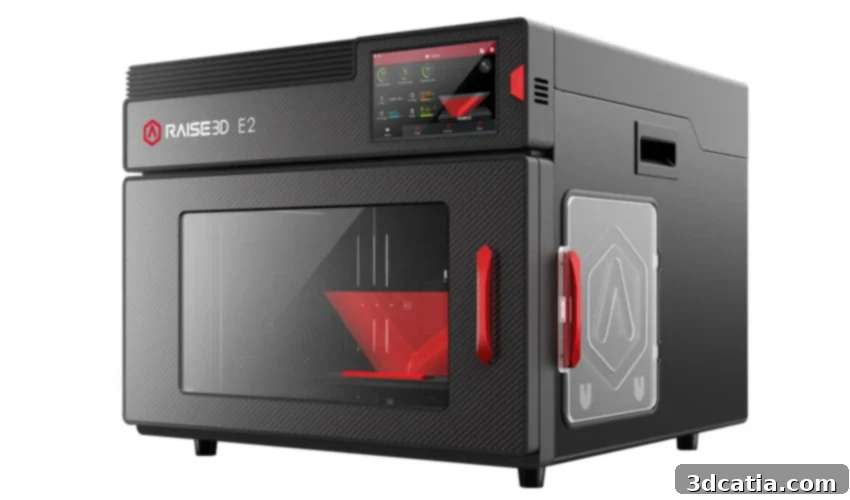
Raise3D Unveils E2: An Innovative IDEX 3D Printer Revolutionizing Education Across Europe
As the 3D printing landscape continues to evolve at a rapid pace, industry-leading manufacturers consistently push the boundaries of innovation. The highly anticipated TCT Show in Birmingham, one of Europe’s premier additive manufacturing events, often serves as a pivotal platform for such groundbreaking announcements. This year, the spotlight shines on American manufacturer Raise3D, a name synonymous with reliable FDM 3D printing, as they introduce their latest offering: the E2 3D printer range. Unveiled with considerable excitement, the E2 is poised to make a significant impact, particularly within the European education sector, where it will be exclusively available from November. This new machine promises to blend accessibility with high performance, catering directly to the unique demands of learning environments.
Raise3D has firmly established itself as a powerhouse in the Fused Deposition Modeling (FDM) 3D printing market. Their reputation was initially forged with the highly successful N2 and N2 Plus series, which paved the way for the widely acclaimed Pro2 machines. These printers quickly garnered a loyal following due to their exceptional features: generous build volumes that allowed for larger-scale projects, robust dual extrusion systems that offered unparalleled material versatility, and overall flexibility that appealed to a broad spectrum of users, from professional engineers to dedicated hobbyists. Building on this legacy of innovation and user satisfaction, Raise3D is now embarking on an ambitious strategy to further diversify its portfolio. By the end of 2020, the company aims to offer a comprehensive range of open machines specifically designed for niche applications, unique materials, and specialized industries. The E2 range marks the beginning of this strategic expansion, meticulously crafted to meet the specific requirements of educational institutions.
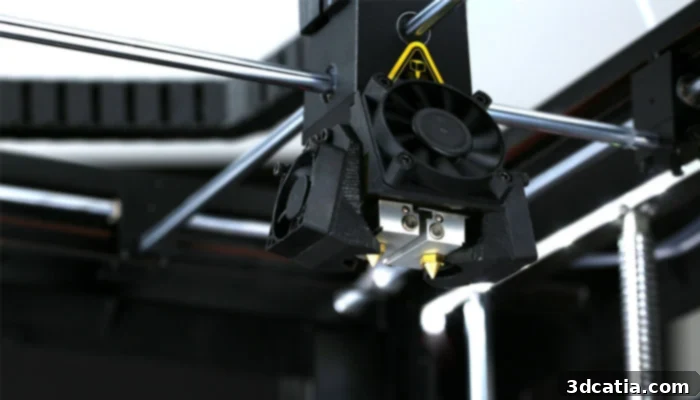
The Raise3D E2 3D printer integrates an advanced independent dual extrusion system, perfect for educational applications requiring multi-material or duplicate printing.
Diogo Quental, Managing Director of Raise3D Europe, elaborated on this strategic vision: “Raise3D aims to have a portfolio that addresses the specific needs of major industries. With that aim in mind, our R&D team designed a new printer which is easier to optimize for each industry, while keeping the highest standards that we always strive for.” This statement underscores the company’s commitment to not just producing high-quality printers, but also tailoring solutions to empower specific sectors. The E2, designed with the educational environment in mind, perfectly embodies this philosophy, offering a user-friendly experience without sacrificing the robust performance Raise3D is known for.
Historically, Raise3D’s machines have been characterized by their substantial dimensions, providing expansive build volumes. The E2, however, presents a distinct departure from this trend. Upon first glance, its more elongated form factor is immediately noticeable, suggesting a more compact footprint and, consequently, a less generous 3D printing volume compared to its larger predecessors like the Pro2 series. This design choice is deliberate, aimed at making the E2 more adaptable to varied educational settings, where space might be a premium. Despite its streamlined profile, the E2 still offers a respectable build space of 330 x 240 x 240 mm – ample room for a vast array of educational projects, prototypes, and models. Furthermore, the printer incorporates a flexible build tray, a feature that significantly simplifies the removal of finished prints and reduces the likelihood of damage to both the print and the build surface. Automatic calibration is another crucial addition, minimizing the technical expertise required to set up and maintain the printer, making it ideal for multi-user environments such as classrooms or university labs where ease of use is paramount. One of the E2’s most distinguishing features is its Independent Dual Extruders (IDEX) system, which opens up a realm of advanced printing possibilities, including double or inverted printing modes, which will be discussed in more detail.
Key Characteristics and Innovations of the Raise3D E2 Printer for Educational Excellence
Raise3D’s overarching objective with the E2 is to fundamentally simplify the user experience, thereby making desktop 3D printing solutions seamlessly integrable into diverse educational and manufacturing requirements. To achieve this, the company has developed a comprehensive ecosystem of tools designed to streamline the entire printing process. Central to this ecosystem is RaiseCloud, a sophisticated cloud-based platform currently undergoing rigorous testing. RaiseCloud promises intuitive print job management, remote monitoring capabilities, and efficient file handling, all accessible from anywhere. This feature is particularly beneficial for educational institutions, enabling instructors to manage multiple printers and student projects remotely, or for students to submit print jobs and monitor progress without needing to be physically present at the machine. Complementing RaiseCloud is RaiseFactory, a turnkey solution engineered for managing and coordinating multiple 3D printers simultaneously. RaiseFactory transforms a cluster of individual printers into a cohesive, efficient production unit, ideal for larger university departments, fablabs, or vocational training centers looking to scale their additive manufacturing capabilities. Beyond these powerful software solutions, the E2 itself boasts several intelligent design elements, including an energy-saving mode that reduces operational costs and environmental impact, and an automatic pause function that activates when the printing chamber is opened, enhancing safety for users in busy educational environments.
The Independent Dual Extruder (IDEX) system is arguably the most compelling technical feature of the E2, offering unprecedented flexibility for educational applications. Unlike conventional dual extrusion systems where two nozzles move together on the same print head, IDEX allows the two extruders to operate entirely independently. This capability unlocks several powerful printing modes:
- Duplicate Mode: This feature allows users to print two identical objects simultaneously. In an educational context, this dramatically cuts down print times for multiple students needing the same prototype or component, effectively doubling the output of a single machine.
- Mirror Mode: Ideal for creating symmetrical parts, Mirror Mode enables the E2 to print two mirrored objects concurrently. This is invaluable for engineering design classes, robotics, or even art projects where left and right components are often required.
- Multi-material and Multi-color Printing: The IDEX system excels at printing with different materials in a single job. This could involve combining a primary build material like PLA with a soluble support material such as PVA, allowing for complex geometries with intricate overhangs that are easily cleaned post-processing. Alternatively, it enables the creation of multi-color prints, enhancing visual appeal and functional clarity for educational models.
- Reduced Oozing and Cross-Contamination: With IDEX, when one extruder is active, the other is parked away from the print area. This significantly reduces the risk of oozing or cross-contamination between different materials or colors, ensuring cleaner, higher-quality prints.
These advanced capabilities make the E2 an incredibly versatile tool for STEM education, design, and practical skills development, fostering creativity and problem-solving among students.
Edward Feng, CEO of Raise3D, articulated the delicate balance the company strives to achieve with its products: “There is always a fine balance between usability and performance. At Raise3D we want our 3D printers to be as inclusive as possible, operated by engineers, technical experts, and large manufacturing enterprises, while at the same time providing access to easy-to-use 3D technologies that support education, entrepreneurial ventures, and desktop engineering. We’ve made an extra effort to improve some usability factors in the E2, without compromising performance.” This philosophy is evident in every aspect of the E2’s design. While offering advanced features like IDEX and a robust ecosystem, its intuitive interface, automatic calibration, and safety features ensure that even novices can achieve successful prints, making it truly inclusive for a wide range of users within the education sector.
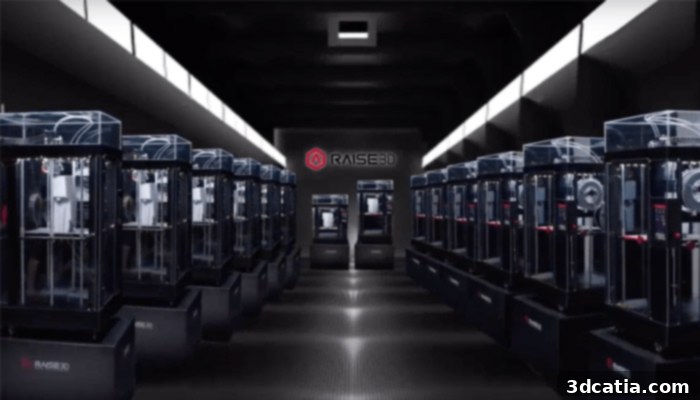
Like the acclaimed Pro2 range, the E2 3D printer will seamlessly integrate with the RaiseFactory solution, enabling efficient management and simultaneous operation of multiple machines for enhanced productivity in educational and research settings.
Accessibility and Impact: The Raise3D E2’s Role in Empowering European Education
For its European launch, the Raise3D E2 is strategically positioned with an accessible price point, starting from €2,499. This pricing strategy, coupled with its exclusive reservation for the education sector in Europe, underscores Raise3D’s commitment to democratizing access to advanced additive manufacturing technology. For schools, high schools, vocational training centers, fablabs, and universities, which often operate under stringent budget constraints, this more affordable price point represents a significant opportunity. Investing in professional-grade 3D printing solutions has traditionally been a considerable financial hurdle for many educational institutions. The E2 aims to bridge this gap, making cutting-edge technology attainable and fostering a new generation of innovators and engineers.
Beyond its financial accessibility, the relatively compact size of the E2 3D printer is another key advantage for educational environments. Classrooms, labs, and workshops frequently have limited space, and the E2’s thoughtful design ensures it can be accommodated without requiring extensive reorganization or dedicated large areas. This smaller footprint does not compromise its capabilities, allowing institutions to integrate multiple units or deploy them in diverse learning settings, from design studios to science labs. The E2 was officially presented for the first time from September 24 to 26 at the prestigious TCT exhibition in Birmingham, generating considerable interest. Deliveries for the E2 are scheduled to commence from November, ensuring that European educational institutions can begin integrating this innovative tool into their curricula soon.
The introduction of the Raise3D E2 has profound implications for the future of education. By providing an accessible, high-performance, and user-friendly 3D printer, Raise3D is directly enabling richer STEM curricula, empowering students to engage in hands-on learning, rapid prototyping, and creative problem-solving. It equips educators with a powerful tool to bring abstract concepts to life, from visualizing complex biological structures to designing functional mechanical components. The E2’s robust feature set, particularly its IDEX capabilities and integrated ecosystem solutions like RaiseCloud and RaiseFactory, positions it as not just a printer, but a comprehensive learning platform. It supports collaborative projects, fosters digital literacy, and prepares students for future careers in fields increasingly reliant on additive manufacturing. Raise3D’s strategic focus on the education sector with the E2 is a testament to the belief that empowering the next generation with advanced manufacturing skills is critical for global innovation and technological progress. You can find more comprehensive information about this exciting new product directly on the Raise3D website HERE.
What are your thoughts on the Raise3D E2 and its potential impact on the education sector? We invite you to share your insights in a comment below or join the discussion on our Facebook and Twitter pages! Don’t miss out on the latest advancements and news in the world of 3D printing; remember to sign up for our free weekly Newsletter, delivered straight to your inbox.