
Canyon Pioneers Sustainable Cycling: Unveiling a 3D Printed Bike Frame for an Eco-Friendly Future
The world of cycling recently witnessed a significant leap forward in sustainable innovation with the grand unveiling of Canyon’s groundbreaking 3D printed bicycle prototype. This highly anticipated event took place at the prestigious London Bike Show, held from April 21st to 23rd, where the renowned German bike manufacturer showcased its visionary approach to eco-conscious design and advanced manufacturing. The star of the presentation was undoubtedly the meticulously engineered bike frame, brought to life through a sophisticated laser powder bed fusion (L-PBF) solution. This cutting-edge additive manufacturing technique allowed for the precise fabrication of the frame in three distinct sections, marking a pivotal moment in the quest for a more environmentally responsible bicycle.
Canyon’s primary objective with this ambitious project was clear: to engineer a bicycle that not only performs at an elite level but also significantly reduces its environmental footprint. By embracing additive manufacturing, often referred to as 3D printing, Canyon has demonstrated a profound commitment to a more sustainable production paradigm. This innovative approach inherently minimizes the quantity of raw materials required, drastically cuts down on waste, and opens up exciting possibilities for localized production. The ability to print complex geometries directly from digital designs allows for unparalleled material efficiency, a stark contrast to traditional subtractive manufacturing methods that often generate considerable scrap material. This focus on resource efficiency and reduced environmental impact positions Canyon as a leader in sustainable innovation within the competitive cycling industry.
The “Ride Green” Initiative: A Vision for Sustainable Cycling
The genesis of this remarkable project can be traced back to the German magazine BIKE, which launched the impactful “Ride Green” initiative. This project was built around a singular, profound question: Is it truly possible to construct a bicycle that embodies sustainability at its core? Canyon, known for its innovative spirit and engineering prowess, stepped forward to provide a compelling answer. Their suggested methodology was revolutionary: designing and producing a bicycle frame using advanced additive manufacturing techniques. This decision aligned perfectly with the growing trend within the industry, as Canyon’s prototype bike now joins the numerous initiatives that have emerged in recent months. Across the globe, various bike and equipment manufacturers are increasingly leveraging 3D technologies to deliver bespoke, high-performance solutions that are, in many cases, demonstrably more sustainable than their traditionally manufactured counterparts.
The integration of 3D printing into bicycle design offers a multitude of benefits, extending beyond mere sustainability. It allows for the creation of intricate internal structures and lightweight designs previously impossible with conventional manufacturing. This translates into bikes that are not only lighter and stronger but also precisely tailored to individual rider needs. The “Ride Green” project serves as a powerful testament to the industry’s evolving conscience, highlighting a collective drive towards innovative solutions that do not compromise performance for environmental responsibility. Canyon’s participation underscores a fundamental shift in design philosophy, moving from mass production towards a more intelligent, on-demand, and resource-efficient future.
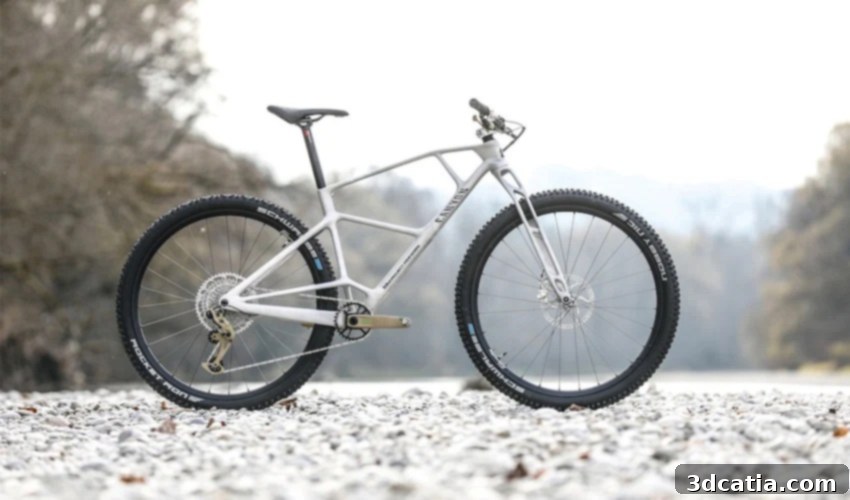
The bike frame was 3D printed using Laser Powder Bed Fusion technology, enabling a lightweight and sustainable design (photo credits: Wolfgang Watzke)
The Engineering Marvel: Canyon’s 3D Printed Bicycle Frame
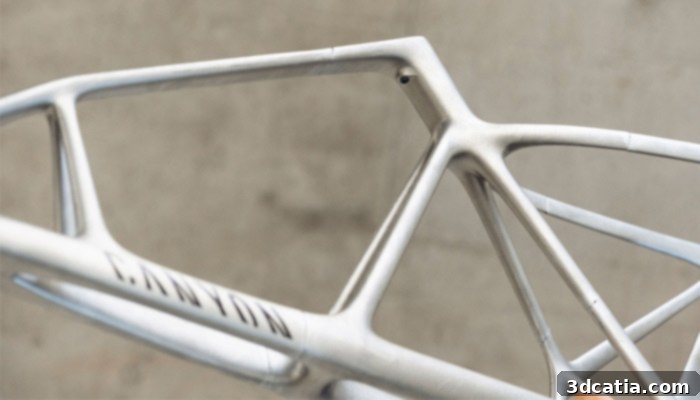
Canyon’s decision to employ additive manufacturing for the bicycle frame was driven by a desire to push the boundaries of design and material efficiency. The core innovation lies in the frame’s lattice structure, an advanced geometric design only achievable through 3D printing. This intricate internal network allows for a significant reduction in the amount of material used, thereby minimizing weight, while simultaneously maintaining or even enhancing the structural integrity and high performance expected from a premium mountain bike frame. The concept is akin to bone structures in nature, where optimal strength-to-weight ratios are achieved through intelligent, non-solid designs.
After thorough market analysis and material research, Canyon opted for Laser Powder Bed Fusion (L-PBF) as the chosen additive manufacturing process. This technology involves a high-power laser selectively melting layers of metal powder, fusing them together to build a part layer by layer. The material of choice for this prototype was recycled aluminum, further cementing the project’s commitment to environmental stewardship. Utilizing recycled materials not only reduces the demand for new raw resources but also significantly decreases the energy consumption associated with primary metal production. The meticulous printing process was entrusted to Materialise, a leading 3D printing service provider renowned for its expertise in complex metal additive manufacturing.
The production of the frame was a testament to the precision and capabilities of L-PBF. To manage the complexity and scale of the frame, it was intelligently divided into three distinct parts. Each of these sections required approximately 6 hours of continuous printing, highlighting the intricate nature of the manufacturing process. The result is truly remarkable: according to Canyon, the combined weight of the entire frame and fork assembly is an astonishingly light 4 pounds (approximately 1.8 kilograms). This exceptional lightness contributes directly to improved climbing efficiency, agile handling, and an overall enhanced riding experience, proving that sustainability does not equate to a compromise in performance.
A Collaborative Effort for Holistic Sustainability
Canyon’s commitment to sustainability extended far beyond the frame itself, fostering a collaborative ecosystem where other prominent brands participated in the “Ride Green” project. These partners contributed the remaining components of the bicycle, with each part meticulously selected or specifically designed to be made from recyclable materials. This holistic approach ensured that the project’s core aim – the creation of a truly more environmentally friendly production – was maintained throughout the entire bicycle assembly. From the drivetrain to the wheels and tires, every element was chosen with sustainability in mind, demonstrating that a complete eco-conscious product is achievable through strategic partnerships and a shared vision.
While this groundbreaking 3D printed mountain bike prototype represents a significant leap forward in design and manufacturing, Canyon currently has no immediate plans to bring this specific model to market. However, its importance cannot be overstated. This prototype serves as a powerful proof-of-concept, an invaluable exploration into new designing methods and production paradigms. It demonstrates the immense potential of additive manufacturing to revolutionize not only how bicycles are made but also how they are conceived. The insights gained from this project will undoubtedly influence future product development across Canyon’s entire range, pushing the boundaries of what is possible in terms of performance, weight, and environmental responsibility. It’s an exciting glimpse into the future of cycling, where innovation and sustainability ride hand-in-hand.
For those eager to delve deeper into Canyon’s existing range of high-performance bicycles and their ongoing commitment to innovation, we encourage you to visit their official website HERE. Their platform offers extensive information on their current models, technological advancements, and brand philosophy.
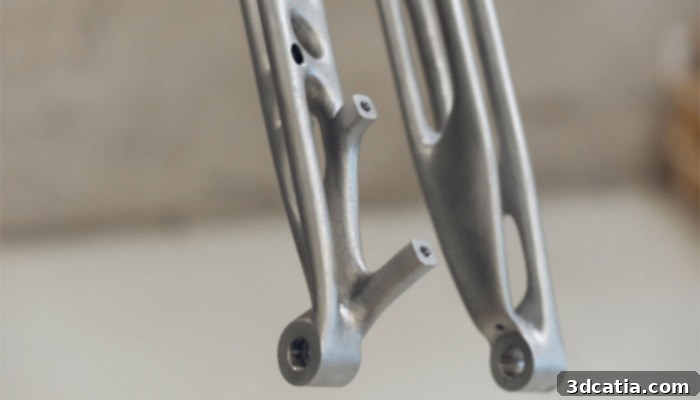
The intricate design and lightweight nature of Canyon’s 3D printed bike prototype. Photo Credits: Wolfgang Watzke
The Future of Cycling: Performance, Customization, and Sustainability Through Additive Manufacturing
The unveiling of Canyon’s 3D printed bicycle frame marks a pivotal moment, showcasing not just a new product, but a paradigm shift in how we approach bicycle manufacturing. The implications of additive manufacturing extend far beyond the immediate benefits of material reduction and waste minimization. It opens the door to unprecedented levels of customization, allowing for bike frames to be tailored precisely to a rider’s biomechanics, optimizing fit, comfort, and power transfer. This bespoke approach can lead to significant performance gains for athletes and a more enjoyable experience for everyday riders.
Furthermore, the ability to rapidly prototype and iterate designs using 3D printing accelerates the research and development cycle. Engineers can test multiple design variations quickly and cost-effectively, leading to faster innovation and the introduction of superior products to the market. This agile development process is crucial in a fast-paced industry like cycling, where marginal gains can make a significant difference. The production process itself can also benefit from increased localization, reducing complex global supply chains and their associated carbon footprints. On-demand manufacturing means less inventory and less waste, aligning perfectly with the principles of a circular economy.
Canyon’s prototype is a vivid demonstration that high performance and environmental responsibility are not mutually exclusive. Instead, they can be harmoniously integrated through the intelligent application of advanced manufacturing technologies. This project sends a clear message to the broader industry: the future of premium bicycles lies in embracing innovative techniques that prioritize both rider experience and planetary health. As material science continues to evolve, offering even more robust and sustainable options for additive manufacturing, we can expect to see even more revolutionary developments in bike design and production.
What are your thoughts on the transformative potential of additive manufacturing in the production of high-performance and sustainable bicycles? We invite you to share your perspectives and insights in the comment section below. Join the conversation on our social media platforms: connect with us on Linkedin, engage with our community on Facebook, and follow our updates on Twitter! Don’t miss out on the latest advancements in 3D printing technology – sign up for our free weekly Newsletter here to receive breaking news directly in your inbox. For comprehensive video content and deeper dives into the world of additive manufacturing, explore our YouTube channel.
*Cover Photo Credits: Wolfgang Watzke