
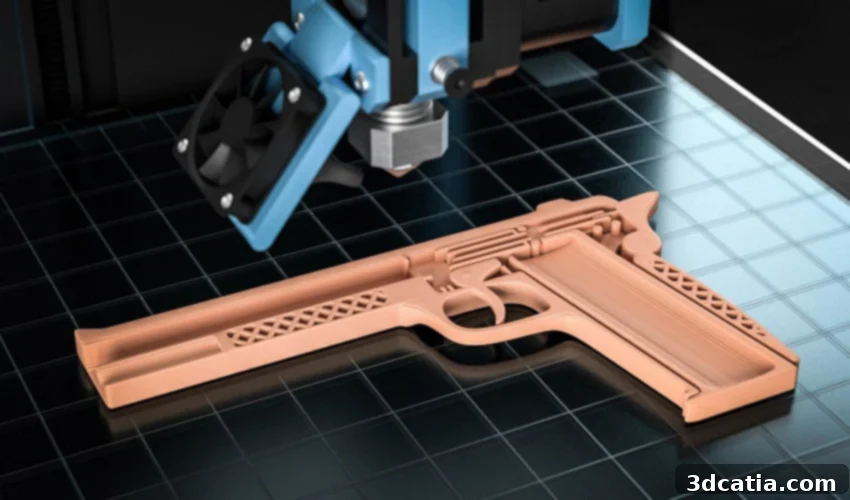
The UK’s Landmark 3D Printed Gun Case: Unpacking Tendai Muswere’s Conviction and Global Implications
The rapid advancement of additive manufacturing technology, commonly known as 3D printing, has opened up unprecedented possibilities across various industries, from healthcare to aerospace. However, like any powerful tool, it also presents significant challenges, particularly when its capabilities intersect with sensitive areas such as firearm production. This complex interplay came into sharp focus with the groundbreaking case of Tendai Muswere, a student at London South Bank University, whose arrest and subsequent conviction for possessing 3D printed firearms marked a pivotal moment in UK legal history.
In a case that sent ripples through legal and technological communities alike, 26-year-old Tendai Muswere pleaded guilty to charges related to the production of two firearms using a 3D printer in his apartment. His initial defense, that he was creating props for a film project as part of his academic studies, was ultimately not sufficient to circumvent the serious legal ramifications. This trial was not only a first of its kind in the United Kingdom but also underscored a growing global concern regarding the accessibility of digital firearm models and the ease with which functional weapons can be manufactured in a domestic setting. The questions it raised about regulating digital blueprints, controlling access to manufacturing tools, and safeguarding public security are profound and far-reaching.
The phenomenon of 3D printed firearms has been on a concerning upward trajectory for years, gaining significant notoriety following their legalisation in the United States. This came after a prolonged and highly publicised legal battle involving Cody Wilson, founder of Defense Distributed, who became the first individual to release 3D gun models online. Wilson’s actions sparked a fierce debate about Second Amendment rights, freedom of speech, and the inherent dangers of easily accessible, untraceable weaponry. The sharing of these firearm files on the internet has profound societal consequences, as it enables individuals to manufacture weapons at home, often without leaving any identifiable trace for law enforcement. This ‘ghost gun’ phenomenon poses immense challenges for traditional gun control measures and crime detection.
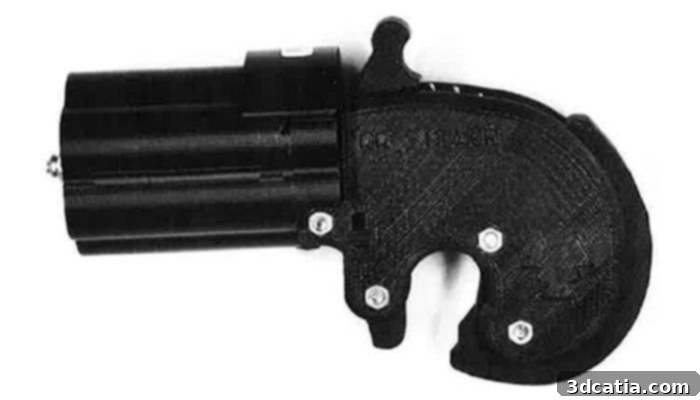
One of the 3D printed firearms | Credits: Metropolitan Police / PA
While Tendai Muswere’s case garnered significant attention as a European first for a conviction of this nature, it is crucial to note that similar incidents have occurred globally. For example, a comparable case emerged in Japan in 2014, highlighting the international scope of this challenge. However, Muswere’s conviction set a critical legal precedent in the UK, establishing a clear stance against the domestic manufacture of such weapons, irrespective of the stated intent. This case illuminated the urgent need for robust legal frameworks to catch up with technological advancements, especially concerning the unregulated proliferation of digital blueprints for dangerous items.
The events leading to Muswere’s arrest began in October 2017 when police officers, acting on information, conducted a search of his London apartment. Initially, their focus was on a suspected drug offense. However, during the course of their search, detectives uncovered something far more alarming: various components of 3D printed firearms, fabricated from plastic resin. These parts, once assembled, had the potential to form dangerous and functional weapons. Further investigation into Muswere’s internet history provided crucial evidence, revealing that he had accessed numerous tutorials and guides online detailing how to use a 3D printer to create firearms capable of firing live ammunition. This digital trail directly contradicted his claim of producing mere film props, demonstrating an intent to create viable weapons rather than inert replicas. The discovery highlighted the ease with which individuals can access manufacturing instructions and leverage readily available technology to produce illicit items.
Despite his initial plea, Tendai Muswere ultimately pleaded guilty, acknowledging the severity of his actions. The firearms he possessed were not rudimentary or non-functional; they were specifically designed for 3D printing and identified as a Washbear plastic revolver and a Hexen Pepper-box handgun. These models are notable within the illicit 3D printed gun community for their relatively simple designs, making them achievable for home fabrication with consumer-grade 3D printers. Crucially, the court established that one of the pistol’s firing pins had been replaced with a stronger copper component, indicating a deliberate effort to enhance its functionality and lethality. This detail was pivotal in proving that the weapons were indeed viable and potentially dangerous, not merely theatrical props.
Detective Sergeant Jonathan Roberts, who spearheaded the investigation, emphasized the significance of this conviction. “This conviction, which I believe is the first of its kind regarding the use of a 3D printer to make a firearm, prevented a viable weapon from falling into the hands of criminals and is an excellent example of a successful partnership between detectives, neighbourhood police and our forensic colleagues,” Roberts stated. His words underscore the proactive nature of the police work and the collaborative effort required to tackle emerging forms of crime that leverage advanced technology. The success of this investigation serves as a stark warning to others who might consider engaging in similar activities, demonstrating that law enforcement is adapting to the challenges posed by digital manufacturing of illegal weapons.
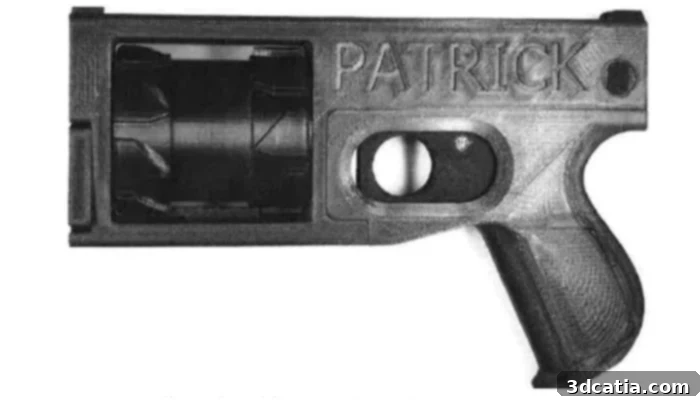
Another of the 3D printed firearms | Credits: Metropolitan Police / PA
Following his conviction, Tendai Muswere faced a minimum sentence of five years for the possession of prohibited firearms, reflecting the seriousness with which UK courts view such offenses. This robust legal response aims to deter others and underscore the UK’s commitment to strict gun control. While this case was a significant development, the Metropolitan Police clarified that there was no widespread concern about the rampant printing of firearms in London specifically, but rather an ongoing vigilance against isolated incidents and the potential for escalation. The focus remains on preventing these weapons from entering criminal circulation and maintaining public safety. The case, however, highlighted a critical vulnerability in global security frameworks: the challenge of regulating intangible digital files and the potential for their physical manifestation into dangerous objects. More detailed information on the conviction and its legal context can be found HERE.
The Broader Implications: Regulating Digital Blueprints and Additive Manufacturing
The Tendai Muswere case extends beyond a single conviction; it opens a pandora’s box of questions for legislators, law enforcement, and technology developers worldwide. How do countries effectively regulate digital content, especially when it facilitates the creation of illegal physical objects? Current laws are often slow to adapt to technological shifts, leading to significant gaps. The very nature of 3D printing—its ability to decentralize manufacturing and make it accessible at a consumer level—presents a paradigm shift in how governments must approach arms control. Unlike traditional firearms, which are manufactured in factories and distributed through established supply chains, 3D printed guns can bypass these controls entirely, creating “ghost guns” that are untraceable and often undetectable by conventional security measures.
Furthermore, the materials used in 3D printing, primarily plastics, make these weapons difficult to detect by metal detectors, adding another layer of complexity for security agencies at airports, public venues, and border crossings. While partially metallic components or firing pins are often necessary for functionality, the prevalence of largely plastic frames makes them far less discernible. This technological challenge necessitates innovation in detection methods, including advanced scanning technologies and more sophisticated intelligence gathering.
Navigating the Future of Firearm Regulation in the Digital Age
As 3D printing technology continues to evolve, becoming faster, more precise, and capable of handling a wider array of materials, the potential for sophisticated homemade firearms will only increase. This demands a multi-faceted approach to regulation and enforcement. Legislators must work towards creating laws that address the dissemination of digital blueprints for prohibited items, potentially through international cooperation to prevent file sharing across borders. Technology companies, too, have a role to play, perhaps in developing algorithms that can identify and flag illicit content, or in implementing safeguards within 3D printer software to prevent the printing of known dangerous designs.
Education and public awareness are also critical. Understanding the severe legal consequences of manufacturing 3D printed firearms, as demonstrated by Muswere’s case, is essential for deterring individuals, particularly students and hobbyists who might be unaware of the serious implications. The balance between technological freedom and public safety is delicate, but cases like Tendai Muswere’s serve as crucial reminders of where that line must be drawn. The UK’s proactive stance in this landmark trial sends a clear message: while 3D printing offers immense constructive potential, its misuse for creating illegal weapons will be met with serious legal repercussions.
What are your thoughts on this landmark conviction and the ongoing debate surrounding 3D printed firearms? We encourage you to share your perspective in the comments section below or join the conversation on our Facebook and Twitter pages! Don’t forget to sign up for our free weekly Newsletter to receive all the latest news in 3D printing directly to your inbox!