
Revolutionary 3D Printed Smart Gel: Rutgers Unveils Light-Responsive Artificial Muscle for Dynamic Applications
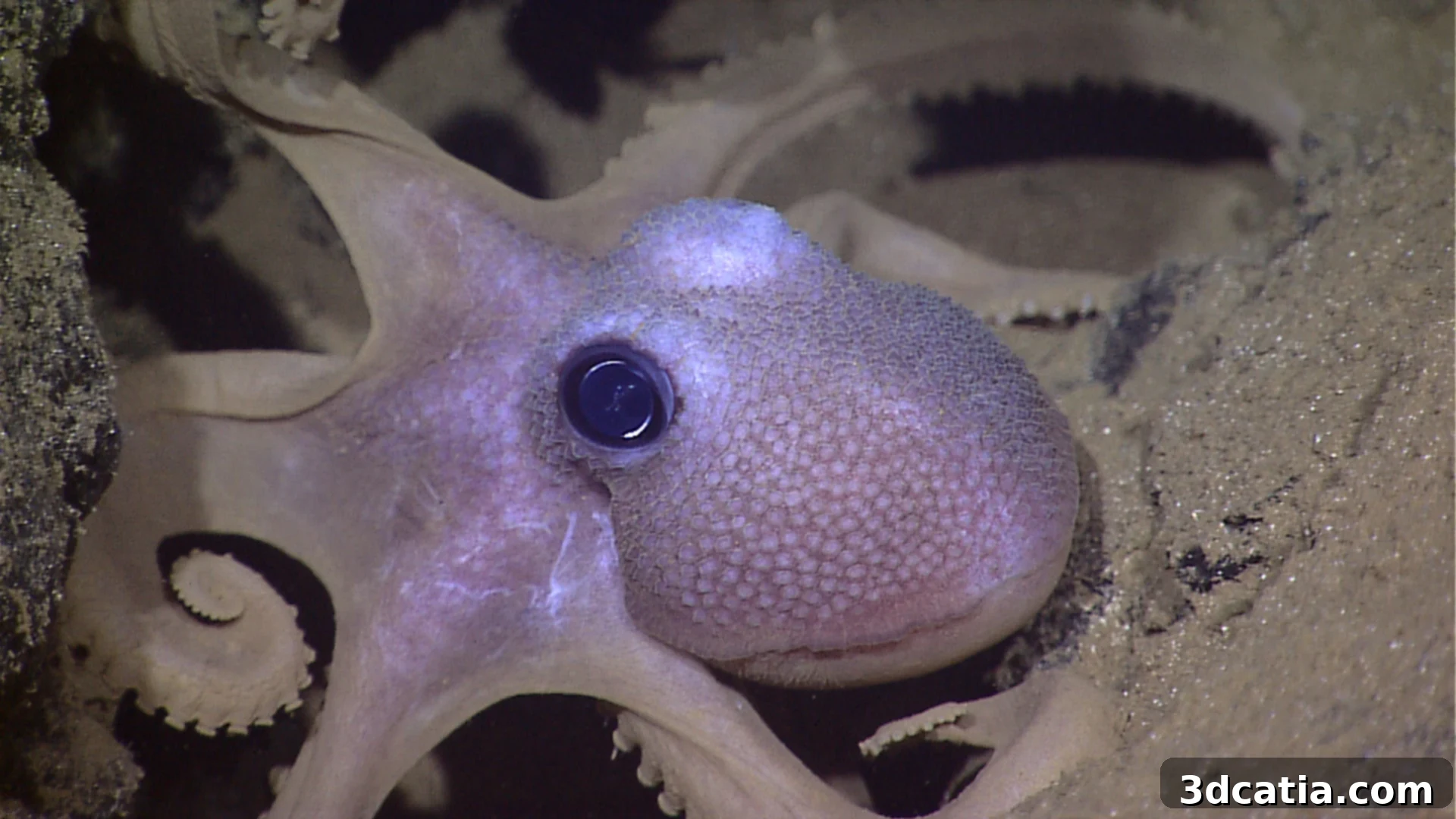
A groundbreaking innovation from a dedicated team of engineers at Rutgers University has led to the development of a novel 3D printed smart gel, capable of sensing and dynamically changing its properties in response to light exposure. This remarkable material has been dubbed “artificial muscle” due to its adaptive capabilities. The inspiration for this smart gel stems directly from nature’s most sophisticated camouflage artists: cephalopods. Octopuses, cuttlefish, and squid possess highly specialized pigment-containing cells in their skin, known as chromatophores, which allow them to rapidly alter their color and texture to blend seamlessly with their surroundings. Emulating this intricate biological mechanism, the Rutgers researchers harnessed an advanced form of Stereolithography (SLA) technology, specifically multimaterial projection microstereolithography. This sophisticated additive manufacturing technique enabled them to transform ordinary hydrogel into a “smart gel” by seamlessly incorporating light-sensing nanomaterials throughout its structure. Further enhancing its functionality, the team also engineered a complementary 3D printed stretchy material. When strategically combined with their light-sensitive smart gel, this composite material achieves an astonishing camouflage effect, autonomously adapting its color and appearance in direct response to changes in ambient light. This pioneering innovation holds immense promise, poised to catalyze significant advancements across diverse fields, including military camouflage systems, the burgeoning sector of soft robotics, precision-targeted drug delivery, the development of next-generation flexible displays, and the creation of vastly improved prosthetics.
This recent breakthrough is not the first foray for Rutgers engineers into the realm of intelligent materials. In 2018, the same team introduced their innovative “4D printing” method for smart gels, a concept that added a fourth dimension – the ability of a 3D printed object to change its shape or function over time – to traditional three-dimensional structures. This earlier iteration of their smart gel demonstrated the capacity to alter its shape dynamically in response to temperature variations. The foundational research at the time clearly demonstrated that high-resolution, scalable, and remarkably efficient additive manufacturing of hydrogels was not only feasible but could be achieved without compromising their inherent shape and solidity, despite their characteristically high water content. Building upon this success, just a few months later, the team pushed the boundaries of their research even further. They successfully developed an advanced 3D-printed smart gel capable of complex movements, specifically demonstrating the ability to walk underwater, as well as grasp and manipulate objects, all in response to precisely applied electrical stimulation. Reflecting on the profound implications of their work, Howon Lee, a senior author of the study and an assistant professor in the Department of Mechanical and Aerospace Engineering, remarked, “Our 3D-printed smart gel has great potential in biomedical engineering because it resembles tissues in the human body that also contain lots of water and are very soft.” This statement underscores the material’s inherent biocompatibility and its remarkable potential to interface seamlessly with biological systems, opening doors for unprecedented applications in medicine.
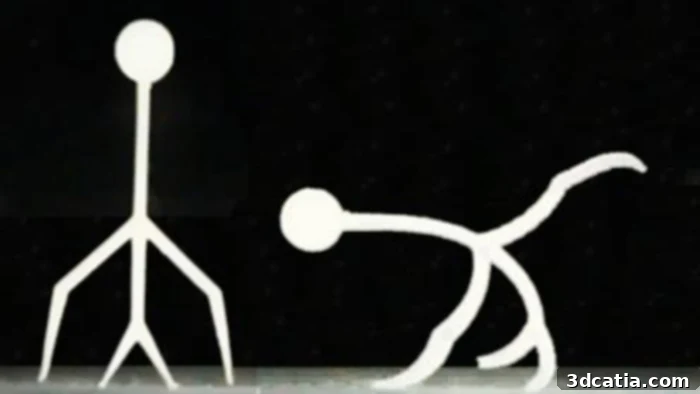
A human-like 3D-printed smart gel walks underwater. (Photo Credit: Daehoon Han/Rutgers University-New Brunswick)
Hydrogels, which serve as the fundamental building blocks for these innovative smart gels, are by no means a new concept within the medical sector. Their unique properties have positioned them as a cornerstone in numerous biomedical applications, leading to a host of groundbreaking innovations over the past decades. These range from the creation of life-sized, anatomically accurate models of a human heart, invaluable for surgical planning and medical education, to everyday items like comfortable and breathable contact lenses. Beyond these, hydrogels have been instrumental in developing novel methods for administering cancer treatment, enabling more targeted and effective drug delivery, and even facilitating the development of advanced brain implants designed to integrate more harmoniously with delicate neural tissue. The primary utility of hydrogels lies in their remarkable ability to absorb and retain substantial amounts of water, sometimes exceeding 90% of their weight, while simultaneously maintaining a stable shape and structural solidity. This unique combination of properties allows them to mimic the soft, hydrated environment of biological tissues within the human body. While hydrogels naturally occur in various biological contexts, they can also be meticulously produced through additive manufacturing techniques, which involve fabricating highly hydrated polymer networks layer by layer. This precise control over their microstructure through 3D printing enables the creation of hydrogel constructs with tailored properties for specific biomedical applications, from drug delivery vehicles to scaffolds for tissue engineering.
The newest iteration of Rutgers’ smart gel represents a significant leap forward, moving beyond electrical stimulation to embrace control through changes in light. This shift unlocks a far wider and more versatile range of applications compared to its predecessors, which required direct electrical stimuli. The ability to manipulate the gel’s properties wirelessly and remotely using light offers unparalleled flexibility and opens doors for use in environments where electrical connections are impractical or undesirable. Moreover, thanks to its inherent flexibility and soft nature, this smart gel is uniquely positioned to bypass many of the physical obstacles and limitations that often constrain the potential applications of more rigid technologies. Professor Howon Lee eloquently highlights this advantage: “Electronic displays are everywhere and despite remarkable advances, such as becoming thinner, larger and brighter, they’re based on rigid materials, limiting the shapes they can take and how they interface with 3D surfaces. Our research supports a new engineering approach featuring camouflage that can be added to soft materials and create flexible, colorful displays.” This vision points towards a future where displays are no longer confined to flat, rectangular screens but can seamlessly integrate into fabrics, curved surfaces, and even dynamic, shapeshifting objects, enabling truly immersive and adaptable user interfaces for wearables, smart environments, and beyond.
The potential applications of this light-responsive smart gel are truly transformative. In the military sector, dynamic camouflage could revolutionize stealth technology, allowing vehicles, equipment, and personnel to instantaneously adapt their appearance to match changing environmental conditions, significantly enhancing concealment and survivability. For soft robotics, the ability of these gels to act as artificial muscles, contracting and expanding in response to light, could lead to the creation of highly compliant, dexterous robots capable of navigating complex, unpredictable environments, interacting safely with humans, or performing delicate tasks unsuitable for rigid machines. In targeted drug delivery, light-activated smart gels could be engineered to encapsulate therapeutic agents and release them only when exposed to a specific wavelength or intensity of light, ensuring precise drug delivery to diseased tissues while minimizing systemic side effects. Furthermore, the development of flexible displays could lead to wearable electronics that conform to the body, interactive wallpapers, and adaptive interfaces that change shape and color, offering an entirely new dimension of human-computer interaction. Finally, in prosthetics, these gels could enable the creation of more natural, comfortable, and adaptive limbs that can change texture, temperature, or even offer rudimentary sensory feedback based on environmental stimuli, significantly improving the quality of life for amputees.
Despite the remarkable progress, the research team is not resting on its laurels. Their ambitious goals for the immediate future include enhancing the technology’s sensitivity to light, improving its response time for quicker adaptations, ensuring its scalability for larger-scale production and wider applications, optimizing its packaging for practical deployment, and significantly boosting its durability for long-term use in diverse environments. Addressing these challenges will be crucial for transitioning this cutting-edge laboratory innovation into commercially viable products that can truly reshape industries and improve lives.
What are your thoughts on this incredible new research into 3D printed smart gels and their potential to redefine various technological fields? We invite you to share your insights and predictions in a comment below, or join the conversation on our Facebook and Twitter pages! For more cutting-edge news and developments in the world of additive manufacturing, make sure to sign up for our free weekly Newsletter here and receive the latest 3D printing news directly to your inbox!