
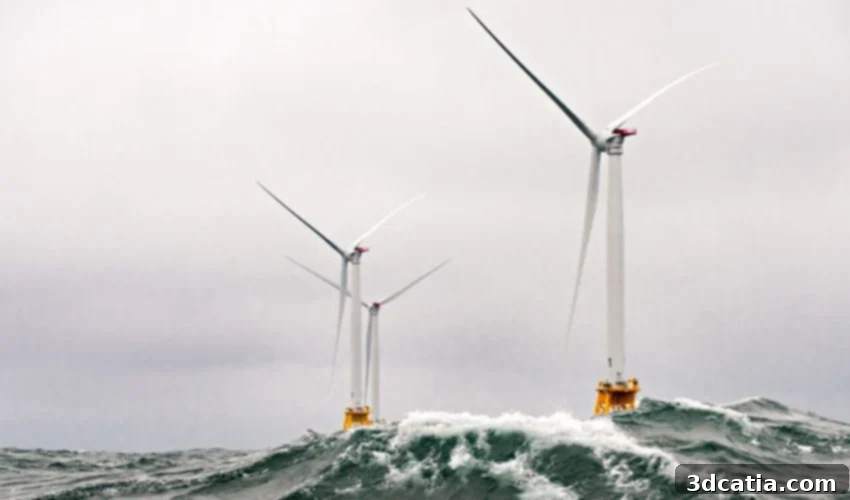
Revolutionizing Marine Energy: How 3D Printing Powers Sustainable Ocean Solutions
The global imperative to reduce reliance on fossil fuels has brought the exploration and development of clean, renewable energy sources to the forefront of scientific and engineering innovation. Among the most promising yet largely untapped frontiers is marine energy, which seeks to harness the immense power inherent in the ocean’s waves, tides, and currents. This vast, consistent resource holds incredible potential for a sustainable energy future. Recently, a groundbreaking collaboration between the National Renewable Energy Laboratory (NREL) and the Pacific Northwest National Laboratory (PNNL) has illuminated a revolutionary path forward: integrating advanced additive manufacturing techniques, specifically 3D printing, to accelerate the development of robust marine energy technologies.
For over two years, NREL scientists have dedicated their efforts to understanding the practical applications of additive manufacturing for enhancing marine energy systems. Their initial foray quickly revealed a critical insight: traditional plastic 3D printing, while versatile, lacked the structural integrity and durability required for the unforgiving oceanic environment. Components exposed to constant saltwater corrosion, immense hydrostatic pressures, and dynamic forces from waves and currents demand materials of superior strength. This understanding prompted a swift and decisive pivot towards metal 3D printing, a technology capable of producing parts with the necessary resilience for critical marine energy infrastructure, such as offshore wind farms and tidal energy converters.
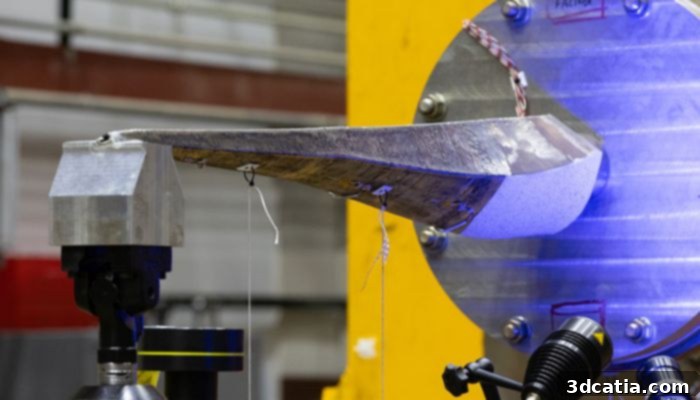
3D printed stainless steel tidal turbine spar.
Paul Murdy, a mechanical engineer at NREL and the lead researcher for this pioneering marine energy additive manufacturing study, underscored the absolute necessity of robust materials. “In the very beginning, we quickly figured out that typical plastic additive manufacturing processes wouldn’t produce strong enough components to handle ocean forces,” Murdy explained. “It became apparent that it would be impossible to design this structure without using metals.” This realization paved the way for exploring specialized metal alloys and advanced fabrication methods designed to endure the extreme conditions of marine environments.
The Power of Metal Additive Manufacturing for Tidal Turbines
Among the chosen materials, stainless steel quickly emerged as a prime candidate, highly valued for its exceptional corrosion resistance—a non-negotiable trait for any component submerged in saltwater. This makes it an ideal choice for manufacturing tidal turbine spars, which serve as the fundamental backbone of the blades used in marine energy converters. To precisely create these durable components, NREL researchers are utilizing advanced techniques such as laser metal deposition. This method involves melting and fusing metal powder layers using a high-power laser, building intricate geometries with superior material properties. The ability to precisely control the material’s microstructure during this process allows for the creation of components that are not only resistant to corrosion but also capable of withstanding the relentless forces exerted by strong ocean currents and dynamic wave movements over extended periods.
Beyond material selection, the iterative design and testing process is paramount. Back in the laboratory, the 3D-printed tidal turbine spar components undergo a series of rigorous tests meticulously designed to validate both their structural integrity and long-term durability. Load testing simulates the maximum forces these spars would encounter in real-world oceanic conditions, ensuring they can bear the operational stresses. Fatigue testing takes this a step further, subjecting the components to repeated cycles of stress to assess their endurance over millions of cycles, mimicking years of continuous operation. Researchers push these spars beyond their theoretical limits, exceeding design specifications by as much as 50%. This extreme testing regime provides invaluable data, allowing scientists to understand precisely how these innovative components will perform and last under the most demanding conditions imaginable. This meticulous approach ensures that the 3D-printed components are optimized for extreme conditions, leveraging the inherent advantages of additive manufacturing.
Commenting on the transformative impact of this technology, Murdy stated, “We’ve opened a really unique design space through 3D printing. This project has demonstrated that additive manufacturing has the potential to produce very strong, stiff structures that will be good for marine energy.” This “unique design space” allows engineers to create complex, optimized geometries that are simply not feasible with conventional manufacturing methods. From intricate internal latticework that reduces weight while maintaining strength to hydrodynamically optimized external shapes that improve efficiency, 3D printing empowers designers to push the boundaries of what’s possible, leading to more effective and durable marine energy systems.
Beyond Durability: The Multifaceted Benefits of Additive Manufacturing
The advantages of incorporating 3D printing into the marine energy sector extend far beyond merely creating more robust components. This advanced manufacturing technology offers a host of benefits that are critical for accelerating the deployment and commercialization of marine energy systems. One significant advantage is the drastic reduction in manufacturing timelines and associated costs. Traditional manufacturing often involves complex tooling, molds, and multiple assembly steps, all of which are time-consuming and expensive. 3D printing, by contrast, builds parts layer by layer directly from a digital design, eliminating the need for much of this costly infrastructure and significantly speeding up production.
Furthermore, the inherent ability of 3D printing to customize components with intricate details allows for incredibly efficient rapid prototyping. This means engineers can quickly fabricate and test multiple design iterations of turbine spar components, making rapid alterations and improvements based on test results. This agile design-test-refine cycle dramatically shortens the innovation pipeline, enabling researchers to identify and develop the most promising technologies much faster than with conventional methods. This iterative capability is crucial in a nascent industry like marine energy, where continuous optimization of designs is essential for improving performance and reducing costs.
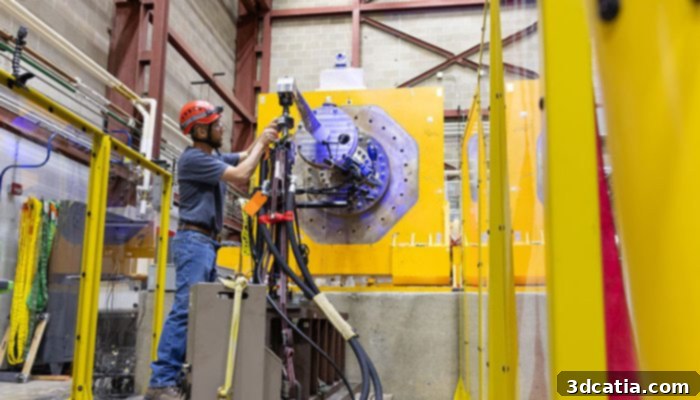
The 3D printed stainless steel tidal turbine spar undergoes testing to ensure it can withstand ocean forces.
The cumulative effect of these benefits is profound: increased prototyping allows for extensive testing and iterative design, which in turn helps researchers pinpoint the most effective and efficient technologies for various “blue economy” sectors. This includes not just large-scale energy production but also niche applications like powering offshore aquaculture farms, providing energy for scientific research platforms, or establishing resilient microgrids in remote coastal communities. Such applications are vital for sustainable economic development in harmony with marine ecosystems.
Empowering Coastal Communities and Enhancing Energy Resilience
The potential impact of marine energy, supercharged by additive manufacturing, extends deeply into societal and economic well-being, particularly for vulnerable coastal regions. Miguel González-Montijo, a designer of the tidal spar component, passionately articulated this vision: “For specific communities in particular places, marine energy could be a game changer.” He cited his home, Puerto Rico, as a prime example, highlighting its potential to benefit immensely from an upgraded energy grid that incorporates innovative renewable energy technologies like marine hydrokinetic energy. Islands and remote coastal areas often face unique energy challenges, including high fuel costs, unreliable grids, and vulnerability to natural disasters that can cripple centralized power systems.
Marine energy, especially when enabled by the efficient and customizable production capabilities of 3D printing, offers a path to genuine energy independence and resilience. By generating power locally from the abundant and predictable forces of the ocean, these technologies can help numerous small towns and island nations build robust energy infrastructures. This not only delivers locally sourced, renewable power but also significantly reduces their reliance on imported fossil fuels, lowering energy costs, reducing carbon footprints, and fostering local economic growth through new industries and job creation. In the face of increasing climate volatility, the ability to generate power sustainably and reliably from local resources becomes an invaluable asset for community resilience and long-term prosperity.
The Future of Marine Energy: Sustainable Innovation Through 3D Printing
The collaborative efforts between NREL and PNNL represent a critical leap forward in the quest for sustainable energy. By harnessing the transformative capabilities of metal additive manufacturing, researchers are not only overcoming the formidable challenges of marine environments but also unlocking unprecedented opportunities for design innovation, efficiency, and cost reduction in marine energy technologies. The ability to rapidly prototype, test, and produce highly durable, optimized components like tidal turbine spars is fundamentally changing the trajectory of ocean energy development. This synergy between cutting-edge manufacturing and a vast renewable resource promises a future where our oceans become a cornerstone of our energy supply, providing clean, reliable power to communities worldwide. As research continues and these technologies mature, we can anticipate a significant acceleration in the deployment of marine energy solutions, bolstering global efforts to combat climate change and fostering greater energy independence for coastal populations.
What are your thoughts on NREL’s innovative exploration of 3D printing within the marine energy industry? We invite you to share your insights in a comment below or join the discussion on our LinkedIn, Facebook, and Twitter pages! Don’t forget to sign up for our free weekly newsletter here for the latest 3D printing news straight to your inbox! You can also find all our videos on our YouTube channel.
*All Photo Credits: NREL