
The Future of Casting: How Sand 3D Printing Enhances Traditional Sand Casting
While you’re likely familiar with the advancements in plastic and metal 3D printing, a less conventional yet incredibly powerful material is transforming the manufacturing landscape: sand. Indeed, sand has emerged as a highly cost-effective and versatile 3D printing material, presenting significant advantages across numerous industrial sectors. This innovative technology is particularly complementary to traditional sand casting, a foundational process in metalworking. But how precisely does 3D sand printing operate, and in what ways can this advanced additive process elevate and optimize age-old sand casting techniques? In this comprehensive article, we will delve deep into these questions, exploring the intricate mechanics and far-reaching benefits of integrating sand 3D printing into modern foundry operations.
To fully appreciate the transformative impact of sand 3D printing on the casting industry, it’s essential to first grasp the fundamentals of traditional sand casting. Sand casting stands as one of the oldest and most widely used metal forming processes, dating back millennia to approximately 3,200 BC. This time-honored technique is employed to produce a vast array of final metal parts by pouring molten material into a mold crafted from sand. The natural properties of sand, particularly its high heat resistance and ability to withstand extreme temperatures, make it an ideal material for creating robust and temporary molds. While the basic concept of sand casting has remained remarkably consistent over thousands of years, the manufacturing process has undergone various stages of refinement and technological development to meet evolving industrial demands.
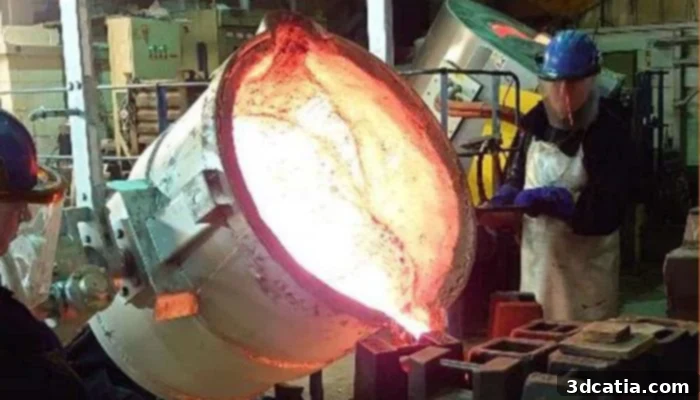
In the sand casting process, a liquid material (usually metal) is poured into sand tanks (photo credits: BigRep)
The traditional sand casting process typically commences with a detailed 2D engineering drawing or a 3D CAD model of the desired object. From this design, a physical pattern (or model) is meticulously produced. This pattern, often made from wood, metal, or plastic, is a replica of the final part, with crucial allowances for material shrinkage during cooling and machining. Additionally, the pattern must incorporate essential elements such as gates (channels for pouring molten metal), risers (reservoirs to compensate for shrinkage), and runners (channels connecting gates to the mold cavity). This physical pattern is then pressed into a carefully prepared sand mixture, typically consisting of silica sand, a binder (like clay), and water, contained within a two-part flask called a cope and drag. The pattern is removed, leaving behind a negative impression – the mold cavity – in the sand. If the part requires internal features or hollow sections, separate sand cores are made and carefully placed within the mold cavity. Once the mold is assembled, molten material, such as aluminum, steel, magnesium, or iron, is poured into the gating system. After the metal solidifies and cools, the sand mold is broken apart (shakeout), and the casting is retrieved. The final stages involve removing the runners and feeders, followed by cleaning, fettling, and potentially heat treatment or machining to achieve the desired finish and tolerances.
While traditional sand casting boasts a proven track record for producing robust parts with intricate details, the multi-stage process, as outlined above, is undeniably complex, labor-intensive, and time-consuming. This is precisely where the innovative power of 3D sand printing steps in, offering a revolutionary paradigm shift. By seamlessly combining conventional casting with cutting-edge additive manufacturing, the entire production workflow becomes significantly more efficient, agile, and cost-effective. Instead of laboriously crafting physical patterns and cores, these crucial components – especially those for parts with complex internal geometries or cavities – are designed digitally using Computer-Aided Design (CAD) software. These digital models are then directly fabricated by a 3D sand printer. This direct digital-to-physical manufacturing completely bypasses several traditional steps, including physical pattern design, manual pattern creation, core box manufacturing, and the labor-intensive process of ramming sand into molding frames. In essence, sand 3D printing provides a direct and optimized shortcut to the desired objective, translating into substantial savings in time, production costs, and valuable resources for foundries and manufacturers alike.
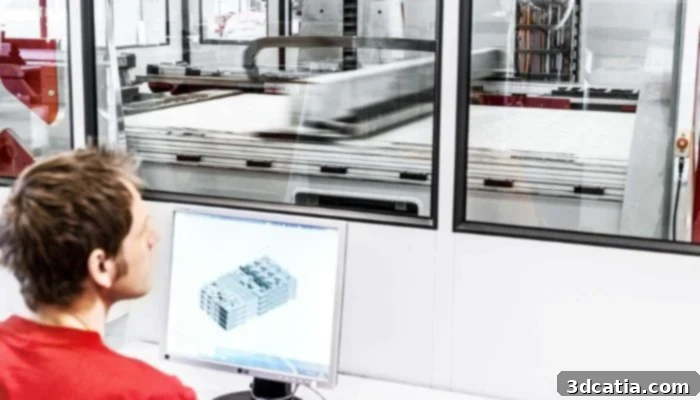
Before printing, the shape design is created by CAD (photo credits: voxeljet)
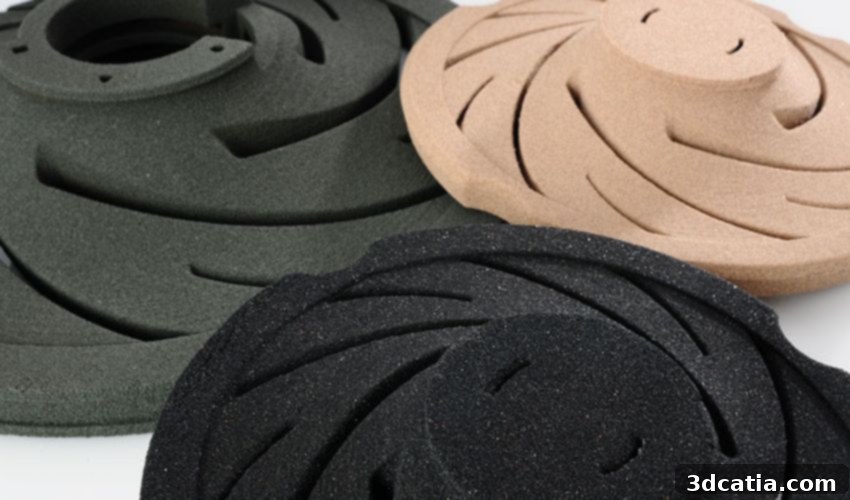
Before delving deeper into the myriad benefits of this groundbreaking technology, let’s focus on the sand 3D printing process itself. Unlike the coarse sand found in a playground sandbox or on a beach, 3D sand printing utilizes specialized quartz sand, primarily composed of fine, uniform quartz grains. The specific type of sand employed can vary depending on the casting alloy of the final metal part and the desired mold properties. For instance, SH-F01 quartz sand is known for its matte, black finish, while SH-P14 appears in a more typical beige, sand-colored hue. Both varieties are prized for their exceptional heat resistance, high strength, and dimensional stability. Furthermore, synthetic sands like SH C052, which are ceramic-based, can also be utilized, offering similar high-performance properties to the quartz-based alternatives. In the realm of 3D sand printing, these specialized sands are transformed into intricate molds and cores for sand casting through a process known as binder jetting. This additive manufacturing technique differs significantly from traditional powder-based 3D printing methods that use metal or plastic powders, as it selectively deposits a liquid binder onto layers of sand particles to create a solid structure, rather than melting or fusing them with a laser or electron beam.
Benefits and Applications of Sand 3D Printing
Binder jetting, as a 3D printing technology, is lauded for its remarkable efficiency when compared to other additive manufacturing processes. This efficiency extends not only to the processing of polymer or metal powders but is exceptionally pronounced when applied to sand. Consequently, binder jetting not only enables users to bypass the multitude of labor-intensive stages inherent in conventional sand molding but also facilitates the rapid and highly efficient production of complex molds and cores. The substantial reduction in production time directly translates into significant financial gains, dramatically lowering overall manufacturing costs. For example, by eliminating the need for expensive physical patterns and tooling, sand 3D printing can slash mold production costs by up to 75% over the entire manufacturing run, especially for low-volume production or large, intricate parts.
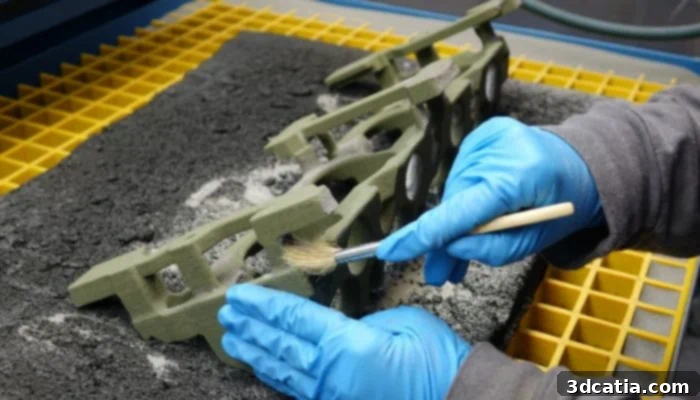
A machine operator cleans sand from a 3D-printed core (photo credits: Hoosier)
One of the most compelling advantages of sand 3D printing lies in its unparalleled design flexibility. Since the 3D mold or core model is designed digitally on a computer, engineers can easily implement individual modifications and intricate adaptations with unprecedented speed and precision. This digital workflow empowers designers to create complex geometries, undercuts, and internal channels that would be prohibitively difficult or impossible to achieve with traditional pattern-making methods. Furthermore, sand 3D printing facilitates production at virtually any scale, from one-off prototypes to small batch runs and even larger quantities of custom parts. Another critical benefit is the exceptional dimensional accuracy and repeatability of binder jetted sand molds. Each mold can be produced with consistent precision, ensuring higher quality castings and reducing the need for post-processing. This superior control over design and production offers significant competitive advantages, as manufacturers can respond more swiftly and effectively to unique customer requirements and evolving market demands.
Beyond the tangible savings in time and money, sand 3D printing also represents a significant leap forward in resource efficiency and sustainability. The necessity to process and consume materials for creating physical patterns – which are often discarded after a limited number of uses – is entirely eliminated. As additive manufacturing processes fundamentally build parts layer by layer, they predominantly utilize only the precise amount of material actually required for the mold or core, thereby generating substantially less waste compared to subtractive manufacturing or even traditional pattern making. Quartz sand, the primary material, is an abundant and environmentally benign resource. Moreover, a substantial portion of unused printing sand powder can be efficiently sieved, reclaimed, and reused in subsequent builds, further minimizing material consumption and disposal. In this crucial sense, the integration of 3D sand printing contributes meaningfully to more sustainable, eco-friendlier manufacturing practices, aligning with modern industrial goals for reduced environmental impact.
The versatility of sand 3D printing makes it a strong contender for a diverse range of applications, particularly those demanding the efficient production of complex, high-performance parts. This includes critical sectors such as the automotive industry, where it’s used for manufacturing intricate engine blocks, manifolds, and custom chassis components, as well as the aerospace industry for producing lightweight turbine components or complex propeller designs. For instance, the British Boro Foundry has successfully leveraged sand 3D printing to produce high-quality spare parts for legacy machinery, demonstrating its value in maintenance and repair. Beyond heavy industries, the technology finds surprising utility in bespoke applications such as the manufacture of unique designer furniture, the creation of intricate sculptures in art, and detailed restoration projects. Its ability to produce high-fidelity prototypes and small series efficiently makes it an invaluable tool for innovation and specialized production across a broad spectrum of creative and industrial endeavors.
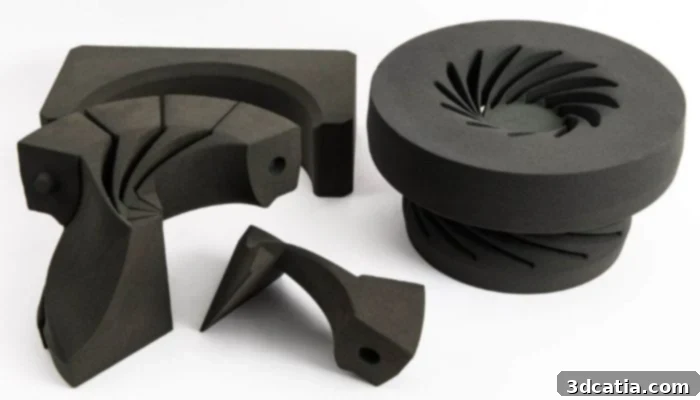
A sand 3D printing mold for a wheel (photo credits: voxeljet)
Leading Sand 3D Printer Manufacturers
Within the expansive landscape of 3D printing, a select group of manufacturers has carved out a niche by specializing in sand processing technologies. Among these pioneers, the German company voxeljet has distinguished itself, building a formidable reputation in the industrial sand 3D printing sector. Voxeljet offers an impressive portfolio of sand 3D printing systems, including robust machines like the VX 200, VX 500, VX 1000, VX 2000, and the massive VX 4000. These systems are characterized by their varying print tray sizes, accommodating everything from intricate, smaller molds to exceptionally large industrial components, thereby catering to a wide range of production needs. In addition to voxeljet, it is imperative to highlight ExOne, a company that has also focused extensively on advanced binder jetting systems for sand and is recognized as a leader in this specialized segment. While ExOne was acquired by Desktop Metal in 2021, its dedicated sand printing division continues to innovate and lead the market with solutions like the S-Max and S-Print series, demonstrating sustained commitment to advancing sand-based additive manufacturing.
While it’s true that sand 3D printing caters to a more specific range of applications compared to the broader utility of 3D printing with resins, polymers, and metals, its ability to address highly specialized needs is unparalleled. This targeted capability is why an increasing number of service providers are integrating sand 3D printing into their offerings. By doing so, they can more effectively meet the demands of customers requiring complex molds and cores with rapid turnaround times. Furthermore, this trend provides invaluable support to smaller foundries that aspire to modernize and optimize their sand casting processes through 3D printing, but may lack the substantial capital investment required to purchase and operate their own industrial sand 3D printers. The accessibility provided by these service bureaus democratizes the technology, allowing a wider array of businesses to leverage the significant benefits of additive manufacturing for metal casting, fostering innovation and competitiveness across the industry.
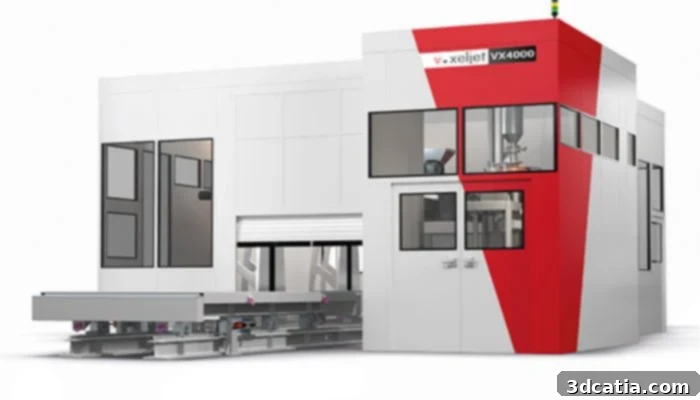
The voxeljet VX4000 is the largest sand 3D printer to date (photo credits: voxeljet)
Sand 3D printing represents a pivotal advancement in the world of manufacturing, bridging the gap between traditional craftsmanship and digital innovation. Its capacity to enhance the efficiency, cost-effectiveness, and design freedom of sand casting is undeniable, positioning it as a key technology for modern foundries. What are your thoughts on the transformative potential of sand 3D printing? We invite you to share your insights in the comments section below or join the conversation on our LinkedIn, Facebook, and Twitter pages! Don’t miss out on the latest developments in additive manufacturing – be sure to sign up for our free weekly newsletter here to receive top 3D printing news directly in your inbox. You can also explore all our engaging videos and content on our YouTube channel.
*Cover Photo Credits: ExOne