
Illuminating Innovation: Philips Signify Transforms Recycled Fishing Nets into Sustainable 3D Printed Lights
Imagine illuminating your living space with stylish lights that not only enhance your home’s aesthetics but also contribute significantly to ocean preservation. This innovative concept is now a reality thanks to a groundbreaking collaboration between Signify (formerly Philips Lighting) and Fishy Filaments. They’ve launched an exciting new range of 3D printed lamps crafted entirely from recycled fishing nets, offering consumers a truly sustainable and eco-conscious choice without compromising on design or quality. This initiative perfectly embodies the principles of the circular economy, transforming what was once ocean waste into beautiful, functional, and environmentally friendly home decor.
Our planet’s oceans face a severe crisis, grappling with an overwhelming deluge of plastic pollution. Among the most insidious forms of this waste is “ghost gear” – abandoned, lost, or otherwise discarded fishing equipment. These nets, lines, and traps, often made of durable plastics, continue to ‘fish’ indiscriminately for decades, entangling marine life, damaging coral reefs, and disrupting fragile ocean ecosystems. Worldwide, an estimated 640,000 tons of fishing gear are lost or discarded in the oceans each year, making up roughly 10% of all marine plastic waste. This silent killer poses a significant threat to fish stocks, sea turtles, dolphins, and countless other species, causing injury, starvation, and habitat destruction. The lack of proper recycling infrastructure for these materials in many coastal regions exacerbates the problem, leading to disposal through burning, landfilling, or, worst of all, direct dumping into the sea.
Recognizing this urgent environmental challenge, Ian Falconer founded Fishy Filaments, a pioneering materials manufacturer based in Newlyn, Cornwall, England. Newlyn holds the distinction of being England’s largest fishing port, making it a critical location for addressing marine waste. Falconer explains the grim reality: “Nets are the main tools used by fishermen to earn a living, but fishing net waste is a genuine problem here in Cornwall due to the lack of a proper recycling infrastructure. Around the world, most of the fishing nets were burned, put in landfill, or worst of all, dumped into the sea, causing massive environmental problems.” Motivated by this dire situation, he embarked on a mission to establish a robust system for collecting these discarded nets directly from the source. Fishy Filaments then undertakes the complex process of sorting, cleaning, and transforming these reclaimed materials into high-quality manufacturing feedstock – specifically, either durable filament suitable for 3D printing or versatile plastic pellets. This ingenious approach not only diverts harmful waste from the ocean but also creates a valuable resource, closing the loop on what was once a linear, destructive cycle.
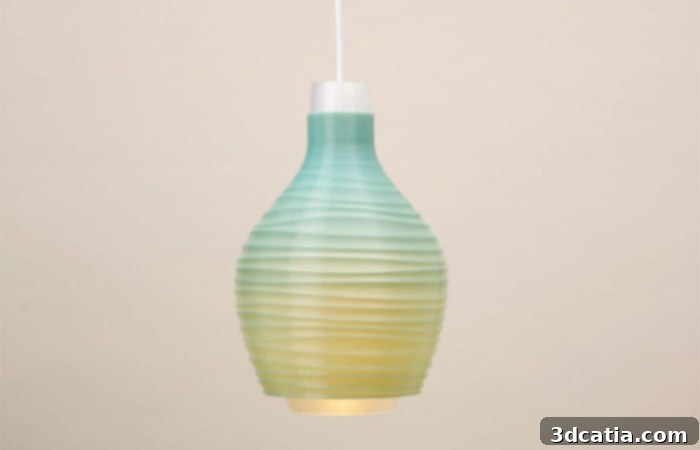
Photo Credits: Philips
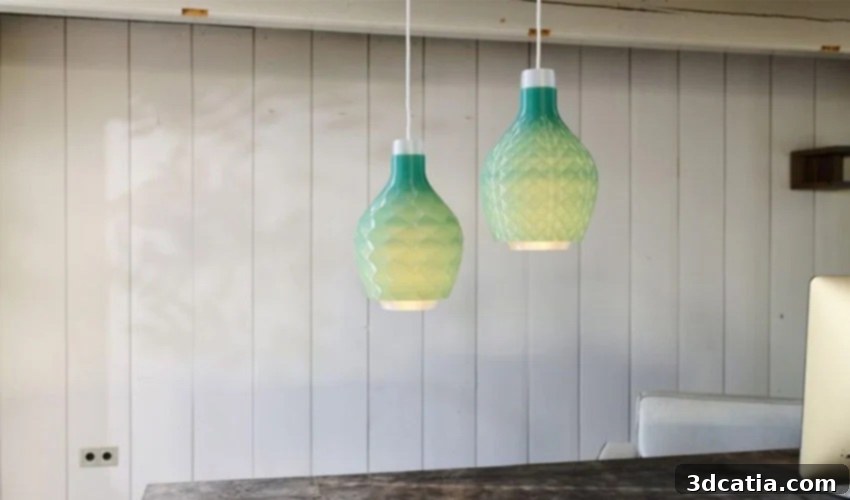
Signify, a world leader in lighting and a brand synonymous with innovation, has wholeheartedly embraced the concept of the circular economy, recognizing its vital role in future-proofing their operations and products. Their partnership with Fishy Filaments underscores their commitment to creating value from waste streams and offering truly sustainable solutions to consumers. By integrating Fishy Filaments’ recycled ocean plastic filament into their “MyCreation” product line, Signify demonstrates how large corporations can leverage sustainable materials and advanced manufacturing techniques to drive positive environmental change. The result is a stunning collection of 3D printed lamps, each one a testament to responsible design and manufacturing. These designs were meticulously crafted to reflect the material’s origin, featuring a slightly wavy, wave-like surface finish that evokes the serene beauty of the ocean. When illuminated, the lamps cast a warm, inviting glow, bringing a distinctive “green” touch – both literally and figuratively – to any room. Each lamp tells a story of transformation, turning harmful waste into a beacon of sustainable innovation.
The role of 3D printing in this venture is absolutely pivotal. This additive manufacturing technology has fundamentally reshaped how Signify approaches product design and development. Far from traditional mass production, 3D printing introduces a level of flexibility and customization akin to artisanal craftsmanship. The brand emphasizes this: “3D printing completely changes the way we design new products. It’s much closer to craftsmanship. In a very iterative process, together with the machine, we created code and new textures and we wanted to reflect those new textures in the product. We are taking 3D printing to a new level by pioneering a new design craftsmanship where the beauty of printed forms, textures, and materials are expressed while solving the technical challenges of a sustainability supply chain in a commercially viable way. We are constantly driven by the challenge to create value in a product with its material origin in a waste stream.” This iterative design process, facilitated by 3D printing, allows designers to experiment with complex geometries and intricate textures that would be impossible or prohibitively expensive with conventional manufacturing methods. While the specific 3D printer model used remains undisclosed, the technology’s ability to precisely deposit layers of recycled filament enables the creation of the lamps’ unique, ocean-inspired aesthetics. This also minimizes material waste during production, aligning perfectly with the circular economy ethos. By embracing 3D printing, Signify not only produces visually appealing luminaires but also champions a more responsible and resource-efficient manufacturing paradigm.
This inspiring collaboration between Signify and Fishy Filaments serves as a powerful model for sustainable innovation across various industries. It demonstrates that combining environmental consciousness with cutting-edge technology can yield products that are both aesthetically pleasing and ecologically responsible. Consumers no longer have to choose between style and sustainability; with these 3D printed lamps, they can have both. Each purchase directly supports the removal of harmful plastic waste from our oceans and encourages the development of localized recycling infrastructures in fishing communities like Newlyn. By investing in such products, individuals contribute to a greener planet, help protect marine biodiversity, and foster the growth of a truly circular economy where waste is seen not as an end-product, but as a valuable resource waiting to be transformed. The partnership exemplifies how creative thinking, technological advancement, and a commitment to environmental stewardship can come together to address some of the most pressing ecological challenges of our time, turning a global problem into a tangible solution with beautiful results. It’s a testament to the power of collaboration and the transformative potential of recycled materials.
Embrace this exciting fusion of design and environmental responsibility by bringing one of these unique lamps into your home. The collection is available for purchase, starting at €179.99 euros. You can explore the full range and make your selection directly on the Philips website. To gain deeper insight into the remarkable journey of these recycled fishing nets and the innovative minds behind this project, we highly recommend watching the informative video below:
What are your thoughts on these innovative 3D printed lamps, crafted from repurposed ocean waste? Do you believe such initiatives represent the future of sustainable home decor and product manufacturing? We invite you to share your opinions and insights by leaving a comment below or by engaging with us on our LinkedIn, Facebook, and Twitter pages! Don’t miss out on the latest advancements and breaking news in the world of 3D printing. Be sure to sign up for our free weekly Newsletter here to receive all the essential 3D printing updates directly in your inbox. You can also explore our extensive library of videos and interviews on our dedicated YouTube channel for more fascinating content.
*Cover Photo Credits: Philips