
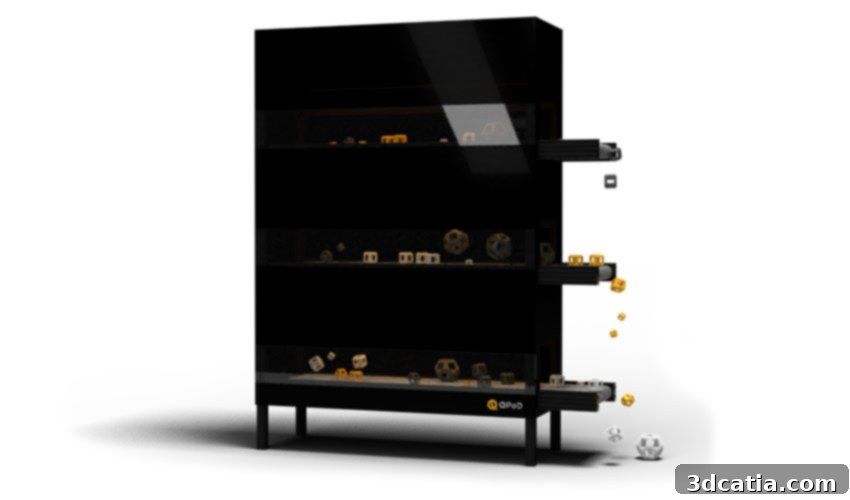
3DQue Systems: Pioneering 24/7 Automated 3D Printing for Sustainable Manufacturing
In the rapidly evolving landscape of additive manufacturing, the demand for efficiency and continuous production has never been higher. Canadian startup 3DQue Systems is at the forefront of addressing this critical need, having developed a groundbreaking system that enables true 24/7 autonomous production. Recognizing the growing necessity for automation in the industry, 3DQue engineered its innovative QPoD hardware and QSuite software solutions to revolutionize thermoplastics 3D printing. Their process, reminiscent of Fused Deposition Modeling (FDM), eliminates many traditional bottlenecks, ushering in an era of unattended manufacturing. The QPoD, 3DQue’s proprietary 3D printing system, is seamlessly integrated with and powered by their intelligent QSuite software. This powerful combination facilitates in-house production of plastic parts with minimal human intervention or maintenance, delivering unparalleled operational uptime. The team proudly reports that their system can achieve an astounding 78,840 autonomous print-hours per year, translating into the production of approximately 864 small parts every week, running continuously without supervision. How does 3DQue achieve this remarkable level of automation and what does it mean for the future of manufacturing? To delve deeper into their transformative solutions for additive manufacturing, we sat down with the visionary team behind 3DQue Systems.
Revolutionizing On-Demand Production with 3DQue Systems
We are 3DQue Systems, an innovative startup proudly based in Vancouver, Canada. Our core mission is to empower businesses by building automated 3D printer networks, thereby creating “smart factories” capable of on-demand, in-house production of plastic components. Our advanced technology fundamentally reshapes traditional manufacturing paradigms, allowing companies to largely bypass the complexities and constraints of injection molding and conventional batch processing. This shift results in dramatic improvements across the board: lead times are slashed by an incredible 95%, transforming production cycles from months to mere hours. Inventory levels are reduced by 85%, significantly mitigating the capital tied up in stock and eliminating the need for extensive bulk warehousing. Furthermore, the associated costs of shipping, handling, and logistics are substantially diminished. By bringing manufacturing closer to the point of need, businesses can achieve significant cost reductions, accelerate product innovation, and profoundly lessen their environmental footprint. This is accomplished by minimizing the fuel consumption, heating, lighting, power usage, and material waste inherently linked with large-scale, centralized bulk production. 3DQue is not just offering a new way to print; we are providing a pathway to a more agile, cost-effective, and ecologically responsible manufacturing future.
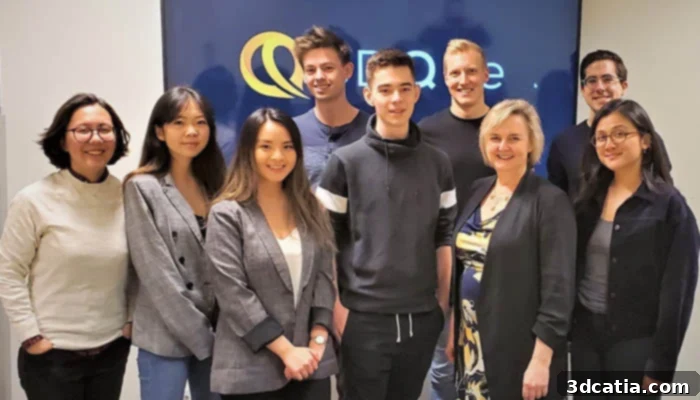
The 3DQue team. Top row (left to right): Steven, Tom, Eric. Bottom row (left to right): Grace, Ruonan, Tavy, Mateo, Steph, Lisa.
At the heart of our groundbreaking technology is a sophisticated combination of our proprietary QSuite software and our innovative VAAPR+Lock hardware. This synergy enables the seamless, automated 3D printing of various thermoplastics, encompassing widely used materials such as PLA, ABS, TPU, PETG, and Nylon. The VAAPR+Lock system is a game-changer, designed to intelligently vary the adhesion of the print bed. This crucial capability ensures robust and secure adhesion during the actual printing process, guaranteeing part integrity and preventing warping or detachment. Crucially, upon the completion of a print, the system automatically and cleanly releases the finished part. This innovative mechanism eliminates the need for manual removal, a common bottleneck in conventional FDM-style printing. By automating these traditionally manual and time-consuming tasks, 3DQue empowers companies to implement “lights-out production,” operating their manufacturing facilities on a continuous 24/7 basis without constant human supervision, maximizing throughput and operational efficiency.
The Genesis and Vision of 3DQue Systems: Sustainable Manufacturing for the Future
The journey of 3DQue Systems began with a moment of insightful realization. Co-founder Mateo, an avid 3D printing enthusiast, discovered a significant gap in the market. He possessed an invention—a concept for automated 3D printing—that simply had no existing technological counterpart. Recognizing the immense potential of his innovation, Mateo sought to transform his personal project into a commercial enterprise. He enlisted the expertise of Steph, who was then his mentor, and together they co-founded 3DQue Systems. Their collective vision extends far beyond simply creating better printers; it aims to fundamentally transform the entire manufacturing paradigm by enabling companies to bring production in-house. At the core of 3DQue’s mission is a commitment to fostering a future of truly sustainable manufacturing. We believe in drastically reducing waste by shifting from bulk production to a precise, on-demand model, where parts are only manufactured as and when they are explicitly needed, eliminating the reliance on vast inventories. Furthermore, we are dedicated to minimizing the carbon footprint associated with each manufactured part. This is achieved by removing the necessity for extensive transportation and warehousing of thousands of pre-produced items, streamlining the supply chain and making production inherently more environmentally friendly. Our mission is to empower industries with agile, efficient, and eco-conscious manufacturing capabilities.
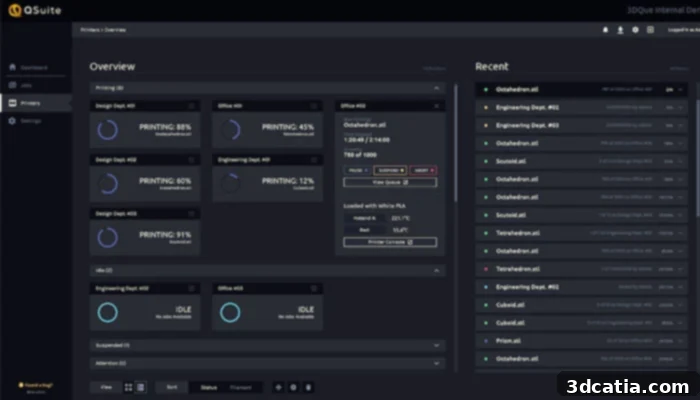
The QSuite provides end-to-end automation | Credits: 3DQue Systems Inc.
A Deep Dive into 3DQue’s Proprietary Automation Technology
The inspiration for 3DQue’s groundbreaking technology stemmed directly from the personal experience of co-founder Mateo. What began as a passionate 3D printing hobby quickly escalated into a significant undertaking as he started receiving numerous print orders from friends. Mateo soon found himself overwhelmed by the sheer volume of requests, struggling to fulfill them efficiently. A major bottleneck was the constant need for manual intervention: printers would sit idle for extended periods while he performed laborious tasks such as scraping finished parts off the build plate, manually uploading new print files, and meticulously resetting the print bed for the next job. This human dependency severely limited throughput and scalability. Driven by a desire to overcome these frustrations, Mateo embarked on a mission to eliminate human intervention from the printing process. His goal was to develop a system that could continuously execute one print job after another, autonomously, even when he was away from home or preoccupied with other tasks. He envisioned a truly “set-it-and-forget-it” operation.
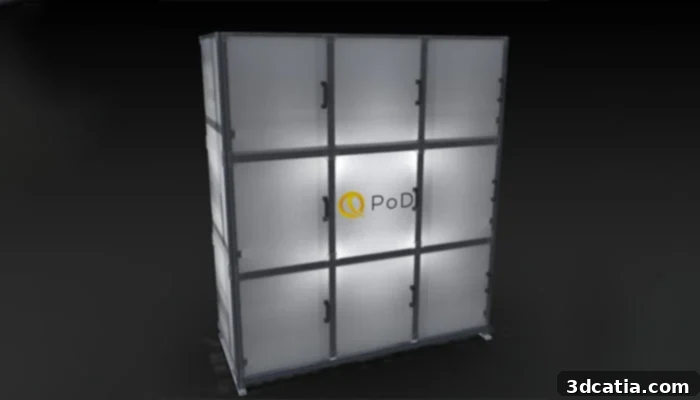
The QPoD is the company’s 3D printing system, it provides 78000+ hours of autonomous printing per year for high-volume production | Credits: 3DQue Systems Inc.
Through extensive research, rigorous experimentation, and a persistent process of trial and error, Mateo finally achieved his breakthrough. The core of his innovation lies in the ingenious technology of varying the adhesion of the print bed. This means the print surface dynamically adjusts its stickiness: providing strong adhesion when the part is being printed to prevent movement and ensuring excellent first-layer adhesion, and then drastically reducing adhesion upon completion. This allows the finished part to be released effortlessly. To facilitate this automatic release and ensure the immediate commencement of the next print, Mateo cleverly reconfigured his printer, turning the print bed sideways. This orientation allows gravity to assist in the automatic detachment and gentle fall of completed parts into a collection bin, clearing the print area for the subsequent job to start instantaneously. This combination of variable adhesion and gravity-assisted part ejection forms the bedrock of 3DQue’s autonomous, continuous 3D printing capability, eliminating manual intervention at critical stages and unlocking unprecedented levels of productivity.
3DQue’s Distinct Advantage: Overcoming Traditional FDM Limitations
While FDM-style 3D printing has been a cornerstone of additive manufacturing for over four decades, its widespread adoption for high-volume production has historically been limited. Traditionally, FDM has been largely relegated to functional prototyping or low-volume production runs, typically under 500 parts. The primary reason for this limitation stems from the numerous “touch points” inherent in conventional 3D printing workflows. A skilled operator is required for a multitude of manual tasks, including uploading files, meticulously leveling the print bed, carefully removing finished parts, resetting the printer for the next job, designing efficient batch layouts, and scheduling production cycles. This reliance on human intervention creates significant inefficiencies, leading to costly downtime as printers sit idle, waiting for operators to complete these steps. For instance, a part that costs $0.97 to print in terms of material and machine time can easily inflate to $3 or more once the labor cost of human intervention is factored in. 3DQue’s fully automated system fundamentally transforms this equation. With our solution, a single operator can efficiently manage a network of 10 QPoDs, which translates to overseeing 90 individual printers running continuously on a 24/7 schedule. This drastic reduction in labor dependency not only slashes operational costs but also maximizes machine utilization and throughput.
Another common misconception surrounding FDM-style 3D printing is that it inherently produces parts of insufficient quality for functional prototypes, durable jigs, precision fixtures, and finished goods. This perceived “low quality” often refers to several specific characteristics: (1) surface finish, characterized by visible layer lines and inherent roughness; (2) mechanical weakness, leading to parts that are prone to breaking easily; and (3) a perceived lack of intricate surface detail. While these criticisms might have held some truth in the past, significant advancements in additive manufacturing technology have rendered them largely obsolete. With recent, substantial improvements in the quality of printer components, the sophistication of infill design algorithms, and the development of advanced materials, FDM technology is now capable of producing robust, high-quality parts that meet the demanding requirements of various industrial applications. 3DQue’s technology leverages these advancements, combined with its automation, to deliver consistent, high-quality output that challenges the old perceptions of FDM capabilities. Our system ensures that the benefits of FDM – material versatility, cost-effectiveness, and design freedom – are fully realized for both rapid prototyping and scalable end-use part production.
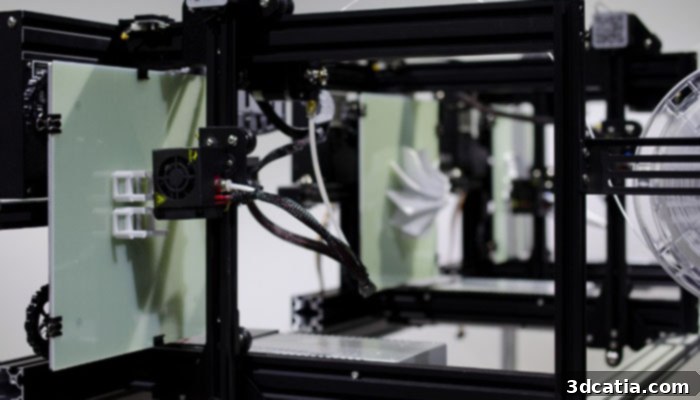
The QPoD automates plastic 3D printing | Credits: 3DQue Systems Inc.
Key Factors for Achieving Success in Automated 3D Printing
For 3DQue Systems to achieve lasting success and widespread impact, several key factors are paramount. Firstly, we are committed to meeting the diverse and evolving needs of our clients across a multitude of markets. This requires not only adaptability but also a comprehensive understanding of specific industry demands. Consequently, we strive for our technology to be compatible with a wide variety of materials, ensuring its effective application across all industries, from high-tech sectors to specialized niche markets. This ongoing commitment necessitates continuous hardware improvements and regular software upgrades to maintain cutting-edge performance and expand capabilities. A robust and knowledgeable support team is also critical, ensuring our clients receive timely assistance and maximizing their operational efficiency. Secondly, we recognize the importance of seamless integration. We aspire to integrate our core technology with other essential automation services, including advanced software slicing solutions, automated post-processing and finishing techniques, and sophisticated sorting and packaging systems. This end-to-end integration will create a truly streamlined and autonomous production workflow, minimizing bottlenecks and maximizing output. Finally, as we operate on a “Manufacturing as a Service” (MaaS) model, our success is intrinsically linked to our clients’ success. Our financial model is directly tied to the utilization of our technology; if our clients aren’t using our solutions effectively, we don’t get paid. This ensures that our goals are perfectly aligned with those of our clients, driving us to ensure that every installation is meticulously configured and performing flawlessly to meet their exact specifications and operational requirements. This client-centric approach is fundamental to our long-term vision.
Expanding Horizons: Target Markets for 3DQue Systems
3DQue Systems is poised to make a significant impact across a broad spectrum of industries. We are actively pursuing implementation in diverse markets such as electronics, where custom enclosures, prototypes, and low-volume specialized components are in high demand; automotive, for rapid prototyping of parts, tooling, and bespoke accessories; agriculture, for custom equipment parts, repairs, and innovative tools; and aerospace, where lightweight, complex geometries for prototyping and functional components are crucial. Beyond these major sectors, our solutions are also finding strong traction with clients engaged in new materials R&D, providing them with agile and efficient testing platforms. University print labs are leveraging our automation to enhance research and educational capabilities, while companies in orthotics and orthopaedics are utilizing our technology for the precise, on-demand creation of customized medical devices. A key strength of our offering is the open architecture of our QPoD system, which comprises a set of nine individual printers. This modular design makes it exceptionally customizable, allowing it to be tailored to suit the unique needs and operational requirements of vastly different industries. Each printer component within the QPoD can be specifically adapted, ensuring optimal performance and versatility for a wide array of applications.
A Vision for the Future: 3DQue’s Long-Term Strategic Plan
At 3DQue Systems, our strategic outlook extends far beyond a typical 10-year business plan; we operate with an ambitious 80-year vision. Our ultimate, overarching goal is nothing less than to fundamentally transform the way companies approach manufacturing, providing a solution that embodies speed, intelligence, and unwavering sustainability in 3D printing. We envision our technology being widely implemented across an extensive variety of industries, becoming an indispensable tool for efficient production. Within the next decade, our immediate objective is to establish 3DQue as a formidable and leading competitor against mid-volume injection molding. This means demonstrating that our automated additive manufacturing processes can not only match but often surpass the economic and operational efficiencies of traditional methods for production volumes that were once exclusive to injection molding. By continuously innovating and expanding our capabilities, we aim to provide a scalable, agile, and environmentally conscious alternative that redefines manufacturing benchmarks for the 21st century and beyond. Our long-term commitment is to foster a global shift towards smarter, more localized, and sustainable production models.
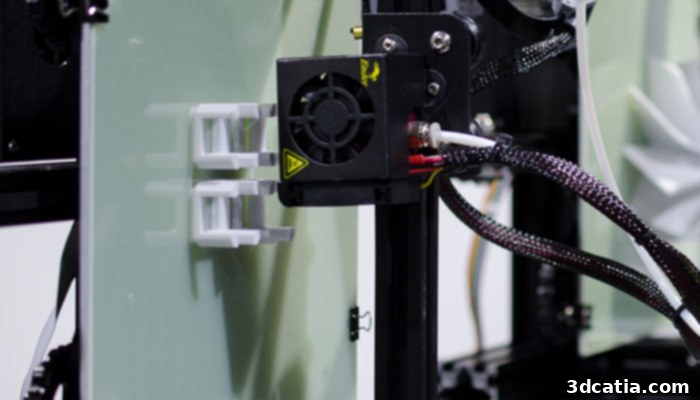
The adhesion to the print bed can be altered, allowing for high adhesion during printing and automatic release of the print upon completion | Credits: 3DQue Systems Inc.
Embracing the Future: A Call for Digital, Sustainable Manufacturing
In a world facing increasing environmental and economic pressures, we at 3DQue Systems firmly believe that the reliance on 180-year-old manufacturing technologies is no longer sustainable or acceptable. The imperative for change is clear. Digital manufacturing, coupled with the strategic implementation of smart factories, represents the critical pathway forward. By moving on-demand production closer to the end customer, we can collectively achieve a substantial reduction in our global environmental footprint. This decentralized, agile approach not only minimizes waste and energy consumption but also significantly enhances industrial competitiveness and fosters unprecedented levels of innovation. Embracing these advanced methodologies is not just an option; it is essential for creating a more resilient, efficient, and responsible manufacturing ecosystem for generations to come.
For more comprehensive information about 3DQue Systems and their revolutionary automated 3D printing solutions, please visit their official website HERE. What are your thoughts on this pioneering startup and their vision for the future of manufacturing? We encourage you to share your insights in a comment below or join the conversation on our Facebook and Twitter pages! Don’t miss out on the latest news and developments in the 3D printing industry; sign up for our free weekly Newsletter to receive all the essential updates directly in your inbox!