

3D Printed Reefs: Ørsted and WWF Pioneer Marine Biodiversity Restoration in Danish Waters
In a groundbreaking collaboration, Danish multinational power company Ørsted and the World-Wide Fund for Nature (WWF) have embarked on an innovative project to bolster marine biodiversity in the Kattegat, the vital strait connecting Denmark and Sweden. This initiative saw the strategic deployment of advanced 3D-printed reef structures on the seabed. The primary objective is to rigorously test and evaluate how these artificial reefs can effectively benefit the diverse marine life in Danish waters, with a particular focus on reversing the alarming decline of the cod stock witnessed over recent years. While the concept of using 3D printing technology for marine restoration is not entirely new globally, this marks the first project of its kind within Denmark’s aquatic territories, setting a precedent for future conservation efforts.
Our planet’s ecosystems are facing unprecedented challenges, and the relentless exploitation of natural resources has brought about increasingly visible and severe consequences. The ocean, in particular, has been pushed to its ecological limits, with widespread damage threatening to reach a point of no return. Marine life across the globe has experienced a drastic decline over recent decades, a stark reality underscored by the critically low stock of cod in the Kattegat, a significant part of the Greater North Sea region. This alarmingly depleted cod population is the culmination of various detrimental factors, including extensive overfishing, widespread habitat destruction, and escalating oxygen depletion in marine environments. Bo Øksnebjerg, Secretary General of WWF Denmark, articulated the urgency of the situation, stating, “Marine biodiversity in Denmark is under heavy pressure, and today there are 90% fewer cod in the Kattegat than in 1990. Action is needed – and urgently. We must give nature and wildlife a hand while trying to solve our climate crisis by expanding our renewable energy production at the same time.” This powerful statement highlights the dual challenge of combating climate change through renewable energy while simultaneously safeguarding marine ecosystems.

The 3D printed reef structures being prepared for deployment (photo credits: Ørsted)
The innovative concept of utilizing 3D printing to create artificial reef structures, designed to mimic natural habitats, has gained significant traction in marine conservation circles. While novel to Danish waters, this approach is not without precedent on the global stage. Indeed, several inspiring projects worldwide have already demonstrated the profound potential of additive manufacturing (AM) technologies in ecological restoration. For instance, the successful 3D printing of coral reefs off the southern coastal Israeli city of Eilat provided valuable insights into accelerating coral recovery. Similarly, archiREEF’s pioneering work in Hong Kong showcased how meticulously designed 3D printed tiles can rejuvenate marine life in degraded areas. Drawing inspiration from these global successes, the strategic partnership between Ørsted and WWF Denmark proceeded to deploy twelve meticulously crafted 3D-printed reef structures onto the seabed in the Kattegat. These artificial habitats were strategically placed amidst the existing infrastructure of wind turbines at the Anholt Offshore Wind Farm, located in the North-East of Denmark. This project represents the latest in a series of collaborative environmental initiatives undertaken since the establishment of the strategic partnership between Ørsted and WWF Denmark in 2018, underscoring a shared commitment to sustainable practices and marine conservation.
The Innovative Technology Behind the 3D Printed Reef Structures
The creation of these specialized reef structures involved a meticulous and collaborative design and manufacturing process. The initial design concepts for the artificial reefs were developed through a synergistic partnership between WWF Netherlands and the Australia-based Reef Design Lab, a recognized leader in marine habitat restoration. This collaboration ensured that the designs were not only aesthetically natural but also functionally optimized to support a diverse array of marine species. Following the design phase, the actual reef structures were brought to life by the Italian company D-Shape, leveraging their expertise in large-scale additive manufacturing. The material composition of these structures is particularly noteworthy: it consists of 70% sand and 30% pozzolanic cement, a unique blend derived from volcanic ash and Portland cement. Crucially, this material is engineered to be fully biocompatible, meaning it poses no harm to the marine environment. It is completely free from synthetic or toxic substances of industrial origin, guaranteeing that the reefs will not introduce any pollutants or harmful elements into their surrounding ecosystem. By providing stable, complex, and safe habitats, these 3D printed reefs are expected to significantly contribute to the project’s overarching goal of replenishing the historically low cod population, building upon previous conservation efforts and paving the way for a healthier marine ecosystem.
The importance of restocking the cod population extends far beyond the mere survival of the fish itself; it is a critical endeavor for maintaining the delicate ecological balance and harmony within the marine ecosystem of the Kattegat area. Cod, as a key top predator in this region, plays an essential role in regulating the abundance of other species, such as the green crab. In a healthy ecosystem, predators like cod help to control prey populations, preventing any single species from becoming overly dominant. If the number of green crabs were to become disproportionately high due to a scarcity of natural predators, it could have cascading negative effects on the natural balance underwater, potentially leading to the degradation of seagrass beds or impacts on other invertebrates. Furthermore, the intricately designed 3D-printed reef structures are specifically engineered to attract a wide variety of other living organisms. These structures will rapidly develop into vibrant micro-ecosystems, providing essential shelter, foraging grounds, and breeding areas for numerous marine species. This re-establishment of a thriving habitat creates a safe and welcoming environment, encouraging the cod to return, flourish, and ultimately contribute to the revitalization of the entire marine food web in the Kattegat.
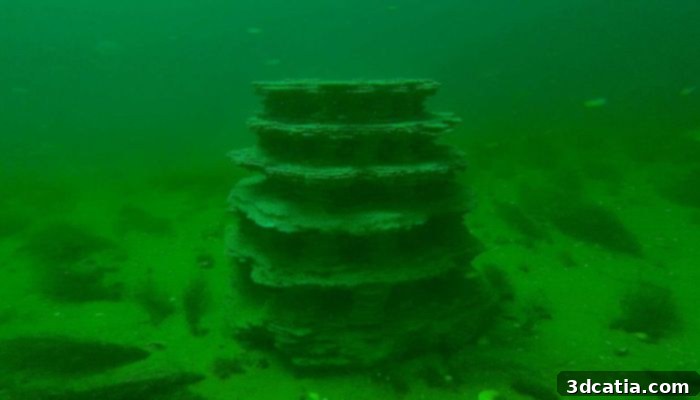
The reef structures flourishing underwater, providing new habitats (photo credits: Ørsted)
Looking ahead, the successful collaboration between Ørsted and the WWF in this pioneering marine restoration project has laid a strong foundation for future endeavors. Both organizations have expressed a clear intent to pursue additional projects together, reinforcing their shared commitment to environmental stewardship. Filip Engel, Vice President of Sustainability at Ørsted, conveyed his enthusiasm for these prospective opportunities, remarking, “At Ørsted, we believe action on climate and nature can and must go hand-in-hand, and this exciting project together with WWF Denmark is one of many we’re testing out globally to seek the best solutions to make our ambition of a net-positive biodiversity impact a reality.” This statement encapsulates Ørsted’s ambitious vision to not only minimize its environmental footprint but to actively contribute to the regeneration of natural ecosystems. Their global search for innovative solutions underscores a dedication to achieving a positive impact on biodiversity, integrating environmental protection with the expansion of renewable energy production. To delve deeper into Ørsted’s comprehensive sustainability initiatives and their strategic plans for the future, interested individuals are encouraged to visit the company’s official website HERE.
The deployment of 3D printed reefs in the Kattegat represents a significant step forward in marine conservation, illustrating the powerful synergy that can be achieved when advanced technology meets dedicated environmental activism. This project not only aims to restore a crucial fish stock but also to rebuild vital habitats, fostering a richer and more resilient marine ecosystem. Such initiatives are vital in our collective fight against global marine degradation, demonstrating that innovative, nature-based solutions are essential for the health of our oceans. What are your thoughts on this pioneering project and the role of additive manufacturing in environmental conservation? Do you believe the additive manufacturing market is sufficiently robust and adaptable to sustain and scale this kind of growth in ecological restoration? We invite you to share your perspectives and insights in a comment below or engage with us on our LinkedIn, Facebook, and Twitter pages! Don’t forget to sign up for our free weekly Newsletter here to receive the latest 3D printing news directly in your inbox. You can also explore all our informative videos on our YouTube channel.
*Cover Photo Credits: Hans-Petter Fjeld