
Revolutionizing Housing: Alquist 3D Pioneers 200 Affordable 3D Printed Homes in Virginia
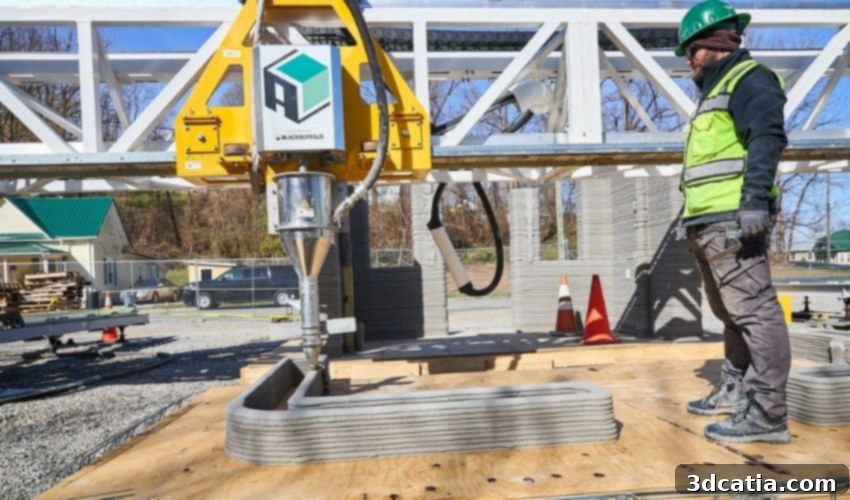
In a groundbreaking move poised to redefine the landscape of residential construction, Alquist 3D, a visionary Virginia-based company, has unveiled its ambitious “Project Virginia.” This initiative aims to construct an unprecedented 200 new 3D printed homes across the state, specifically targeting economically challenged communities. Touted as the largest 3D printed home-building project globally, Project Virginia is a testament to Alquist 3D’s commitment to tackling the pervasive housing crisis by dramatically reducing the cost of housing and essential infrastructure. Following the successful completion of its widely acclaimed project for Habitat for Humanity, which saw families moving into their first 3D printed homes, this latest endeavor signifies a significant expansion of the company’s innovative approach and its broader vision for sustainable, affordable living.
The choice of Pulaski and Roanoke as the initial focal points for this pioneering project is strategic. These areas have recently experienced a substantial surge in housing demand, driven largely by a boom in the tech industry and the creation of numerous new job opportunities. This demographic shift underscores a nationwide trend where smaller communities are grappling with both the challenges and opportunities presented by evolving migration patterns. Zachary Mannheimer, Founder and CEO of Alquist 3D, articulates this dynamic perfectly: “With migration patterns shifting due to pandemic, climate, and economic concerns, smaller communities like Pulaski have a huge need — and an amazing opportunity — to develop affordable housing for new residents. By 3D printing these homes, Alquist and our partners will be accelerating Pulaski and Roanoke’s ability to harness current trends and attract new workers to this wonderful community in southwestern Virginia.” His statement highlights the critical role that innovative construction methods like 3D printing can play in fostering resilience and growth in regions facing rapid demographic and economic changes.
The urgency to provide affordable housing solutions has never been greater. Traditional construction methods often struggle to keep pace with demand, especially in areas experiencing sudden economic revitalization. Alquist 3D’s approach offers a viable, scalable alternative, promising to deliver high-quality, durable homes more quickly and at a lower cost than conventional builds. This not only addresses the immediate housing shortages but also contributes to the long-term economic stability and social well-being of these communities by making them more attractive and accessible to new residents and workers.
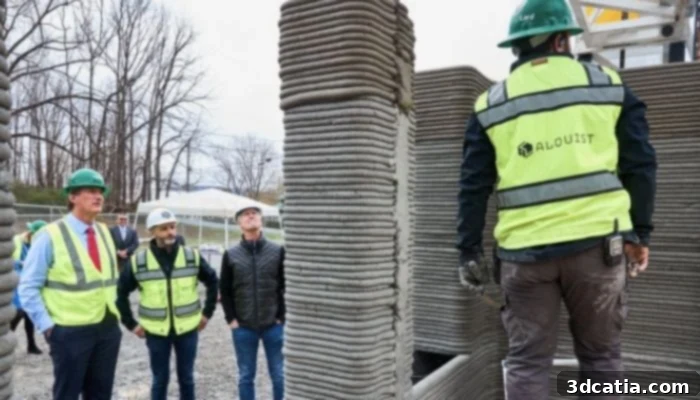
Photo Credits: Alquist 3D
The Transformative Benefits of 3D Printed Houses in Modern Construction
Project Virginia represents more than just a housing development; it’s a strategic response to the American housing crisis, a problem that has intensified across the nation. Alquist 3D, in collaboration with its partner company, Atlas Community Studios, has been at the forefront of rural and economic development initiatives in over 20 different states. Their comprehensive approach goes beyond simply erecting structures; they craft detailed roadmaps for community revitalization. This involves fostering the creation of new businesses, expanding crucial child-care options, promoting technological advancements, establishing vibrant cultural centers, implementing effective marketing and incentive plans, and developing a diverse range of housing units, including single-family homes, multifamily dwellings, mixed-use properties, and senior living facilities. Furthermore, Alquist 3D is actively investing in research and development to explore the potential of 3D printing technologies for constructing new roads and various types of traditional concrete infrastructure, showcasing a holistic vision for modernizing community development.
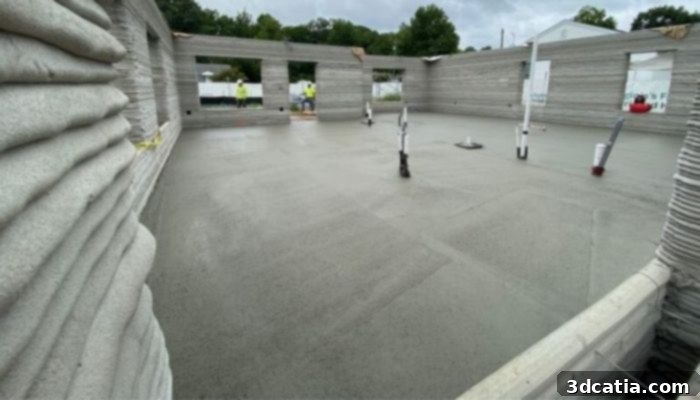
The technical backbone of Alquist 3D’s construction process relies on the advanced 3D printing construction technologies provided by Black Buffalo, a global leader in large-scale 3D printers for construction and a developer of proprietary cement-based ink. The advantages of employing additive manufacturing (AM) for home construction are compelling and have been thoroughly demonstrated. During the successful execution of the Habitat for Humanity project, Alquist 3D gathered crucial data highlighting significant efficiencies. By leveraging 3D printing technologies, builders were able to complete the structural shell of a house in at least two to three weeks less time than a conventional construction schedule would require. This remarkable acceleration in project timelines directly translates into substantial cost reductions, cutting nearly 15% off the overall construction expenses. This saving is critical for making housing more affordable.
Beyond speed and cost, 3D printing offers profound environmental and economic benefits. The technology enables builders to use significantly less lumber, a material whose prices and availability have fluctuated wildly in recent years, presenting immense financial challenges for traditional builders. Reducing lumber consumption not only mitigates these financial risks but also contributes to greater sustainability by conserving natural resources and minimizing material waste. The precision and automation inherent in 3D printing also lead to less on-site waste, further enhancing the eco-friendliness of the construction process. Moreover, the specialized cementitious materials used in 3D printing often result in highly durable and energy-efficient homes, providing long-term benefits to homeowners through reduced maintenance and utility costs. The ability to construct homes with customized designs, reinforcing architectural flexibility, also opens new avenues for creating unique and aesthetically pleasing communities. This innovative construction method is not just about building houses faster or cheaper; it’s about building smarter, more sustainably, and with an eye towards future resilience. It addresses not only the material and labor shortages that plague the traditional construction industry but also offers a pathway to constructing resilient homes that can withstand various environmental challenges. To learn more about Alquist 3D’s pioneering work and its future projects, you can visit the company’s official website HERE.
Addressing the Housing Crisis and Shaping the Future of Construction
The deployment of 3D printing technology for large-scale housing projects like Project Virginia marks a pivotal moment in the battle against the severe housing crisis affecting many nations, including the United States. The scarcity of affordable housing, coupled with rising construction costs and labor shortages, has created a formidable barrier for countless families seeking stable homes. Alquist 3D’s approach directly confronts these challenges by offering a scalable, efficient, and cost-effective solution. By reducing construction timelines and material waste, 3D printing allows for a higher volume of homes to be built in a shorter period, thereby increasing housing supply and easing market pressures. This innovative paradigm shift not only benefits individual homeowners but also empowers communities by fostering economic growth and social equity.
The collaboration with Atlas Community Studios further underscores Alquist 3D’s comprehensive commitment to community well-being. Their work extends beyond housing, recognizing that a thriving community requires a robust ecosystem of support – from educational and childcare facilities to economic opportunities and cultural enrichment. By integrating these elements into their development roadmaps, Alquist 3D is not just building houses; it is constructing the foundations of resilient, vibrant communities. This holistic strategy ensures that the newly built homes are integrated into a supportive environment where residents can truly flourish, contributing to the overall stability and prosperity of regions like Pulaski and Roanoke. As the world continues to grapple with increasing population, climate change impacts, and economic shifts, the need for adaptive and sustainable building practices becomes ever more critical. Alquist 3D’s Project Virginia serves as a powerful model for how advanced manufacturing can be harnessed to address complex societal challenges, paving the way for a future where affordable, high-quality housing is accessible to all.
What are your thoughts on the use of additive manufacturing to build houses and vital infrastructure in Virginia and beyond? We invite you to share your insights in a comment below or join the conversation on our LinkedIn, Facebook, and Twitter pages! Don’t miss out on the latest advancements and breaking news in the 3D printing world—sign up for our free weekly Newsletter here, delivered straight to your inbox! You can also explore our extensive video content on our YouTube channel for more in-depth perspectives.
*Cover Photo Credits: Alquist