
Pioneering Sustainable Infrastructure: ACCIONA’s Transformative Journey with 3D Printing Technology
ACCIONA, a distinguished Spanish conglomerate with roots tracing back to 1931, stands as a global leader committed to the development and management of critical infrastructure and renewable energy solutions. Operating across diverse sectors, most notably energy and infrastructure, ACCIONA has proactively embraced cutting-edge technologies to enhance its operations and sustainability objectives. A significant stride in this direction has been the strategic integration of additive manufacturing into its core activities. Often lauded as a greener alternative to conventional construction and manufacturing techniques, 3D printing technologies offer a unique pathway towards more sustainable practices. But how exactly is ACCIONA harnessing this innovative potential for tangible, sustainable applications? To delve deeper into ACCIONA’s pioneering efforts in this field, we had the privilege of interviewing Luis Clemente, a key figure within the ACCIONA group, who shared invaluable insights into their journey with 3D concrete printing.
Driving Innovation: Luis Clemente’s Vision for 3D Printing at ACCIONA
I am Luis Clemente, a Civil Engineer with two decades of experience in the industry. My professional journey led me to spend over a decade within ACCIONA’s innovation sector, which is precisely where my initial encounter with 3D printing technologies took place. It was approximately seven years ago, within the Corporate Innovation Department, that we collectively identified additive manufacturing as an undeniably disruptive technology, even though it was still very much in its nascent stages. Recognizing its immense potential to reshape our operations and the broader construction landscape, we made an early investment by acquiring an FDM printer. This marked the beginning of an intensive period of research, study, and analysis. Our objective was clear: to thoroughly understand the capabilities of this technology, meticulously identify its potential applications within ACCIONA’s diverse activities, and proactively foresee the transformative effects it could have on our core business and strategic direction. This foundational work laid the groundwork for ACCIONA’s significant foray into large-scale additive manufacturing.
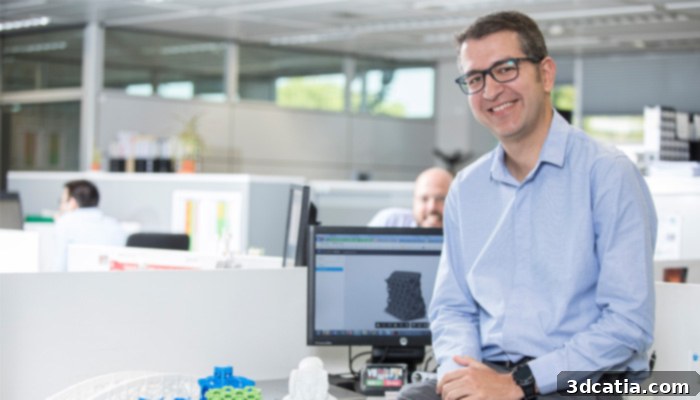
Luis Clemente, a driving force behind ACCIONA’s 3D printing initiatives.
Strategic Investment: Why ACCIONA Chose Additive Manufacturing for Construction
ACCIONA’s decision to significantly invest in additive manufacturing was a carefully calculated strategic move, focusing on large-scale 3D printing with concrete to create structural elements. This pivotal step was taken at a time when such initiatives were incredibly rare on a global scale, positioning ACCIONA at the forefront of this emerging field. We meticulously researched the landscape and identified two primary technologies available for concrete printing: extrusion (often referred to as contour crafting) and powder bed systems (like D-Shape). After a thorough evaluation, we ultimately opted for the powder bed technology. Our choice was driven by the distinct advantages it offered, particularly in terms of unparalleled freedom of form, which is crucial for innovative architectural and structural designs that are often impossible or prohibitively expensive with traditional methods. This capability allows for the creation of complex geometries and organic shapes, unlocking new possibilities in construction.
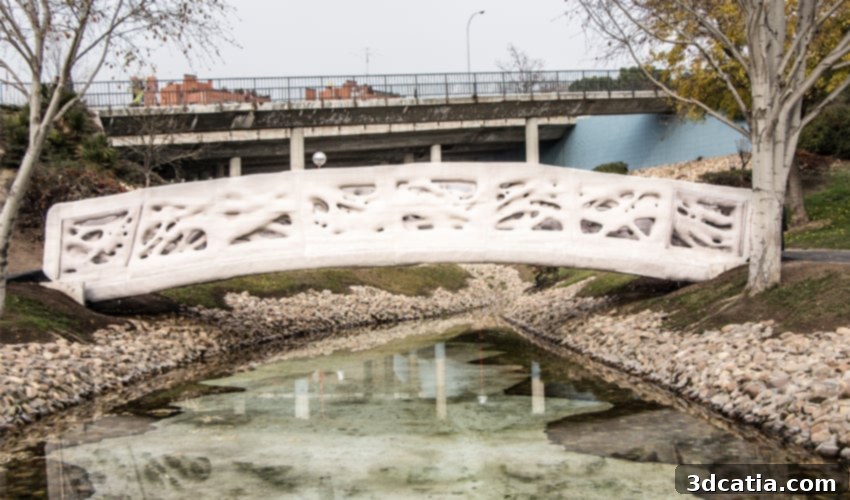
Our subsequent efforts were structured around three core pillars: printing technology, material development, and design innovation. The initial 3D printer we acquired was based on the advanced D-Shape system, boasting an impressive printing capacity of 2 x 2 x 2 meters, which was substantial for its time. For the crucial aspect of material development, we fostered strong collaborations with local producers and esteemed academic institutions, such as the Polytechnic University of Catalonia (UPC), leveraging their expertise to optimize concrete mixtures for additive manufacturing. On the design front, ACCIONA utilized its robust internal experience, complemented by valuable partnerships with external innovative entities like the Institute for Advanced Architecture of Catalonia (IAAC). By bringing together these essential elements – cutting-edge printing hardware, specialized materials, and visionary design – we successfully launched the ambitious project to construct the Alcobendas bridge. This groundbreaking structure would go on to be recognized as the world’s first pedestrian bridge made with 3D printed concrete, serving not only as a functional piece of infrastructure but also as a powerful demonstrator that enabled ACCIONA to subsequently launch new lines of advanced construction solutions, including those deployed in Dubai.
Innovating Public Spaces: The 3D Printed Bus Stop in Dubai
ACCIONA recently celebrated a significant milestone with the inauguration of a striking 3D printed bus stop, a testament to the practical applications of additive manufacturing in urban infrastructure. This innovative project was meticulously realized using powder bed technology at our state-of-the-art facilities in Dubai. The entire process began with a collaborative effort on preliminary design and structural calculations, expertly carried out by the Skill Centers within ACCIONA’s Digital Innovation Hub, showcasing our integrated approach to technological advancement. The bus stop itself is composed of three distinct 3D printed concrete elements that were subsequently assembled on-site. These primary components are elegantly complemented by a lightweight composite roof and robust supporting metal pillars, creating a harmonious blend of traditional and advanced construction methods.
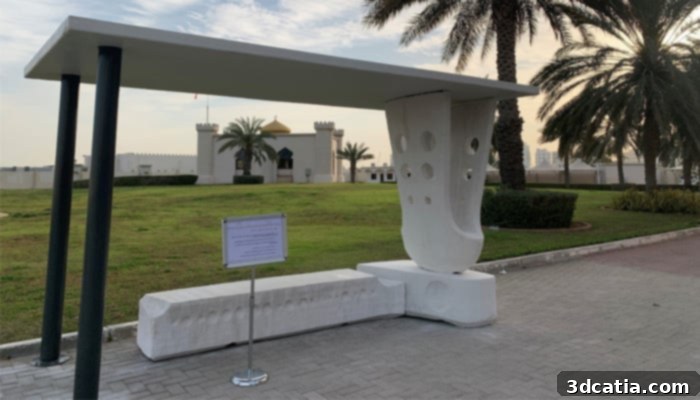
The elegantly designed 3D printed bus stop, a hallmark of ACCIONA’s innovation in Dubai | Credits: ACCIONA
The three printed elements exhibit both functionality and aesthetic appeal. They include a comfortable bench featuring a series of customizable details, demonstrating the technology’s capacity for personalization. Adjacent to this is a bench section designed to provide robust support for the most visually striking component of the entire structure: a vertical element characterized by its intricate and captivating design. This complex geometry is a perfect illustration of what can only be achieved economically and efficiently through the precision and design freedom offered by powder bed 3D printing techniques. Crucially, these large pieces were printed simultaneously, thanks to the impressive printing volume of 6x3x2 meters that our advanced system allows, significantly boosting efficiency and reducing production time. The finish of the printed elements naturally resembles natural stone, lending an organic and sophisticated feel to the structure. To ensure maximum comfort for users, we simply polished the surface of the bench, making it smooth and inviting. This project exemplifies how ACCIONA is leveraging additive manufacturing to create functional, aesthetically pleasing, and highly customized urban solutions.
The Future of Construction: 3D Printing as a Game-Changer
The future of 3D printing in the construction sector is not just promising; it is poised for a revolutionary transformation. We anticipate a period where the incredible advancements made across countless global initiatives and demonstrations will converge with a construction industry that possesses a much deeper and more comprehensive understanding of the immense possibilities and advantages offered by 3D concrete printing. This growing awareness will inevitably lead to greater openness and enthusiasm for integrating this cutting-edge technology into a broader spectrum of projects. 3D printing with concrete is set to evolve from a niche innovation into an indispensable tool for the construction sector, earning a privileged place due to its compelling suite of benefits. These advantages include unprecedented freedom of forms, enabling architects and engineers to realize designs that were previously impossible or cost-prohibitive. It offers unparalleled personalization, allowing for bespoke solutions tailored to specific project requirements or client visions. The technology also brings significant advancements in process automation, reducing manual labor, improving safety, and ensuring consistent quality. Furthermore, its inherent sustainability advantages – such as reduced material waste, optimized material use, and potential for using recycled content – align perfectly with global environmental goals. Coupled with enhanced productivity and faster project completion times, 3D concrete printing is undeniably shaping up to be a cornerstone technology for the future of building, offering more efficient, flexible, and eco-friendly construction methods.
ACCIONA’s Forward Vision: Multi-Technology Solutions for Architecture and Construction
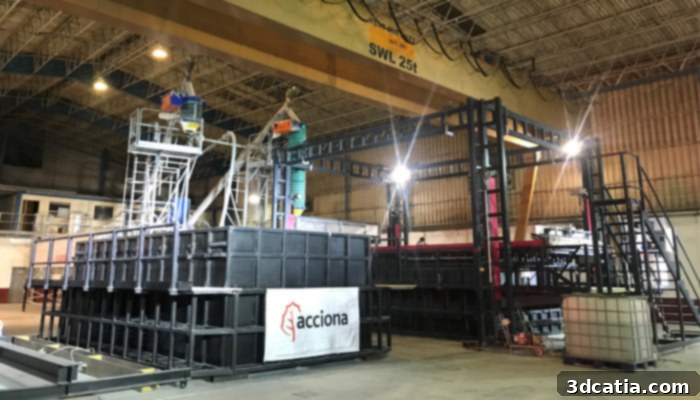
Looking ahead, ACCIONA is strategically advancing its position in the additive manufacturing landscape. While we are diligently consolidating our expertise and market presence in powder bed technology – both through practical business applications and continuous innovation from our Skill Centers dedicated to 3D Printing, Robotics, and Artificial Intelligence – our vision extends further. We are simultaneously investing significant resources and efforts into developing and mastering extrusion technology. This dual approach is crucial as it will enable ACCIONA to evolve into a comprehensive supplier of multi-technology solutions, catering to the diverse and evolving needs of the architecture and construction sectors. This commitment to offering both powder bed and extrusion capabilities ensures that we can provide the most suitable and efficient 3D printing solution for any given project, whether it demands intricate design freedom or rapid, large-scale construction. Currently, we have several exciting specific projects underway, ranging from innovative building structures and custom furniture pieces to unique sculptures and public art installations. These initiatives are actively in various stages of development or competitive awarding processes, underscoring ACCIONA’s relentless pursuit of pushing the boundaries of what is possible with additive manufacturing in the built environment. Our goal is to lead the charge in digital construction, delivering innovative, sustainable, and aesthetically compelling solutions globally.
A Call for Continued Innovation: Shaping a Better Planet Together
In closing, I would like to extend a message of encouragement to all our readers. The remarkable progress we’ve witnessed in additive manufacturing, much like many other groundbreaking technologies, is a direct result of unwavering innovation and the courageous desire to transcend conventional boundaries. It is through this spirit of continuous exploration and an eagerness to push past the limits of what is currently known that true advancement occurs. Therefore, we simply encourage everyone – innovators, engineers, architects, and forward-thinkers alike – to continue embracing this mindset. Let us collectively strive to innovate, to explore new possibilities, and to work together. By doing so, we can collaboratively design and build a better, more sustainable planet for generations to come. ACCIONA is deeply committed to this vision, leveraging technology for a brighter future. You can find more comprehensive information about ACCIONA’s multifaceted initiatives and commitment to sustainability HERE.
What are your thoughts on ACCIONA’s groundbreaking work in 3D printed construction and their commitment to sustainability? We invite you to share your perspectives in a comment below or join the conversation on our Facebook and Twitter pages! To stay informed about all the latest developments and breakthroughs in the exciting world of 3D printing, remember to sign up for our free weekly Newsletter and have the news delivered directly to your inbox!