
Revolutionizing Cycling: How 3D Printing is Shaping the Future of Bikes and Components
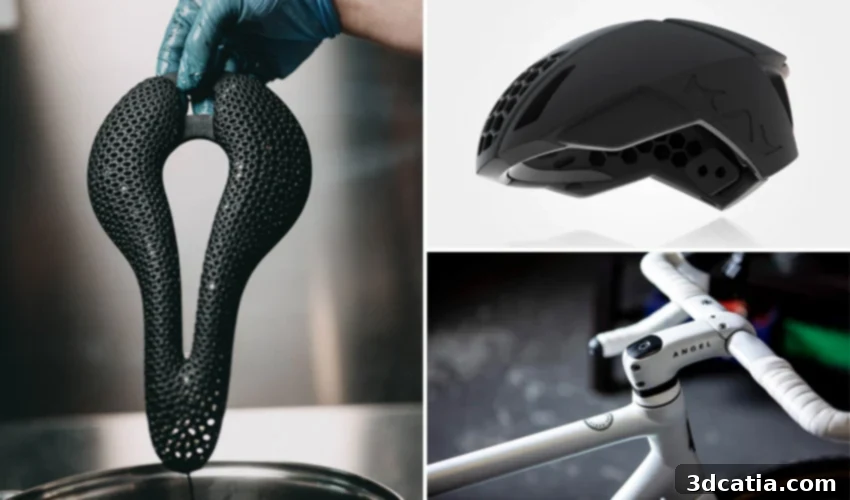
Additive manufacturing, commonly known as 3D printing, has emerged as a transformative force across numerous industries, and its impact on the world of sports, particularly cycling, is increasingly profound. This innovative technology empowers designers and manufacturers to create custom-made equipment with unprecedented precision and efficiency. Cycling, a sport where marginal gains can mean the difference between victory and defeat, has embraced 3D technologies more extensively than many others. The overarching goal is clear: to engineer bicycles that are lighter, faster, and more comfortable, all while simultaneously reducing manufacturing time and costs. The versatility of 3D printing allows for a wide array of materials and processes, with metal and composite 3D printing frequently chosen for their superior strength and durability. Furthermore, integrating 3D scanning with additive manufacturing opens up vast possibilities for customizing essential accessories such as bike helmets, saddles, and grips, ensuring a perfect fit and optimized performance for every rider. The applications within the cycling industry are truly diverse and ever-expanding. Below, we delve into some of the most notable projects and innovations centered on 3D printed bicycles and their components, showcasing the incredible potential of this technology.
Angel Heaven by Angel Cycle Works: A Fusion of Speed and Customization
Angel Heaven represents a groundbreaking titanium bicycle meticulously 3D printed by the innovative Spanish company, Angel Cycle Works. Drawing inspiration from the fastest vehicles on the planet, Angel Cycle Works collaborated with the MADIT Metal 3D team to bring this exceptional bicycle to life. Utilizing Selective Laser Melting (SLM) 3D printing technology, they employ a proprietary titanium powder, allowing for unparalleled customization and the realization of truly unique designs. The inherent advantages of SLM for titanium are manifold: it enables the creation of complex geometries impossible with traditional manufacturing, reduces material waste, and yields components with exceptional strength-to-weight ratios. The high precision of their 3D printers, combined with the specific hardness of their titanium powder and its unique triple track support system, facilitates the strategic lightening of parts by eliminating unnecessary material. This approach not only fosters the creation of cutting-edge and highly resistant products but also ensures a more direct interface between the frame and its bearings, alongside impeccable alignment of all structural elements. Beyond the frame’s integrity, the Angel Heaven features an oversized steering system, delivering absolute precision in handling. Its design also incorporates a clean, hidden, and natural routing for all cables, accommodating various shifting and braking systems, further enhancing both aesthetics and performance. This project underscores how 3D printing is not just about manufacturing, but about redefining design possibilities and performance benchmarks in cycling.
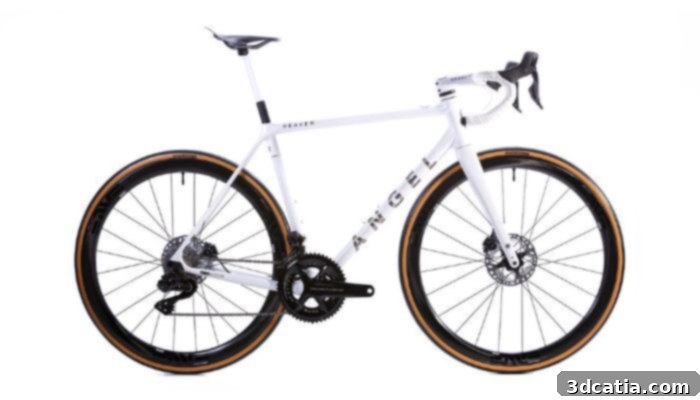
Angel Heaven, the titanium bicycle (photo credits: Angel Cycle Works)
Bolide F HR 3D by Pinarello: Redefining Speed with Biomimicry
Pinarello, a titan in the world of high-performance cycling, showcased the pinnacle of additive manufacturing with its Bolide F HR 3D bicycle. Unveiled in October 2022, this revolutionary bike was proudly proclaimed by the Italian brand as the fastest 3D printed bicycle globally. Its creation was meticulously tailored for world-class cyclist Filippo Ganna’s audacious attempt at the Hour Record – a formidable challenge to cover the longest distance possible on a bicycle within one hour from a stationary start. Ganna’s historic achievement in the same month, where he shattered the Hour Record by covering an astounding 56.792 kilometers, unequivocally validated the bike’s exceptional design and performance capabilities. The frame and fork of the Bolide F HR 3D were intricately 3D printed using Laser Powder Bed Fusion (LPBF), a sophisticated metal additive manufacturing technique. The material of choice was Scalmalloy, an advanced aluminum alloy comprising scandium, aluminum, and magnesium, renowned for its exceptional strength-to-weight ratio and suitability for high-stress applications. The frame itself is ingeniously composed of only five individually produced pieces, which are then precisely glued together, demonstrating a novel approach to structural integrity and manufacturing efficiency. The ingenuity of the Bolide F HR 3D extends far beyond its materials and construction; its distinctive design is equally groundbreaking. Pinarello collaborated with the University of Adelaide to develop an aesthetic and aerodynamic profile inspired by nature, specifically the highly efficient movements of humpback whales. This biomimetic design yielded extraordinary aerodynamic advantages, contributing significantly to Ganna’s record-breaking performance. The Bolide F HR 3D stands as a testament to how advanced 3D printing, combined with innovative design philosophy, can push the boundaries of human athletic achievement and bicycle engineering.
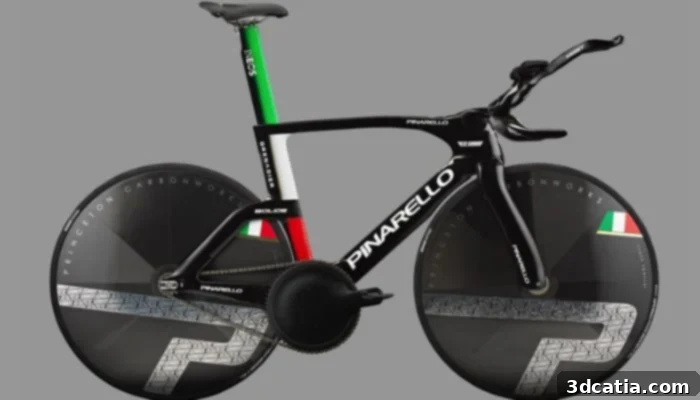
Bolide F HR 3D from Pinarello (photo credits: Pinarello)
The 3D Printed Pads From Elastic Interface: Enhanced Comfort and Breathability
Elastic Interface, an esteemed Italian company renowned for its cycling pads, has pioneered the development of the first-ever 3D printed chamois pad, revolutionizing rider comfort and breathability. Their innovative NX3 chamois pads incorporate a meticulously 3D printed piece that replaces the traditional foam or padding typically found in the support area. The genius lies in its intricate lattice structure, which grants precise control over the density and firmness of the pad, allowing for optimal customization based on specific cycling demands and rider preferences. This advanced design not only dictates how the pad deforms under the weight and pressure of the rider but also ensures greater cushioning, more stable behavior over long rides, and significantly reduced deformation compared to conventional materials. For the manufacturing of these cutting-edge chamois pads, Elastic Interface harnessed FDM (Fused Deposition Modeling) technology. This method enabled them to develop a finely tuned grid shape that critically facilitates air circulation throughout the pad’s structure. The result is superior breathability, a vital attribute for prolonged cycling comfort, and effective prevention of moisture accumulation, thanks to the inherent hydrophobic properties of the materials used. By meticulously engineering support zones and promoting airflow, Elastic Interface’s 3D printed pads offer an unprecedented level of comfort and hygiene, directly addressing common discomforts experienced by cyclists and enhancing their overall riding experience.
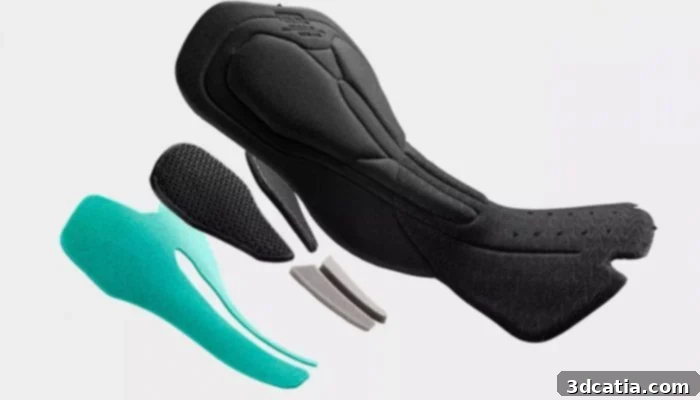
Photo Credits: Elastic Interface
The Shadow M1: A 3D Printed Electric Bike for Sustainable Urban Mobility
The Shadow M1, an innovative electric bike, is the flagship product of the Belgian startup Shadow Concept, founded on a compelling vision to create eco-friendly, custom 3D printed bicycles. Designed specifically for the demands of an urban environment, the M1 seamlessly integrates sustainability with personalized performance. As an electric bicycle, it comes equipped with a robust 36v 11.4ah (400wh) battery, providing users with an impressive average range of 70 km, extendable to 100 km with an upgrade. A cornerstone of the M1’s design is its 3D printed frame, meticulously adapted to each client’s unique biometric data. This bespoke approach ensures that every bike is fully customized to the rider’s specific size and proportions, resulting in unparalleled comfort and a truly ergonomic riding experience. To produce these custom frames, Shadow Concept utilizes large-format FFF (Fused Filament Fabrication) 3D printing technology, employing CO2-neutral and biodegradable biopolymers. This commitment to sustainable materials significantly reduces the environmental footprint of the bike. Beyond the frame, the M1 is also outfitted with high-performance hydraulic brakes for reliable stopping power and a saddle that is further adapted to the cyclist’s anatomy, enhancing overall comfort. The Shadow M1 embodies a harmonious balance between comfort and eco-responsibility, with all its components, including the battery, designed for easy reconditioning, promoting a circular economy model. Available from a starting price of €2,499.00 (approximately $2,712.62), the Shadow M1 offers a compelling vision for the future of urban mobility: personalized, efficient, and environmentally conscious.
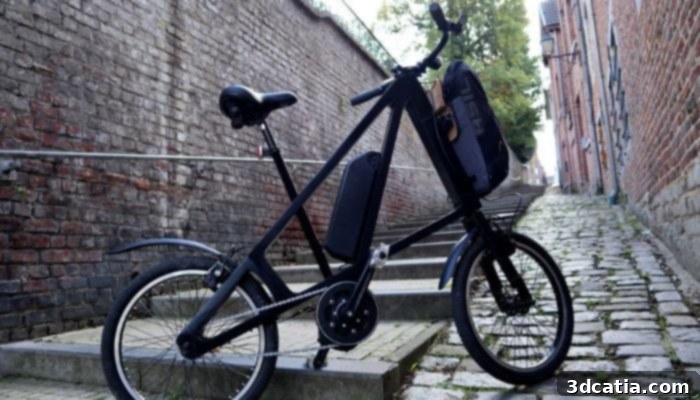
Photo Credits: Shadow
Posedla and its Joyseat: The Ultimate 3D Printed Bike Saddle for Custom Comfort
Based in the Czech Republic, Posedla has embarked on an ambitious mission: to design the most suitable bicycle saddle for every cyclist, regardless of their skill level or riding style. A key enabler for achieving this ambitious goal is additive manufacturing. Their flagship product, the Joyseat saddle, is a meticulously engineered component composed of several advanced elements. These include a lightweight yet robust carbon fiber shell, overlaid with a crucial 3D printed padding. This padding, positioned directly atop the shell, is printed from Thermoplastic Polyurethane (TPU), a material specifically chosen for its exceptional properties in guaranteeing both superior comfort and critical flexibility. The versatility of 3D printing allows Posedla to precisely control the internal lattice structure of the TPU padding, tailoring zones of varying density and support to match the individual pressure points and anatomical requirements of a rider. The saddle’s weight ranges between 170 and 210 grams, depending on the specific rider parameters, with a consistent length of 262 mm. To ensure unparalleled personalization, Posedla offers an intuitive online configurator on its website. This innovative tool empowers every cyclist to design their own bespoke saddle, customizing it according to their unique needs, desired performance characteristics, and personal preferences. This level of mass customization, made possible by 3D printing, translates into enhanced rider comfort, improved power transfer, and a significant reduction in discomfort or pain during long rides. Priced at 490 euros, the Joyseat delivers a truly personalized cycling experience directly to the rider’s home.
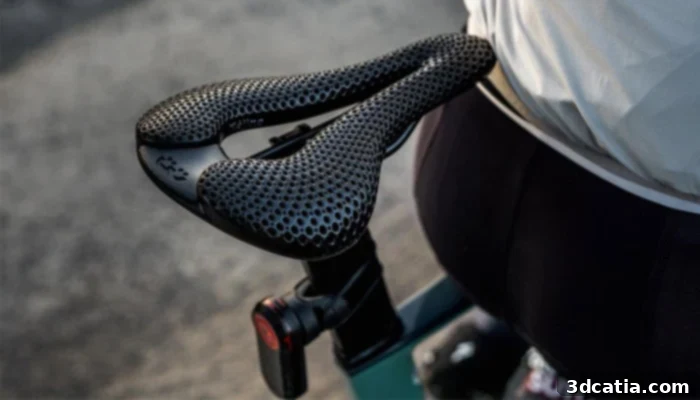
The saddle is fully customizable (photo credits: Posedla)
Custom Bike Grips From Personomic: Preventing Hand Pain with Ergonomic Precision
The young German startup Personomic has addressed a common yet often overlooked problem in cycling: hand pain and numbness. They have developed an innovative solution in the form of custom-made, 3D printed bicycle grips, specifically engineered to prevent and alleviate discomfort. Personomic utilizes Rapid Shape’s advanced DLP (Digital Light Processing) printers to produce grips that perfectly conform to the unique contours of each cyclist’s hand. This bespoke fit is critical because it allows for a significantly better distribution of pressure across the palm and fingers. By eliminating pressure spikes, the grips ensure that sensitive nerves in the hand are not pinched, thereby preventing the onset of pain and numbness during long hours of riding. The benefits extend beyond comfort, contributing to better control and a more enjoyable cycling experience. Furthermore, Personomic enhances personalization through its intuitive “Customize” tool, enabling riders to select their preferred color and texture for the grips, aligning aesthetics with ergonomic performance. The grips are also available with a silicone coating, which Personomic states makes them softer, more durable, and resistant to becoming sticky due to weather exposure or sunlight, ensuring consistent performance and comfort in various conditions. This application of 3D printing highlights its capability to solve specific ergonomic challenges through highly customized, precision-engineered products.
Specialized and its 3D Printed Bike Saddles: Mirroring Comfort and Performance
Specialized, a globally recognized leader in bicycle components and accessories, has forged a strategic partnership with Carbon, a pioneering digital manufacturing company, to develop groundbreaking 3D printed saddles. The result of this collaboration is the S-Works Power Saddle with Mirror Technology, meticulously engineered to elevate rider comfort, protection, and overall performance to new heights. The saddle features a complex elastomeric carbon-based mesh structure, a revolutionary design enabled solely by Carbon’s Digital Light Synthesis™ technology. This intricate lattice offers superior properties compared to traditional saddle materials like foam, providing unparalleled shock absorption, targeted support, and improved breathability. One of the persistent challenges with conventional saddles is achieving uniform support and density across their entire length, or conversely, creating zones with differing characteristics. With 3D printing, Specialized has overcome this limitation, creating multiple distinct zones within the saddle, each with precisely controlled variations in density and compliance. This allows for highly localized and adaptive support, ensuring the rider receives optimal cushioning and pressure relief exactly where it is most needed. The Mirror Technology not only enhances physiological comfort but also contributes to improved blood flow and reduced soft tissue pressure, leading to greater endurance and performance. This collaboration exemplifies how 3D printing is enabling brands like Specialized to push the boundaries of ergonomic design, delivering highly functional and performance-enhancing cycling components.
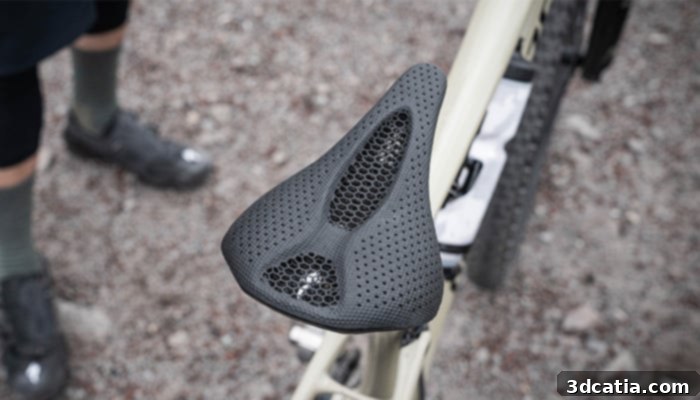
Photo Credits: Specialized
Openbike, the Bicycle From Arquimaña: DIY Cycling for Sustainability
Arquimaña, an innovative architecture firm, has introduced the Openbike project, a visionary initiative that empowers users to actively participate in the creation of their own bicycle. This open-source project provides a comprehensive 3D model of a bicycle that individuals can download, 3D print certain components, and then assemble themselves. The core objective of Openbike is profoundly simple yet impactful: to promote environmental preservation through sustainable practices and a circular economy model. To facilitate its creation, Arquimaña has made available on its website a detailed list of necessary tools and instructions. As its name explicitly suggests, the project operates on an open-source philosophy, meaning the 3D model is freely accessible for anyone to download, adapt, and build upon. While certain smaller components, such as the saddle or handles, can be efficiently produced using 3D printing technology, the bicycle’s main frame requires the robust precision of CNC machining. Regarding materials, PLA (Polylactic Acid) is highlighted as an essential choice for manufacturing various elements, favored for its biodegradability and ease of printing. The Openbike project demonstrates an evolving approach to product design and consumption, shifting towards user empowerment and environmental consciousness. Notably, the Openbike has evolved through four distinct versions, from Rev1 to Rev4, with each iteration introducing different characteristics and improvements, reflecting a continuous development cycle driven by community engagement and sustainable innovation.
The Smart Bike Helmet PYLO: Enhancing Cycling Safety with Advanced Technology
The German company nFrontier is pioneering a new era of cycling safety with the development of the PYLO, a smart bike helmet designed to make cycling a truly safer and thus more sustainable means of transport. The creation of this sophisticated helmet was made possible through the synergistic use of advanced software like Autodesk 3DSMax for design, and state-of-the-art 3D printers, specifically the F370 and J55 models from Stratasys, for prototyping and production. The PYLO helmet is distinguished by its array of innovative functions, setting a new benchmark for protective gear. It features an integrated, self-opening airbag system, strategically designed to deploy in the event of an accident, offering critical protection for the rider’s jaw, teeth, and eyes – areas often vulnerable in cycling incidents. Additionally, the helmet incorporates attached LED lights at both the front (head) and rear, along with an LED blinder, all of which can be activated with a simple double tap, significantly enhancing rider visibility in low-light conditions. However, what truly sets the PYLO apart is its integration of LIDAR (Light Detection and Ranging) technology. This advanced safety system actively warns the cyclist when vehicles are approaching from behind at high speeds, and crucially, it informs the rider of potential blind spot hazards. This proactive accident prevention capability provides optimal conditions for safer urban and rural cycling. The comfort aspect is also meticulously addressed through a 3D-printed inner lining and the use of lightweight materials, ensuring the helmet does not weigh down the head. The PYLO transforms the bicycle into a pleasant and exceptionally safe mode of transport, catering equally to competitive athletes and recreational cyclists who prioritize their well-being.
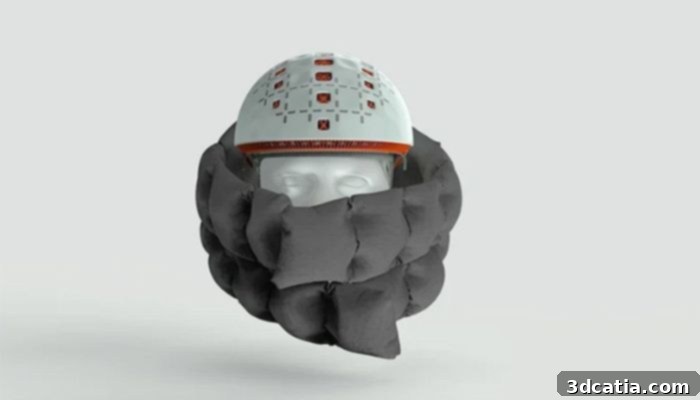
Photo Credits: Pylo
Mythos and Metal Additive Manufacturing: Elevating Bike Component Performance
The British brand Mythos has made significant strides in elevating the performance of bicycle components through the strategic application of metal additive manufacturing. In 2021, Mythos unveiled its inaugural 3D printed bicycle stem, a critical spare part that seamlessly connects the handlebars to the pivot of the bike’s fork. Named Elix, this component was ingeniously designed and produced using a metal 3D printer. Its additive manufacturing origin allowed for optimized internal structures and geometries, resulting in a stem that was reportedly 15% stiffer in torsion compared to traditionally manufactured counterparts. This enhanced stiffness translates directly into more precise steering and improved power transfer, offering a noticeable advantage to riders. Building on this success, a year later, Mythos expanded its range with a new, even more advanced 3D printed stem: the IXO. This iteration was designed and produced on an Electron Beam Melting (EBM) machine, a sophisticated metal 3D printing technology known for its ability to process reactive metals like titanium. The IXO was manufactured using aerospace-certified titanium, underscoring its high-performance credentials. Weighing a mere 147 grams, the IXO not only maintains a low weight but also boasts impressive structural rigidity, reportedly being 16% stiffer in torsion and 11% stiffer in flexion than previous designs. These advancements in stiffness and weight reduction are direct benefits of EBM’s capacity to create complex, optimized internal lattice structures, which are unattainable with conventional manufacturing methods. Mythos’s work with metal additive manufacturing demonstrates a clear commitment to pushing the boundaries of component design, offering cyclists lighter, stronger, and more responsive parts that genuinely enhance their riding experience.
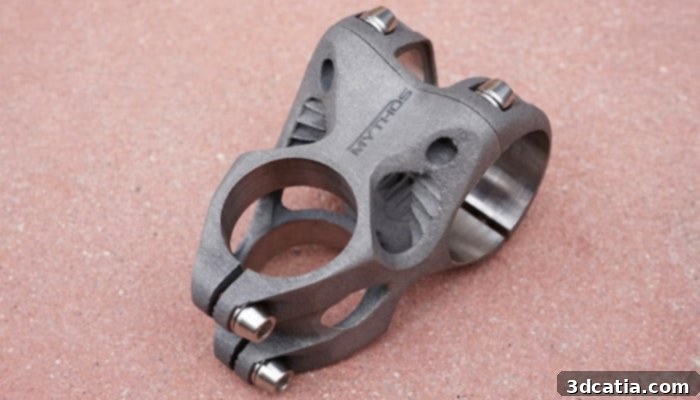
Photo Credits: Mythos
3D Printed Bike Helmets From KAV: Custom Fit and Enhanced Safety
It is an undeniable fact that a bicycle helmet is an essential piece of safety equipment for any cyclist. However, many conventional helmet choices on the market often fall short, being neither optimally safe nor sufficiently comfortable. KAV Sports has emerged with a revolutionary solution to this dilemma, leveraging the power of 3D printing. Building upon their prior expertise in creating highly effective 3D printed hockey helmets, the company has successfully developed a range of bike helmets that set new standards. These helmets are not only custom-fit to the individual rider’s head, ensuring unparalleled comfort and stability, but are also streamlined and remarkably light when compared to numerous other helmets available. The key to KAV’s superior safety lies in its innovative use of 3D printing to create an internal honeycomb structure within the helmet. This intricate, engineered design allows for the strategic addition of extra reinforcement in critical impact zones, distributing forces more effectively upon collision. As a result, KAV helmets reportedly exceed standard helmet certification requirements by an impressive 25-50%, offering an exceptional level of protection. Cyclists can already purchase KAV helmets, including their pioneering first version, the Portola, and the recently updated Portola: Kaze. While the investment, with even the most affordable version starting around $245, is higher than some conventional options, users have consistently lauded KAV helmets for their exceptional safety features, perfect fit, and tangible performance benefits. This underscores the value proposition of 3D printing in delivering personalized safety solutions that significantly outperform mass-produced alternatives.
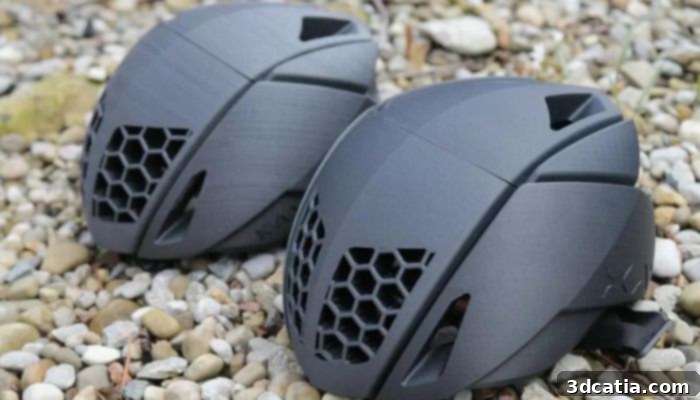
The Portola helmet from KAV (photo credits: KAV)
Rodeo by Revel Bikes: A Mountain Bike with Full Carbon Fiber Suspension from 3D Printing
“Rodeo” marks a significant milestone as the first full-suspension mountain bike frame manufactured using advanced 3D printing techniques by Revel Bikes. Based in Carbondale, Illinois, USA, Revel Bikes embarked on this ambitious project with the explicit aim of demonstrating the profound potential of additive manufacturing in the creation of high-performance carbon fiber bicycles. Jordan Haffener, the chief engineer at Revel Bikes, was instrumental in designing and conceptualizing the Rodeo downhill bike. To transform this vision into reality, Revel Bikes collaborated with 3D printing experts Arevo Inc., renowned for their continuous carbon fiber additive manufacturing technology. This partnership enabled the production of a carbon fiber-reinforced bike frame that pushes the boundaries of strength, stiffness, and weight optimization. Crucially, the Rodeo is not merely a showpiece concept; it is a fully functional prototype that has undergone rigorous testing, proving its capabilities on demanding terrains. This aspect is vital as it validates the practical application and reliability of additive manufacturing for such critical structural components in mountain biking. With this innovative project, Revel Bikes aims to not only showcase the current capabilities of additive manufacturing but also to inspire and accelerate further innovation in the design and production of mountain bikes, paving the way for lighter, stronger, and more dynamically performing cycles in the future.

Photo Credits: Revel Bikes
INDEXLAB, XGINEERING, & GIMAC’s “New01Bike”: The Sustainable 3D Printed Bicycle
The “New01bike” project stands as a beacon of innovation, aiming to create a fully functional bicycle solely from recycled materials, thereby championing sustainability and circular economy principles within the manufacturing industry. Its creators proudly present it as the first-ever 3D printed bicycle frame manufactured entirely from recycled polycarbonate material. This achievement represents a pivotal evolutionary link in the illustrious history of the bicycle, showcasing how modern technology can merge with environmental responsibility. The significance of the New01bike is further underscored by its inclusion in a curated selection of 70 influential cycles, spanning from the 1800s to 2022, displayed at the prestigious Design Museum in Munich. The frame, conceptualized and designed in a research lab by the Italian startup INDEXLAB, was produced using their proprietary polymer extrusion process. This particular technique ingeniously involves the shredding and melting of discarded polycarbonate items – such as CDs, safety glasses, and water bottles – to create raw material for the Robotic Additive Molding (RAM) process. The RAM technique, a collaborative effort led by XGINEERING and GIMAC in conjunction with INDEXLAB, is rapidly gaining traction, particularly in the automotive sector, due to its impressive speed, significant waste reduction capabilities, and inherent ability to customize unique parts with high precision. The resulting bicycle frame is not only visually striking with its transparent aesthetic but also boasts exceptional lightness, remarkable strength, and, most importantly, impeccable environmental sustainability. The New01bike demonstrates that high-performance products can indeed be manufactured while minimizing ecological impact and embracing a truly circular material flow.
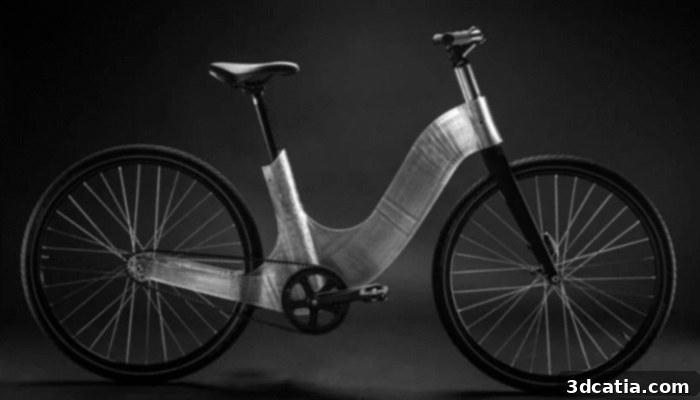
Photo credits: INDEXLAB
Canyon’s 3D Printed Bike Prototype: A Sustainable Leap Forward
Last year, Canyon, a leading German bicycle manufacturer, unveiled its highly anticipated first 3D printed bike prototype, signaling a strong commitment to sustainable innovation. This pioneering bicycle frame was manufactured in three distinct parts by the renowned 3D printing service provider Materialise, with each segment requiring approximately six hours to produce. Canyon’s primary objective in developing this prototype was to construct a more environmentally sustainable bike, a goal where 3D printing technology proved to be indispensable. The core of this sustainability lies in the specific powder bed fusion solution employed. This advanced additive manufacturing technique significantly reduces the amount of raw material needed, as unused powder can often be recycled and reused, minimizing waste. Furthermore, the ability of powder bed fusion to create complex, optimized lattice structures within the frame allowed Canyon to achieve a remarkable feat: the entire device weighs under 2 kg. This lightweight design, combined with the inherent strength of the lattice structure, ensures that high performance is not compromised despite the focus on sustainability. Another critical aspect of Canyon’s eco-conscious approach is the use of recycled aluminum for the production of certain components, further bolstering the bike’s environmental credentials. Canyon’s 3D printed prototype is a compelling demonstration of how additive manufacturing can simultaneously deliver high-performance cycling equipment while championing resource efficiency and ecological responsibility in bicycle manufacturing.
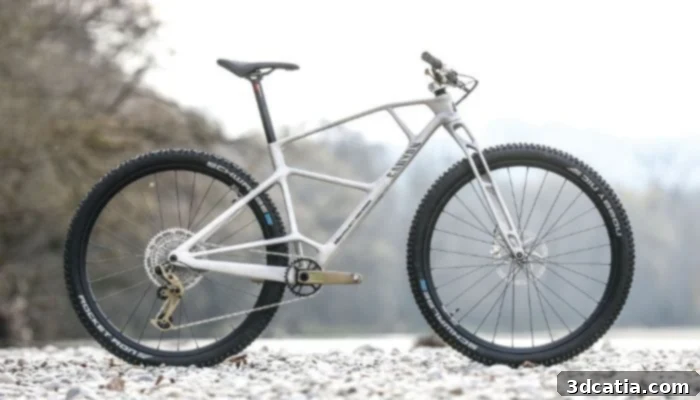
Photo Credits: BIKEPACKING
VAEN Develops 3D Printed Bike Saddles That Mimic Nature’s Efficiency
Designer Vasi Ganhi has brought a remarkable vision to life with the creation of the VAEN bicycle saddle, meticulously crafted using advanced 3D printing techniques. Driven by a profound desire to mimic the inherent efficiency and beauty of nature, Ganhi’s design incorporates organic shapes and structures, particularly evident in the saddle’s middle layer. This crucial layer features a grid-like foam, produced through a flexible material 3D printing process, which was typologically optimized. This optimization ultimately led to the adoption of a sophisticated lattice structure, designed to provide exceptional cushioning and ergonomic support. The flexible material employed in the 3D printing process allows the lattice to adapt dynamically to the rider’s anatomy and movements, absorbing shocks and distributing pressure more effectively than traditional foams. While this inner lattice layer is primarily responsible for its superior cushioning properties, the outer layers of the VAEN saddle are carefully engineered to ensure paramount comfort, optimal breathability, and robust resistance to wear and tear. A key advantage derived from the use of additive manufacturing in the VAEN saddle’s production is the ability to precisely customize the saddle to each individual cyclist. This bespoke fit is paramount for maximizing the user’s performance, as it minimizes discomfort, improves blood flow, and allows for more efficient power transfer to the pedals. Further adding to its appeal, the VAEN saddle is available in a vibrant array of colors, including black, yellow, glass, blue, and orange, offering both performance and aesthetic personalization to discerning cyclists.
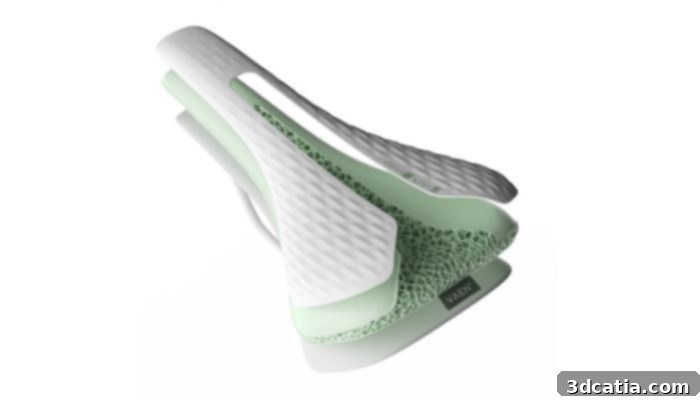
Photo Credits: VAEN
The innovations highlighted above offer a compelling glimpse into how 3D printing is not just a manufacturing method, but a powerful catalyst for transformation within the cycling industry. From ultra-lightweight, aerodynamically optimized frames to personalized ergonomic components that drastically improve comfort and prevent injury, additive manufacturing is redefining what’s possible. It enables unparalleled customization, allows for the creation of complex geometries previously unattainable, and facilitates the use of advanced, often recycled, materials, all contributing to a future of cycling that is faster, safer, more comfortable, and crucially, more sustainable. As 3D printing technologies continue to evolve, we can expect even more groundbreaking applications to emerge, further integrating this remarkable technology into every facet of bicycle design and production, ultimately enhancing the experience for every type of rider. What do you think about this ranking of 3D printed bikes and components? Let us know in a comment down below or on our Facebook and Twitter pages! Don’t forget to sign up for our free weekly Newsletter, with all the latest news in 3D printing delivered straight to your inbox!