
Mastering FDM 3D Printing: A Comprehensive Guide to Fused Deposition Modeling Technology
Fused Deposition Modeling (FDM), also widely recognized as Fused Filament Fabrication (FFF), stands as the most popular and accessible 3D printing technology in the additive manufacturing landscape. Its widespread adoption spans from hobbyist workshops to industrial production lines, thanks to its relative simplicity, versatility, and cost-effectiveness. This in-depth guide will explore the fascinating origins of this groundbreaking technology, meticulously detail its operational mechanisms, delve into the vast array of compatible materials, and provide insights into achieving optimal print quality, troubleshooting common issues, and navigating the dynamic FDM printer market.
The FDM 3D printing process was ingeniously conceived and patented by Scott Crump in 1989. Following this innovation, Crump co-founded Stratasys (USA), which officially introduced FDM technology to the commercial market in 1990. For many years, due to Stratasys’ patent protection, only the company and its licensees could legally utilize the “FDM” acronym. However, the expiration of these core patents in the early 2000s catalyzed a revolution. In 2005, the burgeoning RepRap movement, spearheaded by Adrian Bowyer, introduced the alternative acronym “FFF” (Fused Filament Fabrication). This term specifically highlighted the method’s reliance on filament as the primary feedstock, distinguishing it from Stratasys’ earlier industrial FDM machines which sometimes utilized granules. Today, both FDM and FFF refer to the exact same fundamental additive manufacturing process, with no technical distinction between them, allowing for interchangeable use in most contexts. This democratization of the technology led to an explosion of innovation and made 3D printing accessible to a global audience.
Understanding the Core Principles of FDM 3D Printing
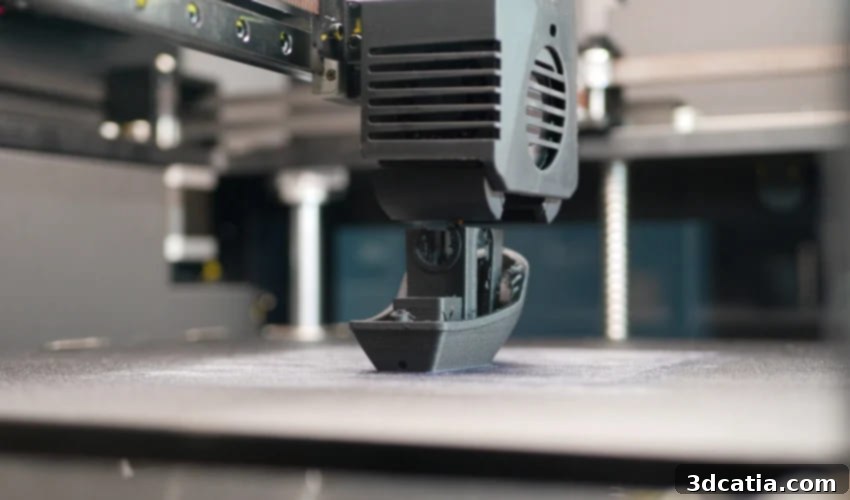
FDM 3D printing operates on a straightforward principle: building objects layer by layer by extruding molten thermoplastic material. This process, while seemingly simple, relies on the synchronized operation of several key components:
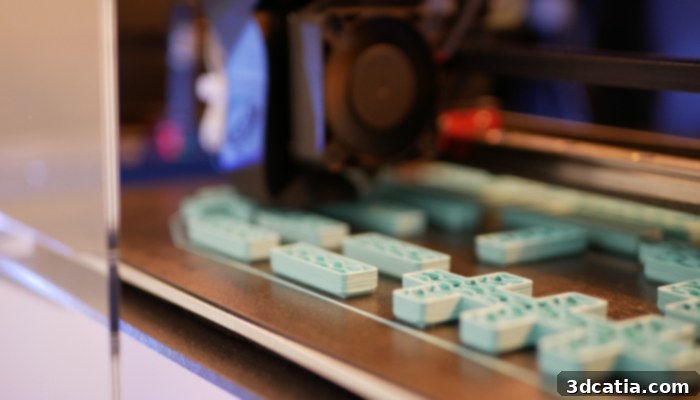
- Printing Plate (Build Plate): This is the crucial surface upon which the 3D object is formed. The quality of the first layer adhesion to the print plate is paramount for a successful print. Modern FDM printers often feature heated beds to prevent warping, especially with materials like ABS, and utilize various surfaces such as glass, PEI (Polyetherimide), or flexible magnetic sheets to enhance adhesion and ease of part removal.
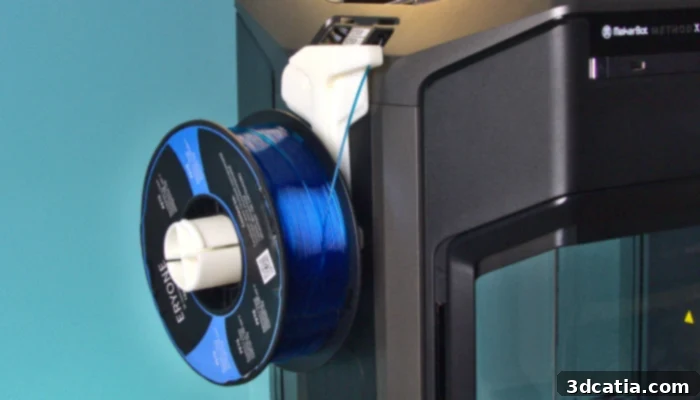
- Filament Spool: The primary raw material for FDM printing typically comes wound onto a spool. This thermoplastic filament, available in various types and colors, is fed into the printer. Proper storage of filament is critical to prevent moisture absorption, which can degrade print quality and lead to issues like bubbling and stringing.
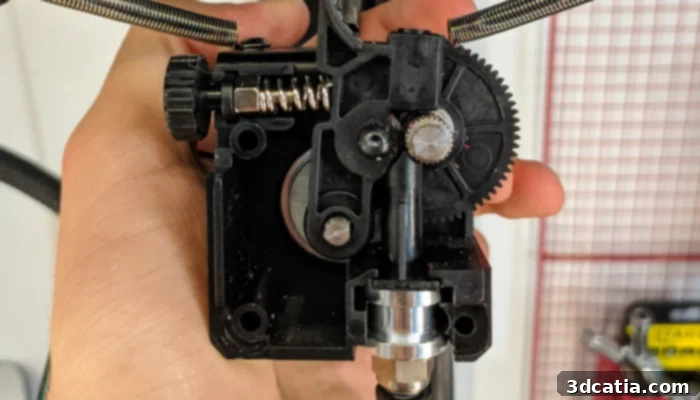
- Extruder: Comprising a stepper motor and a drive mechanism (often geared), the extruder is responsible for accurately feeding the filament through the system towards the hotend. Its consistent and precise control over material flow is vital for maintaining print accuracy. There are two main configurations for extruders:
- Bowden Extrusion: In this setup, the extruder motor is located away from the print head, pushing the filament through a PTFE (Teflon) tube to the hotend. This configuration results in a lighter print head, allowing for faster print speeds and reduced inertia. However, the distance between the extruder and hotend can make printing with flexible filaments more challenging due to compression within the tube.
- Direct Drive Extrusion: Here, the extruder motor is mounted directly above or very close to the hotend. This minimizes the path the filament travels, offering superior control over material extrusion, especially for soft and flexible filaments. It also reduces issues like stringing and provides better retraction performance, though it adds weight to the print head, potentially limiting maximum print speeds.
- Motion System: This sophisticated system dictates the precise movement of the print head and/or the printing plate along the X, Y, and Z axes. This allows for the accurate deposition of material to create a three-dimensional object. Common motion system architectures include Cartesian (e.g., Prusa i3 style), Delta, and CoreXY, each offering distinct advantages in terms of speed, accuracy, and build volume.
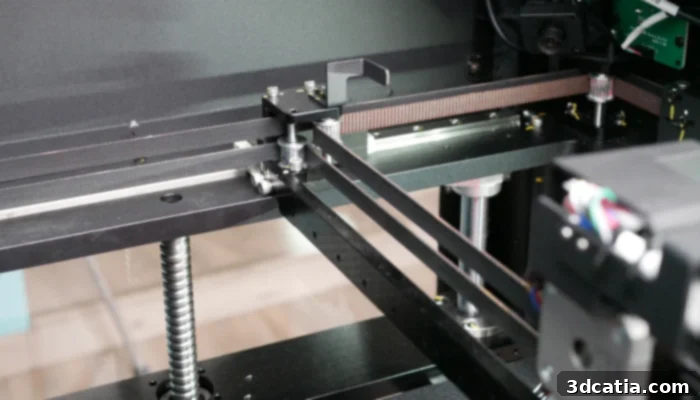
- Print Head (Hotend): The print head is arguably the heart of the FDM printer. It houses the hotend, which consists of a heating block and a nozzle. The filament is pushed into the hotend, where it undergoes resistance heating, reaching its specific melting point and transitioning into a molten state. The molten plastic is then extruded through a narrow nozzle, typically made of brass, steel, or hardened steel (for abrasive materials).
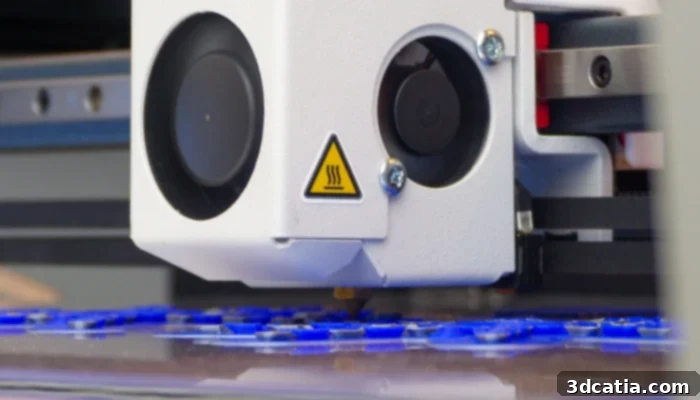
The FDM printing cycle begins with a digital 3D model, which is then ‘sliced’ into hundreds or thousands of thin horizontal layers by specialized software (slicer). This software generates G-code instructions that the printer understands. The printer then heats the hotend and, if applicable, the build plate to the required temperatures for the selected material. The filament is fed by the extruder into the hotend, where it melts and is extruded through the nozzle. The print head moves precisely across the build plate, depositing the molten plastic layer by layer according to the G-code instructions. Each deposited layer quickly solidifies as it cools, often aided by a part cooling fan. This process repeats, gradually building up the object from the bottom, layer by meticulously placed layer, until the final three-dimensional part is complete.
While filament spools are the most common material form, some industrial FDM systems and specialized pellet extruders can utilize plastic pellets. These small plastic granules are loaded into a hopper and then melted and extruded in much the same way as filament. Regardless of the initial form of the material, the fundamental layer-by-layer deposition process remains consistent.
Diverse Materials for FDM 3D Printing
One of the most significant advantages of FDM printing is its compatibility with an incredibly diverse range of thermoplastic materials. The long-standing plastic injection molding industry has developed a vast array of thermoplastics, and many of these have been successfully adapted for FDM printing. This versatility allows users to select materials based on desired mechanical properties, aesthetics, and specific application requirements.
Among the most widely favored FDM materials are PLA (Polylactic Acid), PETG (Polyethylene Terephthalate Glycol), and ABS (Acrylonitrile Butadiene Styrene). Each offers a unique set of characteristics:
- PLA: Known for its ease of printing, low warping, and biodegradability. It’s excellent for beginners and producing prototypes or decorative items.
- ABS: Offers higher strength, heat resistance, and ductility compared to PLA, making it suitable for functional parts. However, it requires a heated bed and often an enclosure to minimize warping and odor.
- PETG: Combines the ease of printing of PLA with some of the durability and heat resistance of ABS, often considered a good all-around filament. It’s known for its strong layer adhesion and translucency.
Beyond these standard options, the material landscape for FDM 3D printing is vast and continually expanding. It encompasses more specialized choices such as:
- Flexible Materials (e.g., TPU – Thermoplastic Polyurethane): These materials produce elastic, rubber-like parts ideal for gaskets, seals, and wearable items.
- High-Performance Materials (e.g., Nylon, PC – Polycarbonate, PEEK – Polyether Ether Ketone, PEI – Polyetherimide): Engineered for demanding applications requiring superior strength, heat resistance, chemical resistance, and rigidity. Printing these often requires advanced printers with high-temperature hotends and heated build chambers.
- Hybrid Materials and Filled Materials: These include filaments infused with other substances to impart unique properties:
- Composites: Carbon fiber or glass fiber reinforced filaments offer significantly enhanced strength and stiffness, making them ideal for structural components.
- Metal-filled: Filaments containing powdered metal particles can produce parts with metallic aesthetics and some conductive properties, which can then be polished.
- Wood-filled: Filaments blended with wood fibers result in parts that look, feel, and even smell like wood, and can be sanded or stained.
- Ceramic-filled: For producing parts with ceramic-like properties, often requiring post-firing processes.
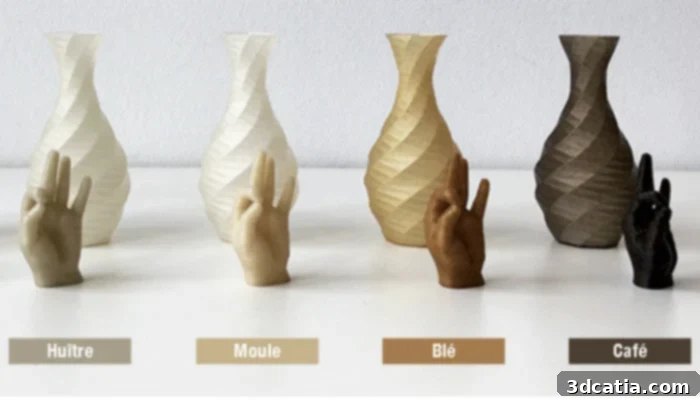
Francofil markets filaments made from co-products containing recycled waste such as oysters, shells, cereals, and coffee.
Beyond engineered plastics, the innovation in FDM materials extends to eco-friendly and novelty options. It’s even possible to print with filaments derived from recycled waste products, such as plastics infused with waste from beer brewing or coffee grounds, showcasing the potential for sustainable manufacturing. Filament manufacturers like Francofil are leading the way by incorporating co-products such as oyster shells and cereals into their materials, offering environmentally conscious options without compromising printability.
The availability of FDM materials is extensive, with countless companies manufacturing filaments. These are generally offered in two standardized diameters: 1.75mm and 2.85mm (often referred to as 3.00mm). These consistent sizes ensure broad compatibility across nearly all FDM printers, simplifying material selection for users and fostering a competitive and innovative market.
Achieving High-Quality FDM Printing Results
While FDM is known for its accessibility, producing high-quality prints consistently requires attention to various printing parameters and understanding how they interact. The final print quality is frequently influenced by several key factors:
- Nozzle Diameter: This choice significantly impacts detail resolution and print speed. A smaller nozzle (e.g., 0.2mm) allows for finer details and thinner lines, resulting in smoother surfaces but increasing print time. A larger nozzle (e.g., 0.6mm or 0.8mm) enables faster printing and stronger parts due to thicker layer lines and better inter-layer adhesion, though with a reduction in fine detail. The most commonly used nozzle size, offering a good balance of speed and detail, is 0.4mm.
- Layer Height: Directly related to nozzle diameter, layer height dictates the thickness of each deposited plastic layer. Thinner layers (e.g., 0.1mm) result in a smoother surface finish and minimize the “stair-stepping” effect, capturing intricate details more accurately. Thicker layers (e.g., 0.2mm or 0.3mm) reduce print time significantly but make individual layers more visible, potentially compromising aesthetic quality. With a 0.4mm nozzle, layer heights typically range between 0.1mm and 0.3mm.
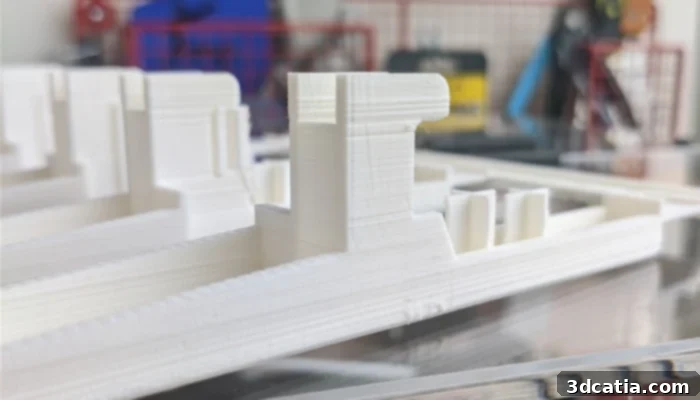
Individual layers of material are visible in some prints, especially with thicker layer heights.
Beyond nozzle and layer height, several other print settings are crucial:
- Print Temperature (Nozzle & Bed): Correct temperatures are vital for proper material flow and layer adhesion. Too low, and the material won’t extrude smoothly; too high, and it can ooze or burn. The heated bed temperature prevents warping and ensures the first layer sticks firmly.
- Print Speed: Faster speeds reduce print time but can lead to a decrease in detail, layer adhesion issues, or increased vibrations. Slower speeds generally yield higher quality, especially for intricate parts.
- Infill Density and Pattern: Infill refers to the internal structure of a print. Lower infill (e.g., 10-20%) saves material and time, while higher infill (e.g., 80-100%) increases strength and weight. Different patterns (e.g., rectilinear, grid, honeycomb, gyroid) offer varying trade-offs between strength, flexibility, and material usage.
- Retraction Settings: To prevent stringing (fine wisps of plastic between printed features) and oozing, the printer retracts the filament slightly when the print head moves between non-printing areas. Proper retraction distance and speed are essential for clean prints.
- Part Cooling Fan: A fan directs cool air onto the freshly extruded plastic, accelerating solidification. This is critical for printing overhangs and bridges and preventing heat creep, but too much cooling can reduce layer adhesion for some materials.
Common FDM Printing Challenges and Solutions
Despite its user-friendly nature, FDM 3D printing can sometimes present challenges. Addressing these common issues is key to consistent success. You can learn more about general 3D printing errors HERE. Many problems arise because the molten material is subject to gravity, especially when creating complex geometries.
- Overhangs and Bridging: When printing features that extend horizontally without support from below (overhangs) or span a gap (bridges), the molten plastic can sag. Proper part cooling and controlled print speeds can mitigate this, but often, additional structures are required.
- Support Structures: For complex geometries with steep overhangs or disconnected sections, support structures are indispensable. These are temporary, sacrificial pillars printed beneath the overhanging parts of a model to provide stability during the printing process. They are removed after the print is complete. Common types include linear supports (like scaffolding) and tree supports (branching structures that use less material and are easier to remove).
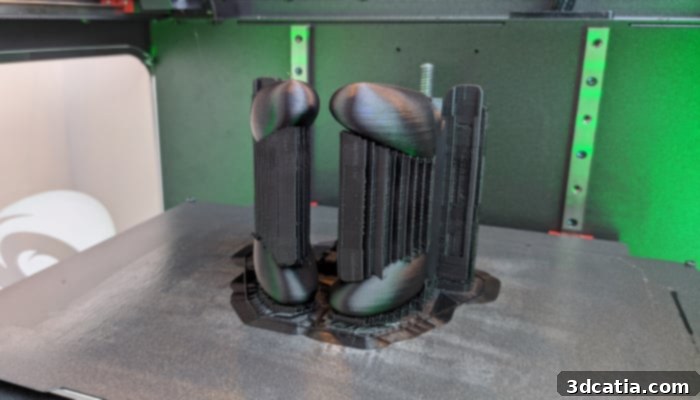
Some parts printed using Fused Deposition Modeling require support structures for successful completion.
Other frequent FDM printing issues include:
- Warping: The corners or edges of a print lift and detach from the build plate, often due to uneven cooling or insufficient bed adhesion, particularly with materials like ABS.
- Layer Shifting: Layers appear misaligned, often caused by loose belts, motor issues, or physical obstructions impacting the print head during printing.
- Under-extrusion/Over-extrusion: Too little or too much material is extruded, leading to gaps in layers or excessive material deposits, respectively. This can be due to incorrect flow rates, clogged nozzles, or incorrect filament diameter settings.
- Clogging: The nozzle becomes blocked, preventing filament from extruding. This can be caused by heat creep, debris in the filament, or incorrect printing temperatures.
The Dynamic Market for FDM 3D Printers
While all FDM printers operate on the same core principle of layer-by-layer material deposition, the market offers an astounding variety of machines with vastly different features, capabilities, and price points. These variations are designed to enhance the printing experience, enable the production of larger or more complex parts, and facilitate the use of advanced engineering-grade materials.
The diversity in the FDM printer market is immense. On one end of the spectrum, you’ll find highly affordable entry-level desktop machines, often costing just a few hundred dollars. Brands like Creality and Anycubic are renowned for their budget-friendly yet capable printers, making 3D printing accessible to hobbyists, students, and small businesses. These typically feature open-source designs and a large community for support.
Moving up the scale, there are professional and industrial-grade FDM printers that can range from several thousands to hundreds of thousands of dollars. These machines, offered by established names such as Stratasys, 3D Gence, and 3ntr, boast robust construction, larger build volumes, enclosed and heated print chambers, advanced material compatibility (including high-performance polymers), higher precision, and often proprietary software and support services. They are designed for continuous, reliable operation in demanding industrial environments.
Innovations in FDM technology have led to specialized printer types:
- Large-Format Printers: Designed for printing exceptionally large objects, often used in architecture, automotive prototyping, or artistic installations.
- IDEX (Independent Dual Extrusion) Printers: Feature two print heads that can operate independently. This allows for printing two different materials simultaneously (e.g., model material and soluble support material), printing in two colors, or even doubling productivity by printing two identical objects at once.
- High-Performance Printers: Equipped with advanced thermal management systems (like heated build chambers) and specialized hotends to handle engineering-grade thermoplastics that require very high temperatures and precise environmental control.
With such an abundance of FDM 3D printers and materials available, the applications are virtually limitless. From creating small, intricate prototypes and custom tools to fabricating functional end-use parts, decorative items, medical models, educational aids, and even components for aerospace (like rockets), FDM technology empowers creators and engineers across diverse industries. Its affordability and user-friendly nature make it particularly invaluable for rapid prototyping, significantly streamlining and accelerating the iterative design and development process for new products.
FDM 3D printing continues to evolve, pushing the boundaries of what’s possible in additive manufacturing. Its ongoing advancements promise even greater accessibility, material versatility, and application breadth in the years to come, cementing its status as a cornerstone technology in the future of manufacturing.
For more comprehensive information about various 3D printing technologies, click HERE.
What do you think of our FDM guide? Let us know in a comment below or on ourLinkedIn,Facebook, andTwitter pages! Don’t forget to sign up for our free weeklyNewsletter here, the latest 3D printing news straight to your inbox! You can also find all our videos on ourYouTube channel.