
Atang Tshikare’s ‘Hui! Gaeb’: A 3D Printed Masterpiece Forged in Record Time
The world of art and design is continuously being revolutionized by groundbreaking technologies, and 3D printing stands at the forefront of this transformation. From intricate architectural models to bespoke fashion accessories, additive manufacturing liberates creativity, allowing artists and designers to bring previously impossible ideas to life. The ability to manifest complex digital designs into physical objects with unparalleled precision and speed has opened new frontiers for artistic expression, challenging conventional limitations of form, material, and production time. This innovative spirit is vividly exemplified by the recent triumph of acclaimed South African artist Atang Tshikare, who leveraged the power of 3D printing to create a monumental sculpture under an astonishingly tight deadline. His latest work is not merely an artistic statement but a testament to how cutting-edge technology can amplify human imagination and execution.
Atang Tshikare: A Visionary Artist Embracing New Frontiers
Atang Tshikare, a prominent figure in the contemporary art scene, hails from Bloemfontein, one of South Africa’s vibrant capital cities. He has cultivated a distinctive artistic voice that blends traditional influences with a modern, speculative aesthetic. Over two decades, Tshikare has diversified his artistic practice, mastering various disciplines ranging from the raw energy of graffiti to the nuanced depth of painting. His unique style and compelling narratives have garnered international recognition, leading to high-profile collaborations with global brands such as Adidas, Puma, L’Oréal, and Dior. His work has graced prestigious institutions, including an exhibition at the Metropolitan Museum of Art in New York just two years prior, cementing his reputation as a leading contemporary artist.
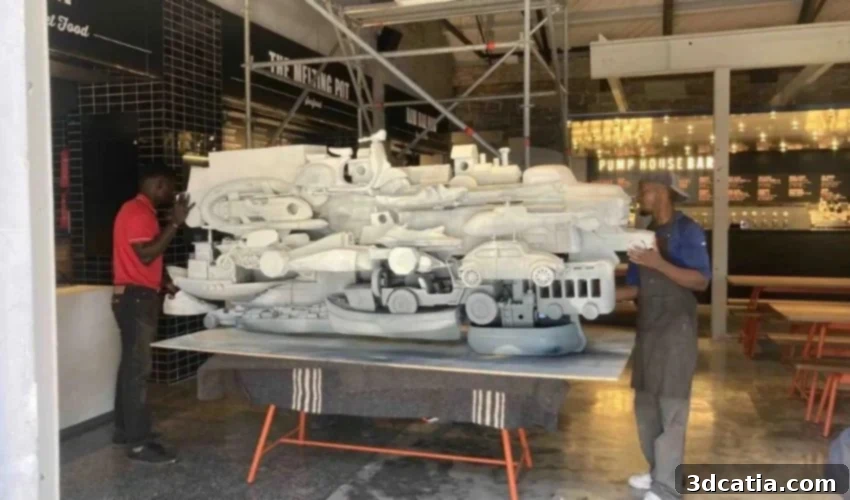
Despite his extensive experience and celebrated career, Tshikare’s journey has always been marked by a willingness to explore and innovate. It was only recently, twenty years after embarking on his professional artistic path, that he embraced 3D printing for the first time. This significant leap into additive manufacturing was driven by an ambitious commission that demanded both artistic brilliance and unprecedented production speed. The result is his stunning 3-meter long sculpture, aptly named ‘Hui! Gaeb’, a phrase rich in meaning, translating to “where the clouds meet.” This project marks a pivotal moment in his career, demonstrating how his deep artistic intuition can harmoniously converge with advanced technological capabilities to push the boundaries of what is achievable in art.
The Genesis of ‘Hui! Gaeb’: Where Clouds Meet Innovation
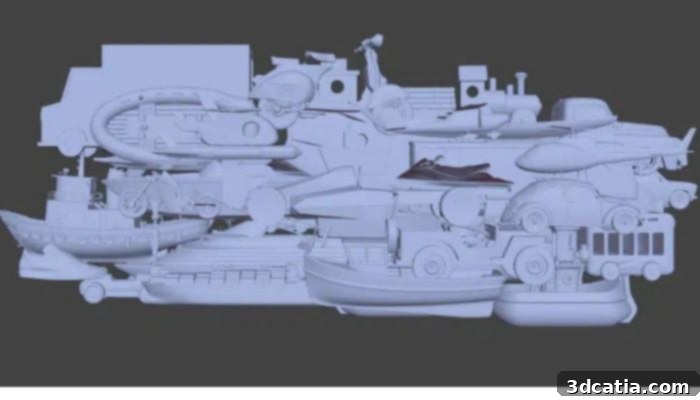
The inspiration behind ‘Hui! Gaeb’ is deeply rooted in the captivating natural landscape and urban character of Cape Town, the very city where Tshikare is based. The sculpture serves as a vibrant homage to the city’s unique identity, a place where majestic mountains meet the vast expanse of the ocean. Tshikare ingeniously captured this essence by interpreting Cape Town’s spirit through the metaphor of various means of transport. A striking detail that immediately reflects this inspiration is the prevalence of boat-like forms within the sculpture’s intricate design. This choice is a direct nod to Cape Town’s profound connection to the sea, being a peninsula surrounded by water, where maritime activities and the ocean environment play a central role in its culture and livelihood.
The commission for ‘Hui! Gaeb’ presented a formidable challenge that went beyond artistic conceptualization. It demanded not only meticulous and complex design work but also an extraordinary feat of rapid production. The deadline for delivering this monumental 3-meter long sculpture was an almost impossibly short 17 days. This severe time constraint meant that traditional sculpting or fabrication methods would have been entirely impractical, if not outright impossible. It was this intense pressure that compelled Atang Tshikare to explore and ultimately rely on 3D printing, recognizing its unique capabilities to meet such demanding specifications. The technology promised the precision, customization, and speed necessary to translate his ambitious vision into a tangible artwork within the designated timeframe.
Rapid Prototyping Meets Artistic Ambition: A Race Against Time
To tackle this ambitious project, Atang Tshikare’s design studio, Zabalazaa Design, collaborated with two specialized partners: Form Farm and Crayon Artel. This collective brought together diverse expertise in design, digital fabrication, and artistic production. Initially, their available resources for additive manufacturing were limited to one FDM (Fused Deposition Modeling) printer and two resin printers. A quick calculation against the daunting 17-day deadline revealed a stark reality: these limited machines would be utterly insufficient to produce a 3-meter sculpture comprising hundreds of individual parts. The sheer volume and complexity of the required components rendered the initial setup inadequate, threatening to derail the entire project before it could truly begin.
Recognizing the urgency, Neo Waterson, co-founder of Form Farm, articulated the critical decision: “With almost the full order amount, and then some, we expanded our capacity to 20 Creality desktop 3D printers within a few days.” This rapid and decisive investment underscores the incredible adaptability and scalability that modern 3D printing technology offers. The team swiftly acquired 16 new Creality Ender-3 V2 3D printers, known for their reliability and cost-effectiveness, alongside a substantial stock of 20 kilograms of filament. This exponential increase in printing capacity transformed the seemingly impossible task into an achievable objective, demonstrating a remarkable example of agile manufacturing in the context of bespoke art production.
From Digital Design to Tangible Masterpiece: The Manufacturing Process
With the expanded arsenal of 3D printers, the collaborative team launched into an intensive manufacturing phase. The ‘Hui! Gaeb’ sculpture demanded the production of over 1,000 individual pieces. Each component, meticulously designed digitally, was then sliced and sent to the farm of Creality printers for simultaneous production. This distributed manufacturing approach allowed for continuous operation, maximizing output around the clock. Once printed, the true artistry of assembly began. Every single one of these thousand-plus pieces had to be carefully glued and assembled by hand by the dedicated team. This laborious and intricate process required precision, patience, and unwavering commitment, but it was essential to bring Tshikare’s complex vision to fruition within the compressed timeline. The synergy between high-speed digital fabrication and meticulous manual craftsmanship was paramount to the project’s success.
An intriguing technical detail that highlights the thoughtful engineering behind ‘Hui! Gaeb’ is the minimal infill used for the printed parts, specifically set at only 1%. In FDM 3D printing, infill refers to the internal structure within a printed object, affecting its strength and weight. The decision to use such a low infill percentage was not arbitrary but a critical design consideration. The sculpture was engineered to be suspended at a considerable height of 4 meters within the Time Out Market. Had the pieces been printed with a higher infill, the overall weight of the 3-meter structure would have significantly increased, potentially exceeding the load-bearing capacity of the support system. By optimizing the infill, the team ensured the sculpture’s structural integrity while keeping it lightweight enough for safe and stable installation. This careful balance between artistic form, structural requirements, and material properties exemplifies the sophisticated application of additive manufacturing principles in contemporary art.
The Enduring Legacy of Additive Manufacturing in Art
The successful completion of Atang Tshikare’s ‘Hui! Gaeb’ sculpture within such an incredibly short timeframe is a profound testament to the transformative power of additive manufacturing. It stands as a beacon for artists and designers worldwide, demonstrating that the creative boundaries are only limited by imagination, not necessarily by the constraints of traditional production methods. This project proves that 3D printing is not just a tool for rapid prototyping in industry but a legitimate and powerful medium for high-art creation, enabling intricate designs and large-scale installations that would otherwise be impossible under tight deadlines.
While it remains to be seen whether Atang Tshikare will attempt to recreate such an incredible feat of rapid, large-scale 3D printing in the future, the impact of this project is undeniable. It showcases how collaboration between visionary artists and technical experts, armed with accessible 3D printing technology, can achieve extraordinary results. This success story encourages a broader adoption of additive manufacturing in creative fields, fostering innovation and pushing the very definition of what art can be. As technology continues to evolve, we eagerly anticipate the next wave of incredible masterpieces that will emerge from the dynamic intersection of art and 3D printing, continuing to amaze and inspire.
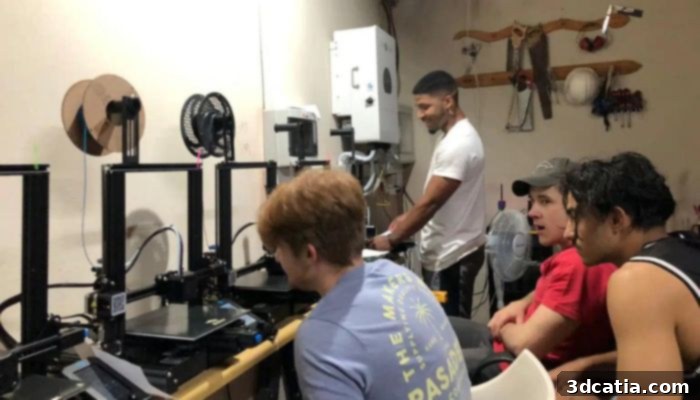
Atang Tshikare, and the others collaborating on this project, working to 3D print the sculpture
What are your thoughts on this groundbreaking 3D printed sculpture by Atang Tshikare and its rapid production? We’d love to hear from you! Share your insights in a comment below or connect with us on our LinkedIn, Facebook, and Twitter pages! Don’t miss out on the latest advancements and news in the additive manufacturing industry; sign up for our free weekly newsletter here, delivering the most relevant 3D printing news straight to your inbox! You can also find all our engaging videos and exclusive content on our YouTube channel.
*All Photo Credits: Atang Tshikare