
Innovations in Additive Manufacturing: Revolutionizing Production from Earth to Space
The landscape of manufacturing is undergoing an extraordinary transformation, driven by relentless advancements in new production technologies. Gone are the days when traditional methods were the sole means of creation; today, innovations like 3D printing, also known as additive manufacturing (AM), are reimagining how we produce everything from personal transport to vital industrial tools. This article delves into some of the most exciting developments shaping the future of manufacturing, exploring how these groundbreaking technologies are fostering efficiency, sustainability, and unprecedented possibilities. From the dynamic changes in scooter production to the pioneering efforts to build structures on the Moon, we will uncover how 3D printing is not just a tool, but a catalyst for progress across diverse industries. We will also introduce you to innovative material launches, advanced cloud-based software solutions, and cost-saving production techniques that are setting new benchmarks in the AM industry. Join us as we explore this fascinating evolution and the incredible potential that lies ahead.
Transforming Scooter Manufacturing with Additive Technologies
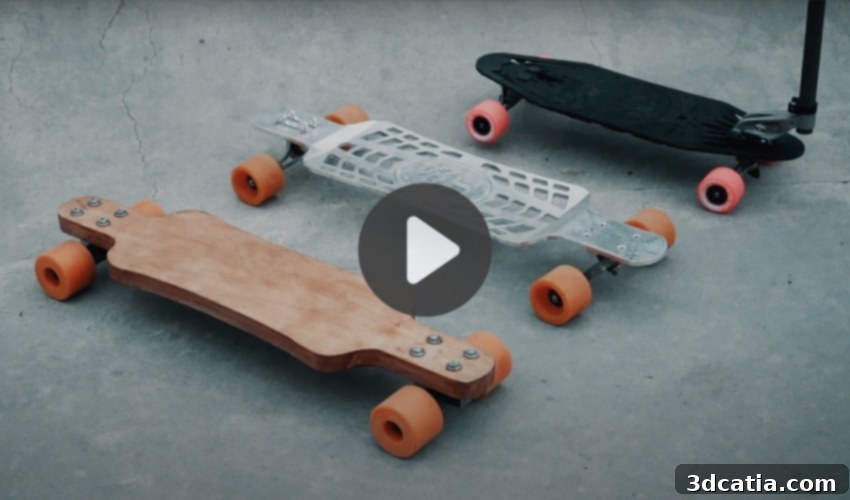
The manufacturing process for everyday items like scooters and skates is far from static; it’s an arena where cutting-edge technologies are making significant inroads. A prime example of this evolution is highlighted by the Young Manufacturing Leaders (YML) project, initiated by the IMH of Elgoibar. This forward-thinking project aims to educate and inspire the next generation about the vast capabilities of modern production technologies, particularly how additive manufacturing is redefining traditional assembly lines.
In the context of scooter production, 3D printing serves as an incredibly versatile tool, offering myriad benefits that traditional manufacturing simply cannot match. For instance, the ability to rapidly prototype new designs significantly shortens development cycles, allowing engineers to test and iterate quickly. Customization becomes a reality, enabling the creation of bespoke components tailored to specific ergonomic requirements or aesthetic preferences. Furthermore, additive manufacturing excels at producing complex geometries and lightweight structures, which can lead to more efficient and durable scooter designs. Imagine custom-fit handlebars, lightweight chassis components, or unique decorative elements, all produced on-demand.
The video associated with this topic beautifully illustrates how IMH leverages advanced equipment, such as Ultimaker 3D printers, to fabricate various parts for skates and scooters. These devices allow for the precise creation of functional prototypes and even end-use parts, demonstrating the practical application of AM in a real-world manufacturing scenario. This shift not only optimizes production methods but also fosters an environment of innovation, encouraging young leaders to explore and exploit the full potential of these transformative technologies. The implications extend beyond just scooters, showcasing a paradigm shift in how consumer goods can be designed, produced, and customized efficiently and sustainably.
Introducing Recreus’s Revolutionary Purifier Filament Range
In the quest for more sustainable and environmentally conscious manufacturing, material innovation plays a pivotal role. Spanish company Recreus, a recognized leader in the development of 3D printing filaments, has recently made a significant stride with the launch of its innovative Purifier range. This new line features two distinct filaments: Filaflex Purifier and PLA Purifier, each designed to push the boundaries of eco-friendly 3D printing.
The core innovation behind these materials lies in their advanced gas mineralization technology. This groundbreaking feature allows the filaments, once 3D printed, to actively interact with their environment by adhering to gases on the surface of the printed parts. Through sophisticated catalysis and photocatalysis processes, these captured gases are transformed into environmentally friendly mineral particles. This means that objects printed with Recreus Purifier filaments not only fulfill their intended function but also actively contribute to air purification, turning passive objects into active environmental contributors.
The introduction of Filaflex Purifier, based on Recreus’s renowned flexible filament, and PLA Purifier, utilizing the widely popular and biodegradable Polylactic Acid, caters to a broad spectrum of applications. The Filaflex variant offers flexibility and durability, making it suitable for functional prototypes, wearable items, or parts requiring elasticity. Meanwhile, the PLA Purifier provides the rigidity and ease of use characteristic of standard PLA, ideal for general prototyping, educational models, and decorative objects. By integrating gas mineralization into these versatile materials, Recreus is not just offering new filaments; it’s providing a tangible solution for reducing environmental impact within the additive manufacturing workflow. This initiative underscores Recreus’s commitment to continuous innovation, focusing on materials that not only perform exceptionally but also foster a healthier planet.
BCN3D Unveils Advanced Cloud-Based Software Platform
The efficiency and scalability of 3D printing operations, particularly in professional and industrial settings, hinge significantly on robust management systems. Recognizing this need, the Spanish 3D printer manufacturer BCN3D has launched its sophisticated cloud-based control software, designed to revolutionize the way users interact with and manage their 3D printing fleets. This innovative platform offers real-time, remote connectivity and control, empowering businesses to streamline their additive manufacturing workflows like never before.
At the heart of this new solution is a powerful, intuitive control panel that provides users with a comprehensive overview of multiple 3D printers simultaneously. This centralized dashboard allows for real-time monitoring of print jobs, machine status, and material levels, ensuring operators are constantly informed about their printers’ performance. The ability to connect and manage printers remotely liberates users from geographical constraints, making it ideal for distributed teams or facilities with multiple production sites.
Beyond basic monitoring, the BCN3D cloud platform excels at optimizing organizational workflows. It offers robust tools for team management, allowing companies to assign individual responsibilities for various tasks, including managing print files, configuring printers, organizing print queues, and analyzing production data. This structured approach fosters a more systematic and efficient workflow, minimizing errors and maximizing throughput. For businesses operating large-scale 3D printer farms, this means unprecedented levels of control, scalability, and operational transparency. The platform transforms complex logistical challenges into manageable tasks, paving the way for more agile and productive additive manufacturing environments. It truly represents a step forward in making professional 3D printing more accessible, manageable, and integrated into modern industrial practices.
Accelerating Production: Economical and Rapid Tooling with 3D Printing
In traditional manufacturing, the production of molding tools and other specialized tooling represents a significant bottleneck. These processes often demand substantial financial investment, involve lengthy lead times, and can be rigid in terms of design iteration. However, additive manufacturing is rapidly transforming this aspect of production, enabling companies to create tools quickly and economically, thereby cutting costs and dramatically reducing production times.
Thanks to the versatility of 3D printing, particularly Fused Deposition Modeling (FDM) technology and the use of high-performance thermoplastics, the landscape of toolmaking is being redefined. FDM allows for the creation of intricate and precise molding tools, jigs, and fixtures in a fraction of the time and cost associated with conventional methods. Where traditional tool steel molds might take months to produce and involve costly machining processes, a 3D printed equivalent can be ready in as little as one week – from initial design concept to a finished, functional tool. This rapid turnaround facilitates agile product development, enabling manufacturers to test and refine designs with unprecedented speed.
Moreover, the benefits extend beyond just speed. The ability to print tools on-demand eliminates the need for large inventories and expensive outsourcing. For many applications, smaller components and simple jigs can even be produced in less than 24 hours, often without requiring extensive labor or specialized skills beyond operating the 3D printer. This localized and rapid production capability translates directly into significant cost savings, reduced material waste, and increased operational flexibility. Companies can quickly adapt to design changes, produce custom tooling for niche projects, and bring products to market faster, gaining a considerable competitive edge. The adoption of 3D printed tooling is not just an alternative; it’s a strategic enhancement for modern manufacturing processes, empowering businesses to innovate and operate with greater efficiency.
3D Printing Beyond Earth: Building the Future on the Moon
The ambitions of 3D printing are quite literally reaching for the stars. As humanity sets its sights on establishing a sustainable presence beyond Earth, additive manufacturing is emerging as a critical technology for extraterrestrial construction. The pioneering work of companies like LUYTEN exemplifies this audacious vision, showcasing the immense potential of 3D printing to facilitate permanent settlements on celestial bodies such as the Moon and eventually Mars.
LUYTEN’s ‘Meeka Project’ is a testament to this future, focusing on the development of specialized 3D printers designed for space environments. The challenge is formidable: creating a printer that is both lightweight enough for space transport and robust enough to operate autonomously in the harsh lunar conditions of vacuum, extreme temperatures, and radiation. The ultimate goal is to enable in-situ resource utilization (ISRU) – the ability to use materials found on the Moon, primarily lunar regolith (moon dust), as the primary building material for habitats and infrastructure. This approach drastically reduces the prohibitive costs and logistical complexities of transporting construction materials from Earth.
The project envisions a future where autonomous robotic rovers, equipped with advanced 3D printing capabilities like LUYTEN’s ‘Platypus Galacticus’ 3D printer, will construct shelters, landing pads, and other vital structures directly on the lunar surface. This method bypasses the need for human supervision during the initial construction phases, allowing for the rapid deployment of foundational infrastructure before human crews even arrive. Building with lunar regolith requires specialized extrusion techniques and binders, all of which are part of the ongoing research and development in projects like Meeka. The implications are profound, paving the way for long-term lunar bases, resource extraction operations, and even future space tourism infrastructure. The fusion of robotics and additive manufacturing is not just about building on another planet; it’s about making humanity a truly multi-planetary species, ushering in a new era of space exploration and colonization.
As we’ve explored, additive manufacturing is far more than a niche technology; it’s a driving force behind innovation, sustainability, and efficiency across a vast spectrum of applications. From refining the production of everyday transport and introducing eco-friendly materials to optimizing industrial workflows and enabling the audacious dream of lunar colonization, 3D printing continues to push the boundaries of what’s possible. These advancements underscore a future where manufacturing is smarter, more adaptable, and increasingly aligned with our planet’s well-being and humanity’s exploratory spirit. We encourage you to delve deeper into these fascinating developments and consider how these innovations might shape your world.
What are your thoughts on this week’s incredible lineup of 3D printing innovations? Share your insights and comments below, or connect with us on our Facebook and Twitter pages. Don’t miss out on the latest advancements – sign up for our free weekly newsletter and get all the cutting-edge news in 3D printing delivered directly to your inbox!