
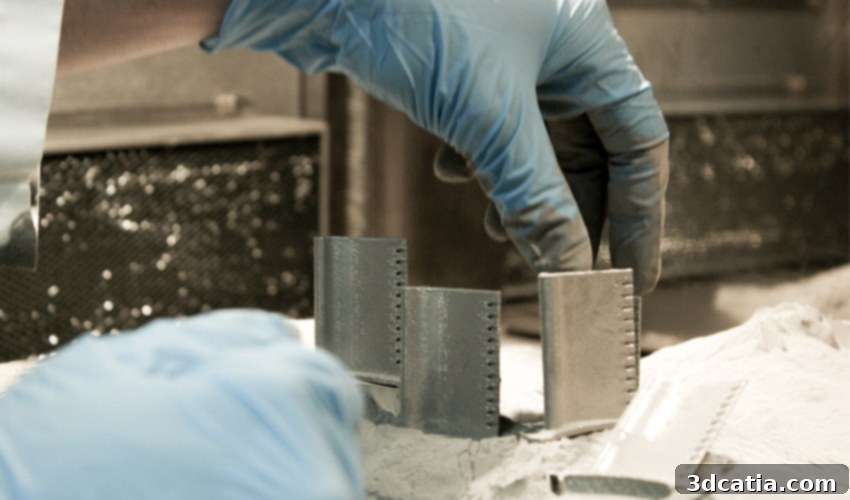
Strategic Integration of Metal Additive Manufacturing: Expert Insights for Business Success
As metal additive manufacturing technology continues its impressive maturation, exhibiting remarkable growth compared to plastic printing processes, a crucial question consistently emerges within the market: how can businesses successfully integrate this advanced technology into their operations? Metal 3D printing still represents a substantial investment, characterized by higher machine and material costs than many other manufacturing technologies available today. Furthermore, for high-volume mass production, it often struggles to compete directly with established, more traditional manufacturing techniques such as machining. Presently, metal additive manufacturing is primarily utilized for the creation of functional prototypes, specialized tooling components, essential spare parts, and even for the repair of defective components. Nevertheless, a growing number of sectors are now confidently designing and producing end-use parts for series production, leveraging AM’s unique capabilities. This evolving landscape begs the question: how can you be confident in the metal AM solution you choose, and more importantly, how can you integrate it efficiently and effectively into your existing production processes to unlock its full potential? To provide practical, actionable advice, we have engaged with three leading experts in the field, whose insights will guide you through this complex yet rewarding journey.
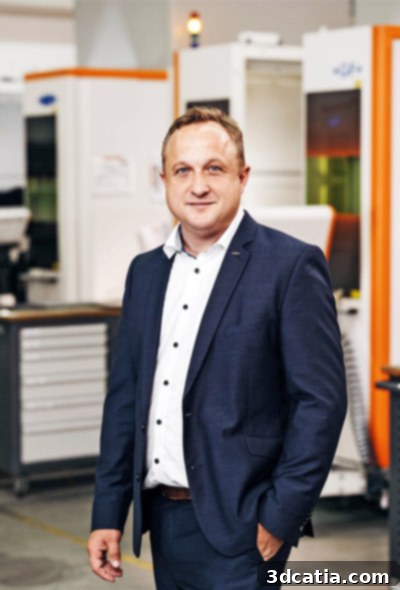
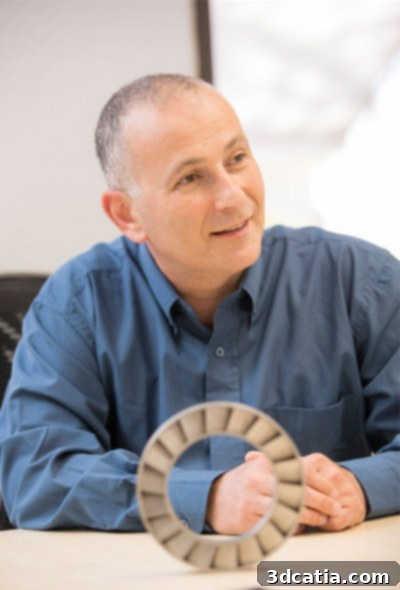
Our first expert, Bernd Martiné, has served as an Expert for Advanced Manufacturing Technologies at GF Machining Solutions since 2013. In this role, he is responsible for the sales and application development of additive manufacturing solutions in Germany. His extensive experience includes managing diverse industrial sectors that have invested in metal AM solutions, whether for creating intricate tooling or for the direct production of high-performance end-use parts. Our second esteemed expert is Benny Buller, the visionary CEO and founder of VELO3D, a company renowned for pioneering a revolutionary support-less process in metal AM, dramatically expanding design freedom. Last but not least, we have Dr. Johannes Gumpinger, an Advanced Manufacturing Process Engineer at the European Space Agency (ESA). Dr. Gumpinger is at the forefront of developing innovative solutions to establish additive manufacturing as a standard design and production process for critical space missions, highlighting the technology’s reliability and precision.
-

- Bernd Martiné
-
- Benny Buller
-
- Johannes Gumpinger

Why Investing in Metal Additive Manufacturing is a Strategic Imperative
Metal 3D printing technologies stand apart by offering an unparalleled degree of complexity and geometrical freedom that far surpasses the capabilities of traditional machining methods. This enables engineers to optimize the total weight of parts through sophisticated design software, which precisely places material only where it is structurally necessary. The European Space Agency (ESA), a pioneer in this field with over a decade of experience using metal additive manufacturing, initially developed a strong interest in R&D. Their goal was to thoroughly understand how to further advance the characterization of materials and enhance the resistance and performance of critical parts for space applications. Today, Dr. Johannes Gumpinger emphasizes, “The high geometrical freedom can effectively be used for developing parts with increased performance, reduced mass, but also lower costs through part consolidation and optimized material usage.” This capability is crucial for industries where every gram saved translates into significant operational advantages or enhanced functionality.
This perspective is strongly echoed by Bernd Martiné of GF Machining Solutions. He elaborates that companies primarily consider metal additive manufacturing when their conventional manufacturing processes reach their limits, particularly when the objective is to significantly improve the complexity-to-weight ratio of a component. This often involves intricate internal structures, lattice designs, or highly organic shapes that are impossible or cost-prohibitive to create with traditional methods. Martiné observes a fascinating trend: “In some companies, I have seen the management investing in such AM machines without having any dedicated parts, just to force their people to think about new designs and to not miss a trend.” This highlights AM’s role not just as a production tool, but as a catalyst for innovation and a strategic move to future-proof manufacturing capabilities. By challenging designers to “think additively,” companies can uncover entirely new product possibilities and competitive advantages.
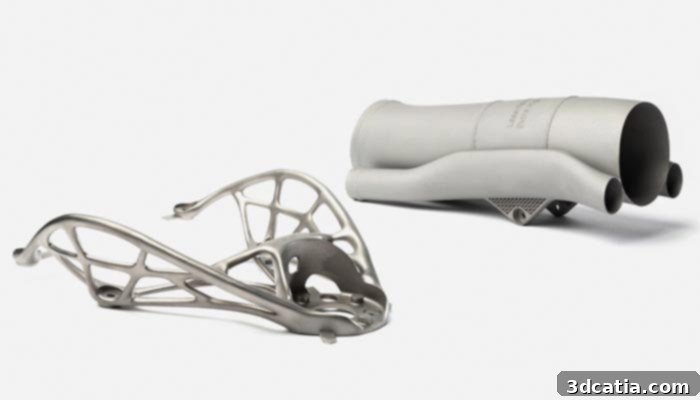
3D printed pieces by GF Machining Solutions showcasing complex geometries and lightweighting potential.
Benny Buller further emphasizes that companies should seriously evaluate 3D printing technologies when their primary goals are to dramatically improve product performance or when they face chronic issues with an uncertain and fragile supply chain. Additive manufacturing offers a powerful solution for reducing reliance on large inventories by enabling on-demand production of parts, minimizing warehousing costs and risks of obsolescence. He states, “Companies that have medium/low volume circulation of spare parts that suffer from supply chain uncertainty, quality and price challenges are the most ideal candidates for AM adoption.” This is especially true for industries like aerospace, automotive, and defense, where legacy parts, long lead times, and diminishing supplier bases are common problems. By integrating AM, these businesses can achieve greater agility, resilience, and cost control, transforming their operational models from reactive to proactive.
Choosing the Right Metal Additive Manufacturing Solution for Your Business
The landscape of metal 3D printing processes is diverse and continuously expanding, presenting both opportunities and challenges when it comes to selecting the ideal machine for your specific needs. Key technologies include Laser Powder Bed Fusion (L-PBF), often referred to as Direct Metal Laser Sintering (DMLS) or Selective Laser Melting (SLM), which is known for producing highly dense and geometrically complex parts. Another prominent process is Directed Energy Deposition (DED), which excels in repairing and building large parts, sometimes even with multi-material capabilities. There are also processes inspired by Metal Injection Molding (MIM), such as Binder Jetting, offering higher throughput for specific applications, and cold spray, used for repair and coating. This variety underscores the complexity of choice. Benny Buller offers pragmatic advice: begin your journey by collaborating with a service provider to explore and test various metal additive manufacturing techniques without the immediate commitment of a large capital investment. “Use contract manufacturers or service bureaus to make the first few steps, consider internal deployment only after successfully implemented first few wins and gained sufficient operational confidence,” he recommends. This approach minimizes risk and allows businesses to gain hands-on experience and validate applications before scaling up.
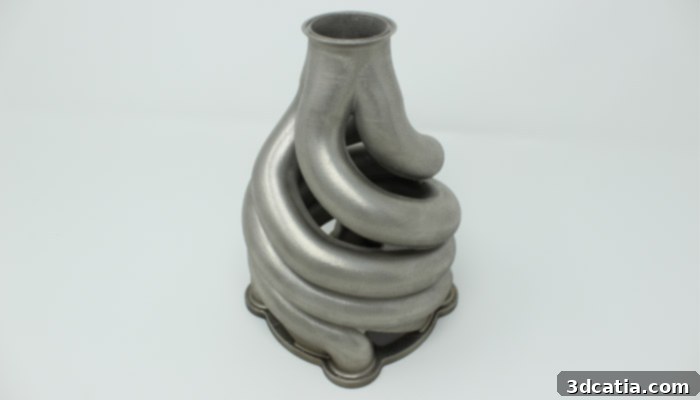
Velo3D’s technology enables the printing of complex parts without traditional support structures, offering unprecedented design freedom. | Credits: Velo3D
Naturally, the ultimate choice of solution will be dictated by the specific type of parts you intend to produce and the materials required for their functionality. At ESA, Johannes Gumpinger explains their strategic decision-making process: they swiftly gravitated towards “machines which can repeatedly and economically produce parts with high mechanical and physical properties.” This focus on repeatability and robust material properties is critical for demanding applications like space missions, where component failure is not an option. For such rigorous environments, typical materials include lightweight alloys (like aluminum and titanium), nickel-based superalloys (for high-temperature resistance), copper alloys (for thermal conductivity), and various steels (for strength and durability). On the materials front, the array of metals compatible with additive manufacturing continues to expand rapidly, with some processes, such as powder bed technology, being inherently better suited to handle a wider spectrum of these specialized alloys. Bernd Martiné adds a crucial point about ongoing advancements: “There is still room for new developments in terms of materials and the machine, but for most industries, our company is already able to offer a viable alternative to their standard materials, often with improved performance characteristics.” This emphasizes that while the technology evolves, current solutions are already robust enough to address many industrial needs.
Successfully Integrating Metal Additive Manufacturing into Your Workflow
The foundational step in successfully integrating a 3D printer into your production line is a meticulous identification of the types of parts you aim to design and, crucially, their intended application. Are you seeking to rapidly create prototypes to accelerate product development cycles? Do you need custom tooling to reduce costs and lead times in manufacturing processes? Or is your goal to produce innovative, high-performance end-use parts that offer superior functionality or efficiency? It is paramount to always remember that metal additive manufacturing is not a universal panacea; it’s not always the optimal solution for every manufacturing challenge. Therefore, clearly defining your objectives and understanding the specific benefits AM brings to your chosen application is essential. Bernd Martiné reinforces this strategic thinking: “We suggest that companies should not try to produce parts using AM that can already be made using conventional, existing technologies, as AM is more expensive in most cases. Instead, think about the limits of the existing technologies. Where could we add functions, and how can we reduce complexity?” This principle, often referred to as Design for Additive Manufacturing (DfAM), encourages engineers to rethink product design from the ground up, exploiting AM’s unique capabilities rather than merely replicating existing designs.
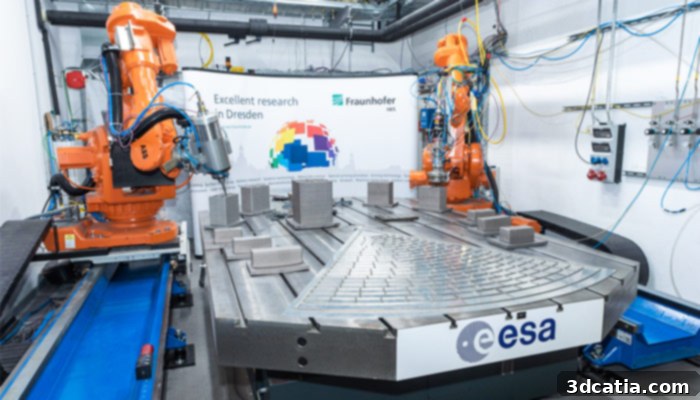
As part of the Athena mission, ESA worked with the Fraunhofer Institute to 3D print a titanium optical bench, demonstrating AM’s precision for space applications. | Credits: Fraunhofer IWS
Comprehensive training is another indispensable component for achieving successful integration. Employees across various roles must be thoroughly trained, not only in the operation of the machine itself and the associated software but also in crucial post-processing techniques. Moreover, stringent safety protocols must be rigorously communicated and adhered to. An industrial metal 3D printing system demands a vastly different approach compared to a desktop 3D printer, and handling fine metal powders requires far more caution than managing plastic filament spools. There are inherent risks, such as explosion hazards or inhalation of fine particles, that must be fully understood and mitigated through proper training and personal protective equipment (PPE). It is absolutely crucial to make these risks known to all personnel involved with the machine. For instance, GF Machining Solutions has proactively established “Centers of Competence” across Europe, Asia, and the United States to deliver specialized, hands-on training for their equipment. Bernd Martiné explains that they have developed workshops specifically tailored for “customers who are still planning an investment. We are able to offer workshops to give them a detailed overview of this technology and its implications, helping them make informed decisions.” Beyond initial training, continuous learning is vital. Johannes Gumpinger highlights ESA’s commitment to staying at the forefront: employees “attend conferences and training courses, conduct and publish cutting-edge research, but also organize conferences and workshops ourselves to foster knowledge exchange and collaboration within the AM community.“
Ultimately, successful integration truly begins at the design stage, not merely at the manufacturing phase; it requires a fundamental shift to “Think Additive,” as Bernd Martiné aptly puts it. This means embracing Design for Additive Manufacturing (DfAM) principles from the very beginning, considering how the unique capabilities of AM can be leveraged to create optimized, consolidated, and higher-performing parts. Successful integration is an iterative process involving various learning phases, making it essential to start gradually, validate processes through testing, and accumulate experience before moving into full-scale production. Benny Buller offers a clear recommendation for this phased approach: “Start with 3D printing of existing parts without redesign to understand if the technology process is dependable. Spare parts that are already in serial production is an ideal place to start with AM, as it allows for direct comparison and validation of the additive process against established benchmarks.” This methodical approach builds confidence and expertise, paving the way for more innovative and complex applications of metal additive manufacturing.
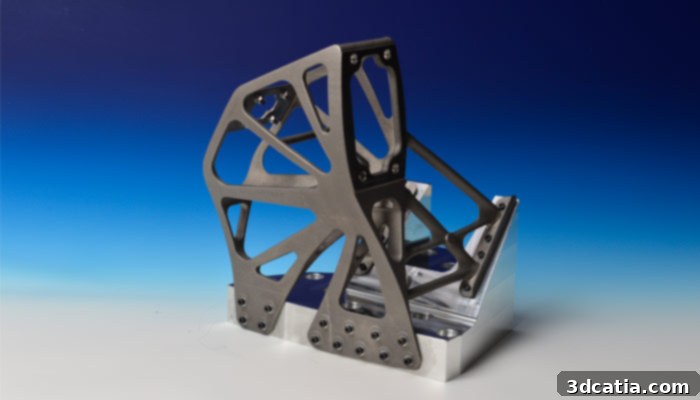
3D printed Ariane launcher support, showcasing metal AM’s application in critical aerospace components. | Credits: ESA
For those looking to explore specific solutions, you can find more detailed information on the metal additive manufacturing technologies and services offered by GF Machining Solutions HERE and by Velo3D HERE. These resources provide in-depth insights into their respective technologies and how they can be applied to diverse industrial challenges.
*Cover Image Credits: Velo3D
We hope this comprehensive expert advice has been useful in guiding your understanding of metal additive manufacturing integration. Let us know your thoughts and questions in a comment below or connect with us on our Facebook and Twitter pages! Don’t forget to sign up for our free weekly Newsletter to receive all the latest news and advancements in 3D printing straight to your inbox, ensuring you stay ahead in this rapidly evolving industry.