
US Army’s Hawkeye Platoon Pioneers 3D Printed Drones for Unrivaled Battlefield Adaptability
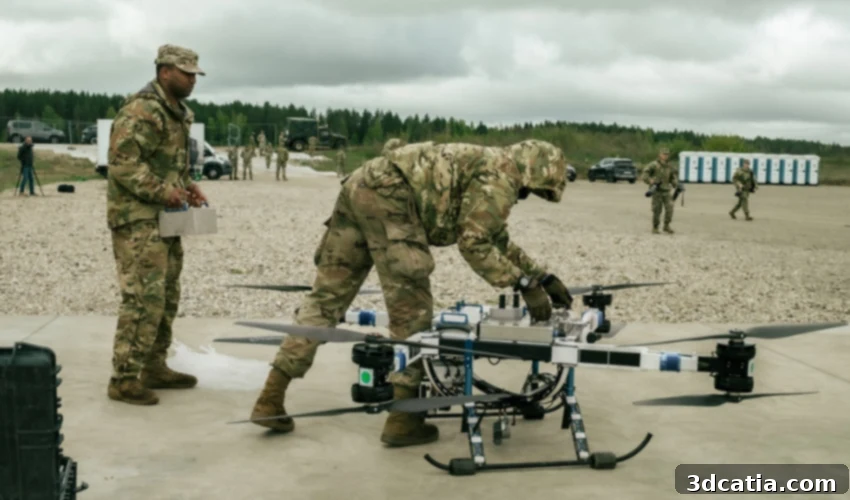
In an era where technological superiority is paramount, the U.S. Army is constantly seeking innovative solutions to enhance its operational effectiveness and maintain a decisive edge. A groundbreaking example of this ethos can be found within the ranks of the U.S. Army’s 173rd Airborne Brigade. Following the retirement of the conventional RQ-7B Shadow drone in March 2024, a unique and forward-thinking unit, known as the Hawkeye Platoon, part of the 1st Squadron, 91st Cavalry Regiment, embarked on a mission to redefine battlefield adaptability. Rather than awaiting external procurement or lengthy development cycles, this ingenious team took matters into their own hands, successfully developing and deploying a fully operational fleet of 3D printed drones entirely from scratch. This remarkable initiative not only fills a critical capability gap but also powerfully illustrates how the integration of cutting-edge 3D printing technology with readily available traditional components is fundamentally transforming the operational capabilities and strategic agility of small military units operating in diverse and challenging field environments.
Empowering Soldiers with a Mobile Additive Manufacturing Hub
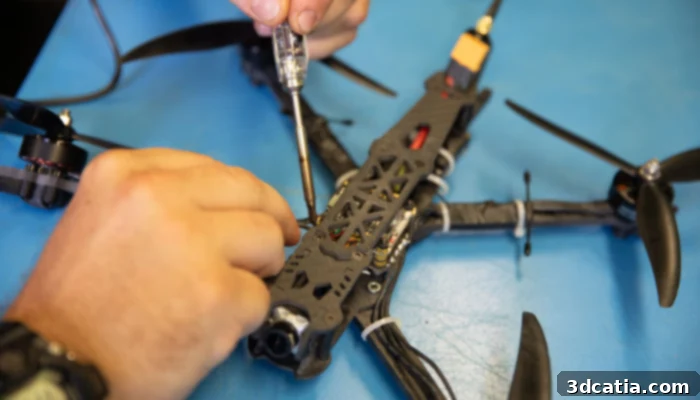
The Hawkeye Platoon’s operational model is a testament to decentralized innovation. Supported by strategic funding from the brigade, the platoon has effectively transformed itself into a dynamic, mobile drone laboratory. This self-contained unit leverages accessible, off-the-shelf 3D printers alongside standard electronic components to design, manufacture, assemble, and operate advanced first-person view (FPV) drones. What makes this approach revolutionary is the ability to tailor each drone precisely to specific combat scenarios or reconnaissance requirements, providing unparalleled flexibility in the field.
The economics of this in-house production are compelling. Each custom-built FPV drone typically costs between $400 and $500, a fraction of the price of commercial or military-grade alternatives. Furthermore, the rapid prototyping and assembly process allows a drone to be constructed and made mission-ready in just a few hours. Staff Sgt. Andy Ortiz, a seasoned drone pilot and a lead trainer within the platoon, highlights the accessibility of this technology. He emphasizes that even soldiers with no prior drone experience can quickly acquire the skills needed to build and operate these sophisticated tools through dedicated training and consistent practice. As Ortiz aptly puts it, “It could increase the lethality of the platoon or the Army because it’s super cheap to build. If it breaks, we fix it in-house.” This self-sufficiency in manufacturing and maintenance drastically reduces logistical burdens, enhances operational readiness, and empowers units to adapt on the fly to evolving threats and mission parameters, showcasing the profound benefits of 3D printing in defense.
FPV Drones: Precision Reconnaissance and Tactical Advantage
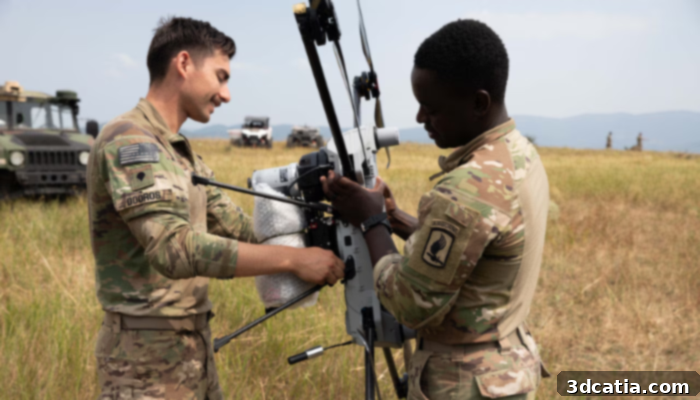
While first-person view (FPV) drones inherently require a direct line of sight for operation, their advantages in terms of cost-effectiveness, rapid deployment, and maneuverability make them invaluable assets in modern warfare. The Hawkeye Platoon expertly utilizes these agile 3D printed drones for a variety of critical tasks, including detailed close-range scouting of enemy positions, executing simulated attack runs to assess defensive vulnerabilities, and rigorously testing methods for deploying small, precision payloads. The team’s innovative spirit extends to designing and 3D printing custom components that can be integrated into the drones to facilitate the accurate simulation of small payload drops, a capability with significant tactical implications for military operations.
The potential impact on battlefield lethality and efficiency is profound. Staff Sgt. Ortiz envisions a future where frontline soldiers possess immediate, organic fire support capabilities. He articulates this vision by stating, “instead of calling for fire support, someone in your platoon could take out the target with a drone.” This shift represents a move towards decentralized combat, where individual platoons are equipped with the tools to directly engage threats, reduce response times, and minimize reliance on external support. The ability to quickly deploy a low-cost, custom-configured drone to identify, track, or even neutralize a target significantly enhances situational awareness and allows for more immediate and precise tactical responses in dynamic combat environments, showcasing true military drone innovation.
Expanding Horizons: The Autonomous C100 Drone for Extended Operations
Beyond the agile FPV drones, the Hawkeye Platoon’s diverse fleet also includes the sophisticated C100, an autonomous long-range drone. This advanced platform operates independently, capable of covering significant distances with impressive endurance. Boasting an operational range of up to 10 kilometers and a flight time of 74 minutes, the C100 is engineered for missions that extend far beyond the visual line of sight, addressing more strategic and logistical requirements for enhanced battlefield adaptability.
The C100’s capabilities make it ideal for critical tasks such as resupplying isolated aid stations with vital medical provisions, conducting extensive deep scouting missions over vast and potentially hazardous territories, or performing persistent surveillance in challenging terrains. Soldiers can pre-program the drone’s mission parameters, allowing it to execute its flight path autonomously, collect necessary data, and return to base without constant human intervention. This autonomous functionality is particularly advantageous in rough, inaccessible areas where traditional ground reconnaissance or aerial support might be too risky or impractical. By integrating both FPV and autonomous platforms, the Hawkeye Platoon demonstrates a comprehensive approach to aerial intelligence and support, significantly broadening the operational scope and effectiveness of infantry units with advanced military 3D printed drones.
A Sustainable Model: Soldier-Led Training and In-House Sustainment
The long-term success and scalability of the Hawkeye Platoon’s drone initiative are underpinned by a meticulously designed training and sustainment system. This innovative “train-the-trainer” approach ensures that knowledge and expertise are not confined to a select few but are disseminated throughout the brigade. Initially, the Hawkeye Platoon members undergo intensive training in drone design, 3D printing technologies, assembly, flight operations, and maintenance. Once proficient, they then become instructors, responsible for training other soldiers within the brigade. This organic, soldier-led training model fosters a self-sufficient ecosystem, allowing the drone program to expand robustly and adaptively, driven by the needs and ingenuity of the soldiers themselves, thereby boosting the US Army’s innovation capacity.
Central to this self-reliance is their fully equipped mobile laboratory. This comprehensive facility contains all the necessary tools and equipment for the entire lifecycle of their drone fleet – from initial design and rapid prototyping using 3D printers, through assembly and rigorous testing, to ongoing maintenance and repair. This complete in-house capability provides the Hawkeye Platoon with unparalleled autonomy and control over their entire drone operation. They are not dependent on external contractors or lengthy supply chains for parts or repairs. This level of self-sufficiency ensures immediate response capabilities, allowing them to rapidly iterate designs, integrate new technologies, and keep their drones operational even in the most demanding and isolated environments, significantly enhancing overall mission readiness and battlefield responsiveness through custom 3D printed drones.
Real-World Validation: Proving Ground at Agile Spirit 25
The practical efficacy and robustness of the Hawkeye Platoon’s innovative approach were rigorously put to the test during Agile Spirit 25, a significant multinational military exercise conducted in Georgia. This large-scale practice event provided an invaluable real-world proving ground for the platoon’s custom-designed drones and their pioneering 3D printing methodology. The successful deployment and operation of their 3D printed drones in complex, simulated combat scenarios unequivocally demonstrated that their designs and manufacturing processes are not only viable but highly effective under genuine operational pressures, solidifying their role in US Army innovation.
The outcomes of these exercises signify far more than merely replacing an obsolete system like the RQ-7B Shadow. They underscore a profound paradigm shift in how the U.S. Army approaches technological integration and capability development, particularly at the most granular level – the squad. This initiative empowers small units with advanced, customizable tools, enabling them to exert greater tactical influence and adapt more rapidly to dynamic battlefield conditions. It highlights a move towards decentralized technological empowerment, where soldiers on the ground are no longer just operators but active participants in the design, development, and deployment of their mission-critical equipment, enhancing overall military drone capabilities.
A New Paradigm: 3D Printing as a Force Multiplier in Modern Warfare
The transformative power of drone technology in modern warfare cannot be overstated. As U.S. Defense Secretary Pete Hegseth eloquently remarked, drones represent “the biggest change in battlefield tech in a long time.” For the Hawkeye Platoon, it is the strategic application of additive manufacturing, specifically 3D printing, that has made this revolutionary shift not only possible but highly actionable. This technology allows them to rapidly conceive, produce, and deploy custom drones precisely when and where they are needed, responding to immediate tactical requirements with unparalleled agility and fostering continuous defense technology innovation.
This innovative approach transcends the traditional role of soldiers merely operating pre-supplied equipment. Instead, it cultivates a new generation of soldier-innovators who are simultaneously designers, builders, and expert users of cutting-edge technology. Each 3D printed drone frame represents a step towards greater autonomy and adaptability, fostering a culture of continuous improvement and self-reliance within military units. This model significantly reduces dependence on external logistics and supply chains, offering a robust solution for maintaining technological superiority in rapidly evolving combat zones. The Hawkeye Platoon’s pioneering work with military 3D printed drones is setting a new standard for how armed forces can leverage localized production to achieve strategic objectives and enhance the lethality and survivability of their personnel.
The innovative spirit demonstrated by the U.S. Army’s Hawkeye Platoon underscores a critical evolution in military strategy and technological integration. By embracing 3D printing for military applications, they have not only overcome a significant operational challenge but have also pioneered a sustainable, adaptable, and cost-effective model for equipping frontline units with advanced drone capabilities. This soldier-led initiative exemplifies how localized additive manufacturing can empower troops, increase battlefield lethality, and enhance overall readiness in a rapidly changing global security landscape.
For those interested in delving deeper into these cutting-edge developments, additional information can be found in the official U.S. Department of Defense memo available HERE. We invite you to share your thoughts on the transformative potential of these 3D printed drones. How do you envision additive manufacturing playing an even greater, more pervasive role within the U.S. military and defense sectors moving forward? We encourage you to engage with us by leaving a comment below or by connecting with us on our LinkedIn or Facebook pages!
Furthermore, ensure you stay at the forefront of the latest advancements in additive manufacturing by signing up for our free weekly Newsletter, delivering the most relevant 3D printing news directly to your inbox. You can also explore a wealth of informative content and visually engaging demonstrations on our YouTube channel. For comprehensive coverage of 3D printing news specifically tailored to the aerospace and defense sectors, be sure to visit our dedicated page HERE.
*All Photo Credit: United States Department of Defense & Defense Health Agency (DHA.gov)