
Revolutionizing Bone Regeneration: How 3D Printing and Bioactive Implants are Reshaping Orthopedics
The human skeleton is a marvel of natural engineering, possessing a remarkable capacity for self-healing and regeneration. From minor hairline cracks to more severe breaks resulting from everyday accidents like skiing mishaps or bicycle falls, bones are typically capable of mending themselves over time. The duration and efficacy of this natural repair process, however, are influenced by various factors, including the patient’s age, the severity and type of the fracture, and overall health. While the body’s inherent healing mechanisms are often sufficient for common fractures, they encounter significant limitations when confronted with larger, more complex bone defects. Such defects, often resulting from aggressive tumors, severe trauma, or debilitating infections, overwhelm the bone’s regenerative capabilities, necessitating external intervention.
Historically, clinical solutions for these substantial bone losses have relied on conventional implants, predominantly crafted from inert materials like titanium or, in some cases, utilizing autologous bone grafts — material harvested from another part of the patient’s own body. While these methods have provided essential therapeutic avenues, they frequently come with a unique set of challenges and compromises. Recognizing these limitations, the field of medical technology is experiencing a profound transformation with the advent of advanced manufacturing techniques. Among these, 3D printing, also known as additive manufacturing, is emerging as a groundbreaking solution, promising to revolutionize the way we approach bone regeneration. At the forefront of this innovation is a pioneering research initiative at the University of Rostock. This project, known as ELAINE (Electrically Active ImplaNtatE), is a core component of the Collaborative Research Center 1270, expertly led by Prof. Dr. Hermann Seitz. The ELAINE team is dedicated to exploring and developing the production of bioactive and electrically active bone replacement structures through sophisticated 3D printing techniques.
The Limitations of Conventional Bone Implants
For decades, titanium has served as a workhorse material in orthopedic surgery for bone replacement. Its notable strength, biocompatibility, and resistance to corrosion make it a suitable choice for many applications. However, titanium implants present distinct drawbacks, particularly concerning their customization and long-term integration within the body. Their metallic nature often makes precise adaptation to the intricate and highly individual anatomical conditions of a patient’s bone structure exceptionally challenging. Achieving a perfect, seamless fit often requires extensive intraoperative shaping, which can be time-consuming and imperfect. Furthermore, titanium implants, being rigid and inert, can sometimes lead to stress shielding, where the implant carries too much load, causing the surrounding natural bone to weaken over time due to lack of mechanical stimulation. This can increase the risk of the implant loosening, leading to painful complications, revision surgeries, and significant long-term problems for the patient.
An alternative therapeutic approach involves autologous bone grafting, where bone material is surgically extracted from a healthy part of the patient’s body, such as the pelvis, and then transplanted to the damaged area. This method benefits from using the patient’s own tissue, reducing the risk of immune rejection and offering superior biological integration. However, as Professor Seitz highlights, this approach inherently creates a “secondary defect” at the donor site. This means the patient endures additional pain, potential complications like infection or nerve damage, and an extended recovery period, simply to address the initial bone defect. The amount of bone material available for grafting is also limited, restricting its use for very large defects. These significant challenges associated with traditional implant strategies underscore the urgent need for more advanced, patient-specific, and biologically integrative solutions in regenerative orthopedics.
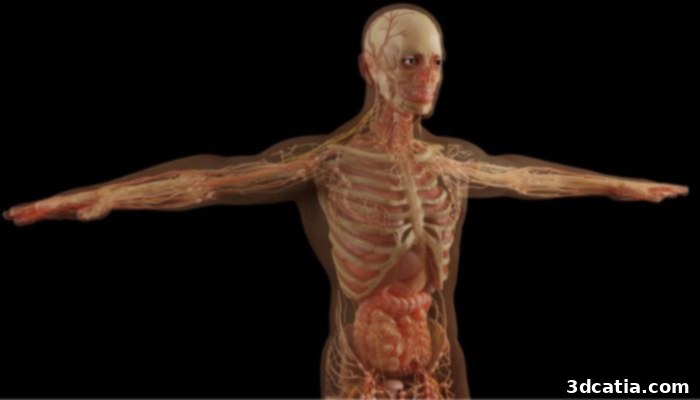
Bones have a high degree of regenerative power. For larger defects, however, the use of an implant is necessary. ELAINE is researching the production of bone implants using 3D printing (photo credits: Pixabay)
Pioneering Regenerative Solutions: The ELAINE Project
In response to the limitations of current orthopedic solutions, the ELAINE research group is pioneering a transformative approach to bone defect treatment. Their work focuses on developing electrically active implants that are not merely structural replacements but are designed to behave physiologically similar to natural bone structures. This innovative strategy is rooted in a deep understanding of bone physiology and leverages the well-established principle of piezoelectricity inherent in living bone. By harnessing additive manufacturing technologies, particularly 3D printing, the ELAINE team is making significant strides towards creating next-generation bone implants that can actively participate in the healing process and promote true bone regeneration.
Understanding Bone Physiology: The Power of Piezoelectricity
A cornerstone of the ELAINE project’s philosophy lies in mimicking the natural biomechanical processes that govern bone health and growth. Bones are not static structures; they are dynamic tissues that constantly adapt and remodel in response to mechanical stresses. A crucial mechanism underlying this continuous remodeling is piezoelectricity. This fascinating phenomenon occurs in certain solid materials, including biological tissues like bone, where mechanical deformation or pressure generates an electrical charge or voltage potential. When a bone is subjected to mechanical loading – for example, during walking, running, or even subtle movements – microscopic stresses within its crystalline structure induce these electrical signals. These endogenous electrical signals are then transmitted to the surrounding bone cells and tissues, acting as vital cues that stimulate cellular activity, bone growth, and overall tissue repair.
Christian Polley, a doctoral student actively involved in Collaborative Research Center 1270 at the Department of Microfluidics, underscores the profound significance of this biological mechanism. He states, “Piezoelectricity is a key factor in continuous bone remodeling in the organism. This so-called piezoelectric effect ensures that cells are stimulated to grow.” This intrinsic connection between mechanical force and electrical signaling is fundamental to maintaining bone density, strength, and integrity throughout an individual’s life. By designing implants that can replicate this natural piezoelectric response, the ELAINE group aims to create a dynamic interaction with the surrounding biological environment, encouraging host bone cells to migrate into, colonize, and eventually integrate with the implant, fostering a more robust and lasting repair than inert materials could ever achieve. This biomimetic approach represents a significant leap forward in regenerative medicine, moving beyond passive replacement to active biological engagement.
Innovative Materials: Barium Titanate and Bioactive Glasses
Translating the concept of electrically active bone regeneration into a tangible implant requires the selection and combination of highly specialized materials. Building upon their deep understanding of bone piezoelectricity, the ELAINE research group has ingeniously crafted implants from piezoelectric ceramics, with a particular focus on barium titanate. Barium titanate is a remarkable material known for its strong piezoelectric properties; it reliably generates voltage potentials when subjected to mechanical pressure, much like natural bone. To further enhance the biological efficacy of these implants, the ELAINE team has forged a crucial collaboration with the Chair of Biomaterials at the Friedrich Alexander University of Erlangen-Nuremberg.
Through this interdisciplinary partnership, barium titanate is not used in isolation but is intelligently combined with bioactive glasses. This synergistic combination is where the true innovation lies. Bioactive glasses are advanced biomaterials designed to interact favorably with biological fluids and tissues. When these implants come into contact with bodily fluids, the bioactive glass component initiates a controlled release of specific ions. This ionic exchange is crucial because it triggers a cascade of biological responses, effectively unfolding the material’s inherent bioactivity. The released ions stimulate cellular activity, promoting osteointegration — the direct structural and functional connection between living bone and the surface of the implant. By integrating barium titanate’s piezoelectric capabilities with the osteoinductive properties of bioactive glasses, the ELAINE project aims to create a sophisticated implant material that not only responds dynamically to mechanical stimuli but also actively fosters the biological environment necessary for bone regeneration and seamless integration within the patient’s body.
Precision Manufacturing: 3D Printing Bioactive Bone Implants
The ability to custom-design and precisely manufacture bone implants to individual patient specifications is a monumental advantage offered by 3D printing technology. After a meticulous digital reconstruction of the bone defect – often derived from high-resolution imaging scans like CT or MRI – 3D printing allows for the creation of an implant that perfectly matches the unique anatomical contours and dimensions required for each patient. This unparalleled level of customization ensures an optimal fit, minimizing gaps and maximizing contact between the implant and the host bone, which is crucial for successful integration. Christian Polley aptly summarizes this precision, stating, “We know beforehand exactly what the puzzle piece has to look like.” This bespoke manufacturing capability dramatically reduces surgical complexity and improves long-term outcomes, moving away from “one-size-fits-all” solutions.
The Role of Advanced Additive Manufacturing (LCM)
The specific 3D printing process employed by the ELAINE project is Lithography-based Ceramic Manufacturing (LCM) technology, a sophisticated additive manufacturing technique pioneered by companies like Lithoz. LCM is particularly well-suited for producing intricate ceramic components with high resolution and excellent mechanical properties. In the context of ELAINE, this process begins by preparing a photosensitive polymer resin that is precisely loaded with the piezoelectric ceramic particles, specifically the barium titanate and bioactive glass composite. This specialized “slurry” is then fed into the 3D printer. The printer utilizes a precise light source, typically UV light, to selectively cure and solidify layers of the resin, building up a delicate and highly structured “green part” layer by layer. This light curing process allows for the creation of incredibly filigree and porous structures, designed to mimic the trabecular architecture of natural bone and facilitate cell infiltration.
Following the initial printing phase, the process moves to a crucial thermal post-processing stage. The printed part undergoes a controlled sintering process, typically involving high temperatures. During sintering, the polymer binder is burned out, and the ceramic particles fuse together, resulting in a dense, robust, and mechanically strong ceramic implant. While the actual 3D printing itself can take a few hours, this post-processing, especially sintering, often takes place overnight to ensure optimal material properties. A significant benefit of this controlled manufacturing process is that the resulting implants are inherently sterile and highly biocompatible, meeting stringent medical standards for implantation into patients. This meticulous, multi-stage process ensures that the final 3D-printed bone implants possess both the structural integrity and the bio-functional characteristics necessary for successful integration and active regeneration within the human body.
Towards Clinical Application: Testing and Future Prospects
The ELAINE project is not merely theoretical; it involves rigorous testing and validation to ensure the efficacy and safety of these advanced implants. Professor Seitz confirms, “We are already successfully testing with simulation chambers in which the pressure in an organism can be faithfully mimicked.” These advanced bioreactor systems allow researchers to recreate the complex biomechanical environment of the human body, applying realistic mechanical loads and physiological conditions to the printed implants. The primary goal of these tests is clear: “We want to have an implant that responds piezoelectrically to mechanical stimuli and is bioactive at the same time.” This dual functionality is critical, as it aims to harness both the mechanical stimulation and the chemical signaling necessary for optimal bone regeneration.
The ultimate measure of success for these innovative implants lies in their ability to integrate seamlessly with the host tissue. The objective is to encourage bone cells from adjacent healthy tissue to actively migrate into and colonize the porous structure of the implant. Furthermore, successful vascularization – the formation of new blood vessels within the implant – is paramount, as it ensures nutrient supply and waste removal, vital for the survival and proliferation of the ingrowing cells. If this colonization and the subsequent formation of a robust vascular network are successful, the implant can then become a living, integral part of the body, potentially leading to a permanent and stable repair. This ambitious vision moves beyond simple replacement to actual biological reconstruction, offering a truly regenerative solution for complex bone defects.
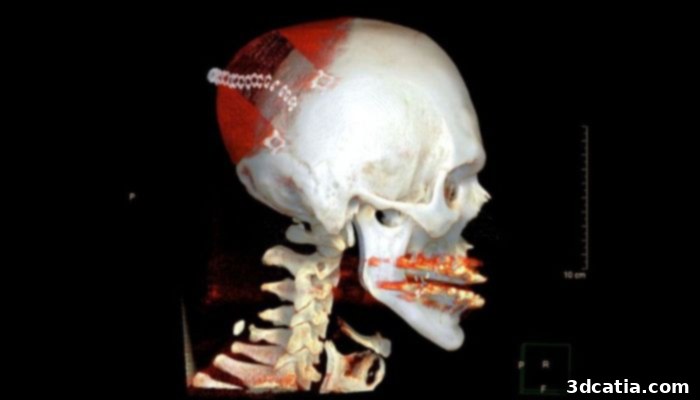
In the future, larger implants, such as those used to reconstruct the skull, could be made using a bone implant from the 3D printer (photo credits: Uniklinikum Salzburg)
The Road Ahead for 3D Printed Bone Implants
While the ELAINE project has achieved impressive results within the collaborative research center, it is important to acknowledge that a significant amount of fundamental basic research remains to be conducted before these sophisticated implants can transition from the laboratory to routine clinical use. As Professor Seitz emphasizes, “This is because the underlying mechanisms must be understood down to the smallest detail.” The complex interactions between the electrically active and bioactive materials, the host cells, and the biomechanical environment require extensive investigation to ensure long-term safety, efficacy, and predictable outcomes. This rigorous scientific journey involves meticulous preclinical testing, in-depth studies of cellular responses, and eventually, comprehensive clinical trials to evaluate human performance.
According to Professor Seitz, it is quite possible that another ten years may pass before these advanced 3D-printed bone implants become a standard part of everyday clinical practice. This timeline underscores the meticulous and comprehensive nature of medical research and development. However, despite the remaining challenges and the need for further exploration, one fact is already abundantly clear: additive manufacturing, particularly 3D printing, is poised to play an increasingly significant and transformative role in shaping the medicine of the future. Its capacity for personalization, intricate design, and material innovation positions it as a cornerstone technology for regenerative medicine, personalized prosthetics, and advanced therapeutic interventions. The ELAINE project stands as a shining example of how interdisciplinary research and cutting-edge technology are converging to create truly revolutionary solutions for complex medical needs, offering renewed hope for patients facing severe bone defects. You can find out more about ELAINE HERE.
What do you think about these innovative bone implants created by 3D printing? We’d love to hear your thoughts! Let us know in a comment below or connect with us on our LinkedIn, Facebook, and Twitter pages! Don’t forget to sign up for our free weekly Newsletter here to get the latest 3D printing news delivered straight to your inbox! You can also find all our compelling videos on our YouTube channel.
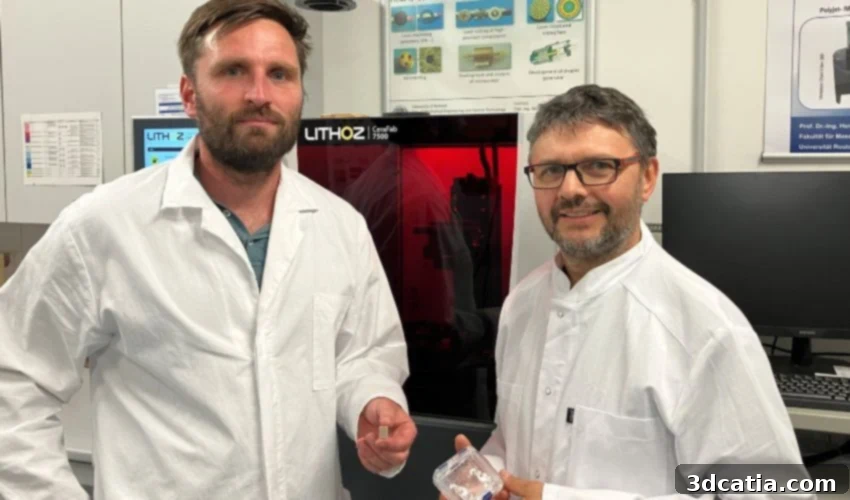
*Cover Photo Credits: Joachim Mangler/Universität Rostock: Christian Polley (left) and Hermann Seitz (right)