
Cutting-Edge 3D Printing Innovations: Medical Milestones, Strategic Alliances, and Advanced Materials
The world of 3D printing, also known as additive manufacturing, continues to evolve at an astonishing pace, bringing forth groundbreaking innovations that redefine possibilities across various sectors. This week’s developments offer compelling insights into how this transformative technology is pushing boundaries, from life-saving medical procedures to industrial-scale production and sophisticated material science. We delve into a truly remarkable medical achievement: the world’s first successful femur transplant utilizing a custom 3D printed implant for a child. Furthermore, we explore significant new collaborations poised to accelerate industry growth and foster diversity, examining the partnership between Women in 3D Printing and the American Society of Mechanical Engineers, alongside the strategic alliance forged by Comau and Roboze. Material science takes a leap forward with Sculpteo’s launch of an innovative polyamide. Finally, we venture into the maritime sector to discover CEAD’s pioneering Maritime Application Center, a cutting-edge facility dedicated to the large-scale 3D printing of boats. These stories collectively highlight the immense potential and ongoing progress that make 3D printing one of the most exciting fields in modern technology. Prepare for an insightful read as we uncover these fascinating advancements!
A Medical Marvel: World’s First 3D Printed Femur Transplant for Child with Bone Cancer
In a testament to the life-changing potential of additive manufacturing, the Vinmec Healthcare System in Vietnam has achieved what was once deemed medically impossible, performing the world’s first successful femur transplant with a 3D-printed bone. This monumental achievement offered a new lease on life to Tran Minh Duc, a young boy from Ho Chi Minh, who faced a grim prognosis after a sudden diagnosis of bone cancer. Traditionally, bone cancer in children presents unique and formidable challenges; artificial joints are typically not suitable for growing patients, and the high risk of infection associated with conventional surgical methods often leads to recommendations for amputation, particularly in complex cases like Duc’s. Given that bone cancer usually affects older individuals, the medical operations for a child of Duc’s age carried significantly heightened risks, making this case particularly delicate and pioneering.
However, Prof. Dr. Tran Trung Dung, a leading expert on the Orthopaedic Council at Vinmec Healthcare System – Vietnam’s premier private hospital group – proposed an audacious and innovative treatment pathway. His vision was to completely replace the affected femur with a custom-designed, 3D-printed metal counterpart. This personalized approach leveraged the precision and adaptability inherent in additive manufacturing, allowing for an implant that perfectly matched Duc’s anatomy. The complex surgery was meticulously planned and executed in two distinct phases. Phase 1 involved the critical removal of the cancerous tumor, followed by the temporary transplantation of a cement bone to stabilize the leg and prepare for the final implant. In Phase 2, the custom-made, 3D-printed metal femur was permanently installed, marking a truly transformative moment in pediatric orthopedics and oncology.
The success of this intricate procedure was celebrated by Prof. Dr. Dung, who proudly announced, “The 4-hour surgery was a success. Duc recovered quickly without any complications, now he is able to walk with the support of physical therapy. The surgery represented a breakthrough in complex techniques, demonstrating the incredible potential of personalized medicine. Critically, both the life and limb of the child were kept intact, offering him a future free from amputation and significantly improving his quality of life.” This medical breakthrough not only offers hope to countless children facing similar diagnoses but also paves the way for wider applications of 3D printing in complex surgical interventions, highlighting its role in advancing personalized healthcare and pushing the boundaries of what is medically achievable.
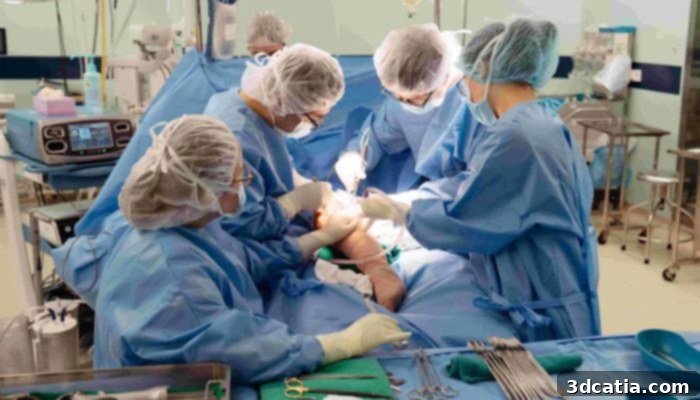
Photo Credits: Vinmec
Fostering Diversity and Growth: Women in 3D Printing Joins Forces with ASME
The additive manufacturing industry, like many STEM fields, has historically faced challenges in achieving true diversity and inclusion. Recognizing this critical need, Nora Toure founded Women in 3D Printing (Wi3DP) in 2014 with a clear mission: to support, inspire, and empower women within the AM sector. Over the past decade, Wi3DP has blossomed from a grassroots initiative into a powerful global network, boasting over 13,000 members across 38 countries. It has become an indispensable force advocating for gender equality and broader inclusivity in an industry that thrives on innovation and diverse perspectives. This remarkable growth has not only elevated the profiles of women in the field but also fostered a vibrant, supportive community where members can connect, learn, and grow professionally.
In a significant new chapter for the organization, Wi3DP is now joining the American Society of Mechanical Engineers (ASME), one of the oldest and most respected engineering organizations globally. This strategic integration will see Wi3DP operate under ASME’s Programs & Philanthropy department, marking a pivotal moment for both entities. This transition is set to unlock a wealth of new opportunities for Wi3DP, providing access to ASME’s extensive global network, robust resources, and well-established initiatives. For ASME, this partnership strengthens its commitment to fostering an inclusive engineering community and expanding its reach within the rapidly evolving additive manufacturing landscape. The synergy between Wi3DP’s focused advocacy for women and ASME’s broad dedication to engineering excellence promises to accelerate progress in both diversity and technological advancement.
Nora Toure emphasized the transformative potential of this alliance, stating, “This new chapter with ASME is a game-changer for Women in 3D Printing. As a volunteer-led organization, we’ve done so much with so little, but with ASME’s support, we can finally tap into the resources we need to grow. ASME’s commitment to inclusive engineering, workforce development and innovation in additive manufacturing aligns perfectly with our mission. Together, we can expand our reach, scale our impact, and bring Wi3DP to even more communities around the world.” This collaboration is expected to significantly amplify Wi3DP’s influence, enabling it to provide enhanced mentorship programs, expanded networking events, and more robust educational initiatives. It represents a powerful step towards building a more equitable and innovative future for the entire additive manufacturing ecosystem, ensuring that diverse voices are heard and celebrated at every level. To delve deeper into the exciting details of Wi3DP joining ASME, further information can be found by clicking HERE.
Photo Credits: ASME
Strategic Alliance Between Comau and Roboze: Bridging Automation and Additive Manufacturing
In a move set to redefine manufacturing paradigms, two prominent Italian companies, Comau and Roboze, have formally announced a groundbreaking collaboration. This strategic alliance is specifically designed to transform advanced technology by seamlessly integrating Comau’s renowned expertise in robotic automation with Roboze’s cutting-edge capabilities in additive manufacturing. The overarching goal of this partnership is ambitious yet essential: to democratize on-demand production across a wide array of high-stakes sectors, including but not limited to automotive, aerospace, and energy. By combining their respective strengths, these industry leaders aim to address critical manufacturing challenges such as supply chain vulnerabilities, the need for greater production flexibility, and the demand for rapid prototyping and customization.
The core of this collaboration will involve the joint development of comprehensive solutions that synergistically blend “Roboze’s additive manufacturing technology and its high-performance materials with Comau’s advanced automation platforms.” This integration is not merely about pairing technologies; it’s about creating a holistic ecosystem where the precision and material versatility of 3D printing are elevated by the efficiency, repeatability, and scale of robotic automation. Such integrated systems will empower other companies to establish highly agile and responsive on-demand production lines, facilitating advanced relocation strategies that bring manufacturing closer to the point of consumption, and pioneering entirely new manufacturing models that prioritize sustainability and efficiency. This partnership signifies a crucial step towards Industry 4.0, where smart factories and interconnected processes lead the way.
Alessio Lorusso, CEO of Roboze, articulated the profound implications of this alliance, stating, “Integrating our advanced 3D printing technologies with Comau’s robotic solutions presents a unique value proposition for global industry. Through this partnership, we’re poised to drive a meaningful transformation in our clients’ manufacturing capabilities, enabling them to be more innovative, agile, and sustainable.” This sentiment underscores the vision for the collaboration: to equip industries with the tools necessary to navigate complex global markets, optimize resource utilization, and accelerate innovation cycles. By offering solutions that combine extreme precision with scalable automation, Comau and Roboze are setting a new benchmark for advanced manufacturing, promising to unlock unprecedented levels of efficiency, customization, and responsiveness for businesses worldwide, ultimately driving economic growth and technological advancement across critical sectors.
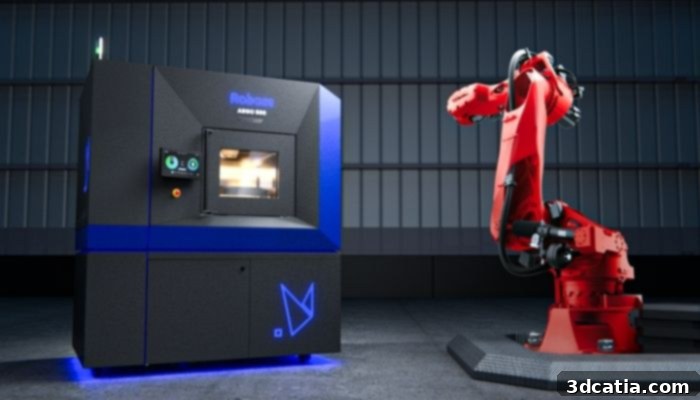
Roboze and Comau will combine their expertise in additive manufacturing and automation to open up new customer segments and markets (Photo Credits: Comau).
Sculpteo Launches New Polyamide, PA12 S: Enhancing Surface Finish in 3D Printing
Material innovation is a cornerstone of advancement in additive manufacturing, continually expanding the capabilities and applications of 3D printing. This week, Sculpteo, a leading 3D printing service provider renowned for its extensive material offerings and advanced technologies, introduced a significant addition to its portfolio: a new polyamide 12 powder, dubbed “PA12 S.” Developed in close collaboration with Arkema, a global leader in specialty materials, this new material is specifically engineered for use with HP’s Multi Jet Fusion (MJF) technology, known for its ability to produce functional parts with excellent mechanical properties. While PA12 S retains the robust mechanical strength and durability characteristic of standard PA12, its true distinction lies in a remarkable enhancement to its compositional structure, resulting in a noticeably superior surface finish.
The key question for designers and engineers is often, how does this new material truly differentiate itself from the ubiquitous standard PA12? The answer lies in the refined morphology of PA12 S (where ‘S’ denotes smooth). This innovative powder promises significantly smoother finishes directly off the printer, drastically reducing the need for extensive post-processing that often adds time and cost to production. Beyond its aesthetic appeal, PA12 S boasts several other advantageous properties, including excellent chemical resistance, thermal stability up to 120 °C, and notably low moisture absorption, which contributes to the longevity and performance of printed parts in diverse environments. Moreover, it is positioned to be competitively priced, making advanced surface quality accessible to a broader range of applications and industries.
These impressive improvements are directly attributable to a meticulous optimization of the material’s particle size and distribution. In conventional PA12 powders, the particle distribution typically hovers around 60 microns, and the particles may exhibit a less uniform shape. In contrast, the particles in PA12 S are engineered to be more spherical, exhibit greater uniformity in size, and possess a tighter distribution, averaging approximately 40 microns. This enhanced morphology allows for a denser and more homogeneous packing during the MJF printing process, leading to less rough surfaces and a finer overall texture on the final printed components. Consequently, Sculpteo’s new PA12 S material is ideally suited for a wide array of applications where both functional performance and exceptional aesthetic quality are paramount, from intricate consumer products to high-performance industrial components that demand a premium look and feel without compromising on mechanical integrity.
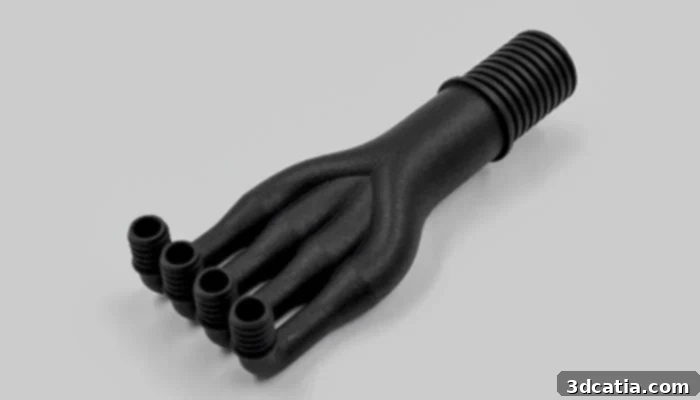
Sculpteo’s new polyamide promises more aesthetic surfaces (Photo Credits: Sculpteo).
Maritime Application Center Opens for Large-Scale 3D Printing Boats
Pushing the boundaries of large-format 3D printing, CEAD, a distinguished expert in this specialized field, recently announced the grand opening of its Maritime Application Center (MAC). This state-of-the-art production facility, spanning an impressive 2,300 m², is strategically designed to revolutionize boat manufacturing through additive manufacturing. Located in an area primed for innovation, the MAC serves as a pioneering hub where CEAD not only develops but also produces entire boats using its advanced large-format 3D printing technology. This initiative is particularly aimed at supporting shipbuilders and maritime companies who may not yet possess the internal capabilities or corresponding technology to leverage the immense benefits of large-scale additive manufacturing. The center represents a significant leap forward in bringing industrial-scale 3D printing to the maritime industry, offering solutions for enhanced efficiency, customization, and sustainability.
At the heart of the MAC’s operational capabilities lies a specially developed 3D printing system that showcases remarkable engineering prowess. This innovative system is capable of automatically printing boat hulls of substantial dimensions, reaching lengths of up to twelve meters. According to CEAD, this proprietary system vastly outperforms conventional 3D printers that rely on robotic arms for such large-scale applications, offering superior speed, precision, and repeatability. The facility’s production processes are further enhanced by the use of specially formulated materials, such as CEAD®HDPro. These high-performance composites are specifically engineered for demanding marine environments, known for their exceptional impact resistance, durability, and virtually maintenance-free properties. The integration of advanced machinery with purpose-built materials underscores CEAD’s commitment to delivering robust and long-lasting maritime solutions.
Beyond its primary function as a production facility, the Maritime Application Center is conceived as a dynamic hub for comprehensive research and development. It actively engages in material development, software adaptation, and process optimization, continuously striving to refine and advance the capabilities of large-format additive manufacturing for maritime applications. Crucially, the MAC is intended to serve as a collaborative platform, fostering an environment where industry partners, academic institutions, and customers can converge to jointly explore and develop innovative solutions. By working in close synergy with stakeholders, CEAD aims to stimulate creativity, accelerate the introduction of sustainable manufacturing technologies into the shipping industry, and address complex challenges unique to marine construction. As Maarten Logtenberg, CTO of CEAD, eloquently emphasizes: “We have to figure out new things, but that’s exactly how real innovation happens.” This forward-thinking approach positions the MAC as a catalyst for transformative change, promising to shape the future of boat building and marine engineering through the power of additive manufacturing.
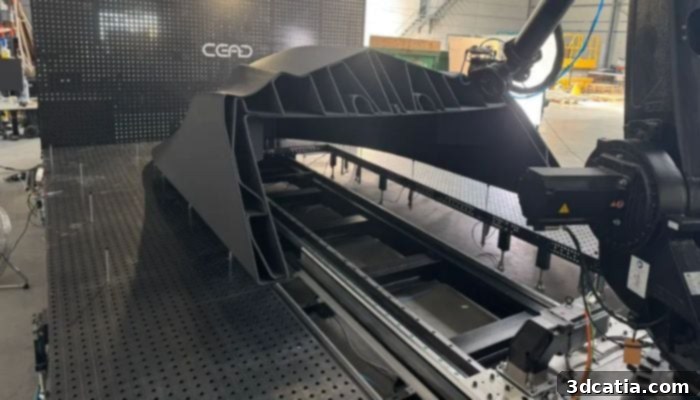
The 3D printing system can print hulls up to twelve meters in size fully automatically (Photo Credits: CEAD)
The rapid advancements in 3D printing continue to captivate and inspire, demonstrating its profound impact across medical, industrial, and specialized sectors. From pioneering surgical breakthroughs to fostering diversity and enabling large-scale maritime construction, additive manufacturing is consistently proving its potential to innovate and transform. We’re eager to hear your thoughts on these incredible developments, especially the monumental achievement of the 3D-printed femur transplant. Share your perspectives and insights in a comment below or join the conversation on our LinkedIn and Facebook pages. Don’t miss out on the latest news shaping the additive manufacturing world; make sure to sign up for our free weekly Newsletter to get direct updates to your inbox. You can also explore all our engaging videos and content on our YouTube channel. For those particularly interested in the intersection of additive manufacturing with healthcare, visit our dedicated page for more medical and dental 3D printing news HERE.