
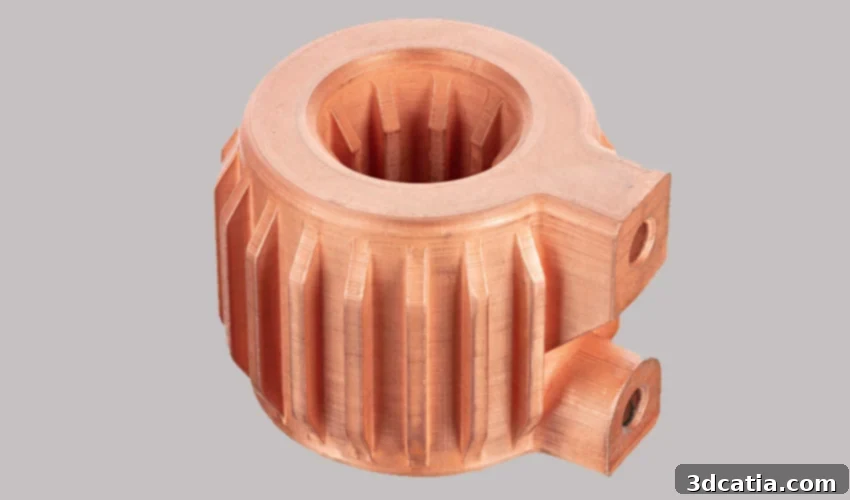
Desktop Metal Revolutionizes Industrial Manufacturing with Pure Copper 3D Printing for Studio System
In a significant move that underscores its commitment to expanding the capabilities of accessible metal additive manufacturing, US manufacturer Desktop Metal recently announced the introduction of pure copper as a new material compatible with its renowned Studio System solution. This strategic addition, revealed during the company’s public debut, marks a pivotal moment for industries relying on materials with superior thermal and electrical properties. Known for its exceptional ability to conduct both heat and electricity, pure copper unlocks the potential for creating high-value, high-performance parts across a diverse range of sectors, including energy, automotive, and electrical applications. This latest material expands Desktop Metal’s already robust portfolio, which currently features essential industrial alloys such as 4140 chromoly steel, H13 tool steel, and 316L and 17-4 PH stainless steel, further cementing the Studio System’s versatility in advanced manufacturing environments.
The integration of pure copper into Desktop Metal’s material lineup addresses a long-standing challenge within the metal additive manufacturing market. Historically, achieving pure copper prints has been notoriously difficult with conventional laser-based metal 3D printing systems. These systems often struggle with copper’s high reflectivity and thermal conductivity, which can lead to inconsistencies and defects during the laser melting process. Consequently, many solutions in the market typically offer copper alloys, such as chromium-zirconium copper, as a workaround. However, these alloys often come with compromised conductivity properties compared to pure copper.
Desktop Metal’s Studio System bypasses these technical hurdles by employing a proprietary Bound Metal Deposition (BMD) process, which is similar in principle to Metal Injection Molding (MIM). This innovative approach involves extruding a plastic-bound metal powder, which is then debound and sintered into a fully dense metal part. Because the Studio System does not rely on lasers for material consolidation, it can effectively process pure copper, overcoming the challenges posed by its intrinsic properties. This distinct advantage places Desktop Metal in a unique position within the industry, alongside a select few, such as Markforged’s Metal X machine, which also demonstrated its pure copper printing capabilities earlier in the year. The ability to 3D print pure copper opens up a new frontier for engineers and designers, enabling them to leverage the material’s full potential without the limitations of traditional manufacturing or alloy substitutes.
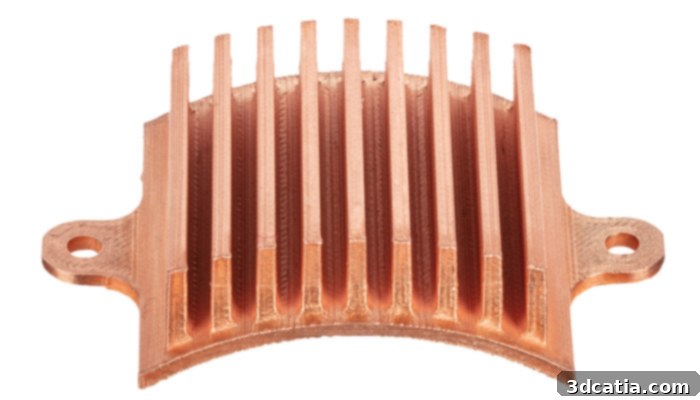
A 3D printed pure copper heat exchanger demonstrates the material’s potential for complex thermal management applications. | Photo Credits: Desktop Metal
Jonah Myerberg, Technical Director and co-founder of Desktop Metal, eloquently highlights the immense value of this new material: “Known for its excellent thermal and electrical conductivity, copper is a highly sought-after material for a wide range of industries and applications, from heat exchangers and electrical components for heavy industry to consumer products. Whether for heat sinks, electric motor and power system components, or resistance welding electrodes, 3D printed copper on the Studio System is an ideal choice for the manufacture of parts with complex geometries.” His statement clearly articulates the vast potential that pure copper 3D printing holds. This addition to the range of compatible metals is particularly transformative for applications demanding exceptional thermal management or superior electrical performance. Consequently, it is no surprise that the initial demonstrative parts created with this technology include critical components like electrode holders, advanced heat exchangers, and high-performance bus bars.
The significance of pure copper extends beyond its conductive properties. It also boasts good corrosion resistance, ductility, and malleability, making it suitable for demanding environments and applications where formability is important. By leveraging the design freedom of additive manufacturing, engineers can now create geometrically complex copper parts that were previously impossible or prohibitively expensive to produce with traditional methods. This includes intricate internal channels for optimized fluid flow in heat exchangers, or custom electrical contacts with enhanced performance and reduced material waste.
Unlocking New Possibilities: Key 3D Printed Pure Copper Parts by Desktop Metal
Desktop Metal has showcased several compelling applications of pure copper 3D printing, each demonstrating the transformative impact of the Studio System’s capabilities. Among the most notable examples are electrode holders, crucial components used in resistance welding processes to precisely hold electrodes in position when welding nuts or other components. In these high-intensity applications, temperature management is paramount. Traditionally manufactured electrode holders often suffer from rapid wear and reduced lifespan due to localized heat buildup. With 3D printing, Desktop Metal can integrate sophisticated internal cooling channels directly into the part’s design. These intricate channels allow for more efficient heat dissipation, effectively regulating the temperature of the component and significantly extending its operational lifespan, while also improving the consistency and quality of welds. This innovative approach promises substantial improvements in productivity and maintenance costs for manufacturing facilities.
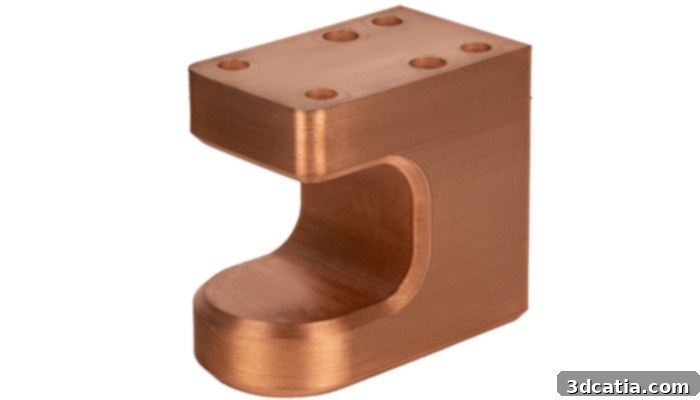
The 3D printed electrode holder featuring optimized internal cooling channels. | Photo Credit: Desktop Metal
Another prime example presented by the American manufacturer is 3D printed busbars. Busbars are essential components in electrical distribution systems, designed to efficiently distribute high currents locally within power electronics, battery packs, and electric vehicle systems. These parts are inherently subject to significant heat generation due to the transfer of electrical energy. The ability of additive manufacturing to create complex internal geometries allows for the integration of custom-designed cooling channels within the busbar itself, precisely targeting areas of highest heat. By choosing pure copper, users benefit from its superior electrical and thermal conductivity, ensuring minimal energy loss and efficient heat transfer. Furthermore, the use of 3D printing streamlines the manufacturing process by eliminating the multiple assembly steps and joining operations typically required by traditional fabrication methods, such as bending, stamping, and brazing. This leads to fewer points of failure, improved reliability, and often a more compact and lighter component, which are critical advantages in applications where space and weight are at a premium.
Finally, Desktop Metal has successfully 3D printed a highly efficient heat exchanger specifically tailored for the demanding automotive sector. Heat exchangers are vital for dissipating heat from various components, such as electric motors, during operation, thereby maintaining optimal temperatures for peak performance and longevity. In this specific automotive application, additive manufacturing offers unparalleled design freedom. Engineers can now custom-design intricate internal structures, including high and thin fins with optimized geometries, that maximize surface area for heat transfer while minimizing material usage and pressure drop. This level of customization is extremely challenging, if not impossible, to achieve with conventional manufacturing techniques. The combination of pure copper’s excellent thermal conductivity with the geometric complexity afforded by 3D printing results in highly efficient, compact, and lightweight heat exchangers that significantly enhance the performance and reliability of electric vehicles and other advanced thermal management systems. For more detailed information on their materials and applications, interested parties can find further resources HERE.
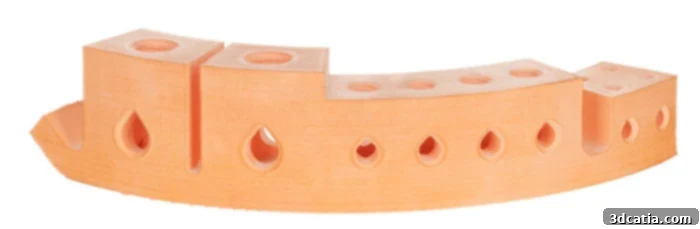
The 3D printed busbar in pure copper, showcasing complex geometries for enhanced performance.
The introduction of pure copper 3D printing for the Desktop Metal Studio System is a game-changer for industries seeking to push the boundaries of performance and design. By enabling the production of previously unachievable geometries with a material renowned for its exceptional conductivity, Desktop Metal is paving the way for innovations in electrical components, thermal management systems, and a myriad of other industrial applications. This development not only enhances the capabilities of additive manufacturing but also makes advanced material processing more accessible to a broader engineering and manufacturing audience.
What do you think of this significant new addition to Desktop Metal’s materials portfolio? How do you envision pure copper 3D printing impacting your industry or specific applications? Let us know your thoughts in a comment below or join the discussion on our Facebook and Twitter pages! Don’t miss out on the latest advancements in additive manufacturing – sign up for our free weekly Newsletter here and get the freshest 3D printing news delivered straight to your inbox!