
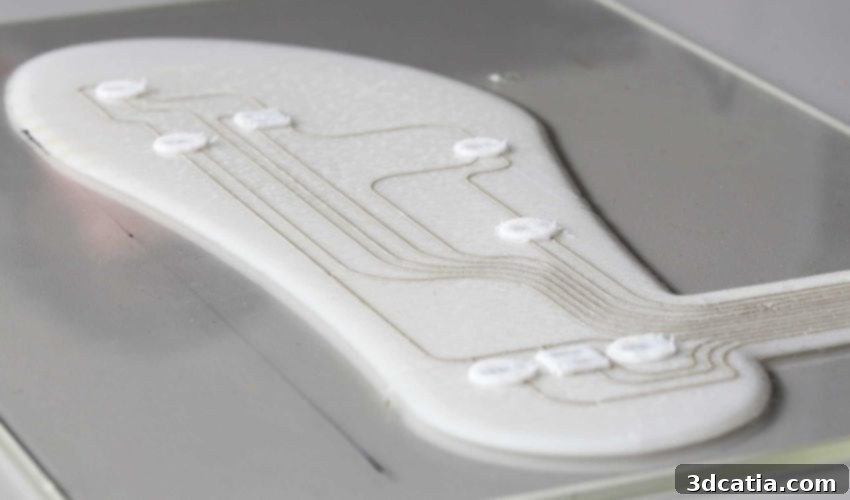
Revolutionizing Foot Health and Performance: The Rise of Smart 3D Printed Insoles
Foot pain is a surprisingly widespread issue, significantly impacting the quality of life for millions. According to a survey conducted by the American Podiatric Medical Association (APMA), a staggering 77% of adults in the United States have experienced foot pain. This pervasive discomfort often goes untreated or is managed with generic solutions, highlighting a critical need for more personalized and effective interventions. The good news is that a groundbreaking innovation is on the horizon: advanced 3D-printed insoles equipped with integrated sensor technology. Developed through a collaborative effort by researchers at the Swiss Federal Institute of Technology Zurich (ETH Zürich), the Federal Institute of Technology in Lausanne (EPFL), and the Federal Laboratory for Materials Testing and Research (Empa), these intelligent insoles are poised to transform how we approach foot health, offering unprecedented levels of personalization and real-time data for both patients and athletes.
This innovative technology moves beyond static support by embedding sophisticated sensors directly into the insole material. These miniature, yet powerful, sensors are engineered to precisely measure the pressure distribution across the sole of the foot while inside the shoe. By continuously monitoring sole pressure, the system provides dynamic, actionable data that can be used to track the progress of physical therapy, optimize athletic training regimes, and ultimately, alleviate foot-related complaints in everyday life. The research team underscored the significance of this real-time measurement capability in their scientific publication, emphasizing its potential to usher in a new era of proactive foot care.
The Limitations of Traditional Custom Insoles
For many years, custom-made insoles have been a go-to solution for individuals seeking to optimize athletic performance, correct biomechanical imbalances, or reduce pain from conditions like plantar fasciitis, bunions, or metatarsalgia. While effective, the traditional process for creating these personalized inserts is often cumbersome, time-consuming, and geographically restrictive. Typically, it begins with a comprehensive assessment where a patient or athlete must step barefoot onto a pressure-sensitive mat. This mat records a static pressure profile of their feet, generating a two-dimensional footprint and pressure map.
Based on this static pressure profile, a skilled technician or orthotist then meticulously crafts the insole, often by hand. This involves shaping various materials, cutting, grinding, and assembling layers to achieve the desired support and corrective features. The manual nature of this process not only demands significant time and expertise but also introduces a degree of variability. Furthermore, adjustments or follow-up modifications often require repeat visits to the specialized facility where the insoles were initially produced, limiting accessibility for many potential users. This traditional method, while tried and true, is inherently reactive and struggles to capture the dynamic forces and subtle shifts in pressure that occur during movement, which are crucial for true performance optimization and injury prevention.
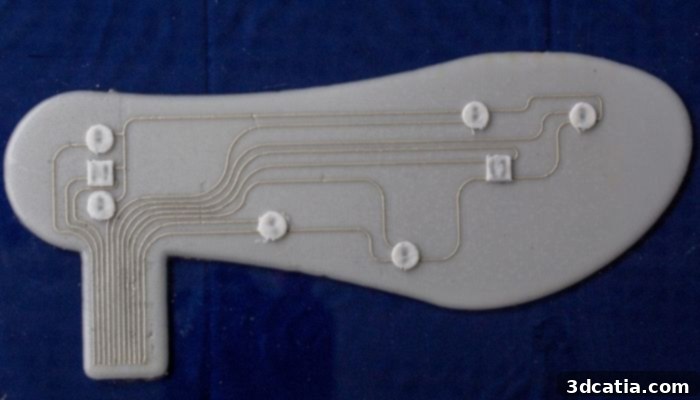
3D printed insole with conductive tracks and sensors made of piezoelectric elements
Smart Insoles: Real-Time Biomechanical Insights Through Additive Manufacturing
The advent of 3D printing, or additive manufacturing, has opened up entirely new possibilities for creating highly customized and functional products. In the context of insoles, this technology allows for the rapid production of complex geometries and multi-material structures that were previously impossible or prohibitively expensive to create. These new 3D-printed insoles represent a significant leap forward because they record pressure patterns within the shoe in real-time. This dynamic data collection offers unprecedented insights into a wearer’s biomechanics during various activities.
As Gilberto Siqueira, co-project leader and senior research assistant at Empa and the Laboratory for Complex Materials at ETH Zurich, explains, the insoles can instantly reveal the activity being performed. “Whether someone is walking, running, climbing stairs or even carrying a heavy load on their back. In which case, the pressure shifts more to the heel,” he notes. This capability to distinguish between different gaits and loads is crucial for understanding how various activities affect foot pressure distribution and, consequently, overall body mechanics. Such detailed, real-time feedback empowers users, therapists, and trainers to make informed decisions for injury prevention, performance enhancement, and rehabilitation.
The intelligence embedded in these smart insoles comes from piezoelectric elements, a type of sensor that plays a pivotal role in transforming mechanical pressure directly into electrical signals. Piezoelectric materials generate an electric charge when subjected to mechanical stress. This property allows the sensors to accurately measure both the normal forces (direct downward pressure) and, critically, the shear forces (forces acting parallel to the surface, often associated with friction and rotational movements) exerted on the sole of the foot. Understanding both types of forces is essential for a comprehensive analysis of foot mechanics, as shear forces often contribute significantly to discomfort, blistering, and the risk of injury, especially in dynamic sports activities.
The Innovative Multi-Material 3D Printing Process
Printing Layers From Different Materials
One of the most remarkable aspects of this new development is the streamlined manufacturing process. The 3D printing of these complex multi-material insoles can be accomplished in a single pass using a specialized extruder. This capability significantly reduces production time and complexity compared to traditional methods or even multi-step 3D printing processes that require manual intervention between layers. To achieve this, the research team meticulously developed novel materials specifically optimized for this application, ensuring both functionality and durability.
The manufacturing process follows a precise layering system, each layer contributing to the insole’s overall functionality:
- The Base Layer: The foundation of the insole consists of a robust and flexible material mixture primarily composed of cellulose nanoparticles and silicone. This combination provides the necessary mechanical support, cushioning, and biocompatibility, acting as the primary structural component of the insole.
- Conductive Tracks: Following the base layer, the intricate network of conductive tracks is printed directly onto the surface. This is achieved using a highly conductive silver ink, which forms the electrical pathways necessary to transmit signals from the sensors to the processing unit within the insole. The precision of 3D printing ensures that these tracks are laid out with exact placement and minimal material waste.
- Integrated Sensors: After the conductive tracks are established, the vital sensors are integrated. These sensors are printed from a specially formulated soot-containing ink and are strategically placed in areas where the highest pressure points on the sole of the foot are anticipated. The soot particles within the ink provide the necessary piezoelectric properties, allowing them to convert mechanical pressure into electrical impulses. This precise placement ensures maximum data capture efficiency and accuracy.
- Protective Silicone Coating: The penultimate layer is a protective silicone coating. This critical layer serves to encapsulate and shield the delicate conductive tracks and sensors from external elements, moisture, and the continuous mechanical stresses of walking, running, and other activities. This protective barrier significantly enhances the durability and longevity of the smart insole.
- Plasma Surface Treatment: Finally, to ensure robust adhesion between these disparate material layers, the surface of the silicone layer undergoes a specialized treatment with hot plasma. This process modifies the surface chemistry, enhancing the bonding strength and ensuring that all layers adhere firmly to each other, creating a cohesive and resilient product capable of withstanding rigorous use.
Data Collection, Connectivity, and Future Applications
Once the smart insoles have collected a sufficient amount of biomechanical data, this valuable information can be accessed and analyzed. Currently, the data is read out via a cable connection using a specialized interface integrated into the sole. While effective for initial testing and clinical settings, the developers are actively working to establish a seamless wireless connection for future iterations. This wireless capability will significantly enhance user convenience, allowing for real-time data streaming to smartphones or other devices, thereby integrating the insoles more smoothly into everyday life and training routines.
The potential applications for these smart 3D-printed insoles are vast and impactful, particularly in the fields of sports and physiotherapy. In sports, athletes can utilize the precise measurements to gain a deeper understanding of their gait, running form, and pressure distribution during various movements. This data can inform perfectly adapted training plans, help identify biomechanical inefficiencies, and even assist in injury prevention by highlighting areas of excessive stress or improper loading. Coaches and trainers can leverage this information to fine-tune an athlete’s technique, leading to optimized performance and reduced risk of overuse injuries.
For physiotherapy and rehabilitation, the insoles offer a revolutionary tool for monitoring patient progress. Therapists can track changes in pressure patterns and force distribution over time, allowing them to objectively assess the effectiveness of interventions, tailor exercises to individual needs, and provide tangible feedback to patients. For instance, in recovery from foot or ankle injuries, the insoles can ensure proper weight bearing and gait mechanics are being achieved, accelerating recovery and preventing re-injury. The ability to collect long-term, objective data will empower both clinicians and patients with a clearer picture of recovery trajectories.
Looking ahead, the goal is to make these permanent 3D-printed shoe insoles widely available to consumers. These will be fully customizable, offering variations in hardness and flexibility to perfectly match individual needs, foot conditions, and activity levels. By leveraging precise and individualized measurement data, these smart insoles will guarantee the wearer optimal progress in managing foot pain, improving comfort, and enhancing athletic performance. This represents a significant step towards truly personalized medicine and performance optimization, moving beyond one-size-fits-all solutions to data-driven, tailored care that adapts with the user.
What are your thoughts on the revolutionary potential of these smart 3D printed insoles? Do you see yourself integrating this technology into your daily routine or athletic pursuits? Share your perspectives and join the conversation by leaving a comment below or connecting with us on our LinkedIn, Facebook, and Twitter pages! Don’t miss out on the latest advancements in additive manufacturing – remember to sign up for our free weekly Newsletter here, delivering the freshest 3D printing news straight to your inbox! You can also explore all our insightful videos and demonstrations on our YouTube channel for more in-depth content.
*Cover Photo Credits: Jonathan Blutinger/Columbia Engineering