
Electron Beam Melting (EBM): A Deep Dive into Advanced Metal 3D Printing
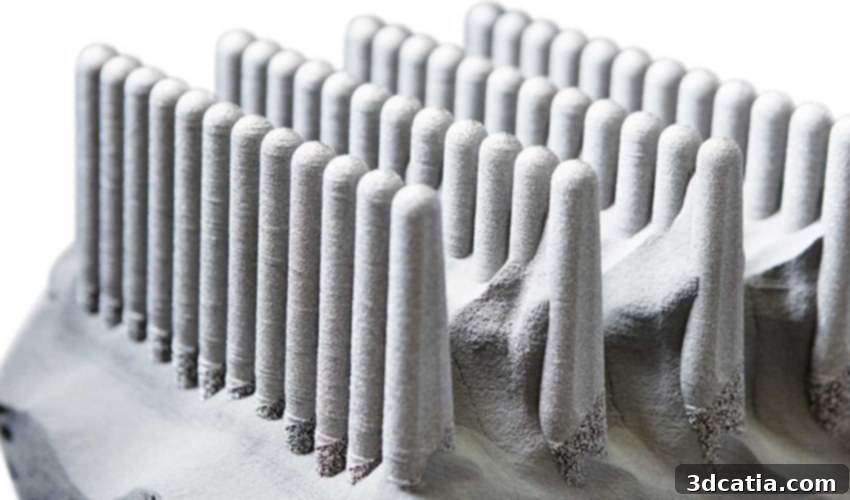
Electron Beam Melting (EBM) stands as a prominent metal additive manufacturing technology within the broader powder bed fusion family. Distinguished from its laser-based counterpart, Laser Powder Bed Fusion (LPBF), EBM harnesses the power of a high-energy electron beam to selectively fuse metallic powder particles, building complex and robust components layer by excruciating layer. This innovative process was pioneered and commercialized by the Swedish company Arcam in 2002, quickly establishing itself as a go-to solution for creating intricate structures with exceptional mechanical properties. In a significant industry move, Arcam was acquired by GE Additive in 2016, and notably, it remains the sole manufacturer of machines based on this specific Electron Beam Melting technology today. The capability to produce highly resistant parts makes EBM an invaluable asset in demanding sectors, pushing the boundaries of what’s achievable in advanced manufacturing.
The fundamental distinction between EBM and LPBF technologies lies in their respective energy sources. While LPBF employs a laser, EBM technology, as its name suggests, utilizes an electron beam. This powerful beam is generated by an electron gun, which functions by extracting electrons from a heated tungsten filament within a high-vacuum chamber. These electrons are then accelerated and precisely directed onto a thin layer of metallic powder that has been evenly deposited on the build plate of the 3D printer. The kinetic energy of these accelerated electrons is converted into thermal energy upon impact, causing the metal powder particles to melt and fuse together selectively, thereby forming a solid layer of the desired part. This layer-by-layer fusion process is meticulously controlled to ensure geometric accuracy and material integrity, resulting in components with superior characteristics.
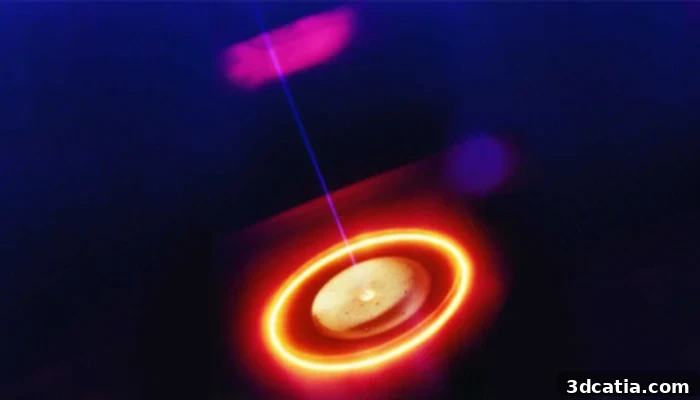
Electron Beam Melting (EBM) technology utilizes a powerful electron beam to fuse metal powder | Credits: Arcam
The Electron Beam Melting Process: From Design to Finished Part
The journey of creating a part using Electron Beam Melting begins long before the machine even starts its build process, typically with the 3D modeling phase. Engineers and designers can meticulously create their desired part using sophisticated CAD software, leverage advanced 3D scanning technologies to capture existing geometries, or even utilize pre-existing models from vast digital libraries. Once the intricate 3D model is finalized, it undergoes a crucial transformation in a specialized slicing software, often simply referred to as a slicer. This software digitally dissects the model into thousands of ultra-thin, successive layers, generating a precise set of instructions for the printer regarding how each physical layer of deposited material should be formed. This detailed information, encompassing build parameters and tool paths, is then transmitted directly to the EBM 3D printer, signaling the commencement of the manufacturing process.
Inside the EBM machine, the selected metal powder is carefully loaded into dedicated hoppers. From these hoppers, a precise amount of powder is spread across the build platform, forming an extremely thin, uniform layer. Before the electron beam begins its fusion work, this entire powder bed is preheated to a temperature close to the melting point of the material. This critical preheating step is one of EBM’s distinct advantages. It significantly reduces residual stresses within the part as it’s being built, minimizing warping and distortion, and also offers enhanced support to complex geometries, particularly overhanging or cantilevered areas, thereby reducing the need for extensive support structures. Following preheating, the powerful electron beam scans the designated areas of the powder layer, selectively melting and fusing the particles together. This process is repeated meticulously, layer after layer, with fresh powder being spread and fused, until the entire part is meticulously constructed. The precision and controlled environment ensure the structural integrity and desired mechanical properties of the final component.
Upon the successful completion of the additive manufacturing process, the operator carefully removes the entire build cake – consisting of the printed part embedded in unfused powder – from the machine. The unmelted powder, which typically surrounds the solidified part, is then meticulously removed using various methods, such as a blowgun, specialized brushes, or even vibratory de-powdering stations. This loose powder, often referred to as ‘cake,’ is a valuable resource. Subsequently, any necessary printing supports, which are significantly fewer in EBM due to the preheating process, can be removed. The part is then detached from the build plate, often requiring specialized tools depending on the material and geometry. The post-processing steps are crucial for achieving the desired final product specifications. These can include machining critical surfaces to meet tight tolerances, polishing for aesthetic or functional smoothness, or more importantly, heat treatments such as stress relief annealing. This annealing process involves heating the part in an oven for several hours at specific temperatures to alleviate residual stresses induced by the rapid heating and cooling cycles during the build, which is vital for the long-term structural integrity and performance of high-performance metal components.
A defining characteristic of the EBM process is the absolute necessity of conducting all manufacturing under a high-vacuum environment. This vacuum is paramount for two primary reasons: firstly, it ensures the proper and efficient operation of the electron beam itself, as electrons can be scattered by gas molecules. Secondly, and equally critically, the vacuum prevents the metallic powder from oxidizing when subjected to high temperatures. Many advanced metal alloys are highly reactive, and exposure to oxygen at elevated temperatures would compromise their material properties and lead to defects. A significant economic and environmental advantage of EBM technology is the high reusability of the unmelted powder. A large proportion of the unfused powder can be collected, sieved, and almost directly reused in subsequent builds, significantly reducing material waste and operating costs. This aspect is particularly appealing to manufacturers in industries like aeronautics, where it is common for only a small percentage (sometimes as low as 20%) of the purchased material to end up in the final part through traditional subtractive manufacturing methods like machining, with the remaining material often sent for recycling. EBM drastically improves material utilization efficiency, making it a more sustainable and cost-effective solution for complex metal parts.
Materials and Applications for EBM Technology
Due to the fundamental operating principle of Electron Beam Melting, which relies on the interaction of an electron beam with the material, the choice of compatible materials is restricted to those that are electrically conductive. Without this inherent conductivity, the electron beam cannot effectively transfer its energy to the powder, making the fusion process impossible. Consequently, the manufacture of parts from non-conductive materials such as polymers or ceramics is technically not feasible with current EBM technology. This limits EBM to the realm of metal additive manufacturing. Today, the primary materials utilized in EBM are high-performance titanium alloys, notably Ti6Al4V, and chromium-cobalt alloys. However, it’s important to note that Arcam, as the sole provider, has historically maintained a relatively restricted range of officially supported materials. For users to experiment with or implement other, custom materials, they often need to undertake specialized, paid training and obtain explicit authorization from Arcam/GE Additive to ensure proper machine operation and material safety. This proprietary approach, while ensuring quality control, can sometimes limit broader material innovation and adoption compared to more open platforms.
Electron Beam Melting technology has carved out a significant niche in industries demanding exceptional material properties and intricate geometries, primarily within aeronautics and medical applications, especially for advanced implant design. Titanium alloys, in particular, are highly favored in these sectors due to their outstanding biocompatible properties, making them ideal for integration within the human body without adverse reactions. Beyond biocompatibility, titanium offers an unparalleled combination of lightness and strength, crucial for performance-driven components. In aeronautics, EBM is widely employed for producing critical components such as turbine blades, structural airframe parts, and engine components where weight reduction directly translates to fuel efficiency and performance gains. For medical implants, EBM excels at creating patient-specific prosthetics like hip, knee, and spinal implants, as well as dental components. The ability to create porous structures directly within the implant using EBM is a significant advantage, promoting bone ingrowth and better integration with the surrounding tissue, leading to more successful and durable implants. While EBM technology is generally faster than LPBF for certain part geometries due to its ability to melt multiple areas simultaneously, it typically offers less fine resolution and a lower quality surface finish. This is primarily because the electron beam spot size is inherently wider than a laser beam, and the powder used can be slightly more granular, often necessitating additional post-processing for aesthetic or functional surface requirements.
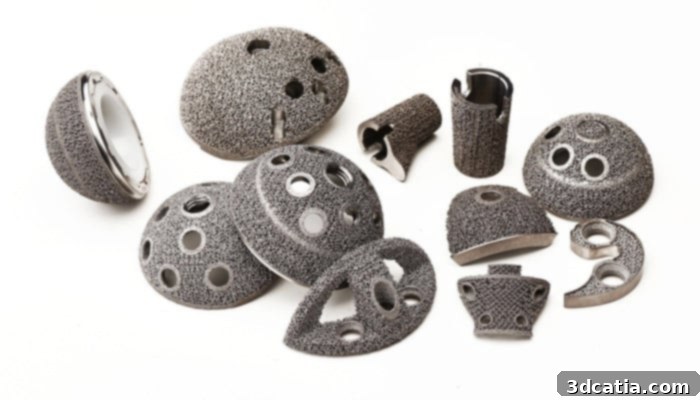
Customized 3D printed medical implants created with an Arcam EBM machine | Credits: Arcam
Electron Beam vs. Laser: A Comparative Analysis in Metal Additive Manufacturing
For manufacturers exploring metal 3D printing, the choice between Electron Beam Melting (EBM) and Laser Powder Bed Fusion (LPBF) is a frequent and crucial consideration. The optimal decision hinges significantly on the specific application requirements, as each technology presents its own unique set of benefits and limitations that must be carefully weighed. Understanding these differences is key to successful adoption.
Strengths of Electron Beam Melting (EBM)
- Superior Manufacturing Speed: One of EBM’s most compelling advantages is its inherent speed. Unlike a laser, which typically must scan and melt the surface point by point in a sequential manner, the electron beam possesses the unique capability to be deflected rapidly across the powder bed. This allows it to heat and melt multiple areas simultaneously, significantly accelerating the production process, especially for multiple smaller parts within a single build or for larger, complex geometries.
- Reduced Residual Stress and Distortion: The continuous pre-heating of the entire powder bed to elevated temperatures (often above 700°C) before melting is a hallmark of EBM. This high-temperature build environment minimizes thermal gradients within the part during the fusion process. Consequently, residual stresses are significantly mitigated, leading to less warping, cracking, and distortion in the final component. This also translates into a reduced dependency on extensive support structures, simplifying post-processing and material waste. Parts built with EBM often exhibit superior material properties, such as improved ductility and fatigue resistance, owing to this controlled thermal environment which influences microstructure.
- High Powder Reusability: The EBM process boasts excellent powder reusability rates, often exceeding 95% for unfused powder. The vacuum environment and the nature of the preheating mean that the surrounding powder is not degraded, allowing it to be collected, sieved, and reused with minimal processing. This significantly lowers material costs and reduces waste, contributing to a more sustainable manufacturing cycle.
Weaknesses of Electron Beam Melting (EBM)
- Lower Precision and Surface Finish: When compared to LPBF, EBM generally offers lower precision and results in a rougher surface finish. This is primarily due to the electron beam’s slightly wider spot size and the typically coarser powder particles used, which result in larger melt pools. While sufficient for many applications, parts requiring very fine details or exceptionally smooth surfaces may necessitate more extensive post-machining or polishing, adding to overall production time and cost.
- Limited Build Volume: Historically, EBM machines have offered smaller build volumes compared to some of the largest LPBF systems. For example, Arcam’s largest Q20 machine offers a build envelope with a diameter of 350 mm and a height of 380 mm. In contrast, advanced laser machines, such as the X-Line series from Concept Laser, can provide manufacturing volumes that are at least twice as large, accommodating bigger parts or a greater number of components in a single build. The engineering challenges of maintaining a uniform vacuum and deflecting an electron beam accurately over increasingly large areas contribute to this limitation.
- Material Restrictions and Proprietary System: As discussed, EBM is limited to electrically conductive metals. Furthermore, Arcam’s proprietary nature of the technology has meant a more controlled and often limited palette of officially supported materials, primarily titanium and cobalt-chrome alloys. Introducing new materials often requires specific authorization and training, which can hinder material innovation and flexibility for users compared to the broader material ecosystem available for LPBF.
- Vacuum Requirements and Complexity: While the vacuum environment is crucial for EBM’s functionality and material purity, it adds significant complexity, cost, and operational considerations to the machine design and maintenance compared to inert gas environments typically used in LPBF. The time required to achieve and maintain vacuum also contributes to longer cycle times between builds.
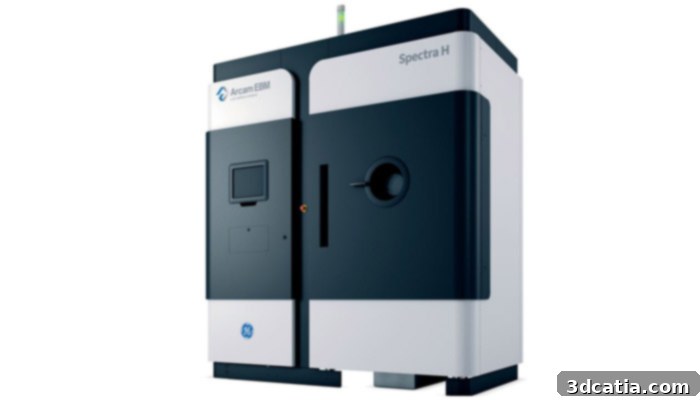
Arcam (now GE Additive) remains the sole manufacturer of EBM 3D printers on the market.