
Revolutionizing Mosquito Research: 3D Printed Synthetic Skin Combatting Global Diseases
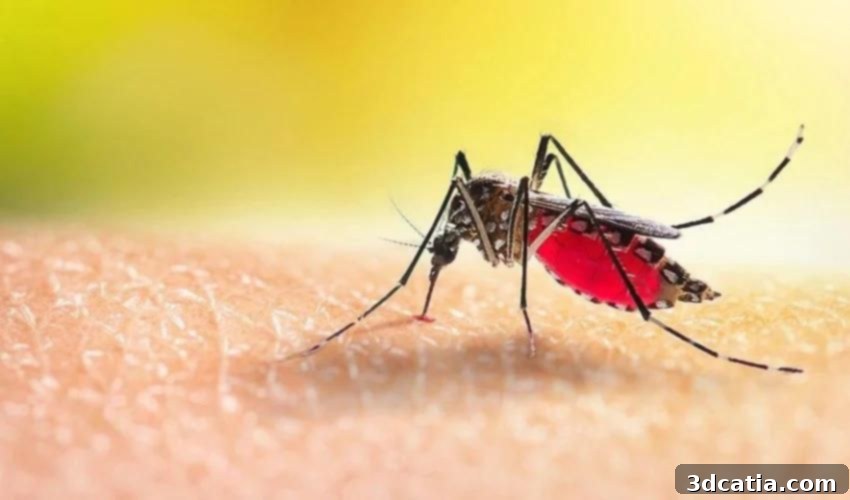
Mosquitoes, tiny creatures often overlooked, are responsible for some of the most devastating diseases worldwide. From the debilitating effects of dengue fever and malaria to the alarming spread of the Zika virus, these insect-borne illnesses pose a significant threat to global public health. Indeed, many of these diseases can prove fatal to humans, making the mosquito arguably one of the most dangerous animals on Earth. The World Health Organization (WHO) paints a stark picture, reporting approximately 725,000 deaths annually due to mosquito bites. To put this into perspective, deaths attributed to snakebites, the second leading cause of animal-related fatalities, amount to only about 50,000 per year. This alarming disparity underscores the critical need for advanced research into mosquitoes and the pathogens they transmit. In response to this urgent global challenge, innovative researchers at Rice University in Houston and Tulane University in New Orleans have pioneered a groundbreaking solution: the development of 3D-printed synthetic skin designed to facilitate more ethical and effective mosquito research.
Given the severe consequences of mosquito-borne diseases, comprehensive mosquito research is not just important—it is absolutely crucial. Understanding the intricate feeding behaviors of mosquitoes, particularly how they interact with and feast on blood, is fundamental to developing effective control strategies and treatments. Traditionally, such studies have heavily relied on human volunteers and live animal subjects, methods that present numerous ethical concerns, practical limitations, and often come at a significant financial cost to research budgets. Kevin Janson, a bioengineering doctoral student at Rice University and a lead co-author of the seminal study on this research, highlighted these challenges, stating, “Many mosquito experiments still rely on human volunteers and animal subjects.” The inherent variability of live subjects, coupled with the ethical complexities of exposing them to potential pathogens or repellent chemicals, has long constrained the scope and reproducibility of mosquito research. This reliance on living organisms also introduces challenges in maintaining consistent experimental conditions, which can lead to difficulties in drawing definitive conclusions and scaling up research efforts. The innovation of synthetic skin directly addresses these pervasive issues, paving the way for a more standardized, ethical, and cost-effective approach to understanding mosquito biology and disease transmission.
Bioprinting to Produce Synthetic Skin for Ethical Research
One of the most significant hurdles in conventional mosquito research has always been the acquisition and ethical management of test subjects. To overcome the need for live human or animal skin in mosquito feeding experiments, the research team embarked on an ambitious project: the creation of a specialized patch constructed from 3D-printed synthetic skin. Each of these ingenious patches is meticulously engineered with a network of tiny, interconnected channels through which blood, or a blood-like substance, can be precisely pumped. These innovative patches are fabricated from a gelatinous hydrogel, a biocompatible material known for its ability to mimic biological tissues. Once bioprinted, these hydrogel patches serve as artificial feeding substrates, allowing researchers to study mosquito behavior in a controlled and ethical environment. The design and production process for these synthetic skin patches are highly sophisticated. According to the official research paper, the hydrogels were initially designed using the widely accessible open-source Blender software. This powerful 3D modeling tool allowed researchers to create complex microstructures. Following the design phase, the grayscale values of the digital model were carefully adjusted to 60% intensity at specific, selected locations, a crucial step for optimizing the hydrogel’s properties and interaction with the mosquitoes. Production then moved to the bioprinting stage, utilizing the Digital Light Processing (DLP) process on a specialized Lumen X bioprinter. The chosen layer thickness for the printing was a fine 50 μm, ensuring intricate detail and realistic texture. Remarkably, three hydrogel patches could be 3D printed simultaneously, significantly streamlining the experimental process, with a total fabrication time of just 23 minutes. This rapid, reproducible manufacturing capability is a cornerstone of the innovation, allowing for consistent experimental conditions that were previously unattainable.
Precision Experiments and Data Collection
The 3D-printed synthetic skin patches are not merely feeding stations; they are integral components of a sophisticated experimental setup designed for high-resolution observation. Once prepared, these patches are strategically placed within clear plastic boxes, each equipped with high-definition cameras. This controlled environment allows researchers to meticulously record and analyze various mosquito behaviors with unprecedented detail. The data collected includes crucial metrics such as the frequency at which mosquitoes land on different sites of the patch, their specific dwell time on those locations, whether they initiate a bite, and the precise duration of their feeding activity. This level of granular detail is vital for understanding the nuances of mosquito-host interaction and the efficacy of different interventions.
The researchers conducted a wide array of experiments, testing numerous variables to gain comprehensive insights. A key focus was evaluating the impact of common mosquito repellents. They investigated the effectiveness of DEET, a widely used synthetic repellent, as well as oil of lemon eucalyptus-based repellents, a popular natural alternative. By applying these substances to various sections of the synthetic skin, they could objectively measure how repellent application influenced mosquito landing, biting, and feeding behaviors, providing crucial data for public health recommendations. Beyond repellents, the team also performed intricate meal choice experiments. In these studies, mosquitoes were presented with different feeding options, allowing researchers to observe their preferences and responses. The options included defibrinated blood, which closely mimics natural blood meals, as well as red India ink, used as a visual proxy for understanding feeding patterns without biological components, and Phosphate-Buffered Saline (PBS), a control solution lacking nutritional value. These comparative studies provided valuable insights into mosquito sensory cues, feeding motivation, and the factors influencing their choice of host or meal source. The precision and reproducibility offered by the 3D-printed synthetic skin allowed for a systematic exploration of these variables, generating robust data that was previously challenging to obtain with live subjects.
Unlocking New Frontiers in Mosquito-Borne Disease Control
The conclusions drawn from this groundbreaking research highlight the profound potential of 3D-printed synthetic skin to revolutionize mosquito studies. The researchers unequivocally stated that this innovative approach significantly surpasses previous knowledge acquired through traditional methods. A paramount advantage of this technology is its independence from specific mosquito species and blood sources. This means the synthetic skin can be adapted to study a diverse range of mosquito vectors responsible for various diseases, and it can be supplied with different types of blood or blood substitutes, offering unparalleled flexibility in experimental design. This adaptability is critical for addressing the complexities of global health, where numerous mosquito species transmit a wide array of pathogens across diverse geographical regions.
Furthermore, this methodology enables scientists to accurately determine the host preference of mosquitoes. By presenting mosquitoes with synthetic skin patches infused with different host-specific chemical cues or blood types, researchers can identify which hosts a particular mosquito species prefers. Understanding these preferences is vital for developing targeted protection strategies. For instance, if a mosquito vector strongly prefers human blood, then human-centric repellent and barrier methods would be prioritized. Conversely, if it prefers livestock, then different control measures might be more effective. This detailed understanding of mosquito behavior, facilitated by 3D printing, offers a concrete possibility for enhancing the protection of at-risk populations and animals, thereby directly contributing to the mitigation of global health problems associated with mosquito-borne diseases. The ethical benefits are equally immense; by eliminating the need for live human or animal subjects, this technology ensures that critical research can continue without compromising welfare standards. The consistency and reproducibility of 3D-printed synthetic skin patches mean that experiments can be standardized across different laboratories, leading to more reliable and comparable results, accelerating the pace of discovery. As this technology evolves, it promises to open new avenues for testing novel repellents, insecticides, and even vaccine candidates, offering a beacon of hope in the ongoing battle against some of the world’s deadliest infectious diseases. The convergence of bioengineering and additive manufacturing has indeed paved the way for a healthier future, making robust, ethical, and scalable mosquito research a tangible reality.
What do you think about using 3D printing to further research on mosquito-borne diseases and safeguard global health? Let us know in a comment below or on ourLinkedIn,Facebook, andTwitter pages! Don’t forget to sign up for our free weeklyNewsletter here, the latest 3D printing news straight to your inbox! You can also find all our videos on ourYouTube channel.
*Cover Photo Credits: Scinexx