
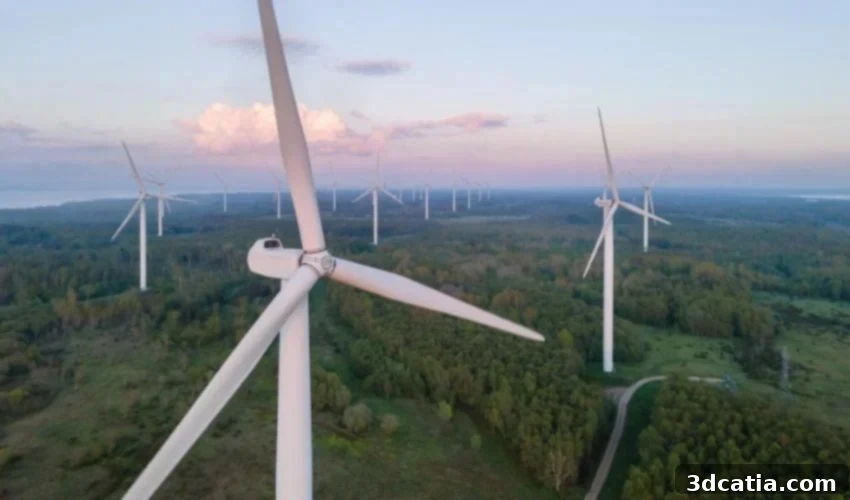
Transforming Wind Energy: The Power of 3D Printing in Turbine Innovation and Sustainable Manufacturing
The rapid adoption and growing use of 3D printing, also widely known as additive manufacturing, are fundamentally reshaping industries across various sectors, with an increasing number of companies recognizing its profound benefits in diverse manufacturing processes. The energy sector, particularly the crucial domain of renewable energies, is certainly no exception to this transformative trend. According to an insightful report from Additive Manufacturing Research, the market for 3D printing within this vital sector is projected to reach an impressive €17 billion by 2032. This substantial growth forecast underscores the pivotal role 3D printing is expected to play, especially in the advanced development, meticulous optimization, and ongoing maintenance of essential wind energy equipment, thereby accelerating the global transition towards sustainable power generation. This innovative technology promises to enhance efficiency, reduce costs, and introduce unparalleled flexibility into the production lifecycle of wind turbines.
Key market players are increasingly acknowledging the compelling advantages that 3D printing brings to the field of renewable energies, with wind power leading the charge. This sophisticated technology offers a revolutionary approach to manufacturing, capable of significantly reducing production costs while simultaneously enabling unparalleled size and design customization to meet the specific needs and environmental conditions of each unique wind farm location. Furthermore, additive manufacturing directly addresses some of the long-standing challenges posed by traditional methods of manufacturing wind turbines. For instance, conventional wind turbine blades are typically made from glass-fiber reinforced plastic – a material notorious for its difficulty in recycling, presenting a significant environmental hurdle. 3D printing opens avenues for exploring alternative, more sustainable materials and production techniques that can contribute to a more circular economy within the wind energy sector, fostering innovation from concept to deployment.

Photo Credits: GE General Electric
Advanced 3D Printing Processes and Materials Utilized in Wind Energy
A diverse array of 3D printing techniques are being strategically deployed within the burgeoning wind energy sector, each offering distinct advantages for specific applications, ranging from rapid prototyping to high-performance component fabrication. Among these, Fused Deposition Modeling (FDM) technology holds a notable place. This method is frequently chosen for its versatility, accessibility, and cost-effectiveness in the rapid manufacture of functional prototypes, tooling, jigs, fixtures, and various non-critical parts, enabling quick design iterations and validation. Another widely adopted and more advanced method is Selective Laser Sintering (SLS), which often utilizes high-performance engineering plastics like nylon. The inherent advantages of SLS include the production of prototypes and finished products with excellent mechanical stability, intricate geometries, and superior surface finishes, making it particularly well-suited for durable wind energy components, especially smaller, complex parts that demand precision and strength. In addition to these, binder jetting is also frequently employed, particularly for producing large, complex sand molds for metal casting, which is a critical process for certain large turbine components, offering speed and flexibility in mold creation.
For applications demanding the highest levels of precision, mechanical strength, and material performance, Direct Metal Laser Sintering (DMLS) has already been successfully implemented in the wind energy sector. This advanced metallic additive manufacturing technique allows for the 3D printing of highly precise and complex metal parts, whether for critical prototypes, high-stress final components, or the intricate repair of existing wind turbine infrastructure. Leading industry players such as Siemens Gamesa Renewable Energy and Vestas have already leveraged DMLS to manufacture and optimize various components of their sophisticated turbines, demonstrating its efficacy in improving efficiency, durability, and extending component lifespans. Beyond these advanced techniques, the wind turbine industry also frequently makes use of more accessible polymer materials like PLA and ABS in the rapid manufacturing of functional prototypes and durable housings for various wind turbine systems. Furthermore, a broad spectrum of engineering-grade materials, including various grades of nylon, polyamide, specialized metal powders (such as stainless steel, titanium, and aluminum alloys), advanced composite materials reinforced with glass and carbon fibers, and high-performance resins, are routinely used in 3D printing to precisely meet the industry’s diverse and specific functional requirements, from lightweight structural elements to corrosion-resistant parts, ensuring optimal performance in demanding environments.
Exploring the Advantages and Current Limitations of 3D Printing in Wind Energy
The integration of 3D printing into the wind energy sector offers a multitude of compelling advantages, particularly in the realm of product development, design iteration, and supply chain optimization. As already mentioned, 3D printing is exceptionally well suited for the rapid and economical production of prototypes. This inherent efficiency stems from the technology’s ability to quickly translate digital designs into physical objects, significantly reducing lead times and fostering an environment of accelerated innovation. By allowing engineers to rapidly test, refine, and iterate designs for wind turbine components, additive manufacturing dramatically shortens research and development cycles, driving down costs associated with design validation and reducing time to market for new innovations. Furthermore, 3D printing provides the unparalleled capability to produce far more complex, organic, and optimized shapes than those achievable through traditional subtractive or formative manufacturing methods. This design freedom directly translates to improved aerodynamic performance for rotor blades and enhanced structural integrity for other critical components, as vividly illustrated by a pioneering research project carried out at the Technical University of Berlin. As part of this study, researchers succeeded in printing an entire, fully functional wind turbine in one piece using the large-format BigRep 3D printer, demonstrating the potential for integrated design and manufacturing of complex systems.
Moreover, the bespoke nature of additive manufacturing makes it possible to design and produce custom-made wind turbine parts tailored precisely to the unique environmental and logistical requirements of individual customers or specific installation sites. This adaptable approach ensures optimal performance and efficiency. The use of 3D printing also offers the transformative possibility of producing components directly on site, a concept often referred to as distributed manufacturing. This provides greater flexibility to continuously adjust and refine molds and components as needed, minimizing delays and costly errors. This approach dramatically reduces the substantial costs associated with transporting oversized molded parts, which can be a major logistical and financial burden, particularly for remote or challenging locations. It also facilitates the swift and economical supply of new or replacement printed molds, significantly minimizing downtime. In the USA, for example, transportation constraints often impose strict length limits of 53 to 62 meters for rotor blades due to the existing rail and road infrastructure. This is precisely why 3D printing, especially when strategically combined with advanced robotics and automation, offers considerable potential for facilitating on-site manufacturing, particularly for the production of larger, more powerful equipment, thus overcoming these logistical bottlenecks and enabling the deployment of next-generation, higher-capacity wind turbines.
Given the notoriously long lead times often associated with traditional production methods for large-scale industrial components, 3D printing also offers a revolutionary solution for the rapid and on-demand production of replacement parts. This capability dramatically reduces ordering and manufacturing times, effectively eliminating the need for companies to constantly maintain high and costly inventory levels of spare parts, which can tie up significant capital and warehouse space. Moreover, this technology enables the creation of highly optimized, lightweight, and complex internal structures for wind turbines. By strategically reducing the overall weight of these massive structures, 3D printing contributes to lower material consumption, decreased transportation costs during assembly, and potentially more efficient operation due to reduced inertial forces, further enhancing the economic and environmental viability of wind energy projects.
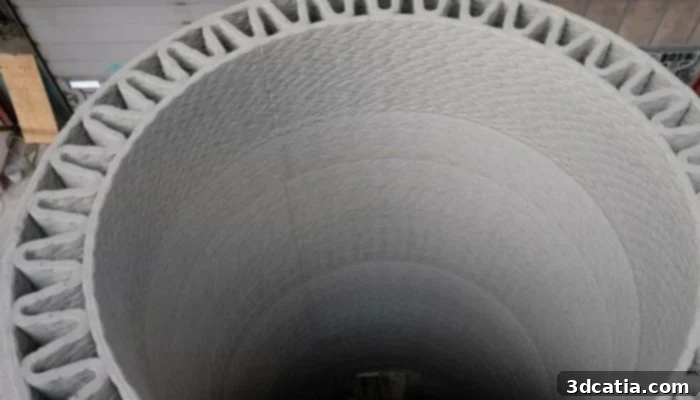
3D printing offers the advantage of being able to produce wind turbines directly on site. (photo credits: en-former)
That does not mean there are not still significant challenges and changes required for widespread adoption. Although 3D printing offers undeniable advantages in terms of reducing the cost and time for producing prototypes and custom tooling, the initial capital investment required for industrial-grade 3D printers, especially large-format systems capable of producing significant turbine components, along with the specialized materials and highly skilled labor, remains very high. This substantial upfront cost can present a barrier to entry and lead to significant financial outlays when integrating this technology into existing manufacturing workflows. In addition, it is often difficult to meet the stringent quality requirements, regulatory standards, and certifications demanded by the highly regulated energy sector when using 3D printing. Ensuring the long-term reliability and structural integrity of 3D-printed components in harsh operational environments, coupled with the need for rigorous testing and validation, often results in additional costs and extended timelines for approval and market acceptance.
Beyond financial and regulatory hurdles, there are still practical limitations concerning the maximum size of wind turbine parts that can be efficiently and economically 3D printed. While pioneering projects such as the Additive Construction for Wind Blades (ACC) initiative are actively pushing these boundaries, they remain among the few leading efforts capable of printing very large-scale wind turbine components. The sheer dimensions of modern turbine blades and towers present significant challenges for current additive manufacturing platforms. Given that the industry’s collective experience with 3D printing in the wind energy sector is still relatively limited and evolving compared to traditional manufacturing, comprehensive long-term data on the performance and durability of 3D-printed parts under real-world operational conditions is still accumulating. It therefore remains to be conclusively seen whether 3D-printed components will consistently exhibit the necessary reliable and stable characteristics over the extensive operational lifespans expected of modern wind turbines, typically 20-25 years or more, requiring continuous research and validation.
Pioneering 3D Printing Applications in Wind Turbine Manufacturing and Beyond
3D printing is rapidly emerging as a pivotal technology, influencing various stages throughout the wind turbine production process, from initial design and prototyping to full-scale deployment and ongoing maintenance. Additive manufacturing is particularly instrumental for the agile production of both critical components and complex molds, as well as for the crucial task of rapid prototyping new designs. This method enables engineers to swiftly create and test prototypes for rigorous evaluation and iterative improvement before committing to mass production, significantly accelerating the design cycle and enhancing product quality. A leading example is US-based industrial giant General Electric (GE), which commenced 3D printing large wind turbine components in 2019. Further solidifying its commitment, GE opened a dedicated 3D printing plant in the USA in 2021, focused exclusively on advanced research and development for additive manufacturing applications in energy. GE has also successfully leveraged 3D printing to manufacture lighter, more efficient turbine blades for its renowned GE9X aircraft engines, showcasing the remarkable weight reduction and performance benefits that can be directly transferred to wind turbine technology, leading to more efficient energy capture.
Another innovative company aggressively exploiting 3D printing in this dynamic sector is the startup Orbital Composites. Specializing in the production of cutting-edge turbines, extremely large wind turbine blades, robust foundations, and towering structures, Orbital Composites utilizes advanced on-site, high-throughput, large-scale additive manufacturing robotics. As part of an ambitious project, Orbital Composites aims to rigorously demonstrate and validate the efficacy of its specialized 3D printing robots for the efficient and scalable manufacture of next-generation wind turbine blades. The company harbors even grander ambitions, aiming to develop integrated systems capable of 3D printing colossal wind blades exceeding 100 meters in length. Furthermore, they envision the transformative capability of manufacturing offshore wind turbines directly on board specialized vessels at sea, revolutionizing the logistics, scale, and environmental impact of offshore wind farm development by reducing the need for complex onshore transport.
To realize these groundbreaking and ambitious goals, Orbital Composites has forged strategic collaborations with esteemed research institutions such as Oak Ridge National Laboratory (ORNL) and the University of Maine, whose significant research contributions will be further explored in a subsequent section. These partnerships are critical for advancing material science, robotics, and large-scale additive processes required for such innovative manufacturing. Orbital Composites has already secured substantial financial backing, receiving $4 million in support from the Department of Energy (DOE) and the Office of Energy Efficiency and Renewable Energy (EERE), underscoring the strategic national importance of their endeavors in advancing renewable energy infrastructure through pioneering additive manufacturing technologies.
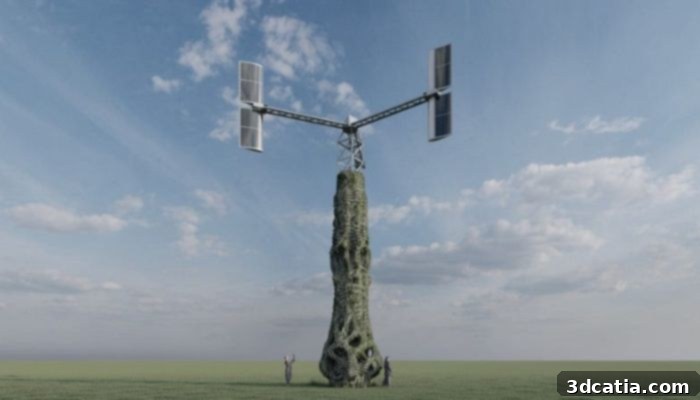
Photo Credits: Soleolico
Advancing the Frontier: Groundbreaking Research into 3D Printing in the Wind Energy Sector
Academic and industrial researchers globally are actively investigating and pushing the boundaries of 3D printing applications within the wind energy domain, recognizing its potential to solve complex engineering challenges. A notable endeavor is the project at the Technical University of Berlin, aptly titled “3D Printing Powers Wind Turbine Research.” This innovative study, spearheaded by technical engineer Immanuel Dorn and master’s student in engineering and project instructor Sascha Krumbein, focuses intently on the optimization of wind turbine rotor blades using the inherent advantages of 3D printing. Their comprehensive work encompasses rigorous testing of various blade configurations within a large-scale wind tunnel, where they meticulously evaluate the aerodynamic performance and structural integrity of rotors subjected to multiple production iterations, utilizing a diverse range of 3D printed materials. The research process begins with sophisticated aerodynamic design, seamlessly transitioning into detailed structural design, which involves careful consideration of infill patterns, material anisotropic properties, and optimal material selection. This iterative process often requires several cycles of adjustment and adaptation to fine-tune the chosen materials and geometries for maximum efficiency and durability. Finally, the team conducts critical “real-life” aerodynamic tests in their advanced wind tunnel, including simulated crash tests, to thoroughly assess the performance and resilience of the innovative blades under challenging operational conditions, providing invaluable data for industrial application.
Across the Atlantic, numerous American universities are also deeply engaged in cutting-edge research in this vital field, contributing significantly to the technological advancements. Purdue University in Indiana, for instance, in a significant collaboration with RCAM Technologies and Floating Wind Technology Company, is diligently working on the development of more cost-effective and structurally efficient concrete turbine anchors and foundations, which are critical for both onshore and offshore installations. Simultaneously, they are exploring the transformative potential of additive tool manufacturing for enhancing the production processes of wind turbine rotor blades. This multifaceted project, conducted in robust partnership with several private companies and generously supported by the US Department of Energy (DOE) with a substantial grant of $2.8 million, is explicitly designed to accelerate tool manufacturing processes and dramatically reduce the overall cost of finished wind energy products through the strategic application of 3D printing technologies. This research promises to deliver tangible improvements in both the economic viability and environmental impact of wind power generation, making clean energy more accessible and affordable.
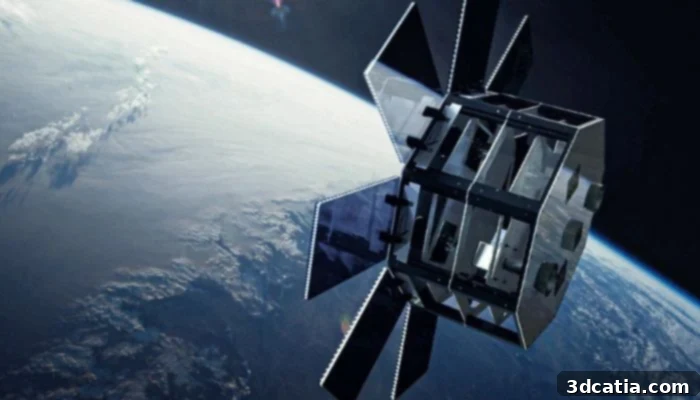
As part of the “3D Printing Powers Wind Turbine Research” project, the team from the Technical University of Berlin is investigating how to optimize rotor blades using 3D printing. (photo credits: BigRep)
In conclusion, it is unequivocally clear that the strategic integration and utilization of 3D printing in wind energy are gaining escalating importance, demonstrating immense potential for fostering groundbreaking innovation and significantly enhancing operational efficiency across the sector. Leading companies and pioneering research institutes across the globe are keenly recognizing the multifaceted benefits offered by this advanced technology, consequently investing substantial resources into the continued development and practical application of additive manufacturing methods. This collaborative and concerted effort is poised to redefine wind turbine design, production, and maintenance strategies for decades to come, contributing significantly to a sustainable energy future.
The extensive and diverse applications of 3D printing span a wide spectrum, ranging from the rapid and precise production of functional prototypes and specialized components to the revolutionary manufacture of entire wind turbines, potentially on-site at a scale previously unimaginable. These capabilities afford an unparalleled degree of flexibility, design freedom, and adaptability that traditional manufacturing methods simply cannot match, especially for complex geometries, challenging material requirements, or geographically dispersed projects. While a number of technical, economic, and regulatory challenges undoubtedly persist, requiring ongoing research, standardization, and investment, the pathway is now firmly established for 3D printing in wind energy to profoundly transform the sector in a sustainable manner, driving down costs, improving performance, and ultimately furthering global access to clean, renewable energy. The ongoing advancements in materials science, printer technology, and process validation will continue to solidify additive manufacturing’s critical and expanding role in the future of wind power, ensuring a more efficient and sustainable tomorrow.
What are your thoughts on the innovative use of 3D printing in the rapidly evolving wind energy sector? We invite you to share your insights and perspectives in a comment below or join the conversation on our LinkedIn, Facebook, and Twitter pages! Don’t forget to sign up for our free weekly newsletter here to receive the very latest 3D printing news, industry analyses, and exclusive content directly to your inbox! You can also explore all our informative videos and engaging content on our YouTube channel for deeper dives into the world of additive manufacturing.
*Cover Photo Credits: Photocase