
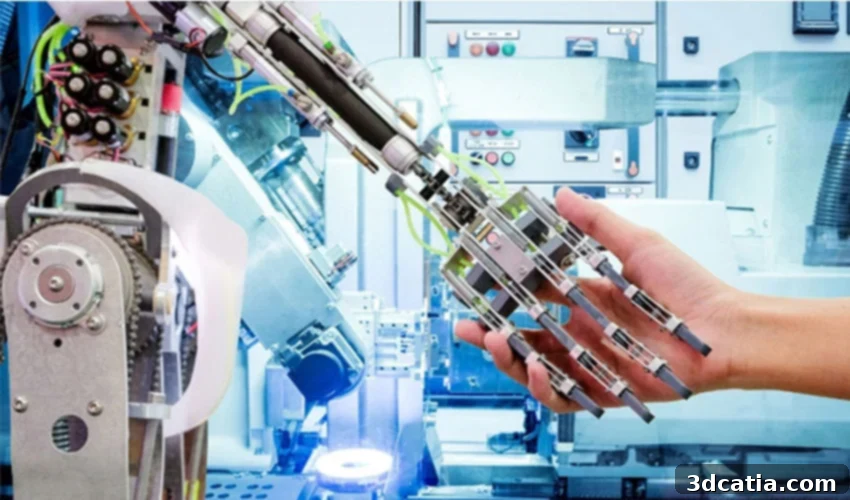
The Synergistic Future: How Artificial Intelligence is Revolutionizing 3D Printing and Additive Manufacturing
In today’s rapidly evolving technological landscape, terms such as Artificial Intelligence (AI), Blockchain, and Industry 4.0 are increasingly prevalent in discussions across various sectors. Each of these groundbreaking technologies, individually, possesses the capacity to profoundly impact global economies and transform existing production paradigms. However, a more compelling and often overlooked aspect is the immense potential that emerges when these “disruptive” technologies are integrated. This convergence opens up an entirely new realm of possibilities, fostering innovations that were previously unimaginable and setting the stage for the next industrial revolution.
Our particular focus here is on the fascinating intersection of these advanced technologies with additive manufacturing, more commonly known as 3D printing. This article delves into the intricate relationship between artificial intelligence and 3D printing, exploring the vast potential unlocked when these two forces combine. We aim to understand the specific benefits, the innovative applications that arise, and the inherent limitations or challenges that must be addressed to fully harness this synergy. By examining practical examples and expert insights, we can better grasp how AI is not just enhancing but fundamentally reshaping the capabilities and future trajectory of 3D printing.
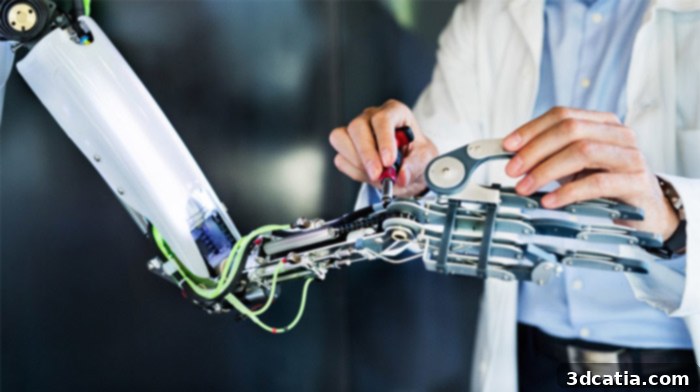
Many new technologies are disrupting current manufacturing techniques
Understanding Artificial Intelligence and its Core Concepts
Before delving into the synergy, it’s crucial to establish a clear understanding of artificial intelligence. Dr. Thomas Wilde, a prominent entrepreneur and investor specializing in AI software solutions, defines AI as a discipline encompassing “all the processes that help machines to perceive, think, and act like humans.” This broad definition highlights AI’s expansive scope, covering a diverse array of capabilities such as natural language processing, advanced image recognition, complex data analysis, and sophisticated motor skills in robotics. In our everyday lives, AI is seamlessly integrated into various devices and services, from facial recognition on smartphones to the increasingly common voice assistants like Amazon’s Alexa, Apple’s Siri, and Google Assistant, which respond to our commands and learn from our interactions.
The field of AI is often associated with more specific terms like machine learning, neural networks, deep learning, automation, and computer vision. At its heart, machine learning allows systems to learn from data, identify patterns, and make decisions with minimal human intervention. Neural networks, inspired by the human brain, form the backbone of deep learning, enabling AI to process complex information, such as images and speech, with remarkable accuracy. This capacity for autonomous problem-solving, guided by historical data and experience, is precisely what makes AI a transformative partner for 3D printing technologies, promising to elevate their performance, reduce errors, and pave the way for fully automated production environments.
The Transformative Power of Combining Artificial Intelligence and 3D Printing
The integration of artificial intelligence with 3D printing technologies represents a monumental leap forward in manufacturing. By allowing machines to independently solve problems based on vast datasets and past experiences, AI can significantly enhance the performance and efficiency of 3D printers. This synergy not only reduces the potential for human error but also facilitates the complete automation of complex production processes. Across the globe, an increasing number of startups and research initiatives are dedicated to embedding AI capabilities into innovative 3D printing products and services, signaling a clear shift towards more intelligent and autonomous manufacturing.
The applications of this powerful combination are diverse and span the entire additive manufacturing lifecycle. From automating the intricate workflow of 3D printing to accurately predicting part quality and accelerating the development of novel materials, AI is proving to be an invaluable tool. We have engaged with several experts who are at the forefront of developing systems that leverage AI in these critical areas, and their insights provide a glimpse into the future of intelligent manufacturing.

Many electronic devices have integrated AI nowadays
Automating the 3D Printing Workflow for Enhanced Efficiency
One of the most immediate and impactful applications of AI in additive manufacturing is the automation of the entire 3D printing workflow. This intricate process encompasses various stages, beginning with the initial design and creation of a digital model (CAD file), followed by its meticulous preparation for printing using specialized slicing software, and culminating in the physical printing itself. London-based company AMFG (Autonomous Manufacturing) offers a comprehensive software solution designed to streamline these steps. Keyvan Karimi, CEO of AMFG, states, “With our software solution designed for the 3D printing workflow, we enable the automation of important steps such as production management.”
AMFG’s platform leverages artificial intelligence to automate numerous manual, time-consuming tasks. This includes efficient data collection, precise cost tracking, and optimized production planning. The software intelligently analyzes various parameters to enhance overall production capacity, primarily by improving machine utilization rates and meticulously scheduling print orders based on printer availability and material requirements. All these critical functions are executed autonomously by the AI system. Furthermore, AI assists in material selection, offering informed recommendations based on the specific requirements of the part being printed, thereby ensuring optimal performance and results.
Despite these significant advancements, Karimi provides a realistic perspective: “We are still a long way from using artificial intelligence to control the entire additive manufacturing process.” While AI can automate a substantial portion of the workflow, certain individual tasks, particularly in post-processing, still require human intervention. Post-processing remains a time-consuming aspect of additive manufacturing, underscoring the importance of optimizing the initial 3D file and print parameters to minimize subsequent manual work. The goal is to maximize the efficiency gained through AI, even as we acknowledge the areas where human expertise remains indispensable.

AMFG’s solution can be used to automate production workflows
Expanding the Horizon of 3D Printing Materials with AI
The combination of artificial intelligence and 3D printing is also instrumental in broadening the spectrum of compatible materials, which is crucial for meeting the rigorous demands of advanced industrial sectors like aerospace. Industries such as these frequently require high-temperature materials capable of withstanding extreme conditions. A prime example of this innovative application is the futureAM project, initiated in 2017 by the Fraunhofer Institute IWS. Prof. Ing. Frank Brückner, Head of the Business Area Generating and Printing at Fraunhofer IWS and AMCD (Additive Manufacturing Center Dresden), elaborates on the challenge: “Aircraft engines could operate at higher temperatures and more efficiently if most materials did not fail at temperatures above 1200 degrees Celsius.”
This is where AI plays a pivotal role. As Professor Brückner explains, “The processing of new high-performance materials is very complex and requires fine tuning of all process parameters. That’s why we monitor the 3D printing process with a variety of different sensors. Using AI, we then evaluate this data stream and identify hidden relationships that are not recognizable to humans.” The inherent advantage of artificial intelligence lies in its unparalleled ability to rapidly process and analyze colossal volumes of data—a task that would be prohibitively tedious and time-consuming for human researchers. Through this sophisticated data analysis, AI enables researchers to successfully process and optimize complex alloys, ensuring that the desired material properties are consistently maintained throughout the additive manufacturing process.
By simulating material behaviors under various printing conditions and predicting optimal parameters, AI significantly accelerates the discovery and qualification of new materials. This not only opens doors to developing materials with superior strength, thermal resistance, and durability but also reduces the extensive trial-and-error traditionally associated with material science. The ability to push beyond conventional material limits means 3D printing can cater to even more demanding applications, fueling innovation in fields from aerospace and automotive to medical implants and energy, ultimately contributing to more efficient and resilient engineering solutions.
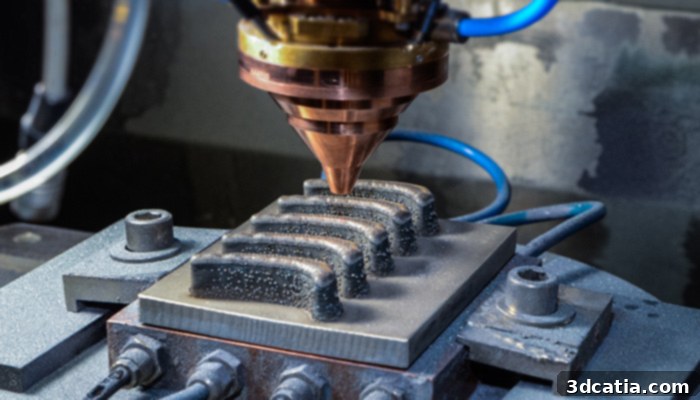
3D printed turbine blades printed | Credits: Fraunhofer IWS
Optimizing the 3D Printing Process and Ensuring Quality
Beyond automation and material development, AI is fundamentally transforming the 3D printing process itself by enabling predictive analytics and real-time quality control. For instance, AI algorithms can thoroughly analyze the printability of an object even before the manufacturing process commences. This pre-analysis can identify potential structural weaknesses, design flaws, or support structure issues, significantly reducing the likelihood of print failures. Moreover, AI can accurately predict the quality of a finished part and actively control printing parameters to avert errors, thereby saving valuable time, materials, and resources.
Printsyst, a pioneering startup, is actively pursuing these advancements, particularly within the demanding aerospace industry. Their patented AI algorithm is meticulously designed to identify the functional requirements of parts and dramatically improve the print success rate. This innovative solution is built upon a foundation of extensive data derived from previous successful additive manufacturing projects. By leveraging empirically proven print parameters, the AI can precisely estimate component costs, manufacturing timelines, and delivery schedules. Crucially, it empowers manufacturers to enhance the quality and reliability of their printed products. The paramount benefit is a significant increase in productivity coupled with a substantial reduction in error risks, which are exceptionally costly in sectors such as aerospace where precision and reliability are non-negotiable.
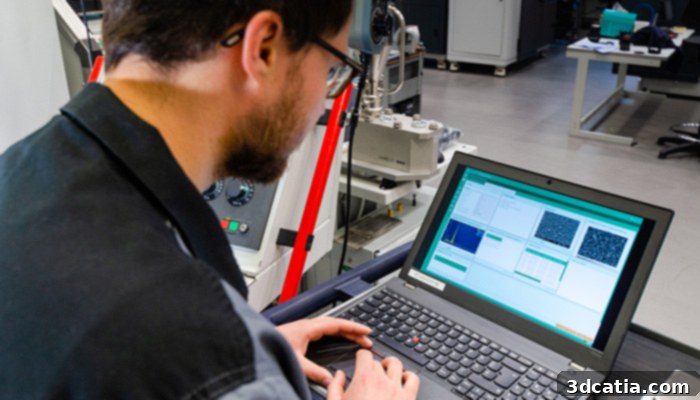
Data is collected in the IWS database and processed for AI | Credits: Frauhofer IWS
Eitan Yona, co-founder of Printsyst, highlights the dramatic efficiency gains: “We reduce the average 3D print preparation process from 30 minutes to 5 seconds for each individual job. By reducing this time, we increase printer utilization and by eliminating errors, we reduce iterations.” This remarkable acceleration is a testament to how AI effectively streamlines a traditionally manual and often complex process, delivering superior results with unprecedented speed and accuracy. Such optimization is critical for scaling additive manufacturing from prototyping to mass production.
Optimization also extends to comprehensive printability analysis, often referred to as pre-print part evaluation. AMFG, for example, has integrated a feature into its software suite that rigorously assesses whether a part is genuinely suitable for 3D printing. This evaluation considers critical factors such as stability, geometric complexity, and resilience, ensuring that only viable designs proceed to production. This capability is particularly vital for companies striving for maximum efficiency and reliability in their additive manufacturing operations. Keyvan Karimi succinctly summarizes the imperative: “We want to use AI to improve our software so that 3D printing departments can effectively control their production processes and guarantee the accuracy and quality of the parts they produce. This is becoming increasingly important as the industry continues to move towards the production of finished parts.” The goal is not just to print faster, but to print right the first time, every time, establishing additive manufacturing as a dependable method for end-use components.
Addressing the Risks and Ethical Considerations
While the examples of innovation and benefits are numerous, it is equally important to critically examine the potential risks and limitations associated with the powerful combination of artificial intelligence and 3D printing. Like any nascent technology, this synergy presents its own set of challenges. In the 3D printing market alone, we’ve seen concerns arise regarding applications such as 3D printed guns, highlighting ethical and security dilemmas. When artificial intelligence is integrated, the conversation often shifts to the more existential question of machines potentially surpassing human control or capabilities. If 3D technologies can easily replicate numerous objects, and AI empowers these machines with autonomous decision-making, our privacy and safety could face unprecedented compromises.
Consider the example of the Astro dog, a robot designed using 3D printing and equipped with an AI-driven brain that bases its decisions on environmental influences. What happens if these choices exceed human foresight or intent? Could humanity lose control over such advanced robotic systems? These questions compel us to confront the ethical ramifications of developing increasingly autonomous machines, particularly when they possess the ability to physically manifest objects or actions through 3D printing. The potential for misuse, unintended consequences, or malicious applications necessitates careful consideration and robust regulatory frameworks.
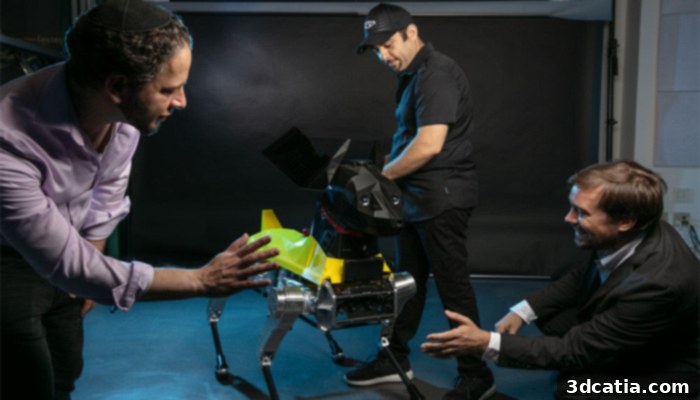
The Astro dog has been 3D printed and can move thanks to AI
Eitan Yona of Printsyst further notes that while artificial intelligence simplifies the utilization of additive manufacturing, it simultaneously diminishes the need for specialized technological understanding. He starkly reminds us, “You can print a weapon on one side and human bones on the other.” This duality underscores the profound responsibility that comes with democratizing advanced manufacturing capabilities. As AI makes 3D printing more accessible, the ethical imperative to guide its development and application responsibly becomes paramount. Addressing these concerns proactively, through thoughtful design, robust security protocols, and international collaboration, will be critical to ensuring that the benefits of AI and 3D printing outweigh their potential risks.
The Bright Future: Artificial Intelligence and 3D Printing as the Combination of Tomorrow
Despite the legitimate concerns, it’s crucial to view the future of artificial intelligence and 3D printing with optimism. The potential for positive transformation far outweighs the risks, provided we approach development with ethical foresight. Keyvan Karimi from AMFG emphatically confirms this perspective: “We believe that AI, machine learning, and other technologies in Industry 4.0 have real potential to improve the manufacturing process and allow engineers and operators to spend less time on repetitive manual tasks and more time on value-added processes. In fact, we are just scratching the surface of what is possible with these technologies.” This sentiment resonates deeply with the broader vision of Industry 4.0, where interconnected, intelligent systems drive unprecedented levels of efficiency and innovation.
Artificial intelligence and 3D printing: the combination of the future?
We are unequivocally certain that both artificial intelligence and 3D printing will play increasingly pivotal roles in the coming years, particularly within industrial applications. For Eitan Yona of Printsyst, the connection between these two technologies is far more profound than commonly perceived: “Today’s additive manufacturing requires a high degree of specialized knowledge for the production of parts. AI will adopt important rules in the 3D printing workflow. Faster and smarter algorithms will reduce the manual process performed by humans. AI will then allow access to large amounts of data to better manage 3D technologies.” This underscores AI’s role not just as an enhancer, but as a critical enabler for widespread adoption and mastery of complex 3D printing processes.
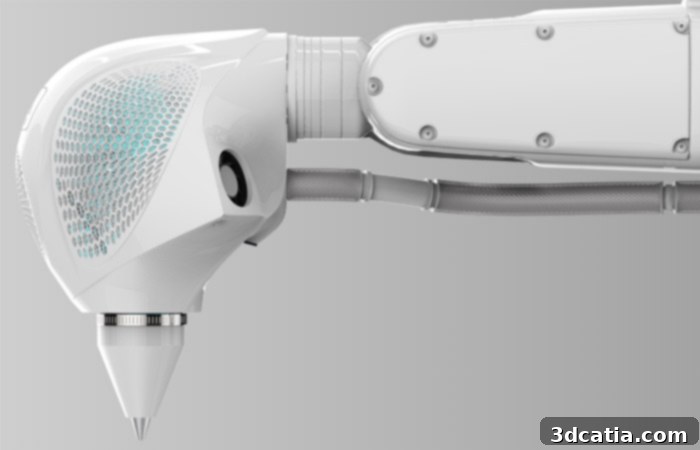
The solution developed by AI Build makes it possible to correct printing errors in real time | Credits: AI Build
At this moment, the synergy between AI and 3D printing is still in its nascent stages, yet it already exhibits immense promise. The examples highlighted throughout this article vividly demonstrate how AI and 3D printing are jointly stimulating innovation, significantly enhancing production efficiency, and providing companies with a distinct competitive advantage. From automated workflows and advanced material development to unparalleled process optimization and quality assurance, the transformative impact is undeniable. While the full extent of this technological revolution remains to be seen, one truth is abundantly clear: the collaborative future of artificial intelligence and 3D printing is exceptionally promising, poised to redefine the boundaries of what is manufacturable.
What are your thoughts on the powerful convergence of artificial intelligence and 3D printing? We encourage you to share your insights in the comments section below or join the conversation on our Facebook and Twitter pages! Don’t forget to sign up for our free weekly Newsletter to receive all the latest news and updates in 3D printing directly in your inbox.