
Revolutionizing Esophageal Cancer Treatment: Innovative 3D Printed Stents Offer Sustained Drug Delivery
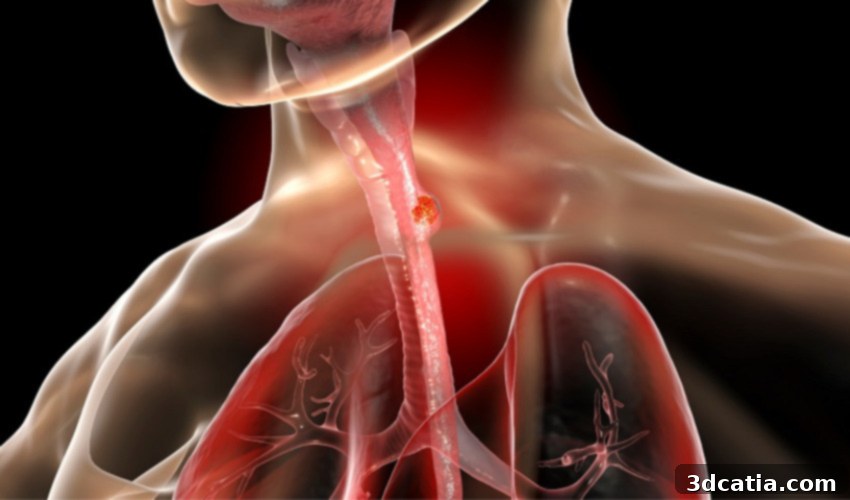
Esophageal cancer, a formidable adversary in the global fight against cancer, remains a significant health challenge. Ranking as the seventh most common cancer worldwide and the sixth leading cause of cancer deaths, its severity underscores the urgent need for more effective and targeted treatment strategies. In a groundbreaking development, researchers at the University of South Australia (UniSA) have engineered advanced 3D printed esophageal stents that promise to transform the landscape of chemotherapy delivery for patients battling this aggressive disease. This innovative approach harnesses the power of medical additive manufacturing to create personalized, drug-eluting devices designed for sustained therapeutic action directly at the tumor site.
The team utilized fused deposition modeling (FDM), a widely accessible 3D printing technique, to fabricate these novel stents. What sets them apart is their unique capability to incorporate and continuously diffuse 5-fluorouracil (5-FU), a commonly used chemotherapy drug, over an extended period. This sustained local delivery mechanism represents a paradigm shift from conventional treatments, offering the potential for enhanced efficacy, reduced systemic side effects, and ultimately, improved patient outcomes. The implications of this research are profound, hinting at a new era of personalized medicine where medical devices are not merely supportive but actively therapeutic.
Addressing the Dual Challenge of Esophageal Cancer
Esophageal cancer presents a dual threat to patients, manifesting not only as a life-threatening malignancy but also through debilitating symptoms that severely impact quality of life. The disease is notoriously aggressive, with five-year survival rates typically ranging from a dismal 5% to 30%, heavily dependent on the stage and early detection of the cancer. A primary symptom, and often the first indicator, is dysphagia – difficulty or inability to swallow food and liquids. This can lead to severe malnutrition, dehydration, and a significant decline in a patient’s overall well-being. Conventional esophageal stents are often employed to alleviate dysphagia by physically keeping the esophageal passageway open, thereby enabling patients to eat and drink more comfortably. However, these traditional stents are limited in their functionality, offering symptomatic relief but no direct anti-cancer intervention.
The UniSA 3D printed esophageal stents are engineered to tackle both aspects of this challenge simultaneously. Firstly, they effectively relieve dysphagia by maintaining an open lumen, facilitating easier swallowing and improving nutritional intake. This immediate symptomatic relief is crucial for patient comfort and strength during arduous cancer treatment. Secondly, and most significantly, these stents are designed as active drug delivery systems. Each stent is loaded with 5-FU, meticulously formulated to release the anti-cancer medication directly to the cancerous tissue over an impressive period of up to 110 days. This localized and sustained drug release is critical because, unlike traditional stents that can become compromised by tumor ingrowth or migration, these drug-eluting stents actively work to inhibit cancer cell proliferation at the site, thereby preventing blockages and enhancing therapeutic efficacy.
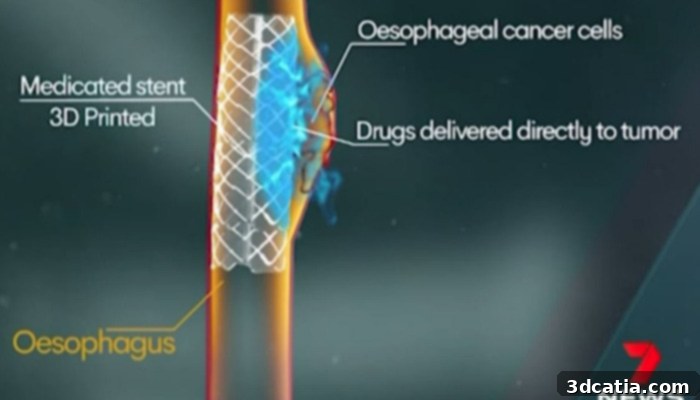
PhD Scholar Fouladian, a key researcher in the project, elaborated on the critical advantage of these new stents: “Blockages are commonly eased by an oesophageal stent – a small tube that is placed in the food pipe to keep it open – but these too can become obstructed by invading cancer cells. Our new drug-loaded oesophageal stents can help prevent further blockages by administering anti-cancer drugs directly to the tumour, limiting further growth while relieving the pressure of dysphagia.” This statement highlights the transformative potential of combining symptomatic relief with active therapeutic intervention in a single device, addressing the limitations of existing solutions and offering a more holistic approach to patient care.
3D Printing: A Catalyst for Medical Innovation and Personalized Treatment
The medical sector is witnessing a profound revolution driven by the advancements in 3D printing, also known as additive manufacturing. This technology’s ability to create complex geometries with unprecedented precision, coupled with its adaptability to various materials, makes it an ideal tool for developing highly personalized and effective medical devices. For esophageal cancer patients, this means designing stents that can be custom-fitted to individual anatomies, ensuring optimal placement, comfort, and efficacy—a significant improvement over ‘one-size-fits-all’ conventional devices.
Beyond precise customization, 3D printing unlocks possibilities for incorporating novel materials and multi-material designs, enabling functionalities previously unattainable. Researchers are exploring various applications, from developing advanced metal implants with improved osseointegration to pioneering bioprinting techniques that utilize living cells to grow bone tissues or even complex organs. In the context of these esophageal stents, 3D printing enabled the seamless integration of active pharmaceutical ingredients (APIs) directly into the polymer matrix. The UniSA team successfully combined 5-FU with a biocompatible polyurethane filament, demonstrating that the drug maintained its integrity and therapeutic efficacy even after undergoing the thermal extrusion and printing processes inherent to FDM. This technical hurdle of integrating pharmaceuticals without degradation is a critical step forward for drug-eluting devices.
Furthermore, the researchers confirmed the robustness of these drug-loaded stents under various sterilization conditions, an essential requirement for any medical implant. The stents exhibited stability when subjected to both UV and gamma sterilization processes, ensuring they can be safely prepared for clinical use without compromising their therapeutic properties. This meticulous attention to material science, drug stability, and sterilization protocols highlights the comprehensive and rigorous approach taken by the UniSA team in bringing this innovative solution closer to clinical application. The ability to control drug dosage, release kinetics, and device geometry with such precision positions 3D printing as an indispensable technology for the future of pharmacotherapy.
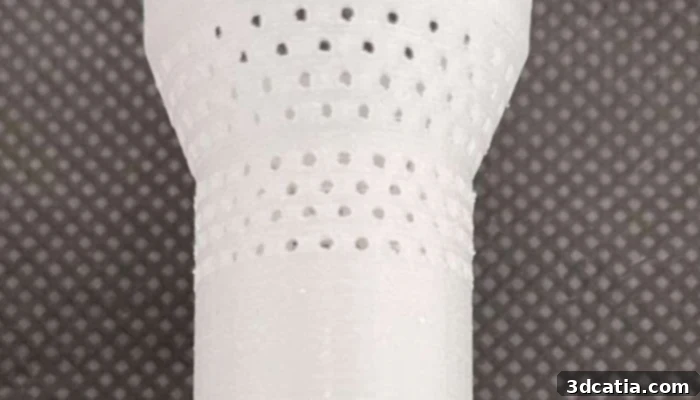
The unique design and materials used for the stents is possible through 3D printing (photo credits: University of South Australia)
Professor Sanjay Garg, Senior Researcher and Director of UniSA’s Pharmaceutical Innovation and Development Group, emphasized the broader implications of this research: “3D printing processes that combine medicines and medical devices are on the precipice of changing the way we deliver medicines. We’re now exploring the potential of 3D printing to design precise and individualized drug delivery systems.” His vision underscores a future where medical interventions are not generic but meticulously tailored to each patient’s unique biological and anatomical profile, maximizing therapeutic benefit while minimizing adverse effects. This level of personalization is particularly crucial in oncology, where treatment efficacy often hinges on precise drug concentration at the tumor site.
While further research and rigorous clinical trials are essential to validate these new drug-loaded 3D printed stents in human patients, the preliminary results are exceptionally promising. They strongly indicate that 3D printing is rapidly evolving into a powerful tool for creating patient-specific geometries and precisely calibrated drug doses, paving the way for truly individualized medicine. This technology holds immense potential not only for esophageal cancer but also for a wide range of other medical conditions requiring localized, sustained drug delivery. It represents a beacon of hope for improving the quality of life and survival rates for countless patients worldwide. For those interested in the detailed scientific findings, the complete study is available for purchase HERE.
What are your thoughts on these revolutionary 3D printed esophageal stents and their potential to transform cancer treatment? Share your insights and comments below, or engage with us on our Facebook, Twitter, and LinkedIn pages! Don’t miss out on the latest advancements in additive manufacturing—subscribe to our free weekly Newsletter here to receive top 3D printing news directly in your inbox!
*Thumbnail photo credits: UNISA