

ZENOS: Revolutionizing Cycling and Mountain Biking with an Open-Source 3D Printed Arm Prosthesis for Amputees
Innovation in assistive technology continues to break down barriers, empowering individuals with disabilities to pursue their passions without compromise. At the forefront of this movement is industrial designer Chan Lee, based in New York, who has meticulously developed ‘ZENOS’ – a groundbreaking 3D printed arm prosthesis specifically engineered for mountain bike riding and general cycling. This invention represents a significant leap forward, offering a tailored solution for amputee athletes seeking to fully engage in the exhilarating world of biking.
The ZENOS project was conceived with a clear mission: to cater to the specific needs of amputees who require a robust and reliable prosthesis for high-impact sports activities such as mountain biking and road cycling. What sets this 3D printed prosthetic apart from conventionally manufactured alternatives is its inherent flexibility and adaptability. Traditional prosthetics often come with significant design constraints, limiting movement, comfort, and functional versatility, particularly in demanding athletic environments. ZENOS, however, transcends these limitations through its innovative design and, crucially, its open-source nature. This means the design files are freely accessible, allowing individuals and communities worldwide to modify, improve, and customize the prosthesis to meet unique requirements. This open philosophy is central to the project’s aim: to dramatically reduce the prohibitive costs typically associated with high-performance medical devices, thereby making professional-grade prosthetics accessible to a much broader spectrum of disabled athletes who aspire to fully enjoy their beloved sport.
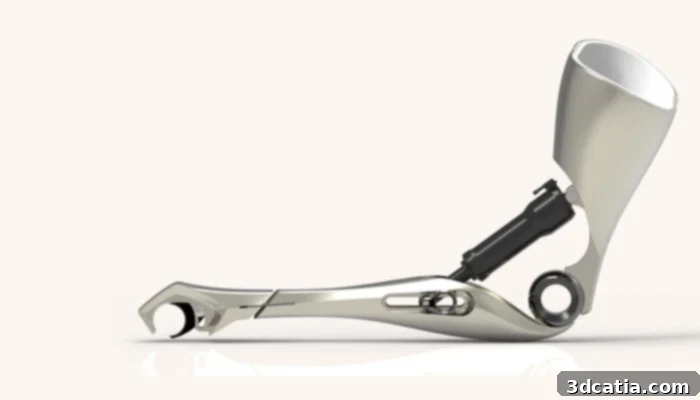
Mountain biking, with its rugged terrains, challenging trails, and dynamic movements, is an activity that captivates a diverse community, including many amputees. Yet, the pursuit of this sport often presents formidable obstacles. Conventional arm prostheses designed for active use are frequently exorbitantly expensive, placing them out of reach for many. Furthermore, they often necessitate additional, custom-fabricated equipment or complex adapters to securely attach to a bike’s handlebars, further escalating costs and complicating the user experience. These factors collectively render the sport quickly inaccessible. It is in this challenging landscape that advanced manufacturing technologies, particularly 3D printing (or additive manufacturing), have repeatedly demonstrated their unparalleled effectiveness. The ability of 3D printing to create custom-made prostheses that precisely conform to the unique anatomical and functional needs of each individual with a disability is revolutionary. Recognizing this transformative potential, Chan Lee naturally turned to this cutting-edge production method to bring the ZENOS project to life.
The inherent advantages of 3D printing for prosthetics are manifold. Unlike traditional manufacturing processes that rely on molds and subtractive methods, 3D printing builds objects layer by layer from a digital design. This allows for unparalleled customization, enabling prostheses to be perfectly fitted to the wearer, optimizing comfort and reducing potential pressure points. For an activity as physically demanding as mountain biking, a precise fit is not just a luxury, but a necessity for performance and safety. Moreover, 3D printing facilitates rapid prototyping and iterative design improvements. Designers like Chan Lee can quickly test and refine different versions of the ZENOS prosthesis, gathering feedback from users and incorporating modifications with unprecedented speed and efficiency. This agile development process ensures that the final product is not only functional but also highly optimized for real-world use. The choice of materials available for 3D printing also plays a crucial role, allowing for the creation of lightweight, durable, and resilient components capable of withstanding the rigors of cycling.
According to industrial designer Chan Lee, the sophisticated ZENOS design incorporates two particularly unique and highly functional features that address critical aspects of cyclist safety and performance. The first is an innovative quick-release locking system, and the second is an easily adjustable elbow shock absorber. The quick-release locking system is ingeniously designed with a robust hook mechanism, allowing users to rapidly and securely connect the prosthesis to their bike’s handlebars. This instant engagement ensures stability and control while riding. Equally important is the immediate release function, which enables the user to detach the prosthesis quickly and effortlessly. This is an absolutely essential feature for cyclist safety, allowing for swift disengagement in emergency situations, preventing potential entanglement or further injury during a fall. The ability to connect and disconnect with ease also enhances convenience, making transitions between riding and other activities seamless.
The second standout feature is the elbow, which is thoughtfully equipped with an integrated shock absorber. This crucial component plays a vital role in mitigating the intense impacts and vibrations that are inherent to mountain biking, particularly on uneven or technical terrain. By absorbing these forces, the shock absorber significantly reduces the potential stress and impact transferred to the rider’s shoulder and residual limb, enhancing comfort and minimizing the risk of long-term joint strain or injury. Furthermore, the designer highlights a remarkable level of user control: the cyclist can adjust the angle of the elbow to achieve the most ideal and comfortable riding position with just one hand, utilizing a quick-release clamp. This on-the-fly adjustability is revolutionary, allowing riders to adapt their setup instantly to different terrains, riding styles, or personal preferences, thereby optimizing both performance and ergonomic comfort throughout their journey. This level of personalized adjustment is often missing in traditional prosthetics and truly elevates the ZENOS experience for amputee cyclists.
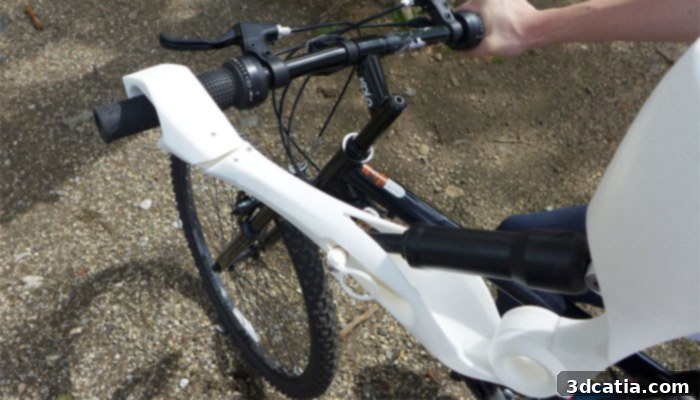
One of the most profound and forward-thinking aspects of the ZENOS project is its commitment to the open-source philosophy. The entire 3D model of the prosthesis is publicly available, offering an unprecedented opportunity for anyone in the world to download and modify it according to their specific requirements. This democratic approach to design and manufacturing has far-reaching implications. It means that the innovation is not confined to a single entity or market; instead, it empowers local communities, universities, makerspaces, and individual users to iterate on the design, adapt it for different sports or unique physical needs, and even produce it locally. This fosters a global community of innovators dedicated to improving assistive technology. By removing proprietary barriers, ZENOS can truly benefit the greatest number of people, significantly lowering the entry barrier for high-quality athletic prosthetics and offering more exhilarating thrills and freedom to all arm amputees who are passionate about cycling. The open-source model ensures that the project can evolve and improve through collective intelligence, leading to faster advancements and broader accessibility.
The ZENOS project stands as a testament to the power of human ingenuity combined with advanced technology to foster inclusion and empower individuals. Its foundational principles—customization, affordability, and accessibility—resonate strongly with other similar initiatives in the adaptive sports and assistive technology sectors. For instance, the ZENOS project shares a remarkable similarity with Paradiddle, another innovative 3D printed prosthesis designed specifically for drum players with limb differences. This connection powerfully illustrates how 3D technologies are revolutionizing the lives of people with disabilities across various domains, offering tailored solutions that enhance participation and performance. From dedicated athletes pushing the boundaries of physical endurance to passionate music fans pursuing their artistic talents, 3D printing is consistently proving to be a game-changer. These innovations don’t just provide functional replacements; they restore independence, foster self-confidence, and enable individuals to fully engage in activities that bring them joy and fulfillment. As additive manufacturing technologies continue to advance, the potential for further breakthroughs in personalized medical devices and adaptive equipment is immense, promising an even more inclusive future for everyone. You can find more comprehensive information about this incredible 3D printed arm prosthesis and the vision behind it on the designer’s official website HERE.
The development of ZENOS underscores a crucial shift towards user-centric design and community-driven innovation in the field of prosthetics. It challenges the traditional model where specialized medical devices are often prohibitively expensive and largely inaccessible. By embracing open-source principles and leveraging the versatility of 3D printing, Chan Lee has not only created a highly functional and safe arm prosthesis but has also laid the groundwork for a more equitable future in adaptive sports. This innovative approach offers a beacon of hope for countless individuals worldwide, demonstrating that passion and perseverance, supported by intelligent design and technology, can indeed overcome physical limitations. The impact extends beyond just cycling; it inspires a broader movement towards empowering people with disabilities to live their lives without boundaries, pursuing their dreams and contributing to a richer, more diverse global community.
We’d love to hear your thoughts on this inspiring project and the potential of open-source 3D printed prosthetics. Please share your insights and comments on our Facebook and Twitter pages! Don’t forget to sign up for our free weekly Newsletter to stay informed with all the latest news, innovations, and developments in the exciting world of 3D printing, delivered directly to your inbox!