
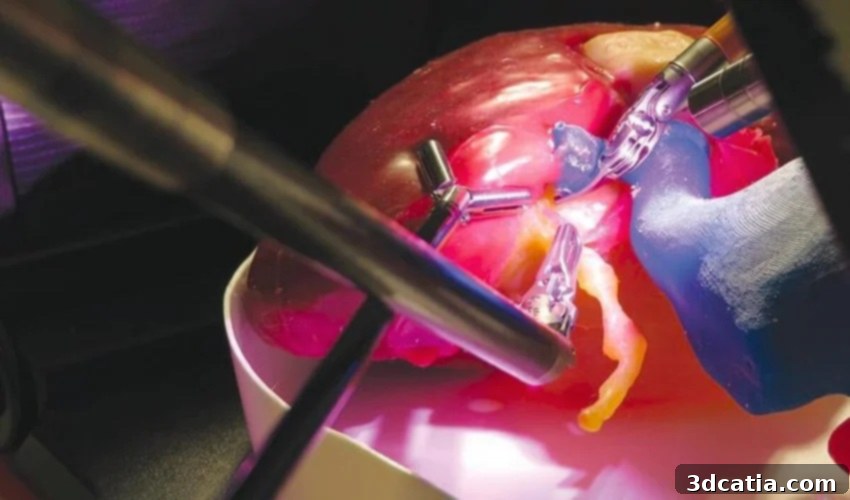
Revolutionizing Surgery: How 3D Printing Creates Realistic Organ Models for Practice and Planning
Imagine a world where surgeons could practice complex procedures on an exact replica of a patient’s internal organs before ever making an incision on the actual body. This might sound like a scene from a futuristic medical drama, but thanks to the rapid advancements in additive manufacturing, this groundbreaking possibility is swiftly becoming a tangible reality. British YouTuber Tom Scott recently brought this concept to the forefront, demonstrating the profound potential of 3D printing in modern medicine. In collaboration with the innovative company Lazarus 3D, Scott embarked on a fascinating project: creating a real-scale, anatomically precise 3D-printed model of his own internal organs. His primary goal was to explore how surgeons could benefit from rehearsing operations on a physical duplicate of the patient’s anatomy, providing an unprecedented level of preparation and insight. While Scott’s experience wasn’t a live surgical procedure, the ability to visualize and interact with a simulated operation on one’s own organs in real-time is nothing short of astonishing, offering a compelling glimpse into the future of surgical precision and safety. This remarkable demonstration powerfully underscores the immense value that 3D technology brings to surgery and the broader medical sector, paving the way for significantly improved patient outcomes and surgical training.
Additive manufacturing, commonly known as 3D printing, has ushered in an era where customized, intricate objects can be fabricated with remarkable ease and accuracy, transforming various industries. This capability holds particular significance in the medical field, where the technology’s applications are continuously expanding and revolutionizing various aspects of patient care. One of its most impactful contributions is in surgical planning, an area where patient-specific 3D printing offers a wealth of benefits. The market for 3D-printed surgical models is experiencing exponential growth, reflecting its increasing adoption and recognized value among medical professionals globally. A comprehensive study published in 2021 by Brand Essence Market Research and Consulting projected that this specialized market would reach an impressive value of $1.022 billion by 2025. This significant growth is directly attributable to ongoing technological breakthroughs, leading to the development of increasingly precise, biocompatible, and high-quality solutions specifically tailored for intricate medical applications. These innovations are not just theoretical; they are actively shaping how surgeries are planned and executed, offering safer and more effective outcomes for patients worldwide. We will now delve deeper into a compelling real-world example, illustrating how the 3D printing of organs is directly aiding in the intricate process of performing real-life surgery, enhancing both surgeon preparedness and patient understanding.
3D Printing and Advanced Organ Surgery Planning: A Patient-Specific Approach
The meticulous process of creating a patient-specific anatomical model begins with highly detailed medical imaging, providing an indispensable digital blueprint. In Tom Scott’s enlightening case, this involved undergoing a comprehensive Magnetic Resonance Imaging (MRI) scan of his abdomen. This non-invasive diagnostic procedure generated a series of intricate cross-sectional images, which were then meticulously processed and digitally stitched together. The result was the construction of a precise digital twin of his entire torso, offering an unparalleled, three-dimensional view of his unique internal anatomy. Within this sophisticated digital model, every internal organ was faithfully recreated with astonishing accuracy, providing surgeons and medical professionals with an unprecedented level of detail for analysis. It was during the expert analysis of this digital replica that an important medical discovery was made: surgeons identified a cyst in his left kidney. Faced with this newfound pathology, and eager to fully grasp the condition’s intricacies and determine the optimal surgical approach, Tom decided to take an extraordinary and innovative step: he chose to have his organs replicated physically using cutting-edge 3D printing technology. To bring this ambitious idea to fruition, he partnered with Lazarus 3D, a distinguished U.S.-based company renowned for its pioneering work in the additive manufacturing of hyper-realistic body parts and advanced medical simulators. Lazarus 3D’s proprietary Pre-Sure® models are ingeniously engineered using advanced soft silicones and specialized hydrogels. These revolutionary materials are meticulously formulated to mimic the exact tactile and physical properties of actual human tissue, including the delicate textures of organs, the elasticity of vessels, and the surrounding anatomical structures. This remarkable material realism is absolutely critical, making these models exceptionally suitable for practicing delicate surgical maneuvers such as precise incisions, complex dissections, and intricate sutures, thereby offering surgeons an invaluable, true-to-life training and planning experience that far surpasses traditional methods.
The profound impact of these realistic 3D-printed surgical models on surgical planning and training cannot be overstated; they represent a paradigm shift in medical preparation. For Tom Scott, this meant an extraordinary opportunity: being present as highly skilled surgeons simulated the entire operation on his personalized organ replicas. Utilizing advanced medical tools and technologies, the experts demonstrated with meticulous detail how they would carefully puncture and precisely cut the 3D models of the organs within the abdominal cavity, perfectly mimicking every intricate step of a real surgical procedure. What made this experience truly invaluable, both for Tom and as a testament to the technology’s potential, was the surgeon’s continuous, step-by-step explanation of each action as it was performed on the replica. This detailed, real-time walkthrough provided Tom with a profound understanding of the complex procedure, alleviating potential anxieties and empowering him with comprehensive knowledge about his own body and the planned medical intervention. For surgeons, these bespoke models offer an unparalleled opportunity to identify potential anatomical challenges, refine their techniques in a risk-free environment, and develop a precise, optimized surgical roadmap tailored to the individual patient. This ultimately enhances patient safety, significantly reduces surgical complications, and optimizes overall outcomes. The ability to physically manipulate, dissect, and repeatedly practice on a true-to-life model transforms theoretical planning into practical mastery, dramatically reducing the margin for error during actual surgery and fostering a higher level of confidence and proficiency for the surgical team.
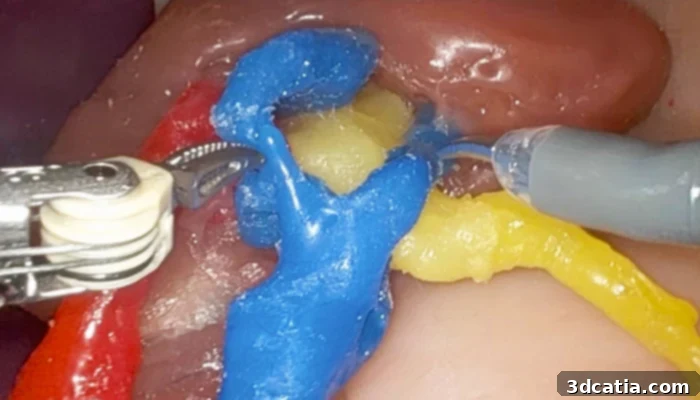
Tom Scott gained invaluable insight by visualizing the operation on his 3D printed organs in real time, enhancing patient education and confidence.
Beyond Simulation: The Broader Impact of Additive Manufacturing in Healthcare
Projects like Tom Scott’s collaboration with Lazarus 3D unequivocally demonstrate the transformative benefits that additive manufacturing brings to the medical field. The implications extend far beyond surgical rehearsal and planning, reaching into various corners of patient care, medical education, and innovation. These advancements are not merely distant aspirations; they are becoming increasingly accessible and integrated into modern healthcare practices globally. The versatility and precision of 3D printing encompass a wide spectrum of applications, each contributing significantly to personalized medicine, enhanced medical training, and improved patient outcomes across diverse specializations.
Consider the realm of **prosthetics and orthotics**, where 3D printing has already revolutionized design and manufacturing. Traditionally, these essential devices were often custom-fitted through laborious manual processes, sometimes resulting in less-than-perfect comfort or functionality for the wearer. With 3D printing, patient-specific prostheses and orthoses can be designed with unparalleled precision, perfectly matching the individual’s unique anatomy and needs. This leads to devices that are not only more comfortable and effective but can also be lighter, more aesthetically pleasing, and produced more rapidly and cost-effectively. For patients, this translates into a significant improvement in quality of life, mobility, and overall psychological well-being, fostering greater independence and activity.
**Custom implants** represent another critical and life-changing application of 3D printing in medicine. When a patient requires a bone or joint replacement, a cranial implant, or even a specialized dental implant, 3D printing allows for the creation of implants that perfectly conform to their unique biological structure and pathology. This leads to superior integration with existing tissue, significantly reduced risk of complications, and enhanced long-term performance and durability. Advanced biocompatible materials like titanium and specialized polymers can be precisely printed, creating porous structures that actively encourage bone ingrowth, further enhancing the implant’s success and stability. This unprecedented level of customization is simply not achievable with traditional mass-manufacturing methods, offering truly tailored solutions for complex anatomical challenges.
The cutting edge of medical 3D printing lies in **bioprinting**, the sophisticated process of creating living tissues and organs using bio-inks containing actual cells. While still in its early stages of development and facing significant research hurdles, bioprinting holds the ultimate promise of fabricating functional human tissues and even whole organs for transplantation, advanced drug testing, and highly accurate disease modeling. Imagine a future where a failing kidney could be replaced with a bioprinted organ grown from a patient’s own cells, thereby eliminating the critical shortage of organ donors and drastically reducing transplant rejection rates. While the complexities are immense and ethical considerations are paramount, research in this area is progressing rapidly, pushing the very boundaries of what is medically possible and offering hope for countless patients.
Furthermore, 3D printing is fundamentally revolutionizing the development and production of **specialized medical devices and surgical tools**. From custom surgical guides that ensure precise cuts during intricate bone surgery to personalized drug delivery systems tailored for an individual’s unique metabolism and genetic profile, additive manufacturing provides the unparalleled flexibility, geometric complexity, and rapid iteration capabilities needed for intricate medical applications. It allows for the rapid prototyping and testing of new tools and instruments, significantly accelerating innovation and bringing safer, more efficient, and often more ergonomic instruments to operating rooms and clinics faster than ever before. This agility in design, development, and production is an invaluable asset in a fast-evolving and demanding field like medicine, constantly striving for better patient care.
The future of medicine is undoubtedly intertwined with the continued evolution and integration of additive manufacturing. These transformative technologies foster a new era of truly **personalized medicine**, where diagnostic tools, treatments, and interventions are tailored precisely to the individual patient’s unique anatomical, physiological, and genetic needs, rather than relying on a generalized, one-size-fits-all approach. For surgeons and medical trainees, this means enhanced training opportunities, the ability to repeatedly practice and perfect complex surgical cases in a completely risk-free environment, and ultimately, achieving greater confidence, precision, and efficiency in the operating room. For patients, this translates directly into significantly safer surgeries, faster recoveries, reduced post-operative complications, and demonstrably improved health outcomes and quality of life. The ethical considerations and challenges, such as ensuring equitable access, robust regulatory approvals, and managing the costs of bespoke solutions, are important aspects that continue to be addressed as the technology matures and becomes more widespread. However, the overarching trajectory clearly points towards a future where 3D printing is not just an innovative tool, but an indispensable and integral component of advanced healthcare, fundamentally changing how we approach diagnosis, treatment, and recovery.
This pivotal shift towards personalized surgical planning and medical device creation is not just a theoretical concept but a practical reality, powerfully exemplified by Tom Scott’s firsthand experience. You can delve deeper into this fascinating intersection of technology and medicine by visiting Tom Scott’s YouTube channel, where his video provides a vivid visual and personal account of this remarkable journey, or by exploring the cutting-edge work showcased on Lazarus 3D’s official website. Both resources offer invaluable insights into how these innovations are shaping the future of healthcare and empowering medical professionals worldwide.
What are your thoughts on utilizing 3D printing for simulating organ surgery and its broader implications for transforming medical practice? We invite you to share your valuable perspectives and engage with our vibrant community by leaving a comment below, or by connecting with us on our dynamic social media channels: LinkedIn, Facebook, and Twitter. Don’t miss out on the latest groundbreaking news, emerging trends, and expert analyses in the world of additive manufacturing; make sure to sign up for our free weekly Newsletter here to have all the essential 3D printing updates delivered directly to your inbox! Additionally, for a comprehensive visual experience and in-depth discussions on various aspects of 3D printing, you can explore all our compelling videos on our YouTube channel.
*All Photo Credits: Tom Scott / Lazarus 3D