
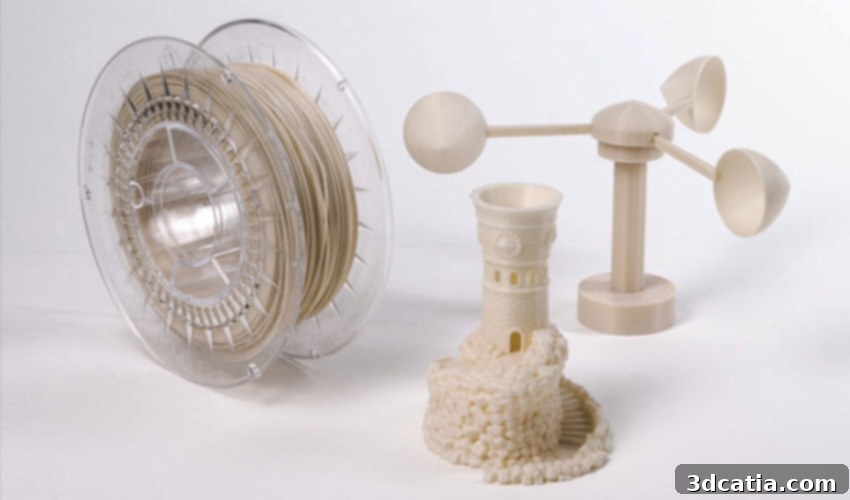
ASA Filament: The Ultimate Guide to Weather-Resistant and Durable 3D Prints
Acrylonitrile Styrene Acrylate, commonly known as ASA, stands out as a high-performance amorphous thermoplastic increasingly utilized in Fused Deposition Modeling (FDM) and Fused Filament Fabrication (FFF) 3D printing. Often likened to ABS (Acrylonitrile Butadiene Styrene) due to its similar chemical composition and mechanical properties, ASA distinguishes itself primarily through its acrylic elastomer component, in contrast to ABS’s butadiene elastomer. This crucial difference grants ASA superior resistance to UV radiation and weathering, making it an ideal choice for outdoor applications where ABS would typically degrade and discolor over time. This comprehensive guide will delve into the production, unique characteristics, optimal 3D printing parameters, and diverse applications of ASA filament, concluding with an overview of leading manufacturers and pricing considerations.
Understanding the Production and Material Science of ASA
ASA was initially introduced to the market by chemical giant BASF in 1970 under the brand name Luran® S. Since its inception, ASA has evolved to be highly versatile, suitable for molding, injection, extrusion, and, notably, FDM 3D printing. As a “terpolymer,” ASA is synthesized from three distinct monomers: acrylonitrile, styrene, and acrylate. Each component contributes specific, valuable characteristics to the final material: Styrene is responsible for the thermoplastic’s inherent gloss and rigidity, contributing to a smooth surface finish. Acrylonitrile provides excellent chemical resistance, improved moisture absorption properties, and dimensional stability, ensuring that printed parts maintain their shape and integrity under various conditions. The acrylate component is key to ASA’s impressive impact resistance, allowing it to withstand significant forces without fracturing. This carefully balanced composition results in a material that combines strength, durability, and aesthetic appeal.
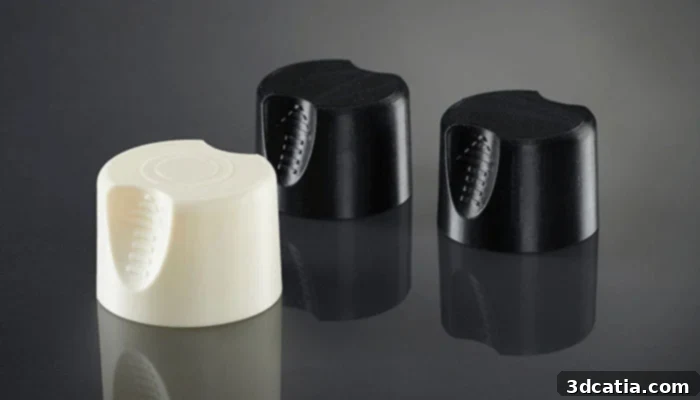
ASA is highly suitable for creating parts that will be exposed to outdoor elements (Photo credits: Stratasys)
Like ABS, ASA is a petroleum-derived plastic, categorized as an “engineering plastic” due to its ability to maintain structural integrity and aesthetic quality even when subjected to harsh environmental conditions. This includes prolonged exposure to sunlight, rain, extreme temperatures, and other abrasive elements. Its resilience makes it a preferred material for manufacturing demanding everyday objects such as electrical enclosures, exterior automotive components, and durable outdoor toys. While petroleum-based, ASA is generally considered recyclable, aligning with increasing environmental considerations in manufacturing. A significant advantage of ASA over ABS, particularly in 3D printing, is its significantly reduced tendency to warp during printing and its superior resistance to discoloration under UV exposure. These benefits address two of the most common challenges associated with ABS, making ASA an easier and more reliable filament to work with for many applications. Furthermore, ASA generally exhibits better interlayer adhesion than ABS, contributing to stronger, more reliable parts. Its resistance to heat and various chemicals further cements its status as a robust material for functional prototypes and end-use parts.
Key Characteristics and Best Practices for ASA 3D Printing
When transitioning to ASA for additive manufacturing, a foundational understanding of its specific properties and printing requirements is crucial. For those accustomed to printing with ABS, many of the challenges and solutions will feel familiar, simplifying the learning curve. However, even experienced users should adhere to a set of recommendations to ensure successful ASA prints. Firstly, while it is technically possible to print ASA on an open 3D printer, a closed print chamber is strongly recommended. This helps maintain a stable, elevated ambient temperature, which is vital for preventing warping and cracking, as ASA can be sensitive to sudden temperature fluctuations during the cooling process. A closed chamber also significantly reduces the emission of styrene fumes, which can be irritating and require proper ventilation when working with ASA. Implementing an enclosure not only improves print quality but also contributes to a safer working environment.
Effective bed adhesion is paramount for ASA to mitigate warping, a common issue with many engineering plastics. It is advisable to utilize specialized build plate surfaces or adhesives. Kapton tape, renowned for its thermal and electrical insulation properties, offers excellent adhesion for ASA. Alternatively, a thin layer of PVA glue stick, an ABS/ASA slurry (a mixture of ASA filament dissolved in acetone), or a PEI (Polyetherimide) sheet can provide reliable adhesion, ensuring the first layer sticks firmly and prevents the print from detaching mid-process. Maintaining a consistent print bed temperature between 80°C and 100°C is also critical for reducing internal stresses and preventing deformation. The specific temperature may vary slightly based on the printer model and filament brand, so a small amount of experimentation might be necessary to find the optimal setting.
ASA’s versatility extends to its compatibility with various support materials. For complex geometries featuring significant overhangs or intricate details (especially those at angles less than 45° from the horizontal plane), High Impact Polystyrene (HIPS) is an excellent choice as a soluble support material. HIPS offers good mechanical strength during printing and can be easily dissolved post-printing using Limonene, leaving a clean surface finish without damaging the ASA part. Using soluble supports greatly enhances design freedom and allows for the creation of more complex and aesthetically pleasing models. Furthermore, careful management of cooling is essential. While some cooling is necessary, excessive fan speed can lead to rapid cooling, which can cause cracking or delamination. It is generally advisable to use a minimal layer fan setting, typically between 10-30%, to solidify the material gradually without inducing sudden temperature changes that could compromise part integrity. This controlled cooling helps in achieving higher quality printed parts with improved mechanical properties.
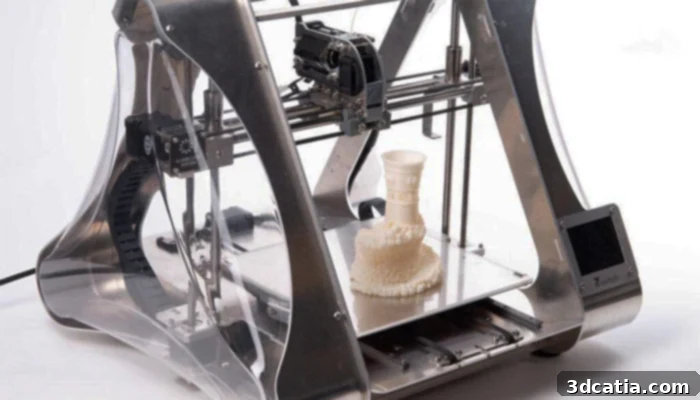
Optimal printer settings are key for high-quality ASA prints (Photo Credits: ZMorph)
Extruder temperature settings are crucial for ASA, with typical melting temperatures ranging between 245°C and 260°C. However, it’s important to consult the specific manufacturer’s recommendations, as variations can occur between different filament brands. Achieving the correct nozzle temperature ensures proper material flow and interlayer adhesion. The distance between the printing bed and the extruder also plays a critical role in achieving strong first-layer adhesion and overall print quality. Proper calibration here will ensure that the first layer is adequately compressed onto the build plate, forming a strong bond. Beyond these printing parameters, ASA boasts several intrinsic features that make it highly desirable: exceptional dimensional stability, ensuring parts retain their precise measurements; a high glass transition temperature, allowing it to perform well under elevated temperatures; and excellent chemical resistance against various substances. These combined characteristics make ASA a straightforward material to use once optimal settings are found, making it perfectly suited for producing functional prototypes and robust end-use machine parts that demand superior outdoor performance and mechanical strength.
Versatile Applications with ASA Filament
The extensive range of features offered by ASA makes it an incredibly versatile material, suitable for an array of applications across diverse industries. Its unique combination of strength, UV resistance, and weatherability positions it as a go-to choice for prototyping, creating durable tooling, and producing high-performance end-use parts. ASA’s exceptional resilience to sunlight, moisture, impact, and general wear and tear makes it a reliable material for components that will be exposed to challenging environments. This includes, but is not limited to, outdoor installations such as gutters, downspouts, and electrical panel covers, where longevity and resistance to degradation are paramount. It is also frequently used for manufacturing outdoor furniture components, garden equipment, and even recreational vehicle parts due to its ability to retain color and structural integrity over time.
Beyond domestic and recreational uses, the automotive industry significantly benefits from ASA’s properties. It is widely employed for designing and producing exterior car parts such as bumpers, side mirror housings, grilles, and sensor covers, where resistance to UV radiation, chemicals (like road salts and cleaning agents), and minor impacts is critical for both aesthetics and functionality. Its ability to maintain its appearance and mechanical properties under harsh driving conditions is invaluable. Furthermore, in the construction sector, ASA, especially when reinforced with additives like fiberglass, can contribute to the creation of robust structural elements, including pedestrian bridge components, offering a lightweight yet strong alternative to traditional materials. The material’s excellent surface finish and availability in a wide array of colors also make it ideal for creating visually appealing and highly functional prototypes across various industries, from consumer electronics to architectural models. For signage and display applications, ASA’s fade resistance ensures that outdoor signs remain vibrant and legible for extended periods, reducing the need for frequent replacements. Its applications are constantly expanding as more designers and engineers discover its robust capabilities for demanding outdoor and industrial requirements.
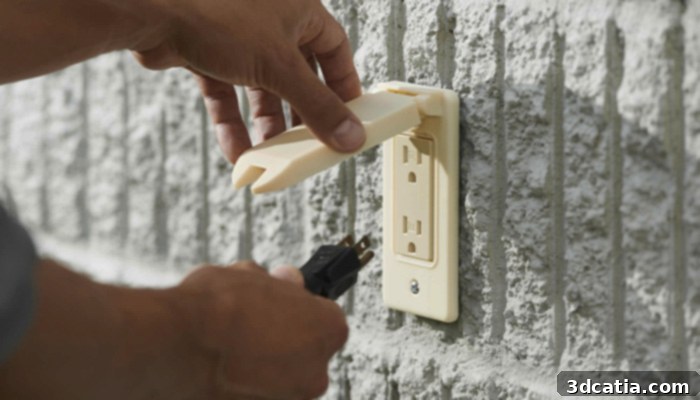
ASA is perfect for functional parts that need to withstand the elements (Photo credits: Kimya)
Leading Manufacturers and Material Price Considerations
The market for ASA filament has grown substantially, with numerous reputable manufacturers now offering this advanced thermoplastic. BASF Forward AM, as the original marketer of Luran® S, continues to be a prominent provider, ensuring high-quality ASA filament for industrial and professional users. Beyond BASF, several other key players in the 3D printing industry offer ASA coils, catering to a broad spectrum of needs. Zortrax, for example, supplies ASA filaments, typically in 1.75mm diameter spools, with pricing often around €40 for an 800g spool. Other esteemed companies like Stratasys, known for their high-performance engineering materials, Kimya, FilamentOne, and Smart Materials, also provide ASA filament, often with slightly different formulations optimized for various printing systems and applications. This growing availability underscores ASA’s increasing popularity and utility in the additive manufacturing space.
One significant factor to consider when evaluating ASA is its price point relative to other common filaments, particularly ABS. While ASA is frequently lauded as a superior alternative to ABS due to its enhanced weatherability, UV resistance, and reduced warping, this improved quality is typically reflected in its cost. For instance, a 1kg spool of ASA filament from a manufacturer like FilamentOne might be priced around €33, whereas a similar weight of ABS material often falls within the €15 to €20 range, almost half the price. This price difference is justified by the advanced properties and more complex manufacturing processes involved in producing ASA. When choosing an ASA filament, it is advisable to visit the respective manufacturers’ websites to review detailed technical specifications, available colors, and specific printing recommendations, as these can vary. Investing in higher-quality ASA filament from a reputable brand often translates to more consistent print results, better material properties, and ultimately, a more reliable and durable end product, making the higher initial cost a worthwhile consideration for critical applications.
Have you integrated ASA into your 3D printing workflow? We’d love to hear about your experiences and see your creations! Share your thoughts in a comment below or connect with us on our Facebook and Twitter pages. And don’t forget to sign up for our free weekly Newsletter to receive all the latest news, trends, and breakthroughs in 3D printing directly to your inbox!
*Cover photo credits: ZMorph