
Unlock Your Creativity: The Ultimate Guide to the Best 3D Printers for Beginners
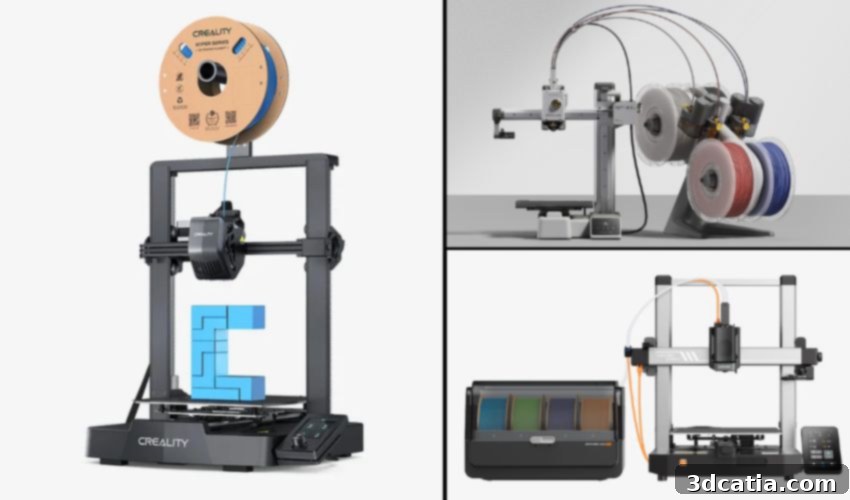
Bringing the world of 3D printing into your home or office environment is an exciting step that opens the door to truly endless creative possibilities. Whether your goal is to design and produce custom functional parts, intricate gadgets, detailed figurines, or unique decorative items, 3D printers offer an incredibly diverse range of applications, catering to both practical utility and pure fun. If you’re eager to delve into the fascinating realm of additive manufacturing but feel unsure where to begin, 3Dnatives is here to guide you. In this comprehensive article, we’ve carefully compiled a list of some of the best 3D printers specifically chosen for beginners, presented in alphabetical order to help you compare. Furthermore, to ensure you’re equipped with all the necessary insights and tools for a smooth start to your 3D printing journey, we’ve provided essential guidelines and practical tips to get you up and running with confidence.
What Makes an Ideal 3D Printer for Beginners?
Choosing your first 3D printer can feel overwhelming, but focusing on a few key characteristics will simplify the decision-making process. An excellent beginner 3D printer should prioritize ease of use, reliability, and affordability. Most models designed for newcomers are marketed as “plug-and-play,” meaning they come pre-assembled and are ready to begin printing almost immediately after unboxing. This significantly reduces the initial frustration often associated with complex technical setups. However, for those on a tighter budget or eager to gain a deeper understanding of the machine’s mechanics, purchasing a 3D printer kit that requires self-assembly can be a more economical alternative. Regardless of your choice, it is absolutely crucial that any printer you select comes with clear, concise instructions and robust safety features to ensure a secure and enjoyable experience.
Beyond the initial purchase, it’s also incredibly worthwhile to consider the level of post-sale support and resources a printer company provides. This can include a wealth of online tutorials, detailed troubleshooting guides, and comprehensive information sources such as a dedicated Wiki page or an active forum. Access to such resources ensures that you have reliable places to turn when inevitable challenges or questions arise during your printing endeavors. Additionally, investigating whether the printer is part of a larger, supportive ecosystem is highly beneficial. For Fused Deposition Modeling (FDM) printers, this typically means a proprietary or highly compatible slicer software and an extensive online library of printable files. Bambu Lab, for instance, excels in this area with their intuitive software suite and the vibrant MakerWorld platform, which offers a vast collection of models and a strong community.
Essential 3D Printing Tips for Beginners
1. Do Your Research: Understand the Technology
Every 3D printing project follows four fundamental steps: creating or selecting a 3D design (often in CAD software), slicing the model, printing it, and finally, post-processing. It’s crucial to understand that 3D printing, or additive manufacturing, encompasses a broad spectrum of technologies. Therefore, distinguishing which technology best suits your specific needs and goals is paramount. In this article, we primarily focus on Fused Deposition Modeling (FDM) printers because they are overwhelmingly the most common and accessible choice for beginners. This popularity stems from their ease of use, relatively low cost, and the fact that they typically don’t require a specialized printing environment. We have also included one resin printer on our list, specifically tailored for beginner use, even though resin printing can be a bit more challenging due to the handling of liquid resins and post-processing requirements. Familiarizing yourself with the chosen technology will give you a clear understanding of the entire printing process and what to expect.
2. Look for Inspiration: Explore the World of 3D Models
Before you even purchase a printer, it’s a great idea to explore the vast universe of available 3D printing files. This will give you a concrete idea of what’s possible and what you might enjoy creating. 3D models are available in various file formats, with Stereolithography (STL) files being the most commonly used standard for 3D printing. Other popular formats include 3MF and OBJ. Fortunately, there are dozens of websites where you can download free STL files, such as Thingiverse, Printables, and MyMiniFactory. Browsing these platforms can spark your imagination and help you identify projects that align with your interests, while also giving you an idea of the build requirements for different designs.
3. Get Creative: Define Your Printing Goals
3D printing offers an incredible avenue for unleashing your creativity and bringing your ideas to life. Before committing to a printer purchase, take some time to seriously consider what types of objects you envision yourself building. This reflection will inform your printer choice significantly. How large do your anticipated prints need to be, and therefore, what build volume will you require from your printer? What level of detail and surface finish, or “quality,” are you looking for in your final prints? Are you aiming for robust functional parts, or highly detailed artistic models? Answering these important questions upfront will guide you towards a printer that truly meets your specific creative and practical needs, preventing potential frustration down the line.
4. Consider Your Budget: Beyond the Printer Price Tag
While the initial cost of the 3D printer itself is a major factor, it’s essential to consider the ongoing costs associated with 3D printing. The beginner-friendly 3D printers listed in this guide typically range from approximately $200 to $500, offering excellent value for entry-level users. However, further costs will largely depend on the printing material you choose. Filaments like PLA (Polylactic Acid) are generally the most affordable and easiest to work with, costing around $10 to $30 per kilogram. Materials with enhanced mechanical properties, such as PETG, ABS, and ASA, will typically be a bit pricier but offer greater strength, temperature resistance, or outdoor durability. While most slicing software is freely available (e.g., Cura, PrusaSlicer), certain advanced CAD (Computer-Aided Design) software packages can incur additional costs, though free alternatives like Tinkercad or Fusion 360 (for hobbyists) are excellent starting points. Don’t forget potential costs for tools, safety gear (especially for resin printing), and maintenance parts.
5. Utilize 3D Printing Communities and Resources
One of the most valuable resources for any beginner in 3D printing is the vibrant and extensive online community. These communities serve as fantastic sources of inspiration, offering a treasure trove of shared projects, innovative ideas, and design tips. More importantly, they provide a supportive and helpful space where you can ask questions, troubleshoot issues, and learn from the experiences of others. Websites like Thingiverse, UltiMaker, Thangs, and Printables all host active community forums and user groups where you can connect with fellow enthusiasts who are leveraging the power of 3D printing. Don’t hesitate to engage; you’ll find a wealth of knowledge and camaraderie. Additionally, remember to explore 3D printing service providers – they can be invaluable for producing complex parts you might not yet be able to print yourself, or for offering expert advice and direction for your projects.
Top 3D Printers for Beginners
The A1 Mini from Bambu Lab
The Bambu Lab A1 Mini is increasingly celebrated as an exceptional 3D printer for beginners, and for very good reason. It stands out due to its remarkable ease of use, unwavering reliability, and print quality that is incredibly difficult to match at its price point. This machine boasts full-auto calibration, significantly simplifying the setup process for new users. A standout feature is its ability to perform 4-color printing, allowing for more vibrant and complex designs right out of the box. Operating at under 48 dB of noise in Silent mode, thanks to active silencing implemented via its firmware, it’s also remarkably quiet for a 3D printer. The A1 Mini arrives pre-assembled and ready to go, incorporating active flow rate compensation and high-speed precision to consistently ensure high-quality, accurate prints. Another major draw for beginners is Bambu Lab’s incredibly user-friendly software ecosystem. Their robust online platform, Bambu Studio, along with the convenient mobile app, Bambu Handy, allows users to easily monitor and manage their prints remotely. Furthermore, users can directly send objects posted on the MakerWorld platform to their 3D printers without the need for manual slicing, streamlining the entire workflow. The A1 Mini offers a respectable build volume of 180x180x180 mm³. For those who envision printing larger objects, the Bambu Lab A1 provides an expanded volume of 256x256x256 mm³ at a slightly higher price point, making it a versatile choice for growing needs.
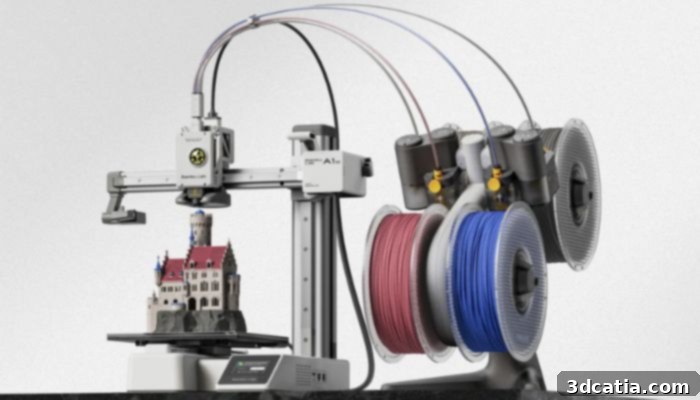
Photo credits: Bambu Lab
The Adventurer 5M Pro from Flashforge
The Flashforge Adventurer 5M Pro offers an impressively seamless entry into 3D printing, arriving fully assembled and ready for action. Users simply need to remove a few shipping fasteners, connect the PTFE tube, and initiate the auto-calibration process to begin printing almost instantly. This printer is engineered for superior print quality, featuring an extruder vibration suppression algorithm that ensures smoother, more precise results. It boasts a fully enclosed chamber with a generous print volume of 220x220x220 mm³, which is particularly advantageous. The enclosed design, combined with an internal circulation system that includes dual-layer HEPA and carbon filters, effectively blocks 99% of particles and Volatile Organic Compounds (VOCs), making it an optimal choice for printing with materials like ABS, which can emit fumes. An external fan further aids in filtering and drawing air out of the printer when working with PLA and PETG, while an auxiliary fan inside actively cools prints during operation. The integrated display screen and camera monitoring capabilities provide easy control and real-time oversight of your prints. Additionally, the flexible PEI print platform significantly simplifies the removal of completed objects. All these carefully considered qualities converge to make the Adventurer 5M Pro a highly suitable and safe 3D printer for beginners seeking a hassle-free experience.
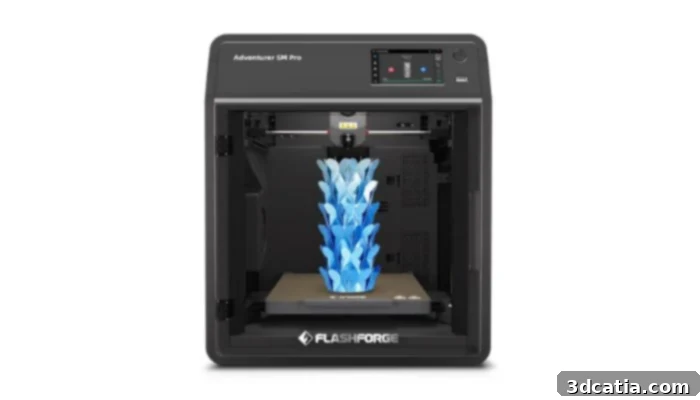
Photo credits: Flashforge
The Ender-3 V3 SE from Creality
The Creality Ender-3 V3 SE is an exceptional choice for beginners due to its rapid setup and user-centric design. Users can expect to be printing within a mere 20 minutes, thanks to its intuitive user interface and a suite of automated features, including auto-leveling and automatic filament loading/unloading. This eliminates much of the guesswork and manual calibration that can often intimidate new users. A key advantage of the Ender-3 V3 SE is its interchangeable “Sprite” extruder base, which allows users to swap printheads. This enhances the printer’s versatility and compatibility with a wide range of popular filaments such as PLA, PETG, and even flexible TPU, enabling beginners to experiment with different material properties. For slicing their designs, users have multiple options, including Creality Print, Cura 5.0, Simplify3D, and more, offering flexibility in software choice. Furthermore, the Creality Cloud platform provides a vast repository of free 3D models, making it easy to find inspiration and projects. One practical consideration is that file transfers are primarily handled via an SD card. However, for those desiring real-time remote control and Wi-Fi connectivity, an optional WiFi Box combo can be purchased separately. With a generous build volume of 220x220x250 mm³ and a stable dual Z-axis, the Ender-3 V3 SE consistently delivers smooth and reliable prints, solidifying its position as a top contender for entry-level enthusiasts.
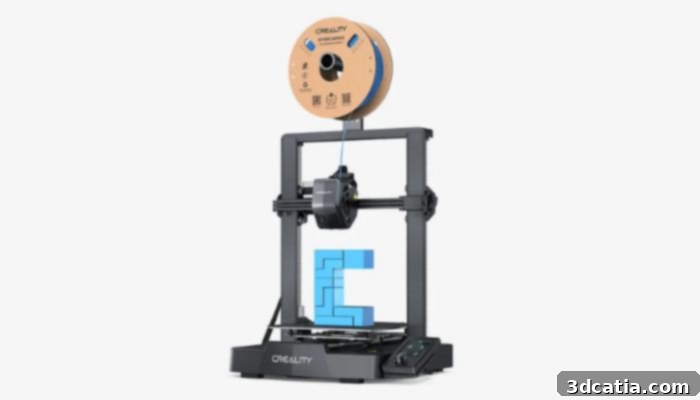
Photo credits: Creality
The Kobra 3 Combo from Anycubic
The Anycubic Kobra 3 Combo stands out as an intelligently designed 3D printer that empowers users with multi-color printing capabilities, supporting four to eight different colors. It comes bundled with the innovative ACE Pro, a specialized container for filaments that efficiently feeds them through four individual tubes, significantly simplifying the multi-material printing process. This system is enhanced with several smart features designed to minimize hassle, such as crucial nozzle clog detection. To ensure exceptional print quality, the printer incorporates a built-in Accelerometer G-Sensor. This sensor intelligently detects vibration frequencies and dynamically adjusts motion control, effectively preventing common printing artifacts like “ringing” or “ghosting.” This intelligent technology contributes significantly to the production of consistently smooth and high-quality prints. The Kobra 3 Combo was engineered with a focus on a hassle-free user experience, evident in its simplified setup and streamlined cable connections. Automatic bed leveling for each print job further removes a common point of frustration for beginners. Additionally, it features a unified module system designed to protect core components and facilitate easy cleanup by eliminating filament residue. The printer is equipped with a responsive touchscreen that seamlessly pairs with the Anycubic App and slicer software, enabling smart connectivity, intuitive slicing, and precise color assignment. With a substantial print volume of 250x250x250 mm³, the Kobra 3 Combo offers ample space for a wide array of projects, making advanced features accessible to new users.
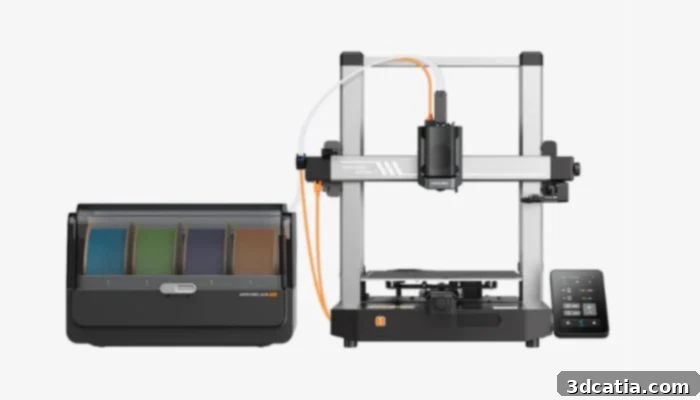
Photo credits: Anycubic
The M5 3D Printer from AnkerMake
The AnkerMake M5 3D printer is designed for quick and easy adoption by beginners, requiring approximately just 15 minutes for assembly. It comes complete with a straightforward quick-start guide, ensuring users can begin their printing journey with minimal fuss. The M5 offers versatile control options, featuring a responsive touchscreen directly on the unit, and can also be conveniently managed via the AnkerMake app or the dedicated AnkerMake slicer software. For design preparation, users have the flexibility to slice their models using AnkerMake’s own Slicer, PrusaSlicer, or Cura, catering to different preferences. A significant advantage of the AnkerMake M5 is its integrated camera and AI recognition system, which provides real-time monitoring of your prints and actively works to improve their quality. An advanced error detection system further enhances the user experience by notifying you in real-time if any issues arise during printing, allowing for prompt intervention. While the AnkerMake M5 is an excellent all-around choice, if you’re seeking a more budget-friendly option, the AnkerMake M5C is available for about $120 less. It’s important to note, however, that the M5C has a smaller print volume and lacks some of the premium features of its sibling, such as the AI recognition capabilities and the built-in touchscreen. Both models, however, are geared towards making 3D printing accessible and enjoyable for new users.
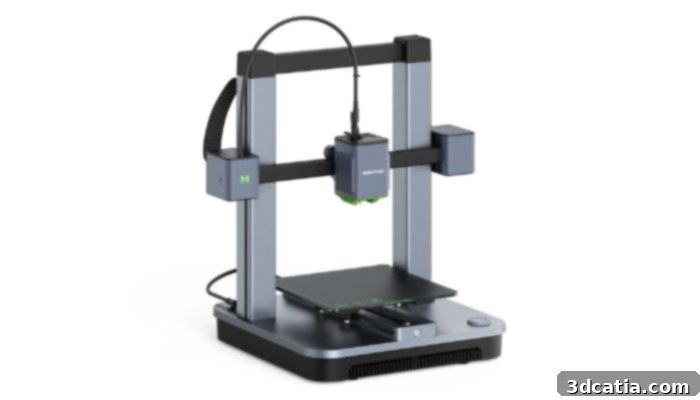
Photo credits: AnkerMake
The Mars 5 Ultra from Elegoo (Resin)
The Elegoo Mars 5 Ultra presents a compelling entry point into the world of resin 3D printing for beginners. While working with liquid resin generally requires more careful handling and post-processing compared to FDM printers, this plug-and-play machine is specifically designed to simplify the intricate process. It comes equipped with a sophisticated smart mechanical sensor, offering self-check capabilities and crucial auto-leveling functions, significantly reducing common setup challenges. An integrated AI camera provides comprehensive monitoring and full control over your prints, enhancing confidence for new users. The Mars 5 Ultra also boasts impressive speed, promising print speeds of up to 150mm/h, and utilizes innovative tilt release technology to facilitate swift and clean model peeling from the release film. If your primary goal is to create highly detailed, high-resolution prints with smooth surface finishes, a resin printer like this, featuring a sharp 9K resolution, might be the perfect fit for your artistic or functional needs. It’s worth noting that the build volume is smaller compared to the FDM printers on this list, at 153.36×77.76×165 mm³. However, this compact size is typical for resin printers, which excel in precision over sheer volume. Elegoo also offers larger resin models for those who may require a greater build area in the future.
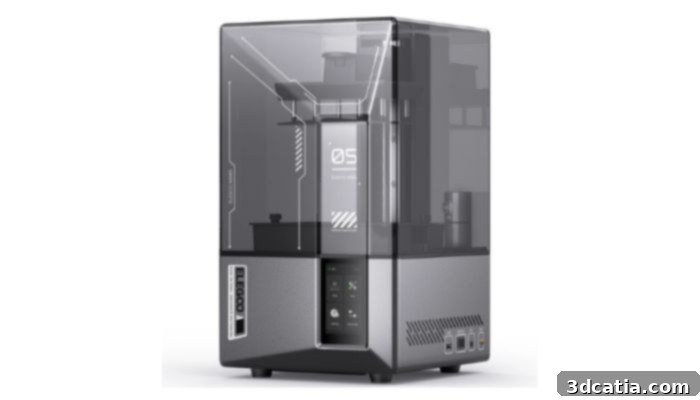
Photo credits: Elegoo
The Original Prusa Mini+ from Prusa
The Original Prusa Mini+ builds upon the legendary reliability and open-source philosophy of Prusa 3D printers, offering a more compact yet equally capable solution ideal for beginners. With a print volume of 180x180x180 mm³, it’s perfectly sized for a wide array of hobby and utility prints. Designs can be easily prepared using the acclaimed PrusaSlicer software, and once your design is loaded onto a USB drive, you can initiate a print with a single click, streamlining the process significantly. Monitoring your ongoing prints is made convenient through the machine’s integrated Ethernet connection or an optional Wi-Fi module. Removing completed prints is remarkably simple and tool-free: just detach the flexible print sheet from the magnetic heatbed and gently bend the sheet to release your object. A major advantage of the Prusa Mini+ is its open-source nature and straightforward maintenance, making it an excellent option for beginners who are interested in tinkering, understanding their machine, and potentially upgrading it over time. Advanced technologies like Input Shaper and Pressure Advance ensure the printer operates at impressive speeds while consistently maintaining high-quality print output. Notably, the Prusa Mini+ offers flexibility in purchase: you can acquire it fully assembled for immediate use or as a kit, providing a rewarding assembly experience for those who wish to build it themselves and gain deeper mechanical insights.
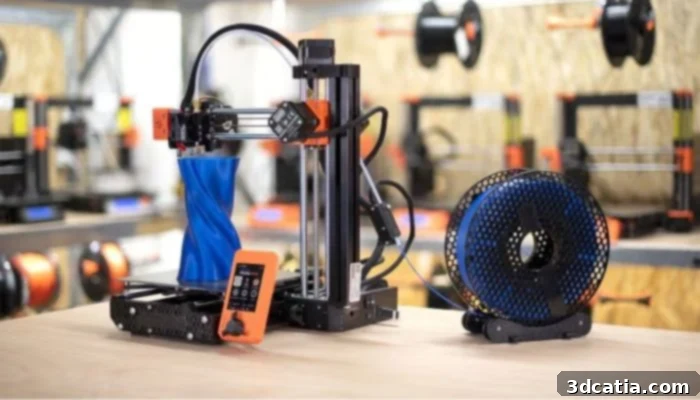
Photo credits: Prusa
The SV06 from Sovol
The Sovol SV06 stands out as an exceptional 3D printer for beginners, particularly because of its incredibly straightforward assembly process, which can be completed in as few as five steps. This printer is designed with ease of use in mind, featuring simplified filament feeding and automatic leveling, eliminating common hurdles for new users. Furthermore, it incorporates features that significantly minimize printer maintenance, making it a low-hassle option for home use. For example, the SV06 utilizes an I3 linear rail structure, a robust design that effectively prevents wear and tear, ensuring greater longevity and reliability for household applications. Sovol has also continually improved the SV06, notably upgrading its firmware this year to enable faster print speeds without compromising quality. Additionally, Sovol developed the All Metal Direct Drive Extruder specifically for the SV06, which provides a higher drive ratio and a lighter motor, resulting in more accurate and consistent filament extrusion. With a generous build volume of 220x220x250 mm³, users have ample space for various projects. The printer also features a PEI build plate, a highly practical addition that allows for easy, tool-free removal of prints once they are complete, further enhancing the beginner-friendly experience.
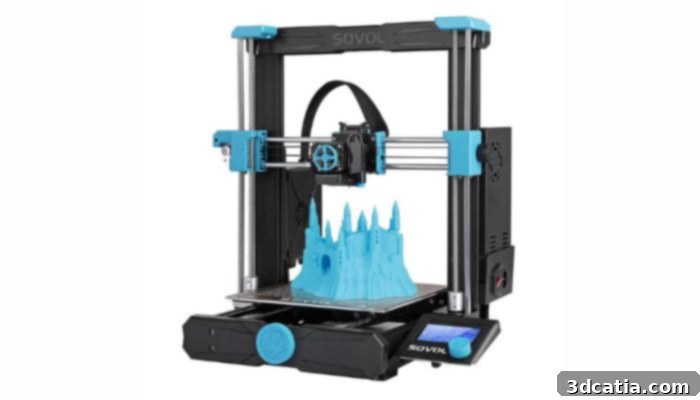
Photo credits: Sovol
With such a diverse array of excellent beginner-friendly 3D printers available, the choice ultimately comes down to your specific needs, budget, and desired features. Each model on this list offers a compelling pathway into the exciting world of additive manufacturing, promising ease of use and reliable performance. Which 3D printer for beginners would you choose to kickstart your creative projects? We’d love to hear your thoughts and experiences! Let us know in a comment below or share your insights on our LinkedIn and Facebook pages. Don’t forget to sign up for our free weekly Newsletter here to receive the latest 3D printing news, trends, and reviews straight to your inbox! You can also find all our engaging videos and tutorials on our YouTube channel, offering visual guides to enhance your 3D printing knowledge.