
Revolutionizing Orthopedic Care: Wypro’s Innovative Approach to Custom 3D Printed Insoles
The rapid advancements in 3D printing technology are fundamentally transforming numerous sectors, with medicine emerging as one of the most profoundly impacted. This innovative technology is unlocking unprecedented opportunities for developing new and highly personalized applications, particularly within the realm of orthopedic care. The paramount advantage offered by additive manufacturing is its inherent capability to provide customized solutions, meticulously tailored to the unique physiological and anatomical requirements of each individual patient. This personalized approach is particularly critical and highly compelling in the field of orthopodology, where we are witnessing a significant and accelerating integration of 3D scanning and additive manufacturing processes. These advanced methodologies are enabling the creation of bespoke orthopedic solutions, most notably patient-specific insoles, designed to deliver optimal comfort, support, and functional correction. At the forefront of this pioneering movement in Spain is Wypro, a company dedicated to leveraging cutting-edge 3D technologies to redefine foot health. We had the privilege of interviewing key members of the Wypro team to delve deeper into their innovative work, understand their vision, and explore the compelling reasons behind their strategic adoption of 3D technologies.
3DN: Could you introduce yourself and tell us about your connection to 3D technologies?

I am Dr. Pablo Marín, a podiatrist specializing in Biomechanics, and the CEO of Wypro. I am also one of the co-founders of Wypro 3D Medical, alongside Jorge Granell, a Mechanical Engineer with specialized expertise in 3D technology. Our journey into this innovative field began in 2019 when we assembled a dynamic and multidisciplinary team. This exceptional group comprises a Mechanical Engineer, a Biomedical Engineer, a medical doctor, two podiatrists, and an orthopedic technician. Together, we established one of the very first 3D design and printing units in Spain, specifically dedicated to the Orthopedics and Podiatry sector. What makes our unit unique is its commitment to developing proprietary technology, a testament to our pioneering spirit. Our operations are strategically located on the picturesque Costa del Sol, a region known for its spirit of innovation.
The genesis of Wypro can be traced back to a pivotal moment when Jorge Granell, a former member of the Spanish national skating team, visited my office for a routine check-up. During this consultation, we identified a critical need for orthopedic insoles engineered with extraordinary precision. These insoles had to be capable of absorbing the immense energy generated by high-impact jumps, while simultaneously distributing plantar pressures with variable density, all within the confined and challenging surface area of a skate boot. This complex challenge ignited our shared passion for technology and research. It inspired us to meticulously recruit the diverse talent that forms our current team, and thus, the Wypro adventure officially commenced, driven by a commitment to solving real-world biomechanical problems through advanced technological solutions.
3DN: What is Wypro and how did the idea of creating the company come about?
Wypro 3D Medical is a Malaga-based company that operates at the cutting edge of Biomedicine and Engineering. Our core specialization lies in the advanced design and manufacturing of orthopedic insoles, exclusively utilizing sophisticated 3D technology. To achieve this, we have invested significant resources in developing our own proprietary design software. This innovative software is built upon the robust framework of Rhinoceros 3D and incorporates automated elements powered by Grasshopper. This allows for unparalleled precision and efficiency in our design processes.
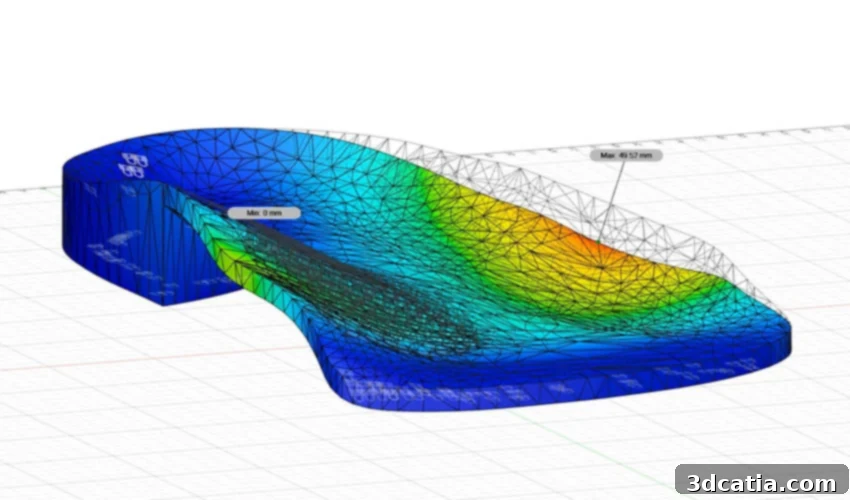
One of the most significant advancements we offer to the podiatry sector is our unique variable density point system. This sophisticated system is meticulously developed using data derived from plantar pressure platforms. By employing finite element calculations and leveraging only the colorimetry reports generated by these platforms, our custom-built Script intelligently detects subtle color differences. These color variations are critical indicators of pressure distribution and biomechanical forces during gait. Based on this analysis, our system automatically applies a specific density to different areas of the insole, precisely tailored to the dynamic characteristics of each user’s unique footprint. This groundbreaking approach ensures a specific and optimized elastic response for every individual. It also grants us the capability to implement specific protocols for a wide range of needs, whether for elite athletes requiring enhanced performance or for patients suffering from specific pathologies needing targeted support and correction. This flexibility allows us to offer diverse response possibilities, such as providing greater propulsion during specific phases of walking for enhanced athletic performance, or ensuring a broader dynamic range for high-impact sports like paddle tennis or athletics. Our commitment to this level of detail means every Wypro insole is a personalized biomechanical device, designed to optimize function and alleviate discomfort.
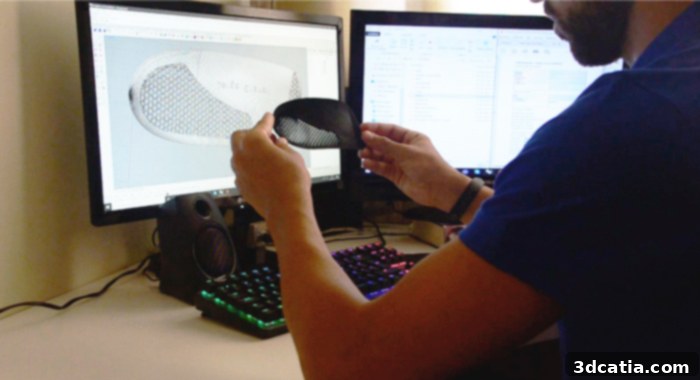
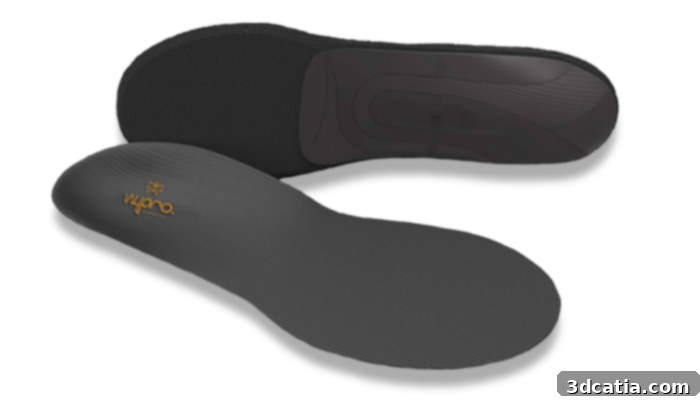
Wypro leverages advanced 3D technologies to precisely manufacture customized orthopedic insoles.
3DN: What is Wypro 3D Scan and what benefits does it offer?
The Wypro 3D Scan is a state-of-the-art 3D laser scanner specifically engineered for the demanding requirements of the podiatry and orthopedics sectors. We first developed this innovative device in 2017, driven by a clear recognition of the inefficiencies and limitations inherent in traditional measurement methods. For decades, the industry relied on outdated techniques involving foams and plaster casts to obtain foot measurements, methods that had remained largely unchanged for over 50 years. These conventional approaches were not only time-consuming and messy but also often lacked the precision necessary for truly customized solutions. Our vision was to modernize this critical first step in orthopedic insole creation.
Today, with the Wypro 3D Scan, professionals can acquire a comprehensive digital file containing all the intricate measurements and structural details of a patient’s foot in the form of a high-resolution mesh with an astounding 350,000 points. This entire process takes less than 1.5 seconds. Once captured, this detailed 3D data automatically connects to our secure Cloud design platform, allowing files to be uploaded and accessed seamlessly from any location in the world. This represents a monumental leap in efficiency and accessibility, transforming the initial consultation into a rapid and precise digital workflow.
The profound benefits offered by the Wypro 3D Scan to professional users are multifaceted. A key advantage is the ability to correct the foot and position it in a neutral, biomechanically optimal stance *before* scanning, and crucially, under controlled load. This ‘controlled load’ factor is paramount, as taking a mold of the foot with the body’s natural weight applied provides a far more accurate representation of its dynamic reality compared to a non-weight-bearing impression. This precision ensures that the subsequent insole design is based on the foot’s functional position. Furthermore, once the scan is obtained, our expert engineering team can meticulously modify the digital scan through advanced design software. This capability is particularly invaluable in complex cases, such as rigid flat feet, where physically correcting the plantar arch using traditional methods is exceedingly difficult due to the foot’s collapsed anatomy.
With traditional plaster casting techniques, rectifying a positive plaster cast would necessitate hours of laborious manual work, involving polishing and subjective visual adjustments. Moreover, a significant risk with traditional methods is the potential loss of the physical cast, or the patient’s need for an exact replica of their treatment years later. In such scenarios, conventional methods fall short. However, with our digital solution, we can offer precise, identical replicas to customers across the globe, ensuring continuity of care and eliminating the challenges associated with physical molds. This digital archiving not only enhances patient care but also streamlines the entire process for practitioners.
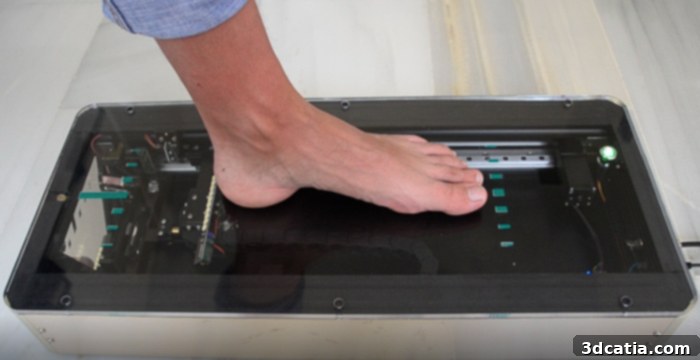
Wypro’s 3D Scan provides precise foot data for custom insole design.
Building on this success, we are currently in an exciting implementation phase with select pilot customers for our brand-new scanning App, compatible with both iOS and Android devices. This innovative application leverages the advanced Lidar sensors found in newer Apple devices, alongside videogrammetry technology for other mobile phones and devices. This groundbreaking development means that virtually any mobile device equipped with a camera can now be used to accurately scan patients’ feet, making advanced 3D scanning technology more accessible and convenient than ever before for podiatrists and orthopedic specialists worldwide.
3DN: What 3D printing method do you use for insole development?
After extensive research and rigorous testing of various 3D printing technologies, we ultimately made the strategic decision to adopt Selective Laser Sintering (SLS) as our primary manufacturing method for orthopedic insoles. In SLS technology, we discovered the optimal equilibrium between crucial factors such as printing speed, exceptional accuracy, and the ability to produce parts with superior mechanical properties. A fundamental prerequisite for our choice was the capability to create 100% solid parts that could effectively withstand the complex and significant mechanical stresses exerted by the foot, including constant weight-bearing, repetitive deformation, and material fatigue over time. SLS technology proved to be perfectly suited to meet these demanding conditions.
The SLS process involves a powerful, low-power laser selectively sintering powdered material layer by layer. This precise method results in robust components that possess mechanical characteristics and surface finishes remarkably similar to those achieved through traditional injection molding techniques. This similarity is crucial for both the durability and the aesthetic quality of our insoles. Our primary material of choice for SLS printing is PA12 (Nylon 12). PA12 offers an ideal and finely tuned balance between the critical properties of flexibility and rigidity. The flexibility is essential to ensure the insoles are comfortable for the user during daily wear, adapting seamlessly to foot movements and shoe structures. Simultaneously, the material provides the necessary rigidity to deliver effective biomechanical correction and structural support, which is paramount for addressing various foot conditions and optimizing gait. This carefully selected material, combined with the precision of SLS, enables us to produce insoles that are not only highly effective in their therapeutic function but also exceptionally durable and comfortable for long-term use.
3DN: How do you see the future of 3D printing in this field?
3D printing, much like in many other industries, has emerged as one of the most revolutionary technological advancements of recent years. In the field of orthopodology, its impact has been transformative, fundamentally altering the paradigm of insole production and delivery. It has dramatically reduced the lead times for manufacturing insoles, enabling patients to receive their custom solutions much faster. When seamlessly integrated with custom software designed for plantar orthotics, 3D printing achieves a micron-level adaptation to the user’s foot, offering an unparalleled degree of personalization that was previously unimaginable with traditional methods. This precision is key to optimal therapeutic outcomes.
In recent years, the landscape of additive manufacturing has evolved considerably. Thanks to the proliferation of open-source 3D printers and significant breakthroughs in the development of diverse new materials, industrial-level 3D printing has begun to democratize. This accessibility has been a game-changer for startups and smaller companies, which historically faced prohibitive capital investment costs for acquiring sophisticated machinery for rapid prototyping and short-series production. The lower barriers to entry mean more innovators can leverage this powerful technology, fostering greater competition and accelerating the pace of innovation within the orthopedic sector.
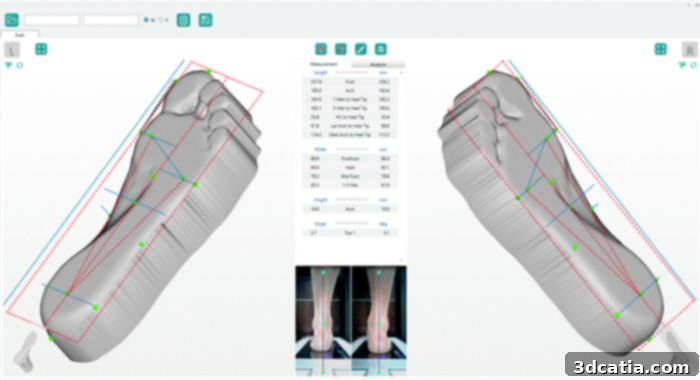
Customized insoles are designed with precision thanks to advanced foot scanning technology.
Wypro is keenly focused on the future and is currently deeply engaged in a dynamic research and development phase, branching into several critical lines of innovation. On one front, we are actively developing new, highly specialized materials tailored specifically for the manufacture of orthopedic insoles. In an exciting collaboration with a multinational partner, we are working on a revolutionary resin that promises to offer mechanical properties uniquely positioned between those of polypropylene and TPU, combining the best attributes of both for enhanced performance and durability. This innovative material will allow for even greater customization of mechanical response within the insoles.
Simultaneously, we are embarking on the implementation of advanced automations powered by machine learning. This ambitious endeavor aims to create sophisticated systems capable of making intelligent treatment predictions and generating biomechanical insole designs. These predictions and designs will be autonomously based on the specific disorders presented by the patient, as well as the detailed information provided in the order form sent by the professional. The integration of machine learning is poised to dramatically reduce design time, streamline workflows, and significantly improve overall delivery times – a critical factor for the timely and effective administration of medical treatments. By leveraging predictive analytics and AI-driven design, we can ensure that patients receive their optimized insoles faster, enhancing the efficacy and responsiveness of their care.
The field of biomechanical insoles has undergone substantial evolution in recent years, largely driven by these technological advancements. The adaptation periods for patients using our insoles have been minimized, leading to a rapid improvement in their quality of life. The impact of Wypro 3D Medical insoles is exponential, thanks to our integrated approach: applying sophisticated design technology using finite elements, precision laser sintering for manufacturing, and cutting-edge prediction systems. This synergy ensures that our insoles facilitate very short adaptation periods, allowing patients to quickly experience the benefits of improved foot mechanics and comfort. Furthermore, our designs are engineered for versatility, ensuring that Wypro insoles can seamlessly adapt to virtually any type of footwear, offering unparalleled convenience and consistent support throughout a patient’s daily activities. This holistic approach underscores our commitment to pushing the boundaries of what is possible in personalized orthopodology.
3D printing technology, while widely recognized, still possesses many applications that remain largely unexplored or little known to the general public, such as its profound utility in the design of podiatric treatments. We recognize that we have only just begun to uncover the immense potential, the “tip of the iceberg,” of this transformative technology. There is vast scope to continue exploiting this versatile and incredibly effective technology for both rapid prototyping and full-scale production across various areas within healthcare and beyond. Our ongoing mission is to constantly innovate and apply these advancements to continuously improve people’s quality of life, demonstrating the enduring power and adaptability of additive manufacturing.
3DN: Any last words for our readers?
We are a passionate, multidisciplinary, and young team at Wypro, always eager to explore new collaborations with forward-thinking companies and to welcome talented individuals who share our vision and drive. If you believe there’s a synergy for collaboration or if you think our expertise can assist you in any way, please do not hesitate to reach out and consult our website. We are always open to new ideas and partnerships that can further advance the field of 3D medical solutions.
What are your thoughts on Wypro’s innovative use of 3D technologies in orthopodology? Let us know your opinions in a comment below or connect with us on our LinkedIn, Facebook, and Twitter pages! Don’t forget to sign up for our free weekly Newsletter here to receive the latest 3D printing news directly to your inbox. You can also explore all our insightful videos on our YouTube channel.
*All Photo Credits: Wypro