
3D Printing on the Front Lines: Revolutionizing Military Logistics and Readiness
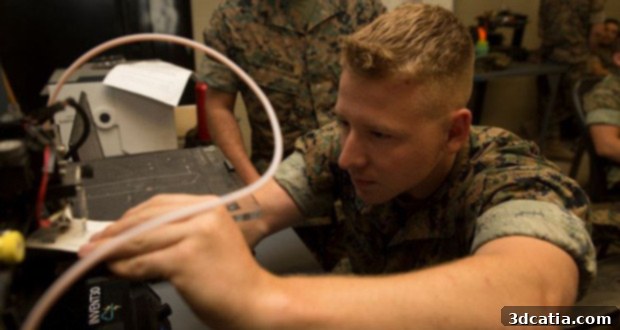
The landscape of modern warfare is undergoing a significant transformation, with advanced technologies playing a pivotal role in enhancing operational capabilities. Among these, 3D printing, or additive manufacturing, has emerged as a groundbreaking innovation, making its way directly into combat zones and being enthusiastically embraced by branches like the United States Marine Corps. The Marines have been at the forefront of integrating this technology into their operations, recognizing its immense potential to make fighting smarter, more agile, and to provide crucial advantages to service members risking their lives in the field. This strategic adoption underscores a fundamental shift in military logistics, moving towards a more decentralized and responsive supply chain.
This latest initiative by the Marine Corps is not an isolated event but part of a broader trend sweeping across the defense and aerospace industries. Throughout the year, major players have made significant announcements highlighting additive manufacturing’s growing importance. For instance, defense giant Lockheed Martin unveiled designs for their ICBM, showcasing how 3D printing can be used to create complex, lightweight, and highly efficient components for critical defense systems. Similarly, the partnership announcement between APWorks and Dassault Systèmes aimed at further embedding additive manufacturing into the defense and aerospace sectors illustrates a collective recognition of this technology’s transformative power. These developments collectively paint a clear picture of how pivotal additive manufacturing will become in shaping the future of defense, enabling faster prototyping, customized parts, and more resilient supply chains.
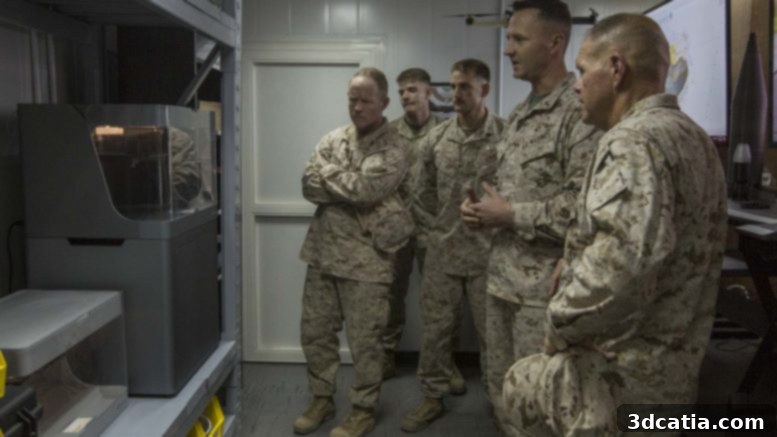
Gen. Robert B. Neller, Commandant of the Marine Corps (right), observes a 3D printer in the Central Command area of operations photo// Marine Corps – Cpl. Samantha K. Braun
Empowering Soldiers with On-Demand Manufacturing Capabilities
The decision to deploy 3D printers directly to the front lines has provided an unparalleled advantage to soldiers. In highly active combat zones, where conventional supply lines can be slow, vulnerable, and resource-intensive, these portable manufacturing units empower service members to address immediate needs. Soldiers can now repair critical equipment, fabricate replacement parts for their gear, and even create specialized tools tailored to specific mission requirements. This capability drastically accelerates the supply chain, moving from a system that often takes days or weeks for replacements to arrive to one that can produce necessary items within hours. This not only ensures that operations can continue without prolonged interruptions but also significantly enhances operational readiness and reduces the logistical footprint traditionally associated with military deployments. By bringing manufacturing to the point of need, the Marines are demonstrating the tangible benefits of this technology, both within the rigorous demands of military operations and as a model for broader industrial applications.
Bridging the Supply Gap: From Weeks to Hours
The impact of this technology on the ground is perhaps best encapsulated by those directly involved. Lt. Gen. Michael Dana, Deputy Commandant for Installations and Logistics, highlighted the transformative potential in a recent interview. “There are radios out there that have plastic components. We’ve been able to print plastic components for those radios, to make them operable when they were inoperable,” he explained. This simple yet critical example illustrates how a small, custom-printed part can restore functionality to vital communication equipment, which could otherwise be rendered useless, jeopardizing mission success and troop safety. Lt. Gen. Dana further elaborated on the speed advantage: “This way it has much promise to provide on-demand parts literally within hours, worst case days, whereas if you’re dealing with a traditional, back in the States to point of need, you’re talking multiple days, weeks and sometimes even longer. So that’s the attraction of this capability.” This dramatic reduction in lead time translates into significant operational advantages, enhancing resilience, responsiveness, and overall efficiency in dynamic environments where every minute counts. The ability to print parts on-site eliminates the lengthy process of ordering, shipping, and receiving, reducing costs and the vulnerability of long supply chains.
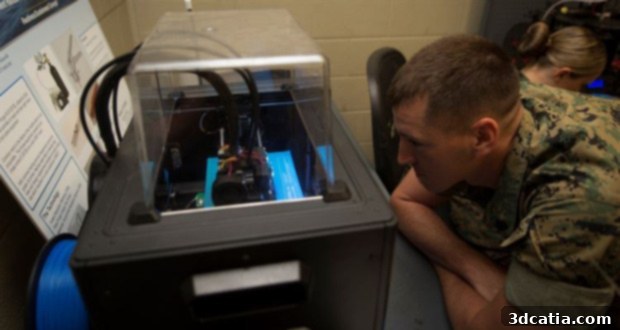
Lance Cpl. Vincent A. Smyth, Marine Air-Ground Task Force planning specialist calibrates a 3D printer during the 3-D Printing Training Course at Camp Lejeune, North Carolina Photo // marines.mil
Marines Paving the Way for Forward-Deployed Additive Manufacturing
The Marine Corps’ commitment to innovation is particularly evident in its pioneering deployment strategies. During an interview in June, Marine Lt. Col. Howard Marotto, the service’s lead for additive manufacturing and 3D printing development and implementation, revealed that the Marines are the first service to actively send 3D printers into combat zones directly with conventional forces. This marks a significant departure from previous deployments, where 3D printers were typically managed by specialized engineers or supporting units. The current approach signifies a profound integration of the technology, empowering individual Marine units with on-site manufacturing capabilities. This shift has been made possible through extensive training programs, which equip Marines with the necessary skills to operate, maintain, and troubleshoot 3D printers independently, even in challenging environments. The ability for service members to deploy with their own manufacturing tools enhances their self-sufficiency, reduces reliance on external support, and allows for unprecedented flexibility in adapting to unforeseen challenges during missions. This forward-deployed manufacturing model represents a new paradigm in military readiness, where the ability to create is as important as the ability to fight.
While the Marine Corps has maintained a level of discretion regarding the exact locations of these printers for operational security reasons, they have confirmed their presence in active combat zones. Specifically, printers are currently deployed with the Marine Corps Crisis Response Task Force in the Middle East, with additional units reported to be operating in the same region, strategically positioned behind the immediate front lines. This strategic placement ensures that critical manufacturing capabilities are readily accessible to forces engaged in operations, enabling swift responses to equipment damage or unique logistical demands. The ability to rapidly produce parts for vital systems, from communication devices to weapon accessories, significantly improves the sustainability of ongoing operations and enhances the safety and effectiveness of Marine personnel. This deployment strategy underscores a commitment to decentralizing manufacturing and pushing essential resources closer to the tactical edge, maximizing their impact on mission success.
The Future of Additive Manufacturing in Defense and Beyond
The integration of 3D printing by the Marine Corps is more than just a logistical upgrade; it is a clear indicator of the future trajectory of additive manufacturing. This capability could mean a profound shift in defense procurement, moving towards more localized and customized production, reducing the reliance on massive, centralized manufacturing hubs. We can anticipate an expansion of materials beyond plastics to include metal printing, enabling the creation of stronger, more durable components for vehicles, aircraft, and advanced weaponry directly in the field. This could also lead to larger-scale printing, potentially for temporary shelters, fortifications, or even components for larger systems. Furthermore, the lessons learned from military applications of 3D printing are likely to cross-pollinate into civilian industries, driving innovations in rapid prototyping, distributed manufacturing, and disaster relief efforts. The ability to produce bespoke parts on demand will continue to revolutionize various sectors, from healthcare to aerospace, making supply chains more resilient and adaptable globally. This ongoing evolution promises to unlock unprecedented levels of customization, efficiency, and sustainability in manufacturing across the board.