
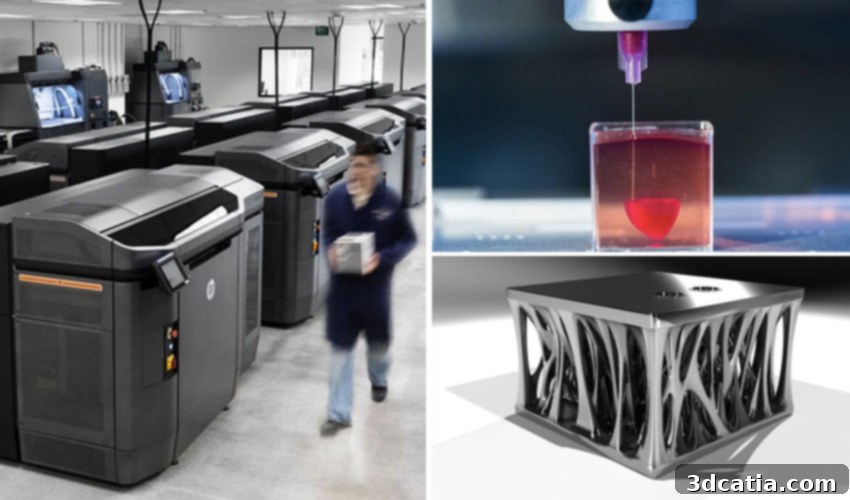
3D Printing’s Evolution: Top Trends of 2019 and What They Mean for the Future of Additive Manufacturing
As we reflect on the significant advancements in the world of 3D printing, 2019 stands out as a pivotal year that truly reshaped the additive manufacturing (AM) industry. This period marked a crucial transition, moving 3D printing from a prototyping tool to a robust, production-ready process capable of transforming industries on a global scale. The growing involvement of major companies and diverse players underscored this shift, signaling a new era of innovation and application. We identified five transformative 3D printing trends in 2019, each contributing to the industry’s burgeoning maturity and setting the stage for even more revolutionary developments in 2020 and beyond. These trends not only highlight the technological leaps but also the expanding ecosystem surrounding additive manufacturing, promising a future where customized, efficient, and sustainable production is the norm.
Industrial Scale Additive Manufacturing: From Concept to Production
The most significant trend of 2019 was undoubtedly the undeniable push towards industrial-scale 3D printing. While additive manufacturing is not poised to entirely replace traditional production methods, its ability to complement and enhance them has proven to be a game-changer across various sectors. A compelling survey by Essentium revealed a dramatic doubling in the number of manufacturers integrating additive manufacturing for full-scale production runs compared to 2018. This demonstrates a clear industry-wide confidence in AM’s reliability and scalability. Throughout 2019, we witnessed a much broader adoption of 3D printing technologies across diverse industries, accompanied by an impressive increase in industrial solutions brought to market by leading manufacturers. The sheer volume of cutting-edge industrial solutions unveiled at Formnext 2019 serves as a testament to this accelerating trend, showcasing machines and systems designed for high-volume, high-performance applications.
Historically, barriers such as cost, speed, material limitations, and perceived reliability often constrained the widespread industrial use of 3D printing. However, 2019 saw significant breakthroughs in overcoming these challenges. The Essentium study further highlighted this progress, indicating that a remarkable 47% of surveyed companies were utilizing additive manufacturing for production runs of thousands of parts, a substantial increase from just 17% in 2018. A prime example of this industrial shift is the collaboration between HP and Volkswagen, where HP Metal Jet technology is being leveraged for large-scale 3D printed parts. In 2019 alone, Volkswagen strategically installed 90 HP printers across its manufacturing facilities, leading to the rapid production of 10,000 functional parts within a few weeks. Their ambitious goal to print between 50,000 to 100,000 football-sized functional parts annually underscores the automotive giant’s commitment to integrating AM into its core production strategy, realizing benefits in customization, speed, and supply chain optimization.
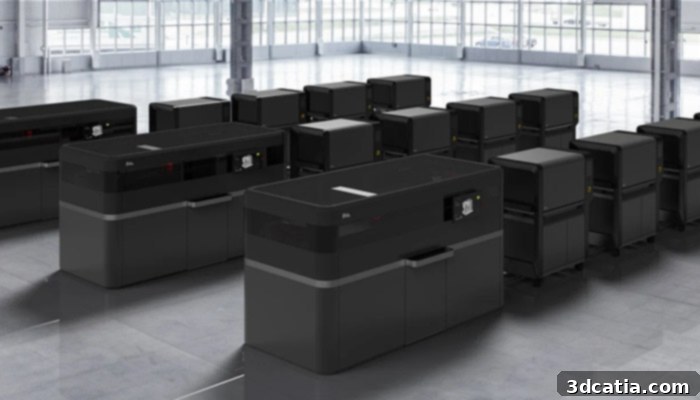
Desktop Metal’s Production System | Credits: Desktop Metal
Beyond specific partnerships, the overall market for industrial 3D printing machines saw robust expansion. A study by CONTEXT reported an impressive year-on-year growth rate of 18% in the shipment of industrial-grade machines, signaling strong demand and market confidence. Companies like Carbon introduced larger, more capable systems such as the L1, which has been adopted by major brands like adidas, Riddell, and Specialized for their production lines, illustrating the technology’s readiness for high-volume manufacturing of end-use parts. Furthermore, the integration of cutting-edge technologies like artificial intelligence (AI) and machine learning (ML) has been instrumental in enabling 3D printers to operate with greater autonomy, precision, and efficiency for larger-scale production. For instance, the MIT-developed 3D printer, Inkbit, utilizes advanced machine learning and machine vision to detect and correct 3D printing errors in real-time, aiming to provide a robust solution for demanding industrial environments. This level of automation extends to specialized software solutions such as 3YOURMIND and AMFG, which empower companies to seamlessly automate their entire additive manufacturing workflow, from order management to production planning. Finally, post-processing, traditionally a labor-intensive bottleneck in the AM workflow, also underwent a significant revolution in 2019. Automation in post-treatment processes, exemplified by innovations from companies like PostProcess Technologies, is rapidly advancing, further streamlining the entire production cycle and making industrial AM more viable and cost-effective.
Design for Additive Manufacturing (DfAM): Unlocking Unprecedented Freedom
Additive manufacturing has fundamentally redefined the possibilities of design, liberating engineers and designers from the constraints of traditional manufacturing methods. This unparalleled design freedom and the ability to create unique, complex geometries have necessitated the emergence of specialized design methodologies, collectively known as Design for Additive Manufacturing (DfAM). DfAM techniques are specifically tailored to leverage the strengths of AM technologies, enabling the creation of innovative designs across a wide array of sectors, from aerospace and automotive to consumer goods and medical devices. These methods allow for intricate internal structures, lattice designs, topology optimizations, and generative designs that would be impossible or prohibitively expensive to produce with conventional techniques. By truly understanding and applying DfAM principles, engineers can optimize parts for specific functional performance requirements, reduce material usage, decrease weight, and consolidate multiple components into a single print.
A compelling illustration of DfAM’s impact is the Uptis puncture-proof tire developed by Michelin. This revolutionary tire concept reimagines the fundamental structure of a tire, eliminating the need for air by leveraging advanced lattice designs and materials made possible only through DfAM. The careful study and adaptation of the tire’s design dramatically enhance its functionality, safety, and sustainability. Similarly, companies like MX3D have showcased the incredible potential for optimizing parts by employing DfAM techniques. Through methods like generative design, where algorithms explore numerous design iterations based on specified constraints, and topology optimization, which mathematically strips away unnecessary material, MX3D has demonstrated how parts can be made lighter, stronger, and more efficient. The power behind these sophisticated design methods lies in advanced software. Platforms like nTopology are at the forefront, providing engineers with the tools to fully exploit the capabilities of additive manufacturing, moving beyond simple CAD to create functionally optimized, structurally complex parts. We can also highlight Hyperganic’s software, which empowers users to design objects with an intricacy and organic complexity that mimics nature itself, pushing the boundaries of what is manufacturable. Throughout 2019, we observed a growing number of examples where DfAM was successfully applied to optimize the functional performance, reduce costs, and improve the reliability of parts. The burgeoning success of these techniques is largely attributed to their profound ability to significantly cut both manufacturing costs and production lead times, making complex, high-performance parts more accessible and economically viable.
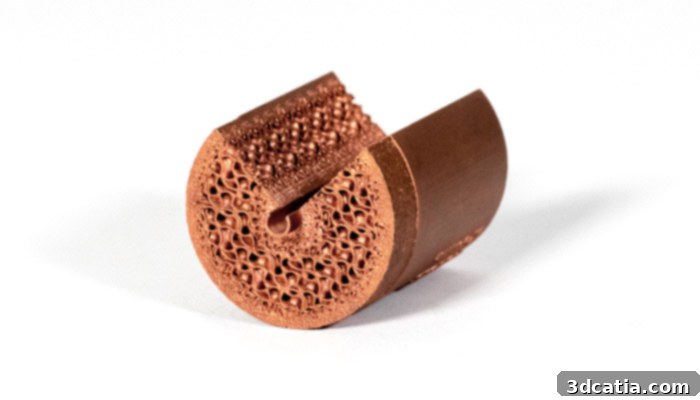
An iteration of a 3D printed heat exchanger | Credits: Hyperganic
Advanced Materials: Expanding the Horizons of Application
Materials continued to be a central focus of innovation and advancement in the 3D printing industry throughout 2019. While the thermoplastics market maintained its steady growth, a surge in the development and adoption of other additive manufacturing materials was particularly notable, significantly expanding the range of possible applications. Metal additive manufacturing, in particular, experienced exceptionally rapid growth, a trend emphatically confirmed by Wohlers’ 2019 report, which announced a remarkable 41.9% increase in revenue from metal AM since 2018. This dramatic expansion highlights the increasing maturity and acceptance of metal 3D printing for critical end-use applications across aerospace, automotive, medical, and industrial sectors. Formnext 2019 served as the perfect arena to witness this firsthand, with over 180 exhibitors showcasing an extensive array of machines and solutions specifically dedicated to metal AM production. This indicated a strong market bet on the future of metal 3D printing. We were especially impressed by the continued expansion of Desktop Metal, which successfully raised an astounding $438 million in equity funding to further develop its cutting-edge metal solutions, alongside the exciting emergence of innovative new players like Meltio, bringing fresh approaches to metal additive manufacturing technologies.
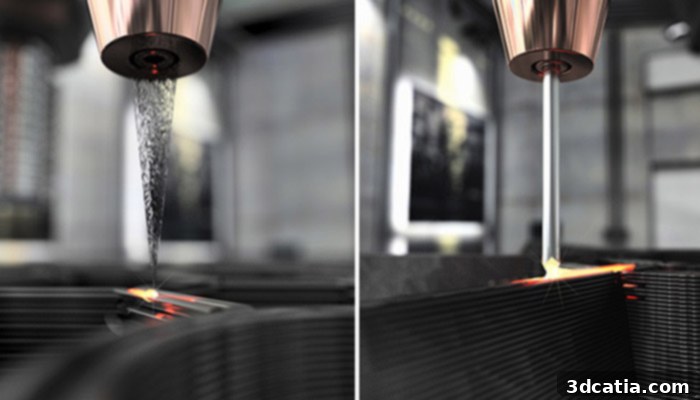
Meltio’s technology enables to 3D print metal wires or metal powders | Credits: Meltio
Beyond metals, advanced composites also experienced substantial growth, increasingly challenging metals in certain high-performance applications. AREVO, a trailblazing Silicon Valley company specializing in direct digital additive manufacturing of ultra-strong, lightweight composite parts, made headlines by creating the world’s first carbon fiber unibody frame for its bike. This achievement underscored the immense potential of continuous fiber composite 3D printing, which offers strength comparable to metal 3D printing but with significant advantages in weight reduction and affordability. The benefits of these advanced materials are clear for numerous end-use applications where a high strength-to-weight ratio is crucial, such as in aerospace, sports equipment, and drone manufacturing. Consequently, the number of players focusing on this segment grew steadily throughout 2019. Anisoprint, with its latest solution, the ProM IS 500, designed for industrial composite production, garnered considerable attention. Even Desktop Metal diversified its offerings by launching a new 3D printer dedicated to these materials this year, aptly named the Fiber, further solidifying the importance of composites in the AM landscape.
In other critical sectors, the adoption of high-performance polymers (HPPs) such as PEEK, PEKK, and ULTEM saw a remarkable surge due to their unique properties, including exceptional temperature resistance, chemical inertness, and mechanical strength. In the medical sector, their biocompatible nature has paved the way for the creation of customized 3D printed implants and prosthetics, offering personalized solutions for patients. Manufacturers are continually pushing the boundaries of HPP development; notably, Roboze and Sabic unveiled a groundbreaking new material, EXTEM™AMHH811F, capable of withstanding continuous operating temperatures of up to 230°C, opening doors for even more demanding applications. Concurrently, the market responded with the development of more sophisticated machines designed to precisely process these challenging materials. Examples include INTAMSYS’ FUNMAT PRO 610 HT and 3DGence’s INDUSTRY F420 system, both engineered to handle the extreme temperatures required for optimal HPP printing. Beyond these core materials, 2019 also witnessed notable growth in specialized areas such as silicone 3D printing for flexible, biocompatible applications, and ceramics 3D printing for high-temperature and wear-resistant components. A truly remarkable innovation was Sandvik’s unveiling of the world’s first ever 3D printed diamond composite, showcasing the industry’s continuous drive to explore and conquer new material frontiers.
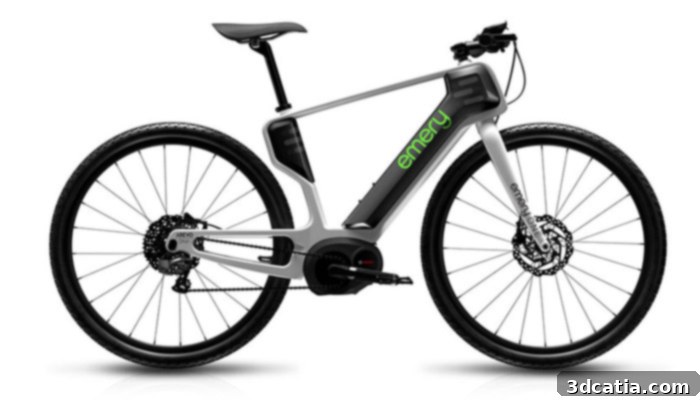
AREVO carbon fiber unibody frame | Credits: AREVO
Sectors Reaching New Levels of Maturity: Breakthroughs Across Industries
Every year, the 3D printing industry experiences groundbreaking advancements, and 2019 was no exception, marking several milestones that demonstrated its growing maturity across diverse sectors. In the highly critical medical field, a team of pioneering researchers from Tel-Aviv University (TAU) achieved a historic feat by successfully 3D printing a heart using human cells. This bio-printed heart completely matched the immunological, cellular, and anatomical properties of a human patient, representing a monumental step forward in bioprinting technologies. Although the initial prototype was the size of a rabbit’s heart, its inherent complexity and biological fidelity offered a tantalizing glimpse into a future where fully functional organs could be printed on demand, revolutionizing organ transplantation, drug testing, and personalized medicine. This achievement alone signifies the profound potential of additive manufacturing to address some of humanity’s most pressing health challenges.
Another astounding development in 2019 was the creation of the world’s largest 3D printed boat at the University of Maine. This colossal achievement, named the 3Dirigo, measured an impressive 7.62 meters (25 feet) in length and weighed a substantial 2.2 tons. The project not only showcased the immense scale now achievable with large-format additive manufacturing but also earned the project teams three coveted World Records: for the largest 3D printed solid part, the largest 3D printed boat, and finally, the largest 3D printer itself. This monumental endeavor highlighted AM’s capacity for creating large structures with unparalleled speed and efficiency, demonstrating its potential for applications in marine engineering, defense, and infrastructure. Furthermore, 2019 also saw significant progress in the nascent but highly promising field of additive manufacturing in space. While still in its early stages of adoption, activity in this sector is burgeoning. For example, Relativity Space successfully raised $140 million with the ambitious goal of becoming the first company to launch an entirely 3D printed rocket into orbit. This visionary approach aims to drastically reduce manufacturing complexity, lead times, and costs associated with space exploration, paving the way for in-situ resource utilization and on-demand manufacturing of spare parts in extraterrestrial environments.
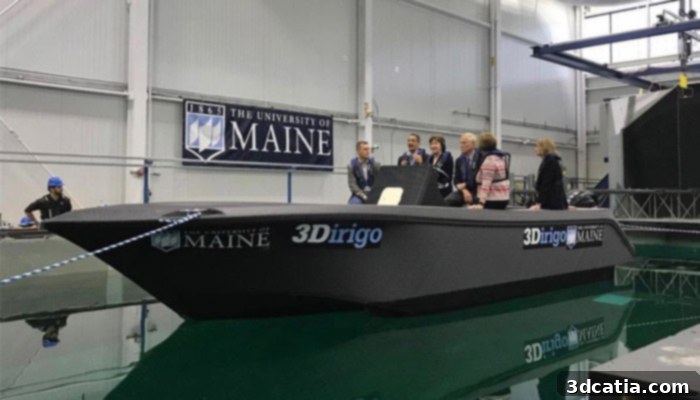
The 3Dirigio 3D printed boat | Credits: UMaine
Sustainability: A Greener Future Through Additive Manufacturing
Sustainability and 3D printing share an inherently special bond, positioning additive manufacturing as a fundamentally greener alternative to many traditional production methods. This is primarily because 3D printing is an additive process; it builds objects layer by layer, utilizing only the material needed for the part, thereby generating minimal waste. In stark contrast, subtractive manufacturing techniques, by their very definition, involve cutting away material from a larger block, leading to significant material waste. This inherent efficiency makes 3D printing a crucial technology in the global push towards more sustainable manufacturing practices and a circular economy. Several projects and initiatives throughout 2019 powerfully underscored this sustainable aspect by offering innovative solutions for waste recycling and material reuse.
Examples include 3devo’s SHR3D IT industrial system, which enables the recycling of plastic waste directly into 3D printer filament, closing the loop on material usage. Additionally, initiatives such as Zero Waste Future showcased the practical application of recycling plastic waste to 3D print functional furniture for urban environments, turning waste into valuable assets. The food industry also explored novel applications of 3D printing for sustainability. We encountered inspiring projects like Upprinting Food, which transforms food waste into appetizing, textured dishes, and the remarkable collaboration between Aleph Farm and 3D Bioprinting Solutions, who successfully 3D printed meat in space, demonstrating the potential for sustainable food production in extreme environments and for addressing global food security challenges. These initiatives highlight AM’s ability to personalize nutrition and reduce the environmental footprint of food production.
Last but certainly not least, the 3D construction industry achieved new levels of maturity in 2019, presenting a compelling solution for addressing global housing crises. Initiatives like WASP’s aim to construct affordable, quick, and sustainable clay houses using large-scale 3D printers, leveraging locally sourced, natural materials and drastically reducing construction time and costs. This approach not only provides sustainable housing options but also minimizes environmental impact compared to traditional building methods. Similarly, COBOD, another leader in construction 3D printing, made significant strides by delivering its first construction 3D printer to Saudi Arabia in 2019. This marked a crucial step in deploying automated construction technologies in regions facing rapid urbanization and housing demands, demonstrating the widespread applicability and potential of sustainable 3D printing across the globe.
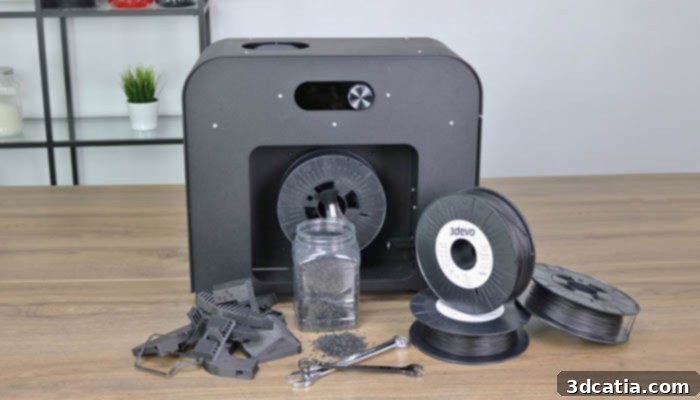
The 3devo recycler and shredder | Credits: 3devo
The trends observed in 2019 paint a vivid picture of an additive manufacturing industry rapidly evolving from niche applications to a mainstream, industrial-grade technology. From advanced materials and sophisticated design methodologies to unprecedented applications in medicine, space, and sustainable construction, 3D printing is undeniably shaping the future of manufacturing. Its ability to enable greater design freedom, facilitate mass customization, enhance supply chain resilience, and contribute to a greener planet makes it one of the most exciting and impactful technologies of our time. As we look ahead to 2020 and beyond, the momentum from these trends is set to accelerate, bringing even more innovative solutions and transformative changes across all sectors.
What developments in 2019 left the biggest impression on you, and what are your predictions for the exciting year ahead in 3D printing? Share your thoughts and insights by leaving a comment below, or engage with us on our Facebook and Twitter pages! For all the latest news, breakthrough innovations, and in-depth analyses in the world of 3D printing delivered directly to your inbox, don’t forget to sign up for our free weekly Newsletter!