
The Critical Role of Ceramic 3D Printing in Revolutionizing Semiconductor Manufacturing
The global demand for microchips is soaring, fueled by rapid advancements across virtually every sector – from the ubiquitous smartphones and burgeoning Internet of Things (IoT) to sophisticated autonomous driving systems, the rise of cryptocurrencies, and the transformative power of artificial intelligence. This insatiable appetite for ever more powerful and efficient microchips places immense pressure on the semiconductor industry. Simultaneously, a confluence of challenges, including raw material shortages, complex trade conflicts, and a tense geopolitical landscape, further intensifies this pressure. The urgent quest for secure, localized production sites has become a top priority, leading many manufacturers to face massive time and delivery constraints due to initiatives like factory reshoring. In such a demanding environment, how can these multifaceted challenges be effectively addressed? And what role can 3D printed high-performance ceramics play in providing rapid and robust solutions?
The semiconductor industry operates under exceptionally high stakes, where speed, precision, and cost-effectiveness are paramount. The immense pressure to deliver, compounded by the significant financial implications of delays, is further exacerbated by current global political events that introduce additional layers of complexity and risk. Consequently, the adoption of new manufacturing paradigms must not only offer tangible added value and significantly boost production efficiency but also strategically mitigate geopolitical vulnerabilities. This is precisely where 3D printing, particularly additive manufacturing of ceramics, emerges as a game-changer.
Additive manufacturing offers unparalleled agility and resilience. 3D printers can be acquired and deployed rapidly, and crucially, they can be easily relocated to new production sites, facilitating genuine on-demand manufacturing and enhancing local flexibility. This distributed manufacturing capability is vital in an era of supply chain fragility. By integrating multiple machines into centralized 3D printing farms, manufacturers can ensure a swift and consistent supply of critical components and spare parts, effectively decentralizing production and reducing reliance on single-source suppliers. Moreover, the inherent nature of on-demand production significantly minimizes the need for extensive storage space and inventory costs, streamlining operations and improving capital efficiency. Overall, 3D printing dramatically increases operational efficiency and introduces a vital layer of stability into production processes, directly addressing the acute challenges faced by the semiconductor industry today.
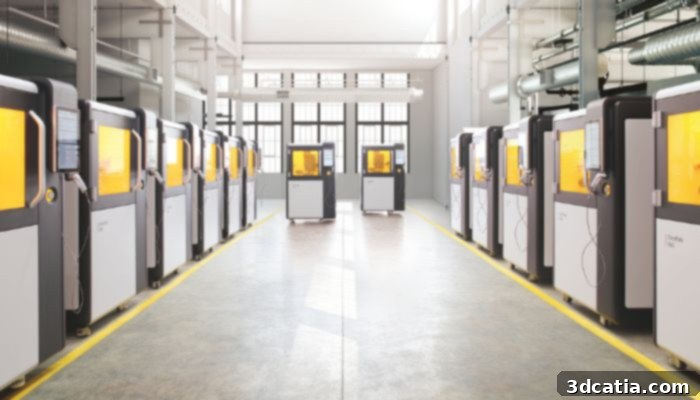
Lithoz LCM 3D print farm.
Among the pioneers who have recognized and harnessed the profound value of additive manufacturing in the semiconductor sector is Lithoz. This innovative Austrian company specializes in the 3D printing of technical ceramics, and their cutting-edge LCM (Lithography-based Ceramic Manufacturing) technology has already demonstrated remarkable utility in diverse fields such as medicine and aerospace. The LCM process delivers a multitude of advantages specifically tailored for the demanding requirements of the semiconductor industry. It enables the creation of previously unattainable complex designs with exceptionally smooth surfaces, which are crucial for critical details such as high-precision internal channels in components responsible for gas distribution and cooling. Furthermore, LCM facilitates the production of monolithic components, eliminating the need for connections or complex assembly processes, thereby reducing failure points and manufacturing complexity.
By integrating multiple functionalities into a single, intricately designed component and rigorously applying Design for Additive Manufacturing (DfAM) principles, manufacturers can achieve significant weight savings while simultaneously boosting cost-effectiveness. This holistic approach optimizes material use and performance. Beyond design freedom, the LCM process is renowned for its stable process control, which ensures reliable series production – a non-negotiable requirement for high-volume industries like semiconductors. This combination of precision, design flexibility, and production reliability positions Lithoz’s LCM technology as a pivotal tool for advancing semiconductor manufacturing.
The Indispensable Role of High-Performance Ceramics in the Semiconductor Industry
So, what precisely are the compelling advantages that technical ceramics bring to the semiconductor industry? Traditionally, semiconductors are fabricated from wafers primarily composed of silicon. While silicon is abundant and has served as the backbone of the electronics industry for decades, it possesses inherent limitations that become increasingly pronounced in the context of high-performance and next-generation applications. For instance, silicon’s semiconductor properties degrade significantly at elevated temperatures, leading to reduced efficiency and reliability. Furthermore, in terms of electron mobility, silicon exhibits a poorer switching speed compared to alternative materials, making it suboptimal for the ultra-fast, high-power semiconductors that are increasingly in demand across modern technological landscapes. This is where advanced technical ceramics truly shine, meeting and often exceeding these demanding requirements.
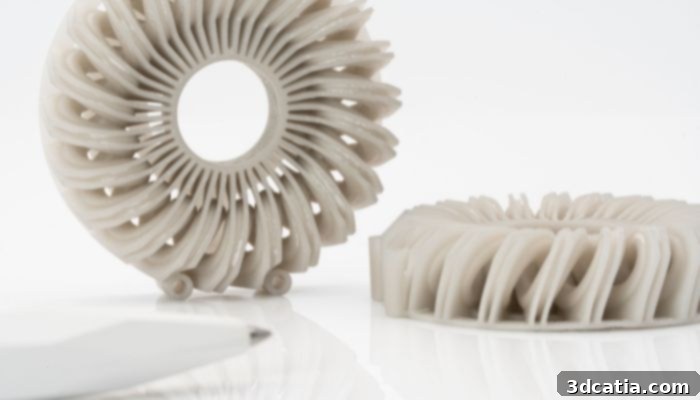
Lithoz ultra-precision aluminum nitride heat exchanger.
Among the array of high-performance ceramics, aluminum nitride (AlN) stands out for its exceptional combination of high mechanical strength and, critically, superior thermal stability. It boasts exceptionally high thermal conductivity, which is crucial for efficiently dissipating heat in high-power semiconductor devices, preventing overheating and ensuring stable performance. Its thermal expansion properties are also highly advantageous, making it particularly interesting and popular for applications where precise dimensional stability under varying temperatures is required. Another highly favored ceramic in the semiconductor industry is aluminum oxide (Al2O3). This material is widely valued for its excellent electrical insulating properties and remarkable resistance to chemical corrosion. These characteristics offer significant advantages for components operating in extreme, chemically aggressive, or corrosive environments often found in semiconductor processing. Additionally, silicon nitride (Si3N4) is another vital ceramic, prized for its outstanding durability, high fracture toughness, and superior resistance to both chemicals and extreme temperatures, making it ideal for robust and long-lasting components.
Lithoz provides these advanced ceramics for 3D printing through its LCM process. The company has already successfully collaborated with prominent representatives of the semiconductor industry to produce functional parts that seamlessly combine the inherent superior properties of ceramics with the ultra-precision capabilities of LCM technology. These applications include complex components such as gas equalizers, ALD rings, advanced heating and cooling plates, and intricate gas distribution nozzles. To better illustrate the transformative potential of ceramic 3D printing, particularly with high-performance materials in the semiconductor industry, let’s delve deeper into one compelling use case.
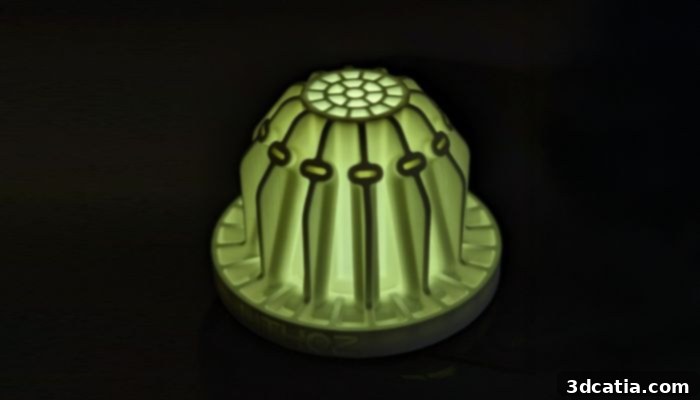
Lithoz gas distributors and gas flow nozzles.
Enhancing Precision: The 3D Printed ALD Ring for Optimized Gas Flow
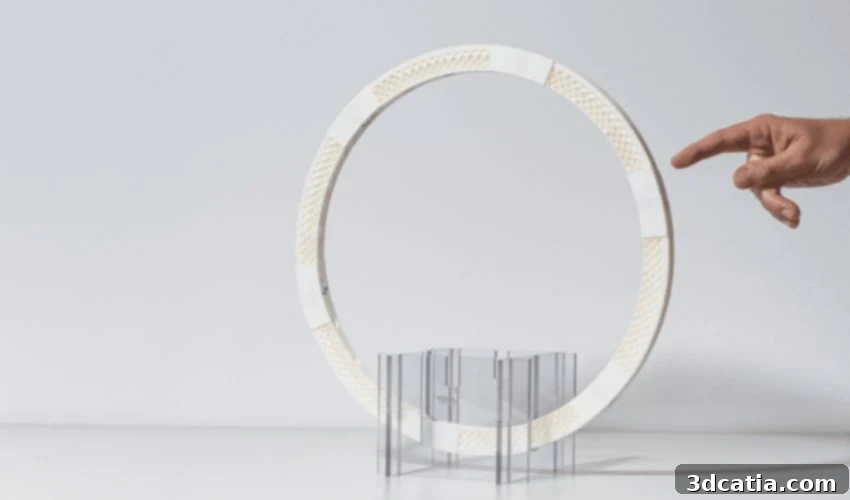
A prime example of LCM technology’s impact is the development and manufacture of an ALD ring, undertaken by Alumina Systems and Plasway Technologies. In atomic layer deposition (ALD), a crucial process in semiconductor manufacturing, extremely thin layers – often only a single atom thick – are precisely deposited onto semiconductor surfaces. Achieving this requires an absolutely uniform and controlled distribution of process gases across the entire wafer surface. An ALD ring is designed to fulfill this critical function, ensuring homogeneous distribution of these gases, which is paramount for the quality and consistency of the deposited layers. Furthermore, integrated sensors within the ALD ring provide real-time feedback, enabling fine-tuned adjustments to maintain optimal process conditions.
The primary objective for Alumina Systems and Plasway Technologies was to significantly enhance the efficiency of the etching and coating processes within their semiconductor production systems. Traditional manufacturing methods often faced limitations in creating the complex internal geometries necessary for truly optimized gas flow, leading to compromises in performance or increased assembly complexity. By leveraging Lithoz’s LCM technology, these challenges were overcome. Alumina Systems took charge of manufacturing the highly intricate ring, which was ingeniously designed by Plasway Technologies. Utilizing a Lithoz CeraFab S320 printer, they were able to print 20 individual ring segments from the LithaLox alumina material on a single platform. Subsequently, six of these precision-printed segments were seamlessly joined to form a complete ring with an impressive diameter of 380 mm. This efficient production method meant that components for more than three full ALD rings could be fabricated in a single print job, showcasing the scalability and productivity of the LCM process.
The results were truly remarkable: the 3D printed ceramic rings not only delivered a substantially improved and more homogeneous gas flow, which is critical for consistent ALD processes, but also led to tangible operational benefits. Alumina Systems and Plasway Technologies reported a staggering threefold increase in productivity, extending the operational lifetime of the components from just one month to an impressive nine months. This significant extension of service life, coupled with optimized gas flow, directly translated into reduced manufacturing costs and minimized downtime. This case study powerfully demonstrates how Lithoz’s LCM technology and its portfolio of high-performance ceramics are not merely addressing but actively overcoming the prevailing challenges in the semiconductor sector, driving innovation, and fostering unprecedented levels of efficiency and reliability.
Further detailed use cases and comprehensive information on Lithoz’s advanced ceramics and state-of-the-art 3D printers can be explored on their official website, providing deeper insights into their transformative contributions to various high-tech industries. You can find more information HERE.
We’re eager to hear your thoughts on how Lithoz is leveraging ceramic LCM 3D printing to tackle the complex challenges facing the semiconductor industry. Share your insights in a comment below or connect with us on our LinkedIn or Facebook pages! Additionally, don’t miss out on the latest advancements in additive manufacturing by signing up for our free weekly Newsletter, delivered straight to your inbox. You can also explore all our engaging videos and content on our dedicated YouTube channel.
*Cover Photo: Lithoz ALD Ring, manufactured by Alumina Systems and Plasway (Photo Credits: Lithoz)