
Revolutionizing Material Science: Berkeley Lab Pioneers 3D Printable Permanent Magnetic Liquids
In a groundbreaking development that promises to reshape the landscape of material science and engineering, scientists at Berkeley Lab in the United States have successfully created a novel material that could pave the way for sophisticated 3D printable magnetic liquid devices. Traditionally, our most critical technologies, from high-capacity magnetic data storage systems to advanced medical imaging equipment like MRI scanners, rely heavily on magnets crafted from solid materials. This conventional approach, while highly effective, inherently limits the potential for flexibility, adaptability, and dynamic control in magnetic applications. The visionary research emerging from Berkeley Lab challenges this long-standing paradigm by exploring the profound implications of making functional magnetic devices not from rigid solids, but from a fluid medium. This innovative quest, powered by cutting-edge 3D printing technologies, is set to unlock an entirely new realm of possibilities for future technological advancements and scientific exploration.
This landmark study, which captured the attention of the global scientific community, was prominently featured in the esteemed journal *Science* on July 19, 2019. Guiding this pioneering effort was Tom Russell, a distinguished visiting faculty scientist at Berkeley Lab and a revered professor of polymer science and engineering at the University of Massachusetts. Professor Russell articulated the profound significance of their discovery, stating, “We’ve made a new material that is both liquid and magnetic. No one has ever observed this before. This opens the door to a new area of science in magnetic soft matter.” This declaration underscores the truly unprecedented nature of their achievement, marking a pivotal moment in the understanding and manipulation of magnetic materials. The ability to combine liquidity with permanent magnetism challenges fundamental assumptions about material properties and offers a fertile ground for exploring novel scientific principles.
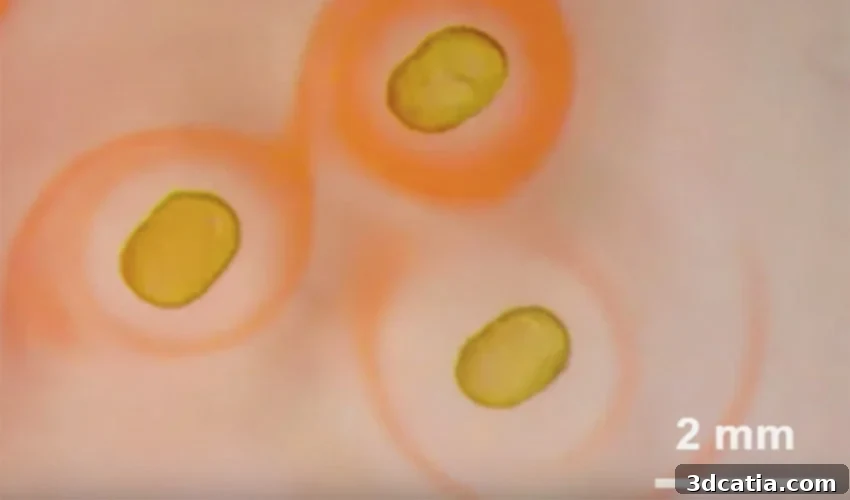
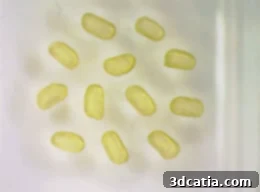
The genesis of this remarkable innovation began with an ingenious idea conceived by Tom Russell and Xubo Liu, the study’s co-lead authors. Their initial concept revolved around forming liquid structures from ferrofluids. For those unfamiliar, ferrofluids are extraordinary solutions comprised of nanoscale iron-oxide particles meticulously suspended in a carrier fluid. What makes them so fascinating is their immediate and dramatic response to magnetic fields: they become intensely magnetized in the presence of an external magnet, exhibiting striking patterns and movements. Building upon this intriguing observation, the scientists pondered a revolutionary question: could these ferrofluids be engineered to become *permanently* magnetic? Could they behave with the enduring magnetic properties of a solid magnet, yet retain their fluid appearance and malleability? To test this audacious hypothesis, the research team employed a specially modified 3D printer. This advanced additive manufacturing device allowed them to precisely 3D print tiny droplets, each approximately 1 millimeter in size, from a carefully formulated ferrofluid solution rich in iron-oxide nanoparticles. This precision engineering was crucial for controlling the initial conditions and exploring the self-assembly mechanisms at play.
Credits: Xubo Liu et al./Berkeley Lab
The critical step in transforming these ordinary ferrofluid droplets into permanent liquid magnets involved a fascinating phenomenon the researchers termed “interfacial jamming.” This process describes how the nanoscale iron-oxide particles naturally migrate and densely pack themselves at the very surface of each liquid droplet, effectively forming a robust, solid-like shell around a liquid core. To imbue these unique structures with magnetic properties, the scientists simply placed them adjacent to a magnetic coil while suspended in solution. As anticipated, the magnetic field generated by the coil exerted a strong pull on the iron-oxide nanoparticles, aligning their magnetic moments. However, the truly astonishing discovery occurred when the magnetic coil was subsequently removed. Instead of demagnetizing and dispersing, the droplets maintained their magnetic properties and, to the researchers’ utter surprise, began gravitating towards one another in perfect, synchronized unison. This spontaneous self-attraction confirmed their success: they had created permanent liquid magnets, a feat previously thought impossible and completely unexpected by conventional scientific wisdom. This breakthrough fundamentally alters our understanding of how magnetism can manifest within materials.
The underlying mechanism responsible for this unprecedented finding is the remarkable way the iron-oxide nanoparticles at the surface of the droplet coalesce and solidify. They essentially form a rigid, protective shell or interface around each liquid droplet, even though the core remains fluid. This interfacial layer is incredibly dense, with a mere 8 nanometers separating each of the billions of nanoparticles. This tight packing is crucial for stabilizing the magnetic alignment and preventing demagnetization once the external field is removed. Furthermore, the researchers made another astounding discovery: the unique magnetic properties of these liquid droplets did not diminish or vanish if a droplet was physically divided into smaller, thinner droplets. This divisibility and retention of magnetism suggest that the magnetic characteristics are intrinsic to the nanoparticle-stabilized interface, not solely dependent on the overall size or integrity of the original droplet. This finding opens up exciting avenues for creating complex, interconnected magnetic liquid systems and hints at scalable applications.
Driven by the immense potential of their discovery, Professor Russell and Xubo Liu are actively planning to continue their pioneering research at the Berkeley Lab. Their immediate goal is to develop even more sophisticated and complex liquid magnetic structures, pushing the boundaries of what is possible with this novel material. Reflecting on the journey, Liu shared his profound sense of accomplishment: “What began as a curious observation ended up opening a new area of science. It’s something all young researchers dream of, and I was lucky to have the chance to work with a great group of scientists supported by Berkeley Lab’s world-class user facilities to make it a reality.” This sentiment highlights the serendipitous nature of scientific breakthroughs and the critical role of collaborative environments and advanced infrastructure, such as those provided by Berkeley Lab, in fostering innovation. The exploration into this new domain of magnetic soft matter is just beginning, promising further exciting revelations.
The implications of these groundbreaking findings are nothing short of revolutionary, suggesting a future where entirely new classes of printable liquid devices could emerge across a myriad of sectors. In the realm of biomedical science, this research could lead to the development of highly advanced artificial cells. Imagine microscopic, magnetically guidable liquid structures capable of delivering targeted cancer therapies directly to diseased cells, minimizing side effects on healthy tissues. This precision medicine approach could drastically improve treatment efficacy and patient outcomes. Beyond healthcare, the technology holds immense promise for the field of robotics, particularly in the creation of flexible liquid robots. These ingenious devices could possess the unprecedented ability to dynamically change their shape and properties to adapt seamlessly to complex and ever-changing surroundings. Picture robots that can navigate intricate environments, perform delicate manipulations, or even self-assemble and reconfigure for different tasks. Further applications could extend to soft robotics, microfluidic systems for advanced diagnostics, self-healing materials that repair themselves using magnetic principles, and adaptive optics for next-generation lenses. The ability to control magnetic properties within a fluid medium opens doors to novel sensor designs, innovative data storage architectures, and highly customizable, responsive materials previously confined to science fiction.
For those eager to delve deeper into the specifics of this fascinating scientific endeavor, comprehensive information and additional resources can be accessed HERE. This research marks a significant leap forward in material science, challenging established norms and inspiring a new generation of innovation.
What are your thoughts on this astonishing research and its potential to transform future technologies? We invite you to share your perspectives in a comment below or join the conversation on our Facebook and Twitter pages! Don’t forget to sign up for our free weekly Newsletter, delivering all the latest news and innovations in 3D printing directly to your inbox!