
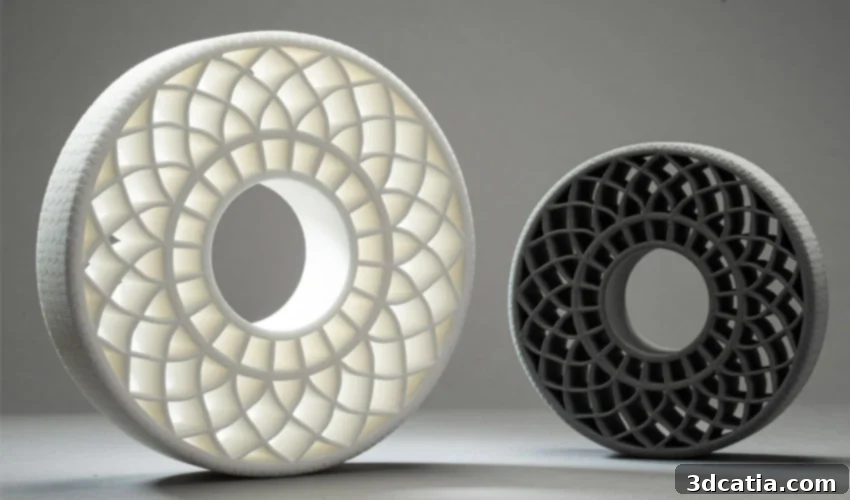
Nylon in 3D Printing: A Comprehensive Guide to Polyamide for Additive Manufacturing
Nylon, also chemically known as Polyamide (PA), stands as a cornerstone polymer within the rapidly evolving additive manufacturing sector. This versatile thermoplastic is widely utilized across various 3D printing technologies, available predominantly in powder or filament form. It is a preferred material for processes such as Selective Laser Sintering (SLS), Multi Jet Fusion (MJF), and Fused Deposition Modeling (FDM). Polyamides are categorized based on their distinct chemical compositions, specifically by the number of carbon atoms they contain. Among the most recognized and widely adopted variants in the 3D printing market are PA12 and PA11, alongside PA6, which is particularly common for FDM applications. But what precisely are the defining characteristics of nylon that make it so valuable for 3D printing? Who are the key players manufacturing these materials, and what are their most significant applications? Dive into our comprehensive guide below to uncover everything you need to know about nylon in additive manufacturing!
The Evolution and Core Characteristics of Nylon
The story of nylon begins in 1935 with the groundbreaking development of nylon 6.6 by Wallace Carothers, a brilliant chemist working for DuPont. This pioneering synthetic polymer was patented in 1937, swiftly commercialized in 1938, and has since maintained its status as one of the most extensively used polyamides globally. Its initial widespread recognition came from the textile industry, owing to its remarkable flexibility, durability, and resistance to wear. A historical milestone was its first use in women’s stockings in 1940, revolutionizing garment manufacturing. Interestingly, even in 3D printing, the inherent flexibility of nylon remains one of its most compelling attributes. Following closely, nylon 6 was independently developed and patented by Paul Schlack in the laboratories of IG Farben in 1941, representing another significant advancement in polyamide chemistry. All other forms of nylon that we see today emerged subsequently, building upon these foundational innovations.
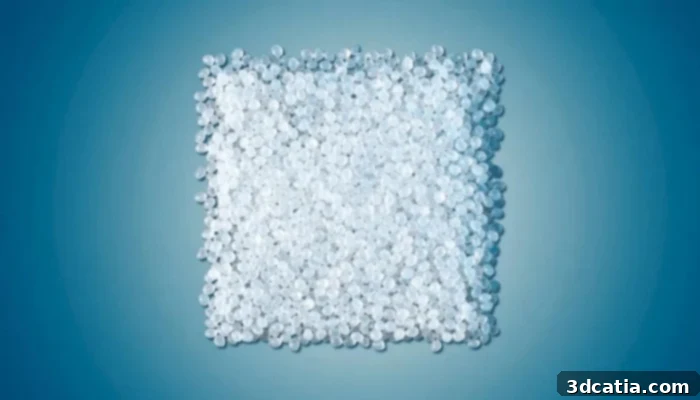
Nylon 6.6, a foundational polyamide in polymer science (photo credits: BASF)
PA11 vs. PA12: Understanding the Differences
Beyond the historical variants, PA11 and PA12 are two types of nylon that have found significant adoption and acclaim within the additive manufacturing industry. While they are distinguished by a seemingly minor difference of a single carbon atom in their chemical structure, their origins and specific property profiles are notably distinct. PA11 boasts a bio-based origin, being derived from castor oil—a natural and renewable resource. This makes it a more environmentally conscious choice for those seeking sustainable material solutions. In contrast, PA12 is synthesized from petroleum, a finite fossil fuel. The differing origins fuel considerable debate regarding nylon’s environmental footprint and its long-term sustainability. Consequently, when feasible and appropriate for the application, many users opt for PA11 over PA12, particularly for items designed for skin contact, due to its excellent biocompatibility and performance. However, it is crucial to acknowledge that even PA11, despite its renewable source, faces challenges in end-of-life recycling infrastructure, often leading to it being disposed of similarly to other conventional plastics.
In terms of mechanical and thermal properties, both PA11 and PA12 are renowned for their exceptional strength, toughness, and resistance to abrasion. However, subtle differences tailor them to specific needs. PA12 typically exhibits lower moisture absorption than PA11, which can be a critical factor in maintaining dimensional stability and mechanical performance in humid environments. It is also often favored for its superior rigidity and higher melting point, making it excellent for robust, stiff parts. PA11, conversely, offers enhanced flexibility, greater impact resistance, and better elasticity, making it ideal for parts requiring higher ductility and durability. Its improved thermal stability and UV resistance further extend its utility in demanding applications exposed to varying environmental conditions.
A significant advantage of nylon in powder form, especially within powder bed fusion technologies, is its reusability across multiple printing cycles. This factor is crucial for optimizing material consumption and reducing operational costs in additive manufacturing. The HP Multi Jet Fusion (MJF) process, for instance, is particularly known for its efficient use of polyamides like PA12 and PA11. MJF technology typically boasts a higher refresh rate compared to traditional SLS technology. This means that a substantial portion of the unsintered powder from a previous build can be blended with a smaller percentage of new powder for subsequent prints. Approximately 70% of the powder often remains unused during a 3D printing job in these systems, yet it can be effectively mixed with fresh powder, significantly minimizing material waste and contributing to a more sustainable manufacturing workflow.
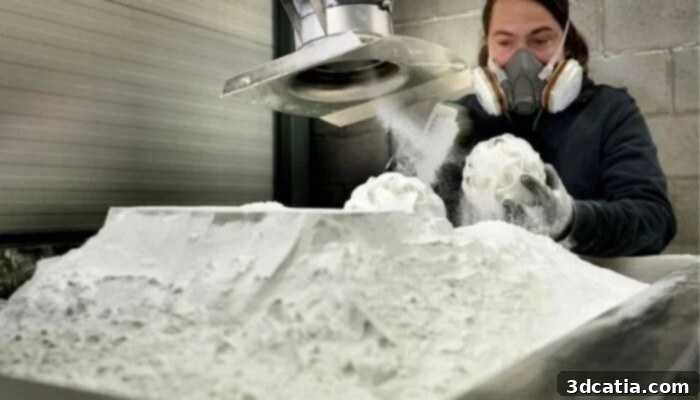
Nylon powder is extensively used in advanced additive manufacturing processes (photo credits: Materialise)
Nylon’s Role Across 3D Printing Technologies
Nylon Filaments for FDM/FFF
When it comes to Fused Deposition Modeling (FDM) or Fused Filament Fabrication (FFF), nylon is most frequently encountered in the form of PA6 filament. This variant of nylon is celebrated for its impressive combination of flexibility, high resistance to impact, and excellent abrasion resistance. Furthermore, its mechanical properties are remarkably similar to those of ABS, yet often offering superior toughness and durability. However, it is important to note that printing with nylon filament, particularly PA6, typically necessitates a 3D printer equipped with a heated print bed, capable of reaching temperatures around 80°C or even higher, to ensure adequate bed adhesion and prevent warping. Another critical consideration for nylon is its highly hygroscopic nature; it readily absorbs moisture from the surrounding environment. If not properly stored and dried, absorbed moisture can significantly degrade print quality, leading to issues like bubbling, steam generation, and weakened parts. Therefore, careful storage in dry boxes or through filament dehydrators is essential. In terms of extrusion temperature, FDM 3D printers typically need to operate within a range of 220°C to 250°C, depending on the specific type of nylon and printer setup. Nylon filaments present a robust and often superior alternative to materials like polycarbonate, as they are generally easier to print, offer enhanced durability, and are ideally suited for creating functional parts that demand high strength and resilience.
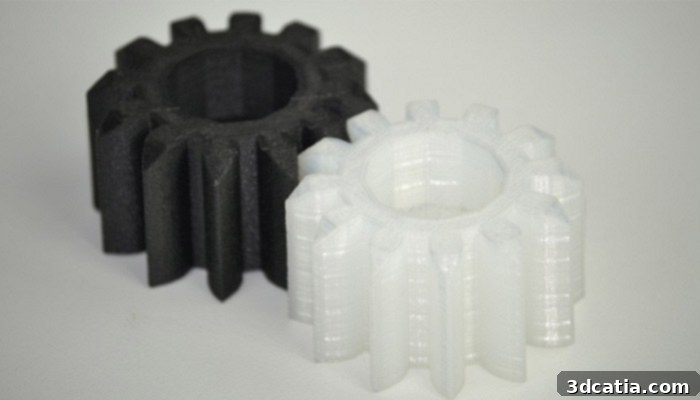
FDM 3D printing with nylon filament (Photo Credits: Sharebot)
Nylon Powders for SLS and MJF
For powder-based additive manufacturing processes such as Selective Laser Sintering (SLS) and Multi Jet Fusion (MJF), PA12 is the most commonly employed nylon variant. Its widespread adoption is due to its exceptional mechanical and thermal properties: PA12 is renowned for being extremely rigid, highly strong even at very low temperatures, remarkably stress-resistant, and characterized by low moisture absorption. These attributes contribute to the production of dimensionally stable and high-performance parts. Additionally, PA12 parts are relatively easy to post-process, allowing for various finishing techniques such as painting, dyeing, and polishing to achieve desired aesthetics or surface characteristics.
PA11 is also extensively available in powder form and shares many admirable characteristics with PA12. However, it distinguishes itself with several key advantages. PA11 typically offers superior thermal stability, greater resistance to light and UV degradation, and enhanced elasticity. Parts manufactured with PA11 often exhibit greater ductility and durability, making it an ideal material for producing functional prototypes and final end-use parts where important mechanical properties like impact strength and fatigue resistance are paramount. It’s important to reiterate, however, that while PA11 offers excellent performance, it generally absorbs more moisture than PA12, which must be managed during storage and processing to ensure optimal print quality and part integrity.
Diverse Applications of Nylon in 3D Printing
Nylon’s unique blend of properties — combining flexibility, strength, durability, and chemical resistance — makes it an incredibly versatile material across a myriad of 3D printing applications. Its resilience against friction and deformation renders it indispensable for demanding automotive applications, such as the rapid prototyping and production of specialized interior components, complex ducting, or lightweight bracketry. It is also extensively used in the manufacturing of gears, living hinges, snap-fit connectors, and as a superior replacement for certain plastics traditionally employed in injection molding, enabling more design freedom and faster iteration cycles. Due to its biocompatible nature, specific grades of nylon can be safely utilized in medical applications, including the creation of custom prostheses, orthotic devices, and various parts that require direct contact with the human skin. Furthermore, nylon’s non-abrasive characteristics make it an excellent choice for high-use items and internal machinery parts that are subjected to continuous wear and tear, reducing maintenance needs and extending product lifespans. Finally, its ability to be easily painted or dyed allows for aesthetically pleasing final products, expanding its utility in consumer goods and highly visible industrial components.
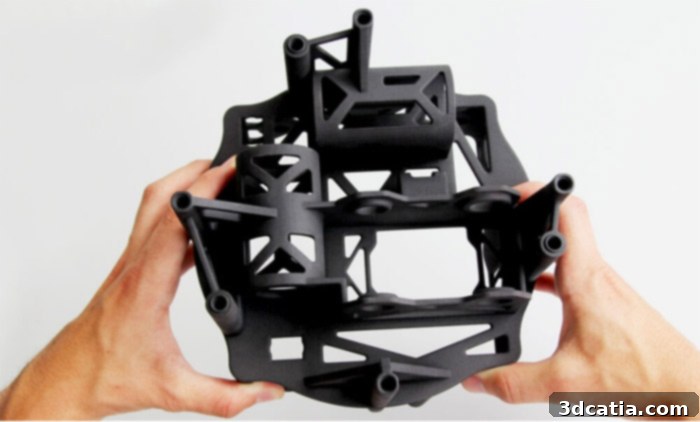
A highly detailed part that has been 3D printed with PA12 (photo credits: Sculpteo)
Leading Manufacturers and Material Pricing for Nylon
The market for nylon 3D printing materials is robust, with several key players contributing to its innovation and supply. For nylon filaments, prominent manufacturers include specialized material companies like Taulman3D, XStrand, Neofil3D, and Polymaker, alongside leading 3D printer manufacturers such as Zortrax, UltiMaker, and Markforged, who often produce their own optimized filament lines. To enhance performance for specific applications, nylon can be reinforced with advanced materials like carbon fiber or fiberglass, creating high-performance composite filaments that offer increased stiffness, strength, and thermal resistance. In terms of pricing, a standard spool of classic nylon filament (typically 500 grams with a 1.75 mm diameter) generally ranges from $25 to $40, depending on the brand, specific PA type, and quality. If opting for a composite material, the price point can quickly escalate, often reaching around $60-70 or more per spool, reflecting the added cost of reinforcement materials and specialized manufacturing processes.
Regarding nylon powder for SLS and MJF technologies, the landscape is dominated by major chemical groups. The French chemical giant Arkema stands out as arguably the largest producer of PA11 powder globally, marketed under its renowned Rilsan PA11 brand since the 1950s. This long-standing expertise makes them a critical supplier for bio-based polyamide solutions. The German company BASF is another significant force in this market, producing PA6 and PA6.6 as well as its Ultrasint brand of PA11 and PA12 powders. Ultrasint materials are specifically engineered to be compatible with popular platforms like HP Multi Jet Fusion machines and various SLS printer models, offering high-quality, reliable options. For PA12 powders, Arkema and Evonik are primary producers, while leading 3D printer manufacturers such as EOS, 3D Systems, and Farsoon often offer their own proprietary powders developed through strategic collaborations with these chemical companies, ensuring optimized performance for their respective hardware. The innovation extends to specialty polyamide powders filled with various additives, including carbon fibers for extreme stiffness, Kevlar for enhanced impact resistance, or glass beads for increased rigidity and improved surface finish. A prime example is HP 3D High Reusability PA 12 Glass Beads, which, as its name suggests, is a thermoplastic filled with 40% glass beads, celebrated for its high reusability in MJF processes and its excellent mechanical properties. The price of one kilogram of standard or reinforced PA11 or PA12 powder typically varies from 100 to 200 euros, depending on the specific composition, brand reputation, and quantity purchased.
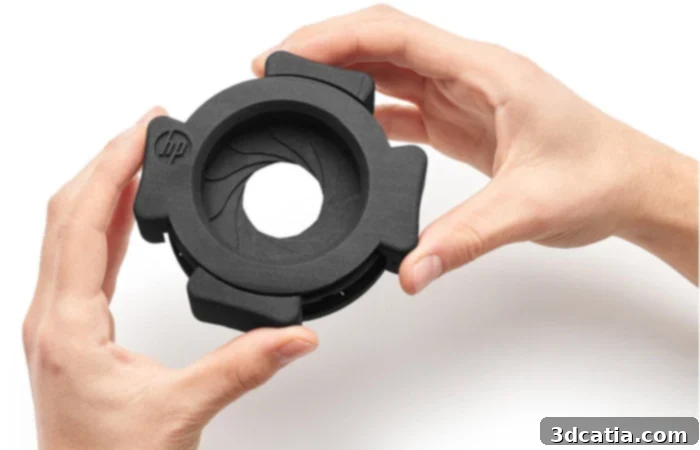
Advanced 3D printing utilizing nylon powder for high-performance parts (Photo Credits: HP)
In conclusion, nylon, in its various polyamide forms, has cemented its position as an indispensable material in the additive manufacturing landscape. Its exceptional balance of mechanical strength, flexibility, durability, and adaptability to different 3D printing technologies—from FDM filaments to SLS and MJF powders—makes it a go-to choice for engineers and designers across numerous industries. Whether for creating robust functional prototypes, intricate end-use parts, or specialized components for automotive, medical, or consumer applications, nylon continues to drive innovation in 3D printing. The ongoing advancements in bio-based polyamides like PA11 and the development of high-performance reinforced composites further underscore nylon’s potential for future growth and sustainable manufacturing practices.
Have you leveraged nylon for your 3D printing projects? We’d love to hear about your experiences and insights! Share your thoughts in a comment below or engage with us on our Facebook and Twitter pages. Don’t miss out on the latest advancements and news in the 3D printing world—sign up for our free weekly Newsletter to receive all the crucial updates directly in your inbox!