
Mastering 3D Printing Tolerances: A Comprehensive Guide to Accuracy and Precision in Additive Manufacturing
When the concept of “tolerance” is mentioned, many immediately think of social acceptance or forbearance towards individuals and ideas. However, in the realms of engineering, manufacturing, and particularly in the rapidly evolving world of additive manufacturing, tolerance takes on a profoundly different and critical meaning. Here, tolerance is rigorously defined as the permissible limit of error or variation in a dimension or property of a manufactured part. This nuanced understanding of tolerance is not just academic; it is fundamental to the successful creation of functional, high-quality 3D prints.
In additive manufacturing, where parts are built layer by layer, understanding and managing tolerances are paramount. Without a clear grasp of these limits, designers risk creating components that don’t fit together, fail prematurely, or simply don’t perform as intended. To truly appreciate the significance of tolerance in this context, it is essential to first clarify two other cornerstone characteristics of successful 3D prints: accuracy and precision. While often used interchangeably in casual conversation, these terms have distinct and vital implications in the manufacturing lexicon.
Accuracy vs precision (photo credits: BMF)
Differentiating Accuracy and Precision in 3D Printing
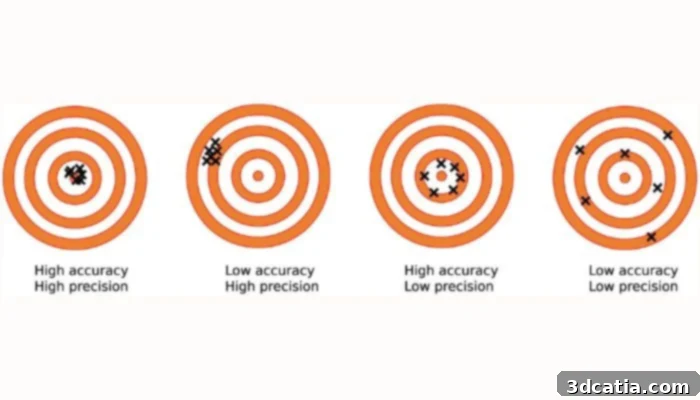
In additive manufacturing, accuracy and precision are two distinct but equally important metrics that define the quality and reliability of a 3D-printed part. Understanding their differences is key to optimizing print results and meeting specific application requirements. Accuracy refers to how close a measurement or the actual dimension of a 3D-printed part is to its true, desired value, as specified in the CAD software. Think of it as hitting the bullseye on a target. If your CAD model specifies a dimension of 100mm, an accurate print will yield a part measuring very close to 100mm. A lack of accuracy means the final part deviates significantly from the original digital design, leading to misfits or functional issues.
Precision, on the other hand, measures repeatability and consistency. It indicates how close multiple measurements of the same parameter are to each other, regardless of whether they are close to the true value. Using the bullseye analogy, precision would be hitting the same spot on the target repeatedly, even if that spot is not the bullseye itself. In 3D printing, a precise process will produce a batch of identical parts, each with highly consistent dimensions, even if those dimensions are slightly off from the CAD model. A lack of precision means that each part produced will differ slightly from the last, making it difficult to maintain quality control or produce reliable assemblies. For optimal part quality, both accuracy and precision are indispensable. A printer can be precise but inaccurate (consistently producing parts 101mm instead of 100mm) or accurate but imprecise (producing parts ranging from 99mm to 101mm, averaging 100mm). The ideal scenario is a printing process that is both accurate and precise, yielding consistent parts that closely match the intended design.
The Role of Tolerance in Additive Manufacturing
Tolerance directly impacts both the accuracy and precision of 3D-printed parts. It quantifies the acceptable range of deviation for a specific dimension or characteristic. For instance, if a design specifies a 10mm hole with a tolerance of ±0.1mm, any hole printed between 9.9mm and 10.1mm is considered acceptable. This concept is crucial because no manufacturing process, including 3D printing, can produce parts with absolute, perfect dimensions every single time. Small variations are inherent to the process. Tolerance acknowledges these unavoidable variations and sets boundaries to ensure that even with these deviations, the part will still function as expected, fit with other components, or meet regulatory standards.
Effectively managing tolerances means understanding what causes these variations and how to optimize settings and designs to stay within the acceptable range. It’s about minimizing random deviations and ensuring consistency. A part printed within tolerance is considered functionally sound, whereas a part outside tolerance, even by a tiny fraction, might be unusable, leading to material waste, production delays, and increased costs. Therefore, specifying appropriate tolerances at the design stage and ensuring the manufacturing process can achieve them are critical steps in successful additive manufacturing.
Key Factors Influencing 3D Printing Tolerances
The final dimensional accuracy and consistency of a 3D-printed part are influenced by a multitude of factors, ranging from the fundamental physics of the printing process to environmental conditions and post-processing steps. Recognizing and controlling these variables is essential for achieving desired tolerances.
1. 3D Printing Technology and Process
Different additive manufacturing technologies inherently offer varying levels of tolerance due to their underlying mechanisms. Each process has its unique strengths and weaknesses when it comes to dimensional accuracy:
- Fused Deposition Modeling (FDM/FFF): As one of the most accessible and popular 3D printing techniques, FDM builds parts by extruding molten thermoplastic layer by layer. Its inherent tolerance is typically around ±0.5% (e.g., ±0.5mm per 100mm). This is largely due to factors like filament diameter variation, nozzle diameter, layer adhesion, and thermal expansion/contraction of the material as it cools. FDM is excellent for rapid prototyping and functional parts where extreme precision isn’t paramount, but intricate assemblies might require larger clearances.
- Stereolithography (SLA): Renowned for its exceptional surface finish and fine details, SLA uses a UV laser to cure liquid resin. Its tolerances are significantly tighter, often around ±0.2% or even ±0.1mm for smaller parts. The precision of the laser and the controlled curing process contribute to this high accuracy, making SLA suitable for intricate models, prototypes with smooth surfaces, and functional parts requiring tighter fits.
- Selective Laser Sintering (SLS): This powder bed fusion technology uses a laser to sinter polymer powder. SLS typically achieves tolerances of about ±0.3%. The powder bed nature helps support features without requiring external supports, and the high processing temperatures contribute to isotropic material properties. However, temperature gradients within the build chamber and material shrinkage during cooling can introduce minor deviations.
- Multi Jet Fusion (MJF): HP’s MJF technology, also a powder bed fusion process, involves fusing polymer powder with a fusing agent and a detailing agent. It generally offers tolerances comparable to SLS, around ±0.3%. MJF is known for producing strong, dense parts quickly, with minimal part-to-part variation.
- Direct Metal Laser Sintering (DMLS) / Selective Laser Melting (SLM): These metal additive manufacturing processes fuse metallic powders with a high-power laser. Given the extreme temperatures and thermal stresses involved, achieving tight tolerances is challenging. DMLS typically has tolerances around ±0.2% (or approximately 0.1mm to 0.2mm per 100mm), often requiring post-machining for critical features. Material properties like thermal conductivity and coefficient of thermal expansion play a significant role.
- PolyJet / MultiJet Modeling (MJM): PolyJet is a highly precise process that jets liquid photopolymer onto a build tray, immediately curing it with a UV light. It boasts some of the tightest tolerances among 3D printing technologies, often in the range of ±0.05mm to ±0.1mm for 100mm. This precision, combined with multi-material capabilities, makes it ideal for complex, detailed models, jigs, fixtures, and medical applications.
2. 3D Printer Hardware and Calibration
Beyond the technology type, the specific printer model itself plays a crucial role. More industrial-grade 3D printers typically feature higher quality components, more robust build platforms, and advanced calibration systems, resulting in tighter tolerances compared to basic, entry-level models. Factors like stepper motor resolution, gantry rigidity, heated build chambers, and precise temperature control all contribute to a printer’s inherent accuracy. Regular maintenance and proper calibration are also paramount. An unlevel print bed, a worn nozzle, loose belts, or an improperly calibrated extruder can significantly degrade accuracy and precision, leading to unpredictable deviations.
Testing the dimensions (photo credits: Formlabs)
3. Material Properties and Shrinkage
Material properties, particularly thermal expansion and contraction, are major determinants of tolerance. Whenever heat is involved in the printing process (as in FDM, SLS, DMLS), the material will expand when hot and shrink when it cools. The degree of shrinkage varies significantly between materials and even between manufacturers. For instance, ABS plastic is known for higher shrinkage and warping tendencies compared to PLA. Engineering resins for SLA also exhibit specific shrinkage rates during curing and post-curing. Filaments, depending on their composition and diameter (e.g., 2.85mm vs. 1.75mm), can have tolerances influenced by their extrusion consistency. Rapid and uneven cooling can exacerbate issues like warping and internal stresses, leading to dimensional inaccuracies. This is why many industrial printers feature heated build chambers or enclosed environments to maintain a stable temperature and control the cooling process, minimizing differential shrinkage and improving dimensional stability.
4. Layer Thickness and Resolution
Layer thickness, often referred to as Z-axis resolution, directly impacts the precision of vertical dimensions and surface quality. Thinner layers generally result in smoother surfaces and finer details, but also increase print time. Deviations can arise from inconsistencies in layer deposition due to factors like poor bed leveling, inconsistent extrusion, or insufficient adhesion between layers. While a smaller layer height generally improves accuracy, there’s a practical limit beyond which the benefits diminish, and print time becomes excessive. Similarly, the minimum feature size dictates the smallest printable detail, influenced by the nozzle diameter (FDM), laser spot size (SLA, SLS, DMLS), or voxel size (PolyJet). Features smaller than this limit may not print correctly or merge with adjacent geometries.
5. Build Size and Part Geometry
The overall size of a part can affect its achievable tolerance. Larger parts tend to accumulate more errors across their dimensions. Complex geometries, including thin walls, intricate internal structures, and features requiring extensive support material, also pose challenges. Overhangs, for example, can droop or warp without proper support, impacting dimensional accuracy. The orientation of the part on the build plate can influence mechanical properties, surface finish, and the necessity of support structures, all of which indirectly affect the final part’s adherence to specified tolerances.
6. Post-Processing
The steps taken after a part is printed can either improve or degrade its dimensional accuracy. Processes like sanding, polishing, support structure removal, washing, and curing (for resin prints) can physically alter the part’s dimensions. For metal parts, heat treatment or machining is often required to achieve final tolerances. Each post-processing step introduces a potential source of variation, emphasizing the need for controlled and precise post-processing workflows to maintain the integrity of the part’s dimensions.
Strategies for Improving 3D Print Accuracy and Tightening Tolerances
Achieving precise and accurate 3D prints with tight tolerances is a multi-faceted endeavor that involves careful planning, meticulous execution, and iterative optimization. While no 3D print can be truly “tolerance-proof,” understanding and mitigating sources of variation is key to producing high-quality components.
1. Print Calibration Models and Characterization
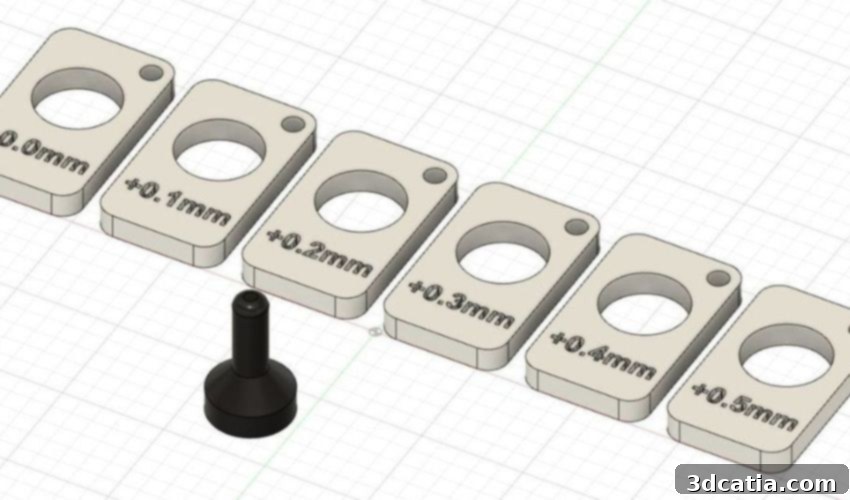
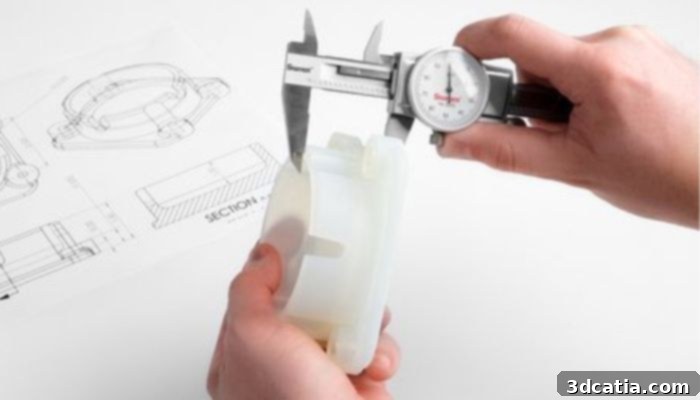
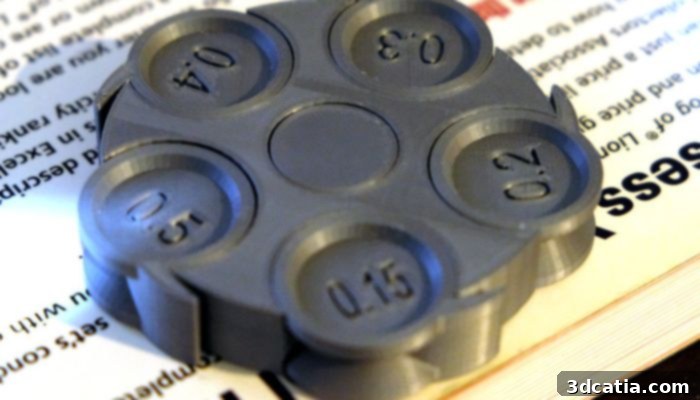
The most recommended first step is to print and rigorously analyze calibration models. These specially designed test prints allow you to characterize the specific tolerances of your 3D printer and chosen material. You can find numerous calibration models online (e.g., dimensional accuracy cubes, overhang tests, bridging tests). Once printed, meticulously measure critical dimensions (holes, pegs, wall thicknesses, gaps) using precision tools like digital calipers or micrometers. The variance between your measurements and the design values will reveal your printer’s actual accuracy and precision. This data is invaluable for making informed adjustments. For example, if holes are consistently undersized, you might apply a “horizontal expansion compensation” setting in your slicer to slightly oversize them in the design. Experiment with various slicer settings—layer height, print speed, nozzle temperature, bed temperature, infill percentage, and flow rate—and measure the impact on your calibration prints to fine-tune your process for optimal accuracy and minimal deviation.
A calibration model (photo credits: Prusa Research)
2. Implement Rigorous Printer Maintenance
Consistent and proactive printer maintenance is critical for ensuring stable tolerances over time. Regular tasks include:
- Print Bed Cleaning and Leveling: A clean, properly leveled (or tramming) print bed is fundamental for good first-layer adhesion and consistent Z-height. Automated leveling systems still benefit from occasional checks.
- Nozzle Inspection and Replacement: Worn, clogged, or damaged nozzles can lead to inconsistent extrusion and poor dimensional accuracy.
- Tightening Belts and Screws: Loose belts on FDM printers can cause “ghosting” or “ringing” artifacts and affect dimensional accuracy. Regularly check and tighten all screws and fasteners to ensure rigidity.
- Lubrication of Moving Parts: Linear rails, rods, and lead screws require proper lubrication to ensure smooth movement and prevent binding, which can introduce dimensional errors.
- Firmware Updates: Keep your printer’s firmware updated, as manufacturers often release improvements that enhance print quality and stability.
- Extruder Calibration (E-steps): Calibrating your extruder’s steps per millimeter (E-steps) ensures that the correct amount of filament is extruded, directly impacting dimensional accuracy and preventing over/under-extrusion.
3. Optimize Slicer Settings and Design for Manufacturing
Beyond basic calibration, thoughtful adjustment of slicer settings is crucial. Consider:
- Flow Rate/Extrusion Multiplier: Fine-tune this setting to ensure the printer extrudes exactly the right amount of material for accurate wall thicknesses.
- Cooling Settings: For FDM, managing cooling can prevent warping and improve layer adhesion. For resin prints, appropriate curing settings are vital.
- Retraction Settings: Proper retraction minimizes stringing and blobbing, which can affect surface quality and dimensional consistency.
- Printing Speed: Slower speeds generally allow for higher accuracy and better detail resolution, especially for complex features.
From a design perspective, incorporating DfAM (Design for Additive Manufacturing) principles is essential. This includes designing parts with appropriate clearances for assemblies, considering minimum wall thicknesses, using chamfers and fillets to reduce stress concentrations and improve printability, and optimizing part orientation on the build plate to minimize support structures and leverage anisotropic material properties. For example, if two parts need to fit together, design the female part slightly larger and the male part slightly smaller, based on your printer’s tested tolerances.
4. Control Environmental Conditions and Material Handling
Environmental factors such as ambient temperature and humidity can significantly affect print quality and tolerance, especially for hygroscopic materials like Nylon. Using a printer enclosure helps maintain a stable temperature, preventing drafts and temperature fluctuations that can cause warping or inconsistent curing. Proper storage of materials, such as dry boxes for filaments or opaque containers for resins, is crucial to prevent moisture absorption or premature curing, which can degrade material properties and dimensional stability.
5. Quality Control and Iterative Testing
For critical applications, implementing a robust quality control process is essential. This might involve statistical process control (SPC) for batch production, where key dimensions are measured and tracked over time to identify trends and potential issues. Remember that achieving tight tolerances is often an iterative process. It involves a cycle of designing, printing, measuring, analyzing deviations, and adjusting both design and printer settings. Especially when tight fits or precise functionality are required, hands-on testing of prototypes is invaluable to ensure the expected results are consistently met.
Conclusion: The Imperative of Tolerance in Modern Manufacturing
In conclusion, tolerance in 3D printing is far more than a technical specification; it is a fundamental aspect that dictates the functionality, fit, and ultimate success of a printed part. While the general concept of tolerance speaks to acceptance, its manufacturing counterpart demands a rigorous understanding of the permissible boundaries of variation. By grasping the distinctions between accuracy and precision and recognizing the myriad factors that influence dimensional stability—from the chosen printing technology and material properties to printer maintenance, environmental controls, and post-processing—users can elevate their additive manufacturing capabilities.
Mastering 3D printing tolerances requires a proactive approach: meticulous calibration, diligent maintenance, intelligent design choices, and a commitment to iterative testing and refinement. As additive manufacturing continues to evolve from prototyping into high-volume production for functional parts and end-use components, the ability to consistently produce parts within specified tolerances will remain a critical differentiator. This pursuit of precision ensures that the digital designs meticulously crafted in CAD software translate into tangible objects that perform flawlessly in the real world, pushing the boundaries of what’s possible with 3D printing.
Did you already know about tolerance in 3D printing? Let us know in a comment below or on our LinkedIn, Facebook, and Twitter pages! Don’t forget to sign up for our free weekly Newsletter here, the latest 3D printing news straight to your inbox! You can also find all our videos on our YouTube channel.