
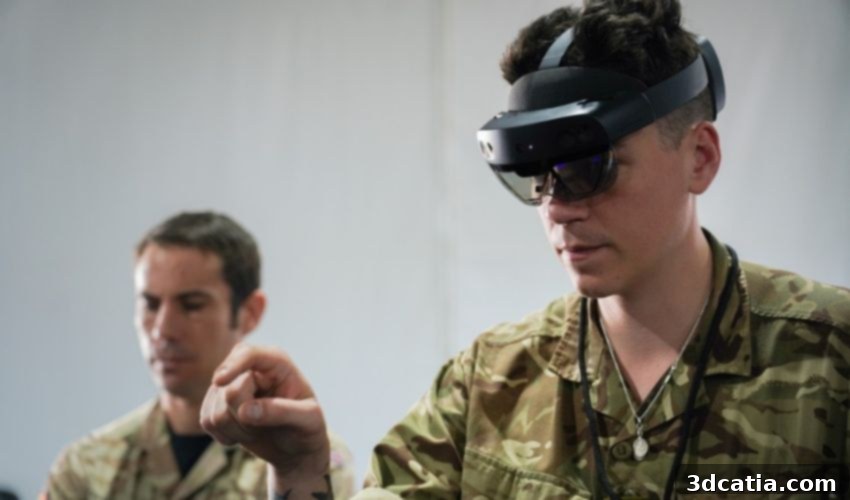
Revolutionizing Battlefield Logistics: How 3D Printing Powers UK-US Military Collaboration in Project Convergence
In a significant stride towards enhancing modern battlefield capabilities, the United Kingdom and United States armies have intensified their collaboration on Project Convergence, with additive manufacturing—more commonly known as 3D printing—at its forefront. This ambitious US Army initiative is designed to accelerate experimentation in speed, range, and decision dominance by integrating cutting-edge technologies. The recent joint efforts underscore a paradigm shift in military logistics, moving towards agile, on-demand production directly in operational theatres.
The latest phase of this international partnership saw the British Army successfully contribute to the fabrication of essential replacement parts for US Army equipment using 3D printing technology. This landmark achievement marks a critical milestone, as British Army officer Maj. Alex Shand emphasized its unprecedented nature. He articulated the profound implications of this capability, highlighting how it fosters unparalleled flexibility and resilience:
‘It shows how a multinational partner could potentially assist the U.S. military in making rapid equipment repairs on the battlefield. The increased flexibility could prove beneficial if a nearby unit lacked a 3D printer, for example, or if supply chain disruptions were preventing the timely delivery of missing parts.’
This statement encapsulates the strategic advantage offered by localized additive manufacturing. In an era where global supply chains can be fragile and logistical lines stretched thin, the ability to produce critical components close to the point of need significantly reduces downtime, enhances operational readiness, and minimizes reliance on traditional, often time-consuming, procurement processes. The collaboration exemplifies how advanced manufacturing techniques are not just improving efficiency but are fundamentally transforming military interoperability and combat effectiveness.
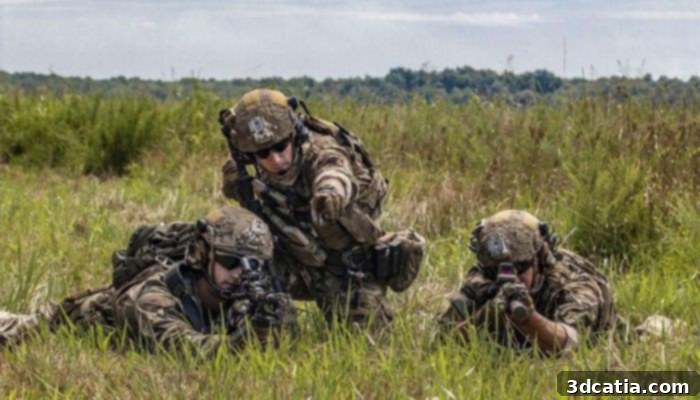
Soldiers as part of Project Convergence UK/US training. Photo credit: Army’s Future Command
3D Printing: A Game Changer for Military Logistics and Readiness
The inherent advantages of 3D printing make it exceptionally well-suited for military applications. The technology consistently delivers faster, more efficient results that are easily scalable—qualities invaluable in the dynamic and unpredictable environment of the battlefield. Military requirements often span a broad spectrum: from high-volume, low-readiness parts like prototypes and specialized tools to low-volume, high-precision components crucial for niche machinery or advanced weapon systems. 3D printing offers a versatile and cost-effective method to address both ends of this spectrum, allowing production to be scaled up or down with remarkable ease, minimizing waste and inventory holding costs.
Enhancing Supply Chain Resilience and Reducing Downtime
One of the most compelling benefits of integrating additive manufacturing into military operations is its profound impact on supply chain resilience. Traditional military supply chains are notoriously complex, often involving multiple tiers of suppliers, long transit times, and susceptibility to disruption from various factors, including geopolitical events, natural disasters, or direct enemy action. By enabling on-demand production of parts in forward operating bases or even directly on vehicles, 3D printing significantly shortens the logistics tail. This means fewer spare parts need to be stockpiled, reducing the logistical burden and freeing up valuable resources. Critical equipment can be repaired much faster, preventing costly operational delays and ensuring that troops have the functional gear they need precisely when they need it.
Rapid Prototyping and Customization for Evolving Threats
Beyond repairs, 3D printing excels in rapid prototyping and customization. The ability to quickly design, test, and iterate new tools, fixtures, or even specialized components for adapting existing equipment to new threats or mission profiles is a massive advantage. This agile development cycle empowers military engineers and operators to respond to evolving challenges with unprecedented speed, ensuring technological superiority. Moreover, it allows for the creation of highly customized parts that might not be available commercially or from existing stockpiles, tailored precisely to unique operational requirements or individual soldier needs, leading to improved ergonomics and enhanced mission effectiveness.
The Critical Role of Metal 3D Printing
For many military applications, robust and durable components are non-negotiable. This is where metal 3D printing proves indispensable. Unlike plastic 3D printing, metal additive manufacturing produces parts with mechanical properties comparable to, or sometimes even superior to, conventionally manufactured metal components. This is crucial for parts regularly subjected to immense pressure, stress, and wear in combat situations, such as structural elements, engine components, or weapon system parts. The ability to print complex metal geometries also allows for lightweighting, which can reduce fuel consumption for vehicles and aircraft, or increase the payload capacity. Furthermore, metal 3D printing facilitates the repair of broken or damaged metal parts, extending the lifespan of valuable equipment and reducing the need for complete replacements.
Global Push for Additive Manufacturing in Defense
The recent collaboration within Project Convergence is not an isolated incident but rather part of a broader, global push by defense organizations to integrate 3D printing into their operations. International military cooperation, particularly in research and development of emerging technologies, is vital for maintaining a competitive edge and fostering interoperability among allied forces. Numerous initiatives across different branches of the military worldwide underscore the strategic importance placed on additive manufacturing.
Pioneering Efforts in the United States
The US military has been at the forefront of this adoption. Notably, the US Army previously commissioned the largest metal 3D printer in the world, specifically for the production of hulls for combat vehicles. This ambitious project aims to dramatically reduce the manufacturing time and cost associated with producing large, complex structural components for armored vehicles, offering increased design flexibility and potentially superior ballistic protection through innovative lattice structures. Such large-scale applications highlight the potential for 3D printing to move beyond small, intricate parts to fundamental elements of heavy military hardware.
More recently, the US Navy opened an Additive Manufacturing Center of Excellence in Virginia. This center serves as a hub for innovation, research, and training. Its primary objectives include educating a new generation of engineers in 3D printing technologies and developing robust processes to scale these capabilities for wide-ranging naval applications. From submarine parts to aircraft components and customized tools for ship repair, the center aims to integrate additive manufacturing into every facet of naval operations, enhancing maintenance, repair, and overhaul (MRO) efficiencies.
The UK’s Commitment to AM Innovation
Across the Atlantic, the UK’s Royal Air Force (RAF) has also demonstrated a strong commitment to additive manufacturing. The RAF recently inaugurated an AM Center for Innovation. This facility focuses on 3D printing metal parts for repairs and replacements of aircraft components, ground support equipment, and other critical assets. The aim is to significantly reduce reliance on external suppliers for spare parts, decrease lead times for repairs, and ultimately improve aircraft availability and operational readiness. Both the US and UK military forces are clearly investing heavily in expanding their use of 3D printing to bolster supply chain resilience, streamline maintenance operations, and ultimately improve battlefield capabilities.
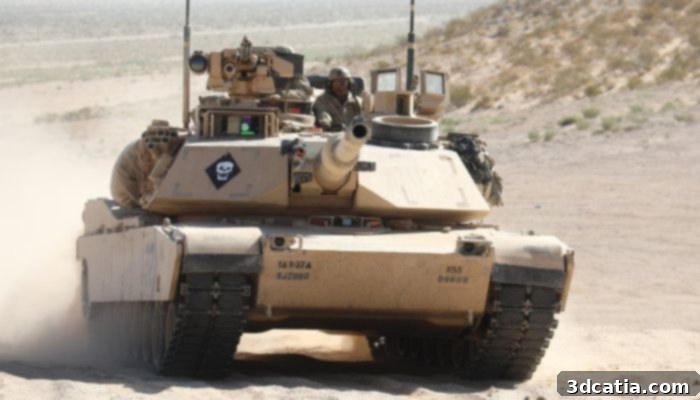
Aside from 3D printing, Project Convergence includes the training UK and US army troops in the field. Photo credit: National Interest Organization
The Future of On-Demand Defense
The integration of 3D printing into military strategies, exemplified by Project Convergence, represents a transformative shift in how defense forces equip, maintain, and deploy their assets. While the benefits are clear, challenges remain, including the need for robust field-deployable printers, material qualification and certification processes for critical parts, and ensuring the security of digital design files. However, continuous research and development, coupled with international collaborations, are steadily addressing these hurdles.
Looking ahead, we can anticipate even greater integration of additive manufacturing. This could include autonomous repair systems, advanced material development for extreme environments, and AI-driven design tools that optimize parts for specific performance metrics. The vision of a truly agile and resilient military, capable of sustaining operations anywhere in the world with minimal logistical footprint, is rapidly becoming a reality thanks to innovations like 3D printing.
You can find more information on Project Convergence HERE. What do you think of this joint venture between the UK and US army? Let us know in a comment below or on ourLinkedIn,Facebook, andTwitter pages! Don’t forget to sign up for our free weeklyNewsletter here, the latest 3D printing news straight to your inbox! You can also find all our videos on ourYouTube channel.
*Cover Photo Credits: U.S. Army photo by Sgt. Thiem Huynh