
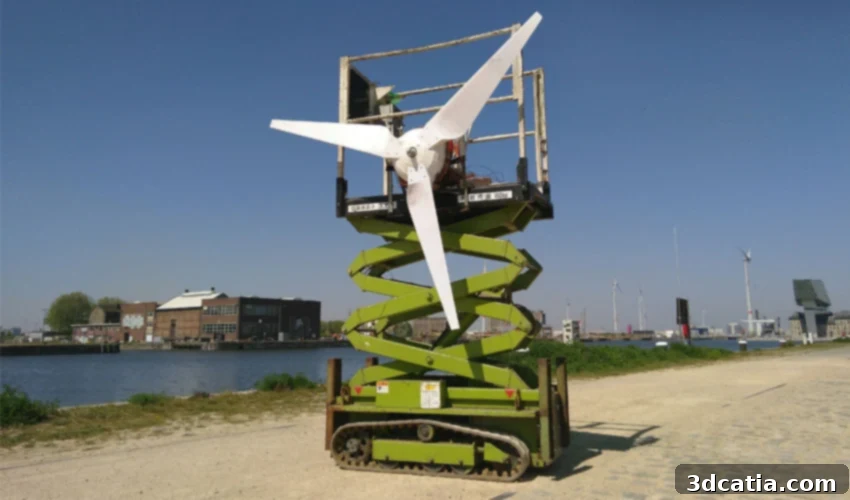
From Waste to Wind: Pioneering Sustainable Wind Energy with 3D Printed Turbines from Recycled Plastic
The global push for sustainable energy solutions has seen wind power emerge as a leading contender in recent years. This renewable energy source offers a cleaner alternative to traditional electricity generation methods. In the United States, for instance, the growth of wind energy has been remarkable: annual electricity generation from wind surged from a mere 6 billion kilowatthours (kWh) in 2000 to approximately 380 billion kWh by 2021. This substantial increase now accounts for about 9.2% of total U.S. utility-scale electricity generation, according to data from the U.S. Energy Information Administration (EIA). While this progress is commendable and deserves recognition, the journey towards widespread adoption of wind energy is not without its hurdles. Key challenges include overcoming public resistance to large-scale wind turbine installations – often stemming from concerns about visual impact and noise pollution – and addressing the significant issue of recyclability for conventional turbine blades.
It is precisely these challenges that the Belgian non-profit organization, From Waste to Wind, was established to tackle head-on. This innovative association is leveraging cutting-edge additive manufacturing techniques, specifically fused deposition modeling (FDM), to design and produce small-scale wind turbines entirely from recycled plastic. This approach not only provides a tangible solution to the problem of plastic waste but also fosters community engagement by making renewable energy more accessible and relatable. To delve deeper into this ambitious and impactful project, we had the opportunity to speak with its visionary founder, Bram Peirs.
3DN: Bram, thank you for joining us. Could you please introduce yourself and share your connection to 3D printing technology?
Hello, my name is Bram Peirs, and I am the proud founder of From Waste to Wind, a non-profit organization dedicated to revolutionizing small-scale wind energy. My professional journey began in the Flemish government, where I gained invaluable experience monitoring the environmental impacts of large industrial wind turbines. This firsthand exposure to both the benefits and the public perception challenges of wind energy deeply influenced my path. My goal now is to empower individuals and communities by making open-source, 3D printable wind turbine designs readily available to the public through my organization. We are thrilled that From Waste to Wind has already garnered international recognition, including an international award, and has received crucial additional support from the Antwerp Climate Fund here in Belgium. This validation fuels our commitment to making sustainable energy solutions accessible to everyone.
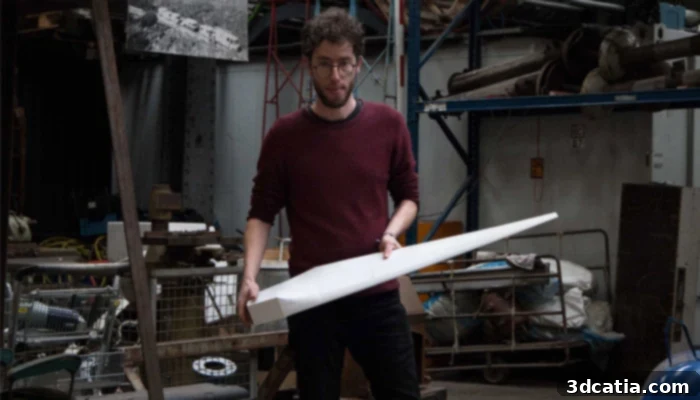
Bram Peirs holds a 3D printed wind turbine blade
3DN: The genesis of From Waste to Wind sounds fascinating. How did this initiative get started, and what core idea underpins its mission?
During my time with the Flemish government, I frequently observed a significant level of public resistance towards new wind turbine projects. Despite the existence of stringent regulations designed to minimize their environmental impact – rules that people were often unaware of – the fear of noise pollution and visual obstruction led many to oppose turbines, especially near their homes. I realized that a fundamental shift in perception was needed. I wanted people to view wind energy not as an imposing industrial structure, but as something approachable and even personally achievable.
My initial experiments involved crafting small wind turbines from discarded materials like old barrels and magnets salvaged from hard drives. There was a profound satisfaction in creating something functional and valuable from what others considered waste. This “maker” spirit led me to connect with like-minded individuals online who were also exploring similar DIY renewable energy projects, and that’s where the collaborative journey truly began.
Our efforts gained momentum when we started collaborating with Time Circus, an innovative art collective in Belgium renowned for constructing diverse creations from recycled materials. They operate Loods 21 and Bar Paniek, and it was there that I encountered their homemade wind turbine with a damaged blade. I took on the challenge of repairing it. The original blades were made from PVC sewer pipes, which, while functional, lacked UV resistance and were perhaps too efficient, leading to generator failures. This experience sparked a pivotal idea: what if we could 3D print the blades? I invested in an affordable 200-euro 3D printer and began working closely with the talented individuals at a local Fablab in Belgium, who provided invaluable expertise and resources.
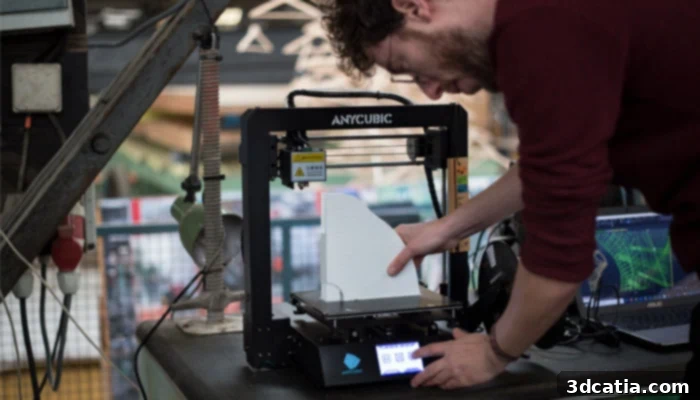
Photo Credits: From Waste to Wind
Working with plastic for 3D printing, especially for functional parts, presents its own set of complexities. Issues such as material shrinkage and deformation are common, and it took us several months of rigorous experimentation and iterative design to perfect our process. However, our persistence paid off. We eventually succeeded in printing a fully custom-designed wind turbine, assembled from smaller pieces – each within the 20x20x20 cm print volume limit of our initial printer. This turbine proved remarkably effective, operating consistently for several months. Its success earned us a significant $10,000 prize at Hackaday, a globally recognized platform for innovators and creators. This award was a tremendous morale boost for our team and, more importantly, it confirmed the widespread interest among the public in building such sustainable solutions themselves. It truly underscored the potential for community-driven renewable energy projects.
Parallel to these developments, we formally established the From Waste to Wind association. Our fundamental goal is to democratize renewable energy, particularly small-scale wind power, and bring energy production closer to the people. Our current operational model is primarily focused on research, development, and public awareness campaigns. We fund these activities through various prizes and subsidies, a strategy that has proven quite successful thus far. A notable achievement was securing a grant from the Climate Fund of the city of Antwerp. This financial independence is crucial; it allows us to pursue our social objectives without the pressure of investor profit expectations, giving us the freedom to chart our own course and concentrate fully on our mission.
3DN: That’s an incredible journey. Could you elaborate on how you are currently utilizing 3D printing technology within From Waste to Wind?
Our initial 3D printer was a small Anycubic I3 Mega, which we quickly realized needed significant modifications to meet our ambitions. One of the most critical upgrades was installing a custom one-meter-long printing plate. This modification presented numerous engineering challenges. Heating such a large plate uniformly is complex, as it leads to considerable expansion and contraction, which can affect print accuracy. Furthermore, extending the power cables over a longer distance required careful consideration to ensure stable power delivery without overheating or voltage drops. These technical hurdles required extensive problem-solving and custom solutions.
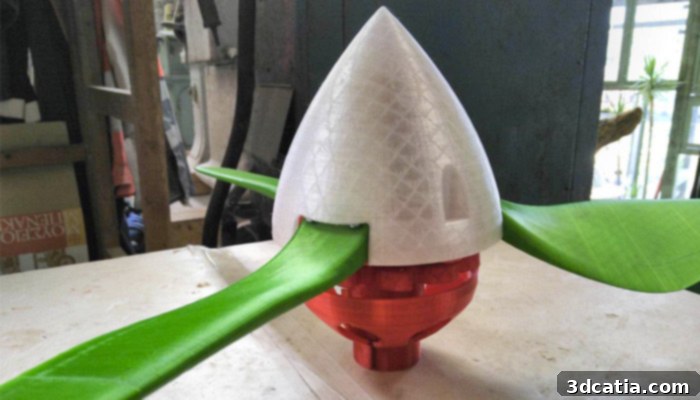
A prototype wind turbine made of rPET (photo credits: From Waste to Wind)
The primary advantage of this enlarged printing plate is the ability to produce one-meter-long blades in a single piece. This significantly enhances the structural integrity and efficiency of the blades. Moreover, printing the blade horizontally, rather than vertically, yields a much stronger component because the adhesion between layers is optimized. Vertical prints are inherently weaker along the Z-axis, making horizontal orientation ideal for parts subjected to high stress, like wind turbine blades. We also implemented Marlin firmware on our printer to gain more control over its functions. However, some of its advanced features, such as manual bed leveling, initially presented numerous bugs. After dedicated troubleshooting, we successfully got it to function reliably with an older, more stable version of the firmware. These combined efforts and technical refinements were instrumental in allowing us to successfully print and test our second, more advanced prototype.
3DN: The sustainability aspect is central to your project. In your opinion, how does 3D printing contribute to a more sustainable future, and specifically, how can it help reduce plastic consumption and waste?
Absolutely, 3D printing offers immense potential for fostering sustainability, particularly in addressing the challenges associated with plastic waste and the end-of-life disposal of wind turbine components. Let’s first consider the major problem with traditional, large-scale wind turbine blades. After their operational lifespan of approximately 20 years, these blades, typically made from fiberglass and resin composites, are incredibly difficult to recycle. The fiber and resin cannot be easily separated, leaving limited options for disposal. Often, they are merely ground up and sent to landfills, or in some cases, reused in materials like asphalt. In the United States, for example, it’s common practice for these massive blades to be simply buried in landfills, creating a significant waste management issue.
This is where our approach truly diverges and contributes to sustainability. By designing our blades from pure plastic, specifically recycled PET (rPET), we ensure they are fully recyclable, unlike the fiberglass-reinforced composite blades used by conventional manufacturers. We deliberately chose to avoid fiber-reinforced plastics because, with current recycling technologies, the plastic remains “contaminated,” drastically reducing its potential for future reuse. While pure plastic blades might be slightly heavier, this is a minor trade-off when compared to the enormous environmental benefit of complete recyclability and proper balancing ensures it doesn’t compromise performance.
However, it’s crucial to acknowledge that 3D printing itself must be approached wisely to truly be sustainable. There’s a risk of generating a lot of waste during the printing process if not managed efficiently, and the origin of printing materials is often opaque. For instance, biomaterials like PLA, while seemingly eco-friendly, require agricultural cultivation, transportation to industrial facilities for filament production, and numerous other energy-intensive steps. This complex supply chain can significantly diminish its perceived environmental benefits. This is precisely why we prioritize the use of rPET. It’s derived from recycled PET bottles, plastic that needs to be recycled anyway and is often readily available locally. This minimizes transportation impact and maximizes resource utilization. Furthermore, rPET possesses superior mechanical properties compared to PLA, making it a more robust and practical choice for durable turbine blades.
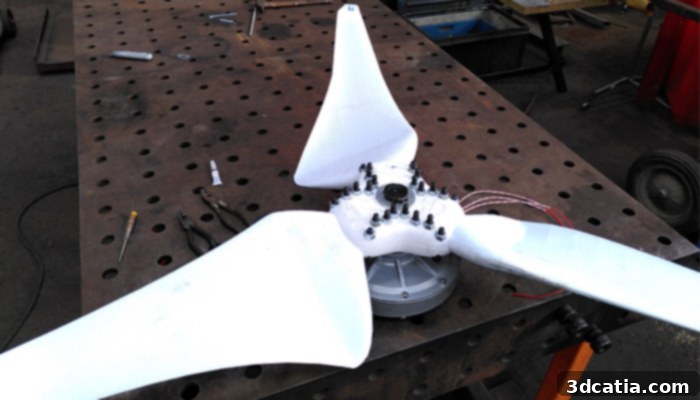
Photo Credits: From Waste to Wind
Finally, consider the manufacturing process for conventional blades of this size. They are typically produced using molds and are entirely solid. Our 3D printing methodology allows us to design and print blades that are partially hollow, strategically saving a significant amount of plastic material while maintaining structural integrity. This optimized material usage further enhances the overall sustainability of our wind turbines.
3DN: Looking ahead, what are the future projects and aspirations for From Waste to Wind?
Our vision for From Waste to Wind is ambitious and multifaceted. While we could relatively quickly establish a production line for off-grid wind turbines with a two-meter diameter, which would be perfect for remote applications, we recognize that there are still so many promising new materials and advanced manufacturing techniques to explore. Our immediate goal is to develop larger wind turbines, specifically those with a four-meter diameter. Turbines of this size would be capable of producing approximately 50% of the energy required by an average family, significantly contributing to household energy independence. In regions like Western Europe, the complementarity of these wind turbines with photovoltaic (solar) installations offers a highly advantageous and resilient energy solution, ensuring power generation even on cloudy or windless days.
Beyond hardware, we are committed to integrating smart technology into our systems. We aim to connect all our wind turbines to a central computer system. This will allow the “prosumer” – a consumer who also produces energy – to monitor their turbine’s energy production in real-time, along with crucial safety parameters like vibrations. To achieve this, we are developing our own Maximum Power Point Tracking (MPPT) controllers, which will be completely open-source. This open-source philosophy is central to our mission, fostering innovation and community collaboration. Ultimately, our business model will likely evolve into a hybrid approach, combining open-source designs with commercially viable product offerings. We firmly believe that a well-designed, reliable, and sustainable product will speak for itself and find its own market.
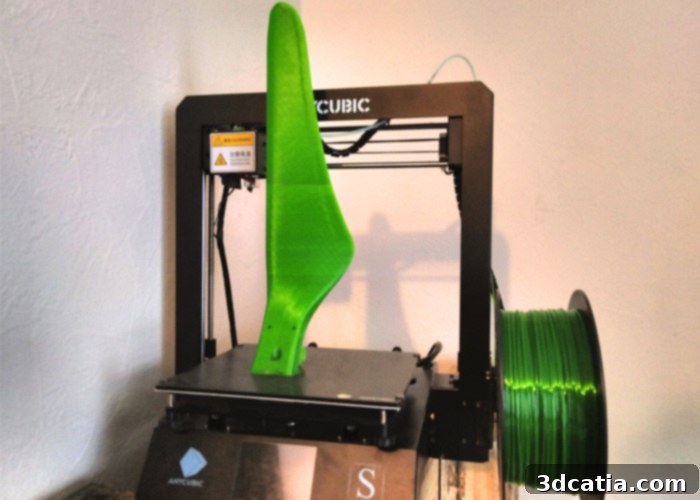
Photo Credits: From Waste to Wind
3DN: Do you have any final words you’d like to share with our readers, especially those interested in sustainable technology and community initiatives?
We are incredibly passionate about our work at From Waste to Wind, and we genuinely appreciate any form of feedback, comments, or insights about our association and our innovative approach. We are a non-profit driven by community support and enthusiasm, and we actively encourage engagement. Please do not hesitate to visit our website to learn more about our projects and progress, or feel free to reach out to us directly via email at in**@*************nd.com. Your interest and support are vital as we continue to push the boundaries of sustainable wind energy!
What are your thoughts on From Waste to Wind’s groundbreaking initiatives? Share your opinions in a comment below or connect with us on our LinkedIn, Facebook, and Twitter pages! Don’t forget to subscribe to our free weekly Newsletter here to receive the latest 3D printing news directly in your inbox. You can also discover all our compelling videos on our YouTube channel.