
Revolutionary 3D Printed Nose Graft: Pioneering Reconstructive Surgery After Cancer Treatment
In a monumental leap forward for reconstructive medicine, 3D printing technology has enabled the creation and successful implantation of a nose graft for a patient who endured extensive cancer treatment. This groundbreaking achievement took place at IUCT Oncopole (University Cancer Institute of Toulouse), a renowned cancer care, research, and training institution located in Toulouse, France, employing a dedicated team of 1800 professionals. The intricate procedure was a collaborative effort, spearheaded by the expert ENT (Ear, Nose, and Throat) and Cervico-Facial surgery teams from both the Toulouse University Hospital and the prestigious Claudius Regaud Institute. Central to this innovation was a specialized 3D printing solution developed by CERHUM, a Belgian medical 3D printing company, which meticulously crafted the custom nose for the patient.
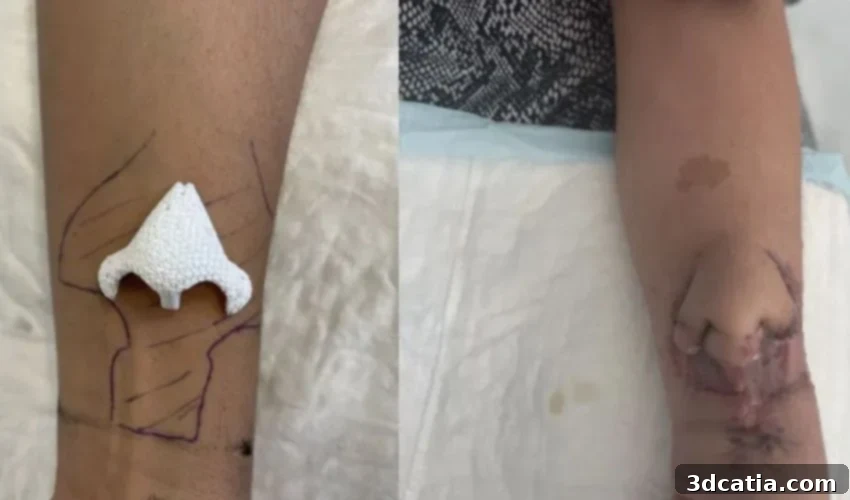
The patient’s journey to this revolutionary treatment began in 2013 when she received intensive radiotherapy and chemotherapy for a particularly aggressive nasal cavity cancer, specifically squamous cell carcinoma. While the treatment was successful in eradicating the cancer, it tragically resulted in the significant loss of her nose and a portion of her facial palate. For nearly four years, she lived without a natural nose, facing immense physical and emotional challenges, and struggling with the daily difficulties and social stigma associated with wearing a traditional prosthesis. This prolonged struggle underscored the critical need for a more permanent and integrated solution, leading her to become a candidate for this pioneering 3D printed graft. The innovative approach involved implanting a custom 3D-printed nose onto her forearm, allowing it to grow and develop its own blood supply (revascularization) before being meticulously transferred and surgically implanted onto her face.
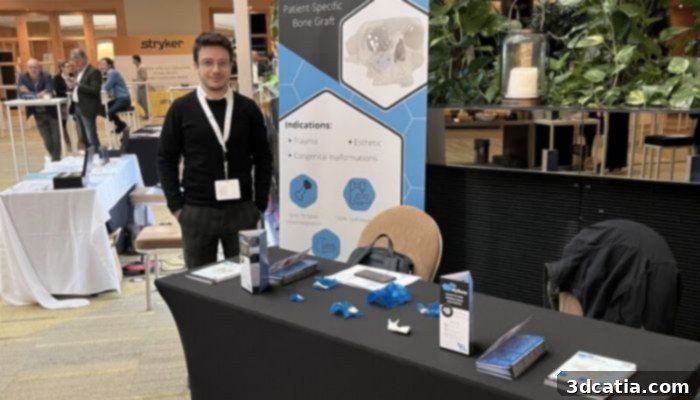
CERHUM were recently at the Belgian Maxillofacial Surgery Congress to promote the MyBone solution (photo credit: CERHUM on LinkedIN)
The multi-stage reconstructive process began in July 2022. The initial and critical step involved surgically implanting the 3D-printed bone graft into the patient’s forearm. This strategic placement allowed for the crucial process of vascularization, where the body’s own blood vessels would gradually grow into and integrate with the graft, establishing a vital blood supply. This preparatory phase is essential for ensuring the viability and success of the graft once it is moved to its final anatomical location. Over the subsequent two months, the ‘colonization’ – or biological integration – of the medical device within the forearm’s skin and tissues progressed successfully. This period allowed the patient’s body to accept the graft and develop the necessary microvasculature. The culmination of this intricate preparation was the final stage: the transplantation of the fully vascularized device to the nasal area. This delicate procedure required advanced microsurgery techniques to successfully revascularize the graft, connecting its newly formed blood vessels to the existing circulatory system of the patient’s face. Specifically, anastomozation – the surgical creation of a connection between blood vessels – was performed to link the vessels of the skin from the arm (which had integrated with the graft) to those in the patient’s temple, ensuring a robust and lasting blood flow to the reconstructed nose.
The innovative nose graft itself was meticulously engineered by CERHUM, a pioneering Belgian company specializing in medical 3D printing solutions. They utilized their proprietary custom solution known as MyBone maxillofacial implants for this complex application. MyBone is a truly remarkable material, primarily composed of synthetic hydroxyapatite, which is a major, naturally occurring mineral component of human bone. This choice of material is not arbitrary; hydroxyapatite possesses exceptional biological properties critical for successful surgical implantation and integration. It is inherently osteoconductive, meaning it provides a scaffold that encourages the growth of new bone cells directly onto its surface. Furthermore, it exhibits excellent osseointegration capabilities, allowing for a strong, direct, and functional connection between the living bone and the implanted synthetic material. In simpler terms, MyBone is designed to seamlessly integrate with the body’s own bone structure and actively promote the regeneration of natural bone tissue on its surface. Beyond its structural and regenerative qualities, MyBone is highly regarded for its safety and biocompatibility, minimizing the risk of adverse reactions or rejections. Its use promotes significantly faster healing compared to more traditional reconstructive methods, which can often involve lengthy recovery periods and multiple surgical interventions. This accelerated healing process contributes to improved patient rehabilitation and, critically, offers superior aesthetic results, allowing for a more natural and integrated appearance. Moreover, the MyBone solution is entirely patient-specific, leveraging the precision of 3D printing to create grafts that perfectly match individual anatomical requirements. Its versatility extends beyond nasal reconstruction, finding crucial applications in dental, cranial, maxillofacial, and spinal treatments, showcasing its broad potential in various fields of reconstructive and orthopedic surgery.
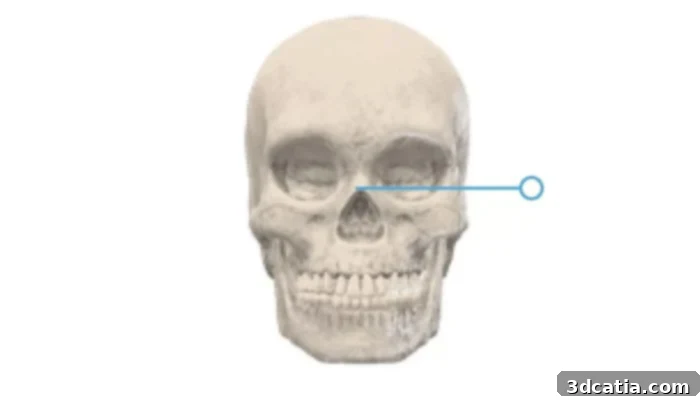
CERHUM offers the MyBone solution for a number of treatments including plastic surgery. (Photo credit: Cerhum)
This incredible success in Toulouse underscores the transformative potential of 3D printing technology across the entire medical sector, heralding an era of highly personalized and effective patient care. The ability to create custom, biocompatible implants is revolutionizing how complex surgical challenges are approached. For instance, similar advancements have been observed with German researchers at the Fraunhofer Institute, who have developed sophisticated 3D printed metal implants specifically designed to alleviate suffering for arthritis patients, offering tailored solutions that improve mobility and reduce pain. Likewise, the Industrial Research Center of Quebec (CRIQ) has leveraged 3D printing to produce bespoke jaw implants using advanced electron beam melting (EBM) technology, demonstrating the precision and strength achievable with additive manufacturing in complex anatomical areas. These diverse applications, from facial reconstruction to orthopedic and maxillofacial interventions, collectively highlight 3D printing’s capacity to significantly enhance surgical outcomes, reduce recovery times, and ultimately improve the quality of life for countless patients globally. This patient’s journey and the successful nose graft procedure stand as a powerful testament to the ongoing innovation at the intersection of medicine and advanced manufacturing. For those interested in delving deeper into the specifics of this groundbreaking reconstructive surgery, the official press release from CERHUM can be accessed HERE.
The successful implementation of this bioprinted nose graft, utilizing the advanced MyBone technology, represents a profound shift in reconstructive surgery and offers immense hope for patients facing similar challenges. We are eager to hear your thoughts on this incredible medical breakthrough. What do you believe are the most significant implications of such advancements for the future of healthcare? Share your perspectives and comments below, or engage with us on our LinkedIn, Facebook, and Twitter pages! To stay updated with all the latest developments in 3D printing and additive manufacturing, don’t forget to sign up for our free weekly Newsletter here, delivering the most pertinent news straight to your inbox. You can also explore our extensive library of videos on our YouTube channel for more insights into the world of 3D printing innovations.
*Cover Photo Credit: Toulouse University Hospital