
Revolutionizing Industry: The Transformative Power of Metal Additive Manufacturing in the Balkans
The landscape of manufacturing is undergoing a profound transformation, spearheaded by advancements in metal additive manufacturing (AM). While traditional methods often associate metal AM with established processes like laser powder bed fusion (LPBF), which utilize powerful lasers to fuse metallic powders, a new wave of innovative metal printing solutions is continuously emerging. These cutting-edge technologies are not merely incremental improvements; they represent a paradigm shift, enabling the production of parts that are significantly lighter—often 30-50% lighter than conventionally manufactured components. This weight reduction translates directly into enhanced performance, improved fuel efficiency, and reduced material costs across various sectors.
Beyond weight savings, these new metal AM processes offer unprecedented levels of design complexity, allowing engineers to create intricate geometries and internal structures previously impossible with traditional methods. This freedom of design fosters innovation, leading to optimized parts with superior functionality. Furthermore, the inherent flexibility of additive manufacturing facilitates mass customization, enabling businesses to tailor products precisely to local market demands or individual customer specifications without incurring prohibitive costs or extensive retooling. This agility is a game-changer for supply chains, offering responsiveness and personalization on a scale never before imagined.
Among the most promising of these new technologies, binder jetting is poised to revolutionize medium to large-scale production. Unlike laser-based methods, binder jetting uses a liquid binding agent to selectively join powdered metal particles, followed by a separate sintering step. This approach offers significant advantages in speed, cost-effectiveness, and scalability, making it ideal for high-volume manufacturing of complex metal parts. By addressing the limitations of earlier AM processes, binder jetting is permanently altering the manufacturing landscape, pushing the boundaries of what is achievable in industrial production. This global trend of AM adoption is particularly impactful in the Balkans, a region witnessing substantial investment from major AM companies and leading service providers. This influx of capital and expertise is rapidly transforming a diverse range of traditional industries, from automotive and aerospace to medical and energy, into more agile, efficient, and innovative sectors.
Exploring the AM Revolution: Insights from 3Dnatives’ Webinar
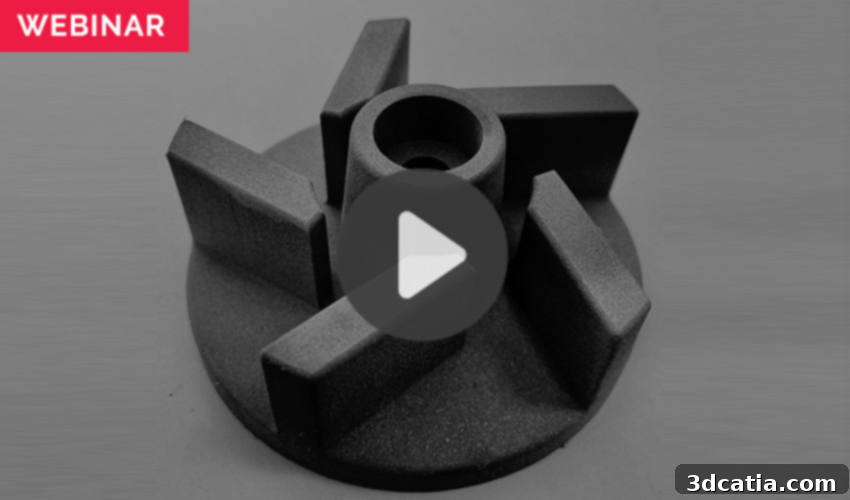
To shed light on the burgeoning impact of additive manufacturing in Southeast Europe, 3Dnatives recently hosted a pivotal webinar titled “How is AM Revolutionizing Industry in the Balkans?” This insightful event took place on July 15th at 4PM CEST (10AM EDT/5PM EEST) and brought together a panel of leading experts. 3Dnatives was joined by Desktop Metal, a renowned AM manufacturer celebrated for its groundbreaking metal additive solutions, and Lino3DLab, a prominent 3D printing laboratory based in Greece, deeply rooted in the regional AM ecosystem. Attendees gained invaluable insights into this new generation of metal AM processes, understanding not just the technology itself, but its practical implications and transformative potential across various industries.
The webinar offered a comprehensive exploration of several critical topics, designed to empower businesses and professionals across the region. Participants delved into cutting-edge applications and compelling case studies across diverse sectors, including advanced manufacturing, marine engineering, specialized molding, educational initiatives, and research & development. For instance, in manufacturing, examples ranged from rapid prototyping and functional part production to custom tooling and jigs, drastically reducing lead times and costs. In the marine sector, AM enables the creation of lightweight, corrosion-resistant components for ships and offshore platforms, enhancing performance and longevity. Molding applications benefit from conformal cooling channels, significantly improving cycle times and part quality. In education and R&D, AM serves as an indispensable tool for hands-on learning, material science research, and accelerating innovation cycles for future technologies.
A significant portion of the discussion was dedicated to a detailed comparison between additive manufacturing and established traditional manufacturing techniques such as CNC machining, metal injection molding (MIM), and casting. While CNC machining excels in precision and surface finish for simpler geometries, AM triumphs in producing complex, organic forms and consolidating multiple parts into a single print. MIM offers high-volume production for small, intricate parts but is limited by tooling costs and design flexibility, areas where AM shines. Casting, suitable for very large parts and certain materials, often involves extensive post-processing and material waste, contrasting with AM’s near net-shape capabilities and efficient material usage. The webinar meticulously highlighted the scenarios where AM is already being successfully deployed to disrupt and enhance traditional industries in the Balkans, demonstrating its immediate and long-term potential for continued growth and innovation throughout the region. The event concluded with an interactive Q&A session, allowing attendees to directly engage with the experts and gain personalized insights into their specific challenges and opportunities.
Couldn’t make it? You can watch the recording of the webinar again below and catch up on all the essential discussions!
Meet the Visionary Speakers: Driving AM Forward
The success of the webinar was significantly bolstered by the caliber of its expert speakers, who brought a wealth of experience and diverse perspectives on the challenges and opportunities within the additive manufacturing landscape. Their insights into both the technological advancements and the practical implementation of AM in industrial settings provided attendees with a comprehensive understanding of the topic.
Carlo Cavallini, Global Channel Enablement Manager at Desktop Metal
 Carlo Cavallini is a distinguished figure in the field of additive manufacturing, bringing a robust academic background with a BSc and an MSc in Mechanical Engineering from the University of Florence, complemented by a PhD in Industrial Products and Process Innovation from Uni Marconi-Rome. His career began with a high-octane three-year tenure in the Ferrari F1 Team Materials Engineering Department, where he honed his expertise in cutting-edge materials. Recognizing his exceptional talent, Ferrari F1 Team then appointed him as Technical Leader for their newly established Metallic Additive Manufacturing Department. In this pivotal role, Carlo was instrumental in internalizing AM know-how and production capabilities within the prestigious racing team. He directly engaged with LB-PBF single and multi-laser machines, working on the homologation of the technology for critical automotive applications, and was deeply involved in Design for Additive Manufacturing (DFAM) and post-processing techniques. Following his impactful work at Ferrari, Carlo joined GKN plc, where he continued to drive AM applications and led significant European development projects. Prior to joining Desktop Metal, Carlo also served as Additive Manufacturing Centre Manager for a premium Ferrari F1 Team Engineering Partner, extending his expertise to both internal projects and third-party collaborations, with a keen focus on unlocking the full potential of metallic AM in the Automotive/Motorsport, Energy, and Oil & Gas industries. His extensive experience makes him a crucial voice in the future of metal AM.
Lefteris Chavouzis, Business Development Manager at Lino SA
 Lefteris Chavouzis is an accomplished Mechanical Engineer whose journey in the industrial sector is marked by continuous learning and diverse experience. After excelling in High School, he earned a scholarship to study Mechanical Engineering at the esteemed Aristotle University of Thessaloniki. Furthering his academic pursuits, he continued his education at RWTH Aachen at the School of Engineering for Production Finance, a testament to his commitment to mastering the intricacies of manufacturing and economic efficiency. Lefteris has cultivated a broad base of experience across the automotive and 2D printing industries, having contributed his talents to globally renowned companies such as Audi AG, Daimler Benz AG, and XEIKON International, holding various challenging positions that broadened his technical and business acumen. Since 2016, Lefteris has been a vital part of Lino SA, where he actively contributes to and manages a wide array of additive manufacturing projects. His background in diverse industrial settings makes him uniquely qualified to bridge the gap between traditional manufacturing and the innovative world of 3D printing.
Maria Papageorgiou, Product Manager at Lino SA
 Maria Papageorgiou brings a unique blend of geological insight and engineering precision to the field of additive manufacturing. After graduating from High School, she pursued her foundational studies in Geology at the Aristotle University of Thessaloniki, laying a strong analytical groundwork. Her passion for applied science led her to further specialize, obtaining an MSc in Petroleum Engineering from the prestigious Heriot-Watt University of Edinburgh. Maria’s career took a significant turn in 2014 when she immersed herself in the exciting world of 3D Designing and Printing. She rapidly acquired her first practical experiences, quickly specializing in both industrial and jewelry design – a testament to her versatility and keen eye for detail. Her expertise as a CAD designer was sought after by various jewelry workshops and industrial firms, where she contributed to the creation of intricate and high-precision designs. Since July 2019, Maria has been an integral part of Lino SA, serving as a Product Manager. In this role, she leverages her extensive knowledge to specialize in both plastics and metal additive manufacturing, guiding product development and strategy to meet the evolving demands of the market. Her multidisciplinary background provides a holistic approach to AM, making her insights particularly valuable.
Giuseppe Cilia, Regional Sales Manager for Southern Europe at Desktop Metal
 Giuseppe Cilia is a seasoned professional with a strong foundation in mechanical engineering, complemented by valuable design experience within the critical medical equipment sector, having previously worked at Sorin Biomedica. His career trajectory then shifted towards expanding the applications of Additive Layer Manufacturing (ALM) in both general manufacturing and rapid prototyping. This focus led him to become the Regional Sales Manager at Desktop Metal for partners across Southern Europe. In this key position, Giuseppe has been instrumental in identifying and opening new markets for the production of low-cost and mid-volume parts, primarily utilizing Desktop Metal’s innovative additive binder jetting single-pass technologies. His deep understanding of both traditional engineering principles and advanced AM processes allows him to effectively articulate the benefits of cutting-edge 3D printing solutions to a diverse client base, driving adoption and growth in a rapidly evolving industrial landscape. His work is pivotal in demonstrating how cost-effective additive solutions can meet industrial demands.