

The Most Innovative 3D Printing Startups of 2024: Pioneering the Future of Additive Manufacturing
The year 2024 has been remarkable for the additive manufacturing industry, witnessing groundbreaking innovations and creative solutions from a new generation of startups. Each month, we had the privilege of interviewing visionary companies that captured our attention, either through their ingenious applications of 3D printing technology or their development of solutions poised to redefine their respective sectors. These dynamic young enterprises have consistently presented ambitious plans designed to transform industries ranging from aerospace and medicine to materials science and even food production. Today, the spotlight turns to you, our esteemed readers. It’s your opportunity to decide: which of these exceptional startups most deserves to be crowned the “Best Startup of the Year” for their pioneering spirit and impactful contributions? We invite you to explore their impressive achievements and cast your vote for your favorite in the poll located on the right side of your screen. Voting remains open until December 31st, with the eagerly anticipated winner set to be revealed on January 7th. Join us in celebrating the ingenuity and potential of these transformative companies!
Rosotics
Headquartered in the USA, Rosotics is a trailblazing company dedicated to advancing metal additive manufacturing. Their audacious mission is to revolutionize industrial production by introducing very large-scale equipment capable of fabricating components traditionally thought impossible with 3D printing. At the heart of their innovation lies the M1, a flagship machine that stands as one of the largest metal 3D printers available globally. Engineered for high-demand sectors such as aerospace, marine, and energy, the M1 possesses the extraordinary capability to manufacture imposing structures, reaching up to 10 meters in height and 2 meters in diameter. This includes critical components like expansive tanks or complex fairings that demand exceptional structural integrity and precision. By leveraging this cutting-edge technology, Rosotics is not merely producing large parts; it is fundamentally redefining the standards for the manufacture of massive, high-performance components, offering unprecedented design freedom, material efficiency, and reduced lead times compared to conventional fabrication methods. Their approach promises to unlock new possibilities for industries reliant on large-format metal parts, pushing the boundaries of what additive manufacturing can achieve. To delve deeper into their transformative work, you can read our full interview here.
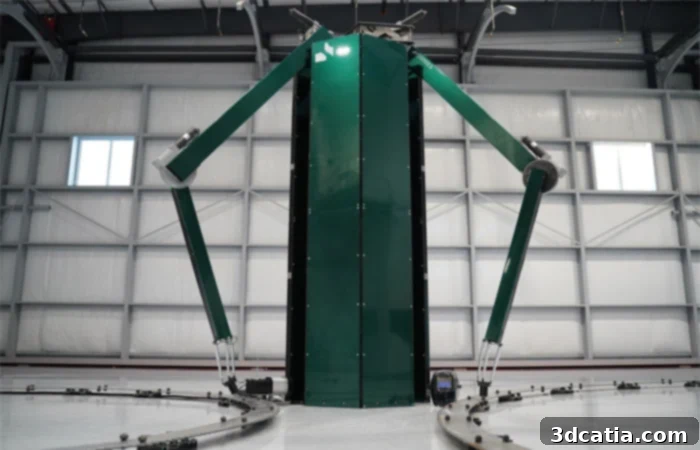
Photo credits: Rosotics
MB Therapeutics
The French startup MB Therapeutics, co-founded by Stéphane Roulon and Ian Soulairol, is at the forefront of transforming the pharmaceutical sector through the innovative application of 3D printing. Located at the esteemed Faculty of Pharmacy in Montpellier, the company is pioneering solutions for producing tailor-made drugs, meticulously adapted to the unique and specific needs of individual patients. Their flagship innovation, the MED-U Modular printer, represents a significant leap forward as the first industrial pharmaceutical 3D printer specifically engineered to meet the stringent and exacting standards of the highly regulated pharmaceutical industry. This groundbreaking technology directly addresses critical challenges, especially for vulnerable populations such as children, who often struggle with swallowing conventional tablets or capsules. The MED-U Modular empowers pharmacists to manufacture personalized drugs in a dispersible form, making them incredibly easy to administer with just a small amount of water. Crucially, these customized medications are free from potentially risky ingredients, enhancing patient safety. This solution not only minimizes the potential for dosing errors but also significantly simplifies drug administration, vastly improving patient adherence and overall treatment efficacy. It marks a paradigm shift towards truly personalized medicine in drug delivery. To learn more about how MB Therapeutics is revolutionizing pharmaceutical manufacturing, click here.

Photo credits: MB Therapeutics
Mechnano
Mechnano is making significant strides in materials science for 3D printing by focusing on the enhancement of additive manufacturing resins through the precise integration of carbon nanotubes (CNTs). The core objective of their work is to fundamentally improve the properties of resins, specifically targeting increased mechanical resistance and the critical ability to meet stringent electrostatic discharge (ESD) standards. ESD protection is vital for sensitive electronic components and environments where static electricity can cause damage. Through its proprietary D’Func technology, Mechnano has engineered a breakthrough method to uniformly disperse and integrate these carbon nanotubes within resins. This innovative approach allows the material to effectively dissipate static electricity (ESD) without compromising its crucial mechanical performance, a common challenge in traditional ESD solutions. The resulting resins enable the manufacturing of high-precision parts, perfectly suited for demanding applications that require robust static electricity management, particularly in high-temperature operating environments. By offering a superior alternative to conventional manufacturing processes like machining and molding, Mechnano empowers industries to produce prototypes and small series batches faster, more cost-effectively, and with enhanced functional properties, opening new avenues for advanced material applications in electronics, aerospace, and defense. Discover more about their material innovations in our comprehensive interview.
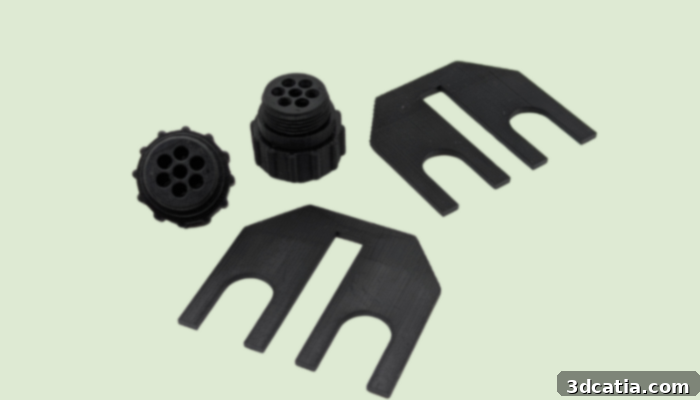
Photo credits: Mechnano
Phase3D
Phase3D, a dynamic Chicago-based startup founded in 2021 by Niall O’Dowd, is dedicated to elevating the quality and reliability of parts produced via 3D printing. The company directly addresses persistent challenges such as reliability, consistency, and quality control, which have historically hindered the widespread adoption of additive manufacturing across numerous industrial sectors. Their primary innovation, Fringe, is a sophisticated computer vision system designed to inspect each layer as it is formed during the 3D printing process, all in real-time. This groundbreaking technology is versatile, compatible with both powder-bed fusion and powder-bonded printing technologies, making it applicable to a wide range of industrial additive manufacturing processes. Fringe meticulously detects and classifies defects as production unfolds, providing integrated quality assurance throughout the entire manufacturing process. This proactive approach ensures that potential issues are identified and addressed immediately, rather than post-production, thereby reducing waste, saving time, and significantly improving part quality. By offering such a robust and reliable solution for reproducibility and quality control, Phase3D is meeting the critical needs of industries seeking to industrialize additive manufacturing with confidence and precision. For an in-depth understanding of their real-time inspection solution, read the full interview here.
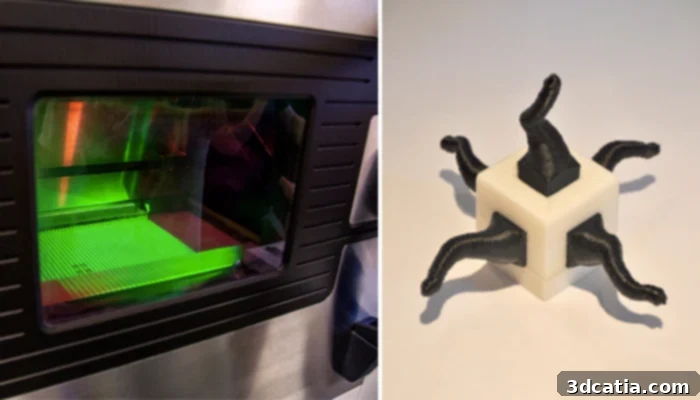
Photo credits: Phase3D
Sprybuild
Sprybuild is at the forefront of developing automated 3D printing solutions, with a strong emphasis on offering users unprecedented flexibility and efficiency in production. Among its most notable achievements is a resin 3D printer that fundamentally rethinks the printing platform by integrating a continuous metal conveyor belt, which replaces the conventional static printing plate. This innovative belt, ingeniously inclined to the DLP projection, facilitates continuous production by automatically unrolling parts as soon as they are printed. This dramatically increases throughput and reduces downtime. Thanks to an advanced magnetic system, the machine ensures exceptional surface stability, a crucial factor for achieving accurate and high-quality results in resin-based additive manufacturing. Designed to serve a diverse array of sectors, including aerospace and medical, this printer aims to significantly simplify manufacturing processes, substantially reduce operational costs, and minimize environmental impact through optimized material usage. Beyond their pioneering printer, Sprybuild is also actively developing a fully automated post-processing system, capable of managing the entire flow of printed parts without requiring any human intervention. This holistic approach to automation promises to unlock new levels of efficiency and scalability for resin 3D printing. To learn more about this transformative technology and the company’s forward-thinking vision, read our exclusive interview with the team here.
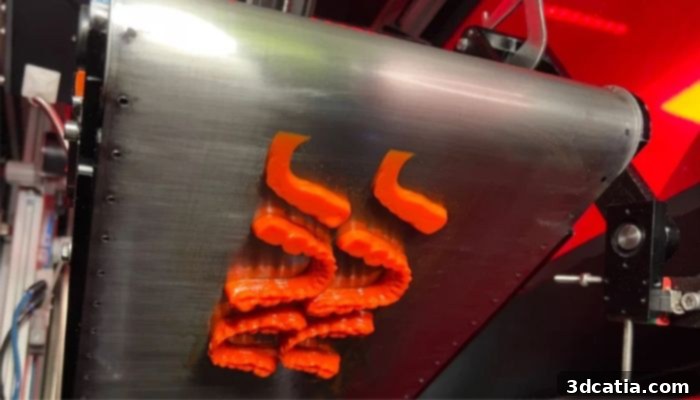
Photo credits: Sprybuild
FemTherapeutics
FemTherapeutics is a compassionate and innovative startup specializing in solutions for pelvic floor disorders, a condition that affects a significant portion of the female population—one in four women, globally. Their core mission is to profoundly improve the quality of life for patients suffering from these often debilitating conditions. By expertly leveraging stereolithography (SLA) 3D printing, FemTherapeutics designs and produces custom-made pessaries, meticulously adapted to each woman’s individual anatomical needs and specific medical requirements. This advanced 3D printing technology enables the creation of devices with intricate geometries and exceptionally smooth surfaces, which are critical features that reduce the risk of bacterial contamination and minimize the need for painful or uncomfortable rework. Through this highly personalized and technologically advanced approach, the startup has successfully developed what is recognized as the world’s first adaptable vaginal pessary, offering effective and personalized relief from the challenging symptoms of pelvic organ prolapse (POP). By seamlessly combining cutting-edge technological innovation with an unwavering commitment to quality and patient-specific design, FemTherapeutics provides a truly tailor-made solution to a widespread and significant health problem, thereby enhancing patient comfort, safety, and overall well-being. To explore the company’s future projects and impact, click here.
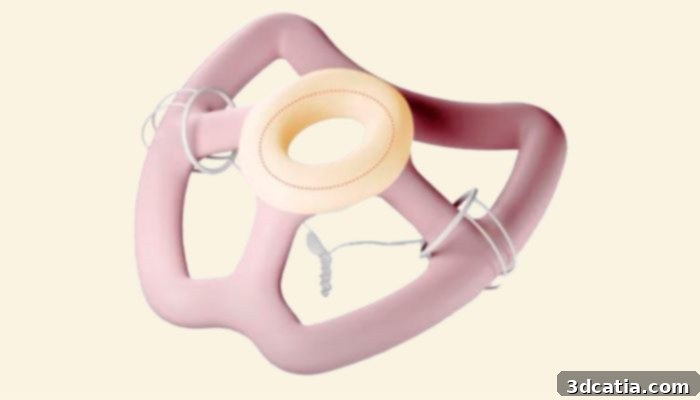
Photo Credits: FemTherapeutics
Fluent Metal
Fluent Metal is poised to introduce a paradigm shift in the metal 3D printing industry with its innovative and highly accessible new technique. The company’s patented technology involves precisely depositing microscopic metal droplets from an extremely fine wire, comparable in width to a human hair. This revolutionary process is remarkably versatile, demonstrating compatibility with a wide array of metals, including conductive materials like copper and silver, robust stainless steel, and even high-temperature refractory metals such as tungsten. A significant advantage of this novel technology is its ability to create finished or near-finished parts with minimal to no post-processing, dramatically reducing manufacturing steps and costs. One of the key benefits of Fluent Metal’s process is its operational simplicity: it requires quick setup and material changeover, characterized by low overhead and significantly reduced overall operative costs. What truly sets Fluent Metal apart is its capacity to utilize standard, off-the-shelf wire as its feedstock. This means the material is safe to handle, broadly available, and can be used efficiently with minimal waste. Unlike many other metal 3D printing methods that demand extensive and expensive safety measures due to hazardous powders or high-powered lasers, Fluent Metal’s method can be easily and safely integrated into a typical manufacturing floor environment, democratizing access to metal additive manufacturing. To delve deeper into Fluent Metal’s game-changing technology, read our full interview here.
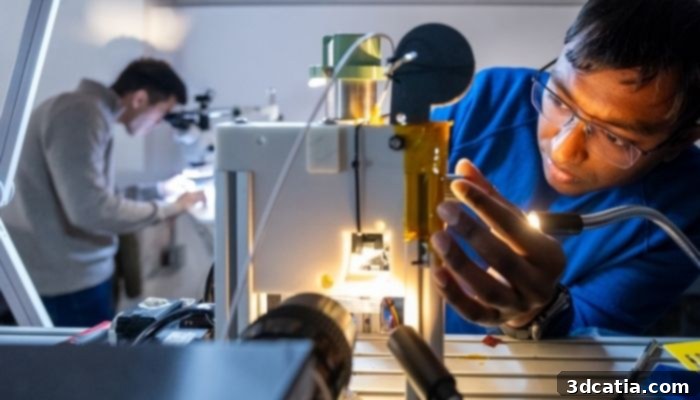
Photo credits: Fluent Metal
VENOX Systems
The Austrian startup VENOX Systems has introduced a truly remarkable 3D printer that is pushing the boundaries of what FDM technology can achieve. This innovative machine is not only capable of printing on five axes, offering unprecedented geometric freedom, but also features an advanced head-changing system that allows for the integration of six different tools. These versatile tools include various FDM printheads for standard thermoplastics, but more importantly, the company’s exclusive CFFP (Collision-Free Fiber Placement) processes designed for continuous fiber printing. Co-founder Nicolai Wampl highlighted that the company was specifically established to address a critical limitation of traditional FDM/FFF printing: the inherent issues with part strength, particularly along the Z-axis. He explained that conventional 3-axis printers can only reinforce parts at a planar level, which often results in significantly low Z-axis strength, limiting the functional applications of FDM parts. The V-REX printer, with its advanced 5-axis capabilities, overcomes this limitation by enabling fibers to be precisely aligned along the part’s actual load path. This intelligent fiber placement dramatically improves the part’s overall durability, anisotropic strength, and structural integrity, making it suitable for more demanding applications. VENOX Systems’ work is a testament to maximizing additive manufacturing’s potential for high-performance composite parts. Read more about their groundbreaking approach in their interview here.
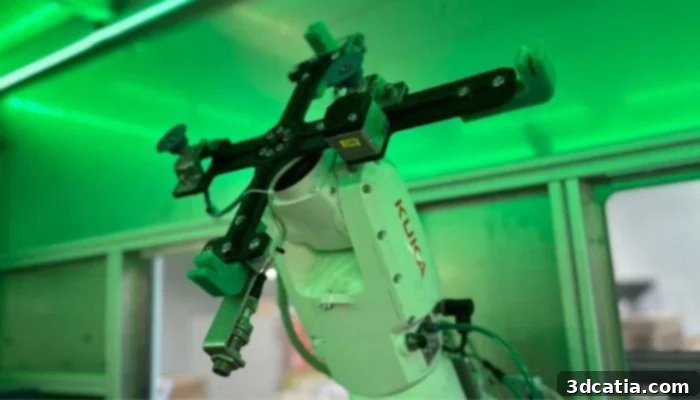
Photo credits: VENOX Systems
AMFREE
AMFREE, another innovative metal additive manufacturing startup based in France, is dedicated to providing turnkey, pre-qualified XXL metal 3D printing hybrid solutions. The company’s specialized laser-wire Directed Energy Deposition (DED) metal 3D printers are meticulously engineered for the production and repair of exceptionally large parts, capable of handling components up to 5 meters in size. These large metal parts, which AMFREE’s printers are designed to produce, are often critical, high value-added components that are not easily replaceable, leading to significant downtime and cost in traditional manufacturing or repair scenarios. AMFREE aims to directly address this persistent problem by developing user-friendly machines capable of quickly and efficiently producing or repairing these large, complex parts. A key selling point for AMFREE is its guarantee that users will have access to all the necessary equipment and software to correctly manufacture XXL parts, ideally achieving success on the very first attempt. What truly differentiates AMFREE’s service is the seamless integration of artificial intelligence (AI) into their machines. This AI capability allows the printers to learn new skills, continuously master their craft, and proactively prevent the production of poor-quality parts, ensuring consistency and reliability in large-scale metal additive manufacturing. This combination of size, simplicity, and intelligence positions AMFREE as a significant player in the industrial adoption of metal AM. Find out more about AMFREE’s vision and technology in the full interview here.
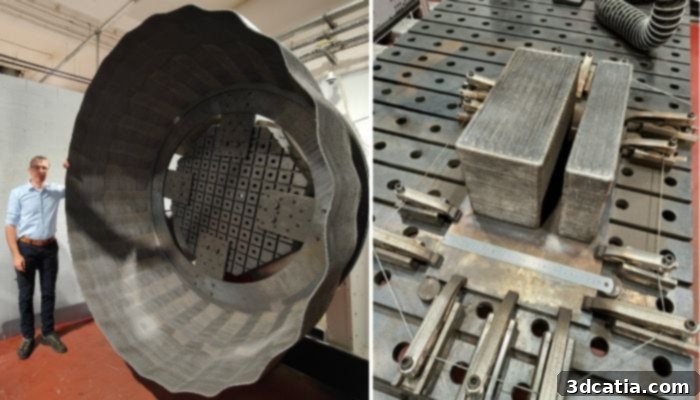
Examples of AMFREE’s printed parts (Photo credits: AMFREE)
Synteris
Ceramics have rapidly gained popularity as essential additive manufacturing materials, largely due to their exceptional qualities, including high wear resistance, superior thermal stability, and excellent chemical inertness. Synteris, a subsidiary of Materic, is at the forefront of ceramic 3D printing, utilizing its proprietary Selective Laser Reaction Sintering (SLRS) technology. What makes Synteris truly remarkable is its ability to 3D print ceramics without requiring any post-processing. This is a significant breakthrough because traditional ceramic 3D printing often involves extensive and complex post-sintering steps that typically cause the printed part’s volume to change dramatically, leading to warping or cracking. Ken Malone, Board Chair of Materic and co-founder of Synteris, proudly states that their method is unique in its capacity to create complex ceramic parts with zero shrinkage, while simultaneously achieving full density. This combination of no shrinkage and full density is crucial for high-performance applications where dimensional accuracy and material integrity are paramount. The company has successfully printed parts primarily for the energy, defense, and industrial sectors, all of which demand materials capable of withstanding extreme high temperatures and possessing intricate geometries. Synteris is effectively overcoming long-standing challenges in ceramic manufacturing, offering a precise and efficient path to producing advanced ceramic components. To learn more about Synteris and the specifics of its innovative 3D printing technology, read our detailed interview here.
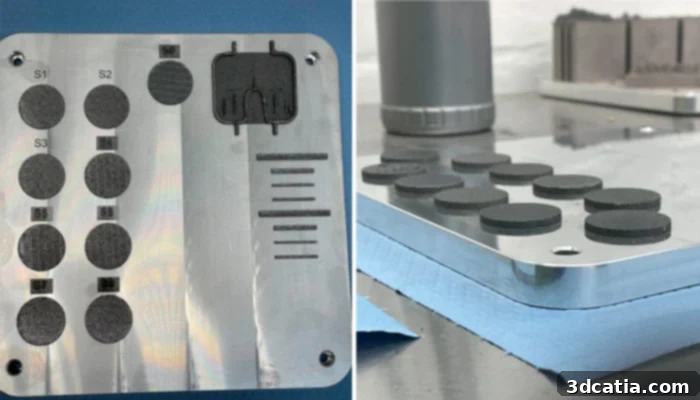
Photo credits: Synteris
Lensy Medical
In today’s optical market, most contact lenses are mass-produced following a “one size fits all” model, which often leads to discomfort and dissatisfaction for many users with unique eye geometries. While custom lenses do exist, their widespread availability remains limited, posing a challenge for optimal vision correction and comfort. Lensy Medical is addressing this gap with an innovative 3D printing solution that aims to enable the direct creation of personalized contact lenses within clinical settings. This approach promises to revolutionize how contact lenses are prescribed and manufactured. While Lensy Medical’s device is still in its development phase, the company has already achieved several notable milestones. To the best of their knowledge, they are the first to have successfully converted FDA-approved contact lens materials into a 3D-printable resin, a crucial step for clinical adoption. Leveraging this unique resin and their proprietary in-house printer, the team has developed a method that utilizes a sterile capsule. This system is designed to minimize material waste, contributing to a more sustainable manufacturing process, while simultaneously minimizing the technical burden on the clinician, making the process user-friendly and efficient in a clinical environment. Lensy Medical is paving the way for a future where personalized vision care is readily accessible and comfortable for everyone. To read more about Lensy Medical’s groundbreaking technology and ambitious goals, read the full article here.
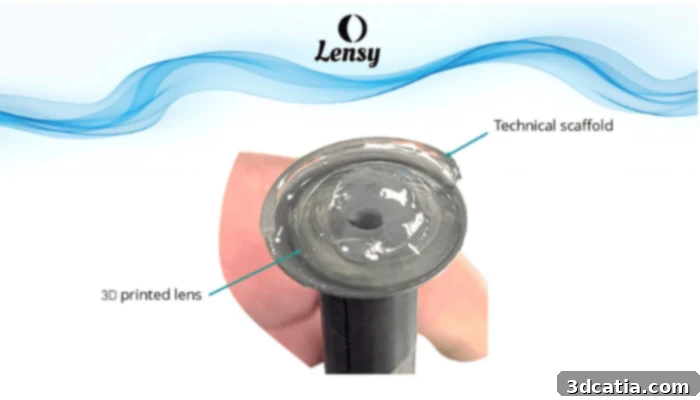
Photo credits: Lensy Medical
sallea
While 3D printed meat and fish products have garnered attention, the innovative startup sallea is taking a remarkably unique and indirect approach to food fabrication. Instead of directly 3D printing the alternative meat or fish products themselves, sallea focuses on creating intricate 3D scaffolding. This ingenious method provides non-printable materials with access to complex 3D structures and geometries that would otherwise be impossible to achieve. Their process involves printing templates using common salt, which is then encased with materials that are typically difficult to print or can only be printed in low resolution, such as plant proteins and polysaccharides crucial for cellular agriculture. Once the desired structure is formed, the salt template is dissolved, leaving behind the cast material in the precise and complex geometry initially designed. While the company’s primary focus currently lies in food applications, particularly in creating structured alternatives for cultured meat and fish, the underlying technology holds immense potential for other materials like thermoplastics. By offering an indirect, yet highly effective, method for cellular agriculture, sallea is directly addressing current challenges associated with bioprinting and the creation of textured, complex food products. Their innovative technique could unlock significant advancements in sustainable food production and materials science. To learn more about the expansive potential of this innovative technology, read the full article here.
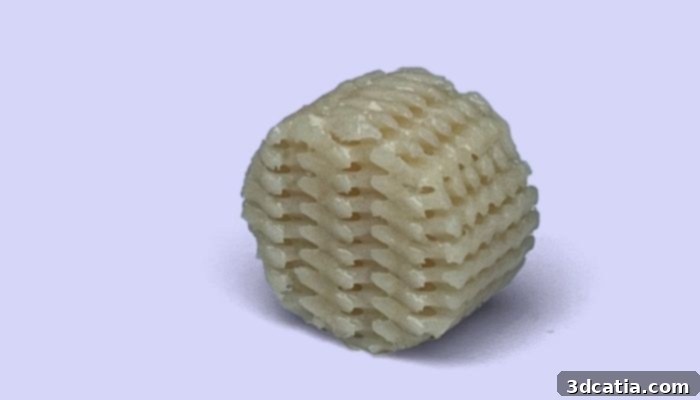
Protein sample used for cell tests (Photo Credits: sallea AG)
The year 2024 has undeniably showcased the vibrant and accelerating pace of innovation within the 3D printing and additive manufacturing landscape. From redefining large-scale metal fabrication to pioneering personalized medicine, enhancing material properties, and even exploring sustainable food production, these startups exemplify the diverse and transformative power of additive technologies. Each company presented here has demonstrated exceptional creativity, ingenuity, and a clear vision for how 3D printing can solve real-world problems and push the boundaries of what’s possible. Your vote is crucial in recognizing the startup that you believe has made the most significant impact and holds the brightest promise for the future. Which 3D startup do you find to be the most innovative and impactful? We eagerly await your decision in our poll! Furthermore, we encourage you to share your thoughts and opinions in a comment below or engage with us on our LinkedIn, Facebook, and Twitter pages. Don’t forget to sign up for our free weekly Newsletter here to receive the latest 3D printing news directly to your inbox! You can also find all our insightful videos on our YouTube channel, offering even deeper dives into the world of additive manufacturing. Thank you for participating in this celebration of innovation and for helping us shape the narrative of 3D printing’s exciting future!