
Revolutionizing the Future: Key Business Shifts and Groundbreaking Innovations in 3D Printing and Additive Manufacturing
The world of 3D printing, also known as additive manufacturing, continues to be a dynamic landscape of technological advancement, strategic business maneuvers, and breathtaking scientific breakthroughs. This week, we delve into significant corporate developments, including Trumpf’s strategic divestment from its laser powder bed fusion business, Autodesk’s potential acquisition discussions regarding software provider PTC Inc., and voxeljet’s crucial steps toward financial restructuring. Beyond the boardrooms, we’ll explore the astounding feat of 3D printing a microscopic elephant figure directly inside a living human cell, pushing the boundaries of what’s possible in biomaterials and cellular engineering. Finally, we’ll admire a unique 3D printed chair from a French design studio, showcasing the immense creative potential and practical applications of additive manufacturing in everyday objects. These diverse stories paint a vivid picture of an industry constantly evolving, promising a future shaped by precision, customization, and unprecedented innovation.
Trumpf Divests Its Laser Powder Bed Fusion (LPBF) Printing Business to DUBAG Group
In a significant move that signals a strategic refocus within the industrial 3D printing sector, Trumpf, a global leader in machine tools and laser technology, announced its divestiture from its Laser Metal Fusion (LMF) division, which specializes in Laser Powder Bed Fusion (LPBF) technology. Earlier this week, the DUBAG Group, an investment firm based in Italy with a focus on acquiring and developing companies with growth potential, confirmed its takeover of this division. This transaction will see the LMF division operate as an independent entity under the DUBAG Group, a decision driven by Trumpf’s broader strategy to streamline its operations and intensify its focus on core applications and established strengths within the additive manufacturing ecosystem.
The divestment is aimed at enhancing Trumpf’s position as a leading technology solution provider for metal 3D printing by concentrating its efforts on areas where it can deliver maximum value. While divesting the LPBF machine manufacturing, Trumpf plans to remain deeply involved in providing comprehensive application consulting, advanced process development, and sophisticated automation solutions to its customers. This strategy allows Trumpf to better align with the specific needs of various high-growth vertical markets, including critical sectors like aerospace, where lightweight, complex parts are essential; medical technology and dentistry, which demand precision and biocompatibility; and general industrial applications, requiring robust and efficient manufacturing processes. The shift underscores a growing trend in the additive manufacturing industry towards specialization and integrated solutions rather than broad-spectrum hardware offerings. The deal awaits approval from relevant local authorities. It is also vital to note that Trumpf will continue to independently manage and expand its laser metal deposition (LMD) sector, an alternative metal additive manufacturing technique often used for repairing and adding material to existing components, further reinforcing its commitment to diverse laser-based manufacturing solutions.
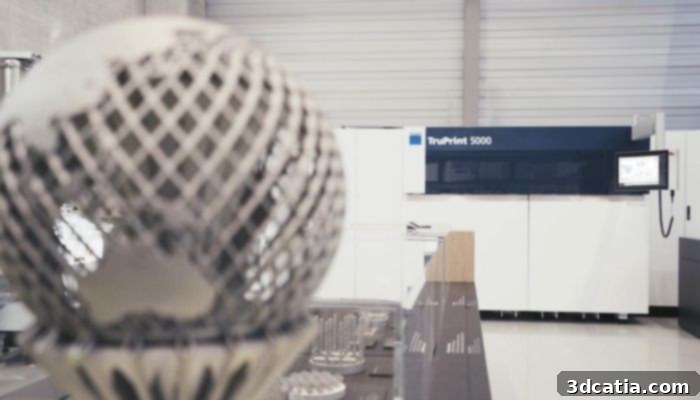
Photo Credits: Trumpf
Autodesk Weighs Potential Takeover Bid for Rival Software Provider PTC Inc.
In a development that sent ripples through the engineering software market, Bloomberg reported earlier this week that Autodesk, a dominant player in computer-aided design (CAD) and manufacturing software, is actively considering a significant acquisition: its rival engineering-software provider, PTC Inc. Both companies are giants in their respective niches, offering comprehensive software solutions essential for product design, engineering, and manufacturing across a multitude of industries, including the burgeoning additive manufacturing sector. Autodesk is widely recognized for its flagship products like AutoCAD and Fusion 360, catering extensively to architectural, engineering, and construction (AEC) as well as manufacturing markets. Similarly, PTC boasts a robust portfolio that includes Creo for 2D and 3D CAD, Windchill for Product Lifecycle Management (PLM), and ThingWorx for Industrial IoT, making it a critical partner for many enterprises in the manufacturing and industrial spheres.
A potential merger between these two industry titans could dramatically reshape the competitive landscape. According to Bloomberg’s analysis, such a deal would empower Autodesk with an impressive 17% share of the highly lucrative $19 billion global manufacturing software market, consolidating a substantial portion of the industry’s intellectual property and customer base. The news immediately impacted the financial markets, reflecting the gravity of the potential acquisition. On Wednesday, following the initial reports, Autodesk Inc. saw its stock drop by 2.4%, closing at $307.27, as investors reacted to the prospect of a large-scale acquisition. Conversely, PTC Inc. experienced a significant surge, with its stock rising by 17.7% to close at $210.47, indicating market optimism about a premium takeover offer. By Thursday afternoon, the market continued its volatile reaction, with Autodesk falling further by 6.52% to $287.24, while PTC adjusted slightly downward by 5.33% to $199.91. This fluctuation highlights the uncertainty and speculative nature surrounding such high-profile corporate maneuvers.
While no final decision has been made by Autodesk, and the company could ultimately opt against pursuing a deal for PTC, the potential strategic benefits are clear. An acquisition would allow Autodesk to significantly expand its product portfolio, integrate complementary technologies, and achieve greater market penetration, particularly in areas like PLM and IoT, where PTC has a strong foothold. This could create a more comprehensive end-to-end solution for manufacturers, fostering greater synergy across the entire product development lifecycle. However, such a merger would also present considerable challenges, including potential regulatory scrutiny, complex integration of diverse software platforms and corporate cultures, and managing customer overlaps. The Bloomberg report also alluded to the possibility that other significant industry players might also be interested in acquiring PTC, suggesting a competitive bidding environment could emerge if Autodesk proceeds with its proposal. The outcome of these deliberations will undoubtedly have lasting implications for the future of engineering software and its impact on modern manufacturing, including the evolving capabilities of 3D printing and additive manufacturing solutions.
Voxeljet Secures Future with Approved Restructuring Package
In a crucial development for the industrial 3D printing sector, voxeljet AG, a prominent German manufacturer renowned for its large-format binder jetting 3D printers, has received approval for a comprehensive restructuring plan. This comes after months of navigating insolvency proceedings, a challenging period for the company that began in late 2023 due to liquidity constraints. The Munich Local Court’s approval of the restructuring plan marks a significant turning point, providing a clear path forward for the company’s financial stabilization and long-term viability. Voxeljet specializes in binder jetting technology, which is particularly suited for producing complex sand molds and cores for metal casting, as well as plastic parts, serving industries ranging from automotive and aerospace to art and architecture.
The approved restructuring plan is multifaceted, encompassing both debt relief and critical capital measures designed to recapitalize the company. A cornerstone of this plan is the strategic investment by Anzu Special Acquisition Corp II (Anzu), a specialized investment entity. Anzu will inject EUR 2.5 million in new capital, demonstrating a strong vote of confidence in voxeljet’s technology and market potential. Simultaneously, the plan includes the waiver of EUR 3.4 million in existing debts, significantly alleviating the company’s financial burden. A notable aspect of the restructuring is the provision for the full expropriation of existing shareholders. While often a challenging outcome for original investors, this step is standard in severe insolvency cases, allowing new capital to come in without being diluted by previous liabilities and enabling a fresh start for the company under new financial terms. Furthermore, the plan stipulates a flexible repayment schedule for existing loans, extending until January 2031. This extended timeline provides voxeljet with the necessary breathing room to focus on operational execution and market growth without immediate pressure from short-term debt obligations.
For voxeljet, this meticulously crafted reorganization plan is not merely a survival mechanism but a catalyst for robust financial repositioning. It is expected to secure the company’s future operations, allowing it to continue its pioneering work in additive manufacturing technology. CEO Rudolf Franz expressed a profoundly positive outlook on the plan, stating, “The restructuring plan creates the conditions for the stable continuation of our business operations and demonstrates our clear commitment to reliably supporting our customers, suppliers, employees and subsidiaries.” This statement underscores voxeljet’s renewed commitment to its entire ecosystem of stakeholders and reinforces its dedication to maintaining its leadership in industrial 3D printing, particularly in the binder jetting segment, which is seeing increasing adoption for high-volume production applications.
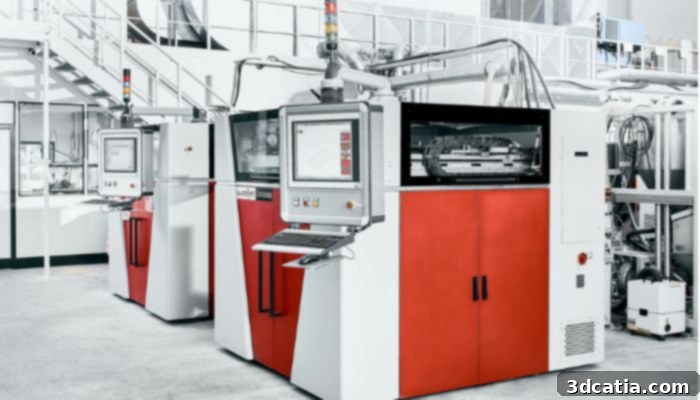
Photo Credits: voxeljet
Scientists Achieve Groundbreaking Feat: 3D Printing a Tiny Elephant Figure Inside a Living Human Cell
In a stunning display of scientific ingenuity and technological prowess, researchers in Slovenia have made a monumental stride in the field of micro-3D printing and cellular engineering. For the first time ever, they have successfully demonstrated the fabrication of custom-shaped polymeric microstructures directly inside living cells using an advanced technique known as two-photon polymerization. This groundbreaking achievement opens entirely new avenues for understanding and manipulating cellular environments at an unprecedented scale, potentially revolutionizing numerous biomedical applications. The scientific team embarked on this ambitious project with the primary goal of exploring the ultimate limits and potential of 3D printing at a subcellular level, pushing additive manufacturing into the realm of biological systems.
To achieve this remarkable feat, the researchers employed a highly precise methodology. Their process involved carefully injecting specialized photoresists – light-sensitive liquid polymers – into live human cells. Once the photoresist was internalized, a femtosecond laser, known for its ultra-short pulses and high peak power, was used to selectively polymerize the injected material. This two-photon polymerization process allows for incredible spatial resolution, enabling the creation of intricate 3D structures at the nanoscale within the cell’s complex internal environment. As the laser targeted specific points, the photoresist hardened, forming the desired shapes. Any unpolymerized photoresist that remained liquid simply dissolved naturally within the cell’s cytoplasm, leaving behind stable, well-defined intracellular structures with astonishing submicron resolution. The team successfully 3D printed a variety of shapes within these live cells, including a minuscule 10 µm elephant – a testament to the precision of the technique – and functional barcodes for individual cell tracking and identification.
The implications of this research are profound and far-reaching. The researchers boldly claim that their innovative approach “could open new avenues for various applications, including intracellular sensing, biomechanical manipulation, bioelectronics, and targeted intracellular drug delivery.” Imagine tiny sensors printed directly inside cells to monitor their health, miniature tools for precise cellular surgery, or smart drug delivery systems that release therapeutics exactly where and when they are needed. These embedded structures could, as the scientists suggest, “offer unprecedented control over the intracellular environment, enabling the engineering of cellular properties beyond those found in nature.” This could lead to a deeper understanding of diseases, the development of novel therapies, and even the creation of engineered cells with enhanced functionalities. Remarkably, the cells continued to thrive for multiple hours after the printing process, demonstrating the initial non-lethal nature of the technique. However, the researchers also candidly noted that the cells eventually died, indicating that the printing material, or possibly the process itself over time, was likely cytotoxic. This finding highlights a critical challenge that future research will need to address: developing biocompatible materials and refining the printing process to ensure long-term cell viability, paving the way for truly transformative bioprinting and cellular engineering applications.
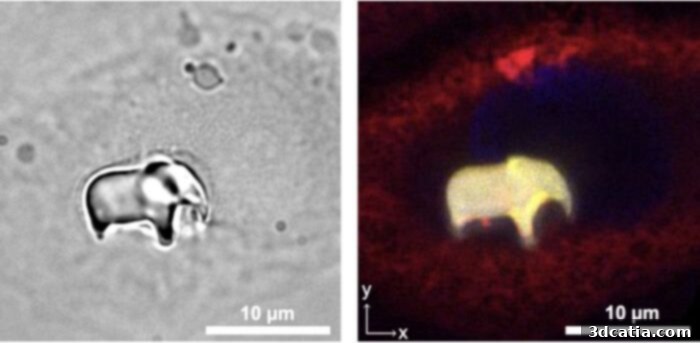
Microscopic elephant figure inside a live cell (Image Credits: Mur et. al.)
A Groundbreaking Monolithic 3D Printed Chair Redefines Furniture Manufacturing
While 3D printing chairs isn’t entirely new, the innovation behind this particular creation lies not just in its additive manufacturing origin, but in its revolutionary production method. This isn’t merely a 3D printed chair; it’s a testament to the advanced capabilities of modern additive manufacturing, as the entire piece was 3D printed in a single, continuous process – a truly monolithic design. This means no assembly was required, no screws, no fasteners, and no additional parts were needed to construct the final product. This “print-in-one-go” approach significantly reduces manufacturing complexity, assembly time, and material waste, offering a compelling vision for the future of furniture design and production.
This groundbreaking project was the result of a powerful collaboration, bringing together the creative vision of design studio Jouin Manku, the advanced engineering and software expertise of Dassault Systèmes, and the sophisticated printing services of ERPRO. Dassault Systèmes likely provided the critical software tools for design optimization and simulation, allowing the designers to craft a complex, structurally sound, yet aesthetically pleasing form that could be printed without supports or assembly points. ERPRO, a specialist in additive manufacturing services, was responsible for the physical production. They utilized an industrial-grade EOS SLS (Selective Laser Sintering) machine, renowned for its ability to produce high-quality, complex plastic parts. The material chosen was polyamide, a durable and versatile polymer frequently used in additive manufacturing for its excellent mechanical properties and smooth surface finish.
The printing process for this unique chair took approximately 35 hours, a substantial but justifiable timeframe given the chair’s size and intricate nature. Crucially, ERPRO highlighted that the cooling of the polyamide part required an equivalent amount of time – another 35 hours. In SLS technology, controlled cooling is just as vital as the printing itself, as it ensures material integrity, minimizes warping, and achieves the desired mechanical properties. This meticulous process underscores the precision and expertise required for large-format, high-quality additive manufacturing. The resulting chair is not only a functional piece of furniture but also a powerful demonstration of the expansive creative potential of additive manufacturing. It showcases how 3D printing can liberate designers from traditional manufacturing constraints, enabling the creation of complex geometries, integrated functionalities, and streamlined production processes that redefine how products, especially furniture, can be designed, produced, and ultimately enjoyed. This monolithic chair truly stands as an icon of design freedom and manufacturing efficiency in the additive era.
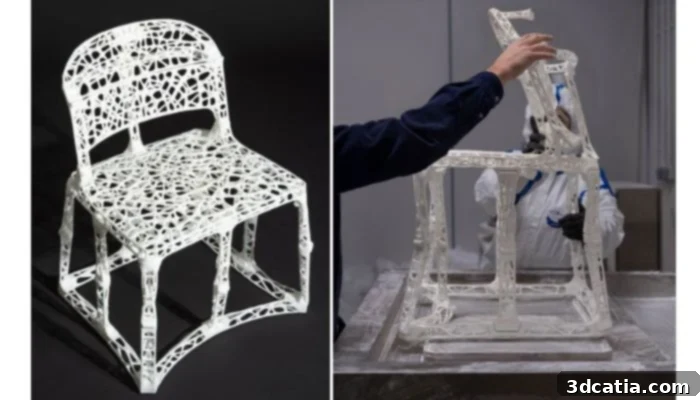
Photo Credits: ERPRO/Cyrille Vue
These stories collectively underscore the vibrant and ever-evolving nature of the 3D printing and additive manufacturing industry. From strategic corporate realignments and potential market consolidations to groundbreaking scientific explorations at the cellular level and innovative approaches to product design, the sector continues to push boundaries. What are your thoughts on Trumpf’s strategic decision to divest its LPBF business, or the potential impact of an Autodesk-PTC merger? How do you envision the future applications of intracellular 3D printing? Share your insights and comments below, or connect with us on our LinkedIn or Facebook pages! Don’t miss out on the latest advancements by signing up for our free weekly Newsletter, delivering the most important 3D printing news directly to your inbox. You can also explore our extensive video content on our YouTube channel.
*Cover Photo Credits: Trumpf