
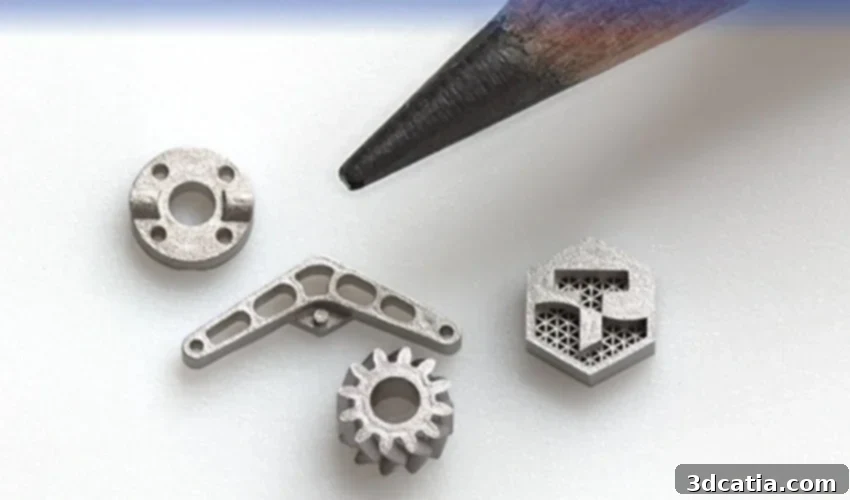
Unlocking Micro-Scale Precision: Trio Labs’ RIPL Technology Revolutionizes Metal 3D Printing for Healthcare and Beyond
In the rapidly evolving landscape of advanced manufacturing, American company Trio Labs stands at the forefront, pioneering a groundbreaking metal additive manufacturing technology. This innovative process is uniquely capable of designing and producing intricate parts on a microscopic scale, pushing the boundaries of what’s achievable with 3D printing. Dubbed Resin Infused Powder Lithography (RIPL), this proprietary technology boasts an unparalleled resolution of just 5 microns. This remarkable precision allows for the creation of highly detailed and exact components, opening up new possibilities across various industries, particularly in the demanding healthcare sector where personalization and miniaturization are paramount. To delve deeper into this transformative process and explore the vast prospects it offers, we recently had the opportunity to speak with Trio Labs’ visionary founder and CEO, Adam Steege.
3DN: Could you introduce yourself and tell us about your connection with 3D printing?

Adam Steege, CEO of Trio Labs
My journey into the world of advanced manufacturing and particularly 3D printing began in 2010 when I founded my first company. The primary focus then was on developing sophisticated laparoscopic surgical instrumentation. In that endeavor, I extensively leveraged various manufacturing methods, including 3D printing, alongside traditional CNC machining and casting processes, to bring those innovative medical devices to fruition. For over a decade now, I’ve also dedicated a significant portion of my career to medical device development in a consulting capacity, where I continued to employ these same processes, in addition to stamping and molding techniques, to produce a wide array of devices. Throughout these experiences, I encountered many of the same frustrations with existing 3D printing technologies that I believe most design engineers have faced. This was especially true when it came to metal printing, which often presented challenges such as poor surface finish, inconsistent tolerances, and difficulties in achieving the required mechanical properties. These persistent issues became a powerful motivator. I recognized a critical gap in the market for a more precise and reliable metal additive manufacturing solution, and it was this realization that ultimately inspired me to establish Trio Labs. Our core mission from the outset was to address and overcome these prevalent problems, setting a new standard for precision and quality in metal 3D printing.
3DN: What is Trio Labs’ mission?
At Trio Labs, our fundamental mission revolves around delivering unparalleled precision and flexibility in manufacturing through our proprietary Resin Infused Powder Lithography (RIPL) technology. We’ve developed RIPL to bridge the gap between the exceptional accuracy of CNC machining and the design freedom inherent in 3D printing. This innovative process allows us to create metal parts with a level of detail and quality previously unattainable through conventional additive manufacturing methods. Our primary focus is currently directed towards transformative healthcare applications. There’s an immense and growing need for the highly specialized parts we can produce, particularly in areas such as minimally invasive surgical instruments and advanced interventional catheters. These sectors demand components with incredibly small features, superior surface finishes, and precise geometries—all characteristics where RIPL excels. Beyond healthcare, our vision extends to supporting the continuous global push towards miniaturization across numerous vertical markets. As industries strive for smaller, more complex, and higher-performing components, Trio Labs is committed to providing the advanced manufacturing capabilities necessary to drive this type of innovation wherever our unique precision can make a significant impact.
3DN: What are the special features of your micro-scale metal additive manufacturing technology? How did you manage to make it so precise?
The distinctive feature that truly sets Trio Labs’ Resin Infused Powder Lithography (RIPL) apart is its extraordinary precision, allowing us to print metal parts with an astonishing 5-micron resolution. To put this into perspective, this level of detail is approximately ten times finer than what is typically achievable with standard metal 3D printing processes available today. This micro-scale capability is not just about resolution; it’s about delivering parts with a unique combination of superior surface finish, extremely tight tolerances, and exceptional mechanical properties that are often considered unattainable with other additive manufacturing techniques. Moreover, RIPL is designed with scalability in mind, making it capable of high-volume production at levels that are simply impossible for any other micro-metal printing process on the market. This means our technology can transition seamlessly from prototyping to mass manufacturing without compromising on quality or precision. We achieved this breakthrough by fundamentally reinventing several critical aspects of the printing process itself. This involved developing novel approaches to material handling, photopolymerization, and layer-by-layer consolidation to produce ultra-high-quality “green parts” – the unsintered components – that serve as the foundation for the final metal product. These meticulously crafted green parts are then subjected to our advanced, high-throughput, and high-quality sintering processes. The results speak for themselves: our customers consistently describe the parts produced by RIPL as the best they have ever seen from any 3D printing technology, a testament to our commitment to pushing the boundaries of what’s possible in micro-scale metal additive manufacturing.
3DN: What are the main advantages of additive manufacturing for Trio Labs?
For Trio Labs, the core advantage of our additive manufacturing technology, RIPL, lies in its ability to empower our customers with a digital manufacturing solution that perfectly aligns with their demanding requirements for precision and quality. By offering a process that is not only highly accurate but also incredibly scalable – from a mere 10 prototype parts to over 100,000 production units and beyond – we are fundamentally transforming the commercialization pathway for their new devices. This unparalleled flexibility translates into a significantly faster and more efficient route to market. Traditionally, engineers developing highly specialized medical devices or intricate industrial components would face lengthy development cycles, expensive tooling, and complex transitions between prototyping and mass production. Our technology streamlines this entire process, reducing both time and cost. Furthermore, RIPL opens up entirely new design opportunities that simply did not exist before. Engineers are no longer constrained by the limitations of conventional manufacturing methods, which often dictate design choices based on manufacturability rather than optimal performance or innovative function. With the extreme precision and complexity offered by RIPL, designers can explore geometries, internal structures, and miniaturized features that were previously theoretical. They can fully capitalize on the inherent digital flexibility of 3D printing, iterating quickly and optimizing designs, without the added concern or significant hurdle of having to qualify an entirely different, more cumbersome process for eventual high-volume production. This seamless scalability and consistent quality across all production volumes are what truly set Trio Labs apart, enabling our customers to innovate more freely and bring their cutting-edge products to market with unprecedented speed and confidence.
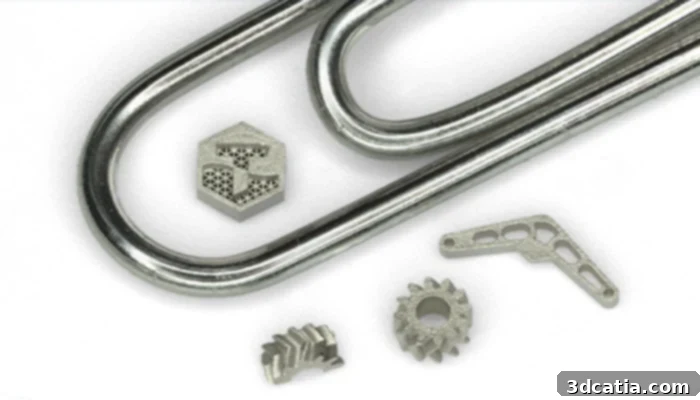
Trio Labs’ technology allows for exceptionally precise resolutions in metal component fabrication.
3DN: How do you see the continued role of 3D Printing in healthcare?
The role of 3D printing in healthcare is already profound and continues to expand in numerous impactful ways, many of which are actively being implemented today. One of the most significant contributions is its unparalleled ability to design and produce patient-specific solutions. This critical advantage is already transforming fields such as orthopedics and surgery, where custom surgical guides are created from individual patient scans to enhance precision during complex operations. Similarly, personalized orthopedic implants, perfectly tailored to a patient’s unique anatomy, are leading to better fit, reduced recovery times, and improved long-term outcomes. Beyond these established applications, I envision even greater opportunities for 3D printing, especially in areas where there’s immense value in seamlessly operating at different levels of scale. For instance, in developing highly specialized medical devices, a single part might be needed for a rare condition, while a million identical or subtly varied components are required for a common procedure. The right 3D printing technology, like RIPL, possesses the versatility to produce a single, bespoke part with the same ease and cost-effectiveness as it can produce a million units. This adaptability is an absolute necessity in the healthcare space, which is characterized by a high mix of highly varied devices, from intricate micro-surgical tools to large-scale prosthetics. This ability to switch effortlessly between custom, low-volume production and efficient, high-volume manufacturing, all while maintaining stringent quality and precision, will unlock innovations in areas like advanced drug delivery systems, personalized diagnostics, and even bio-printed tissues and organs as the technology matures. The future of healthcare will increasingly rely on bespoke solutions enabled by additive manufacturing, pushing the boundaries of personalized medicine.
3DN: What are the main difficulties you have encountered in your work?
One of the most significant challenges we frequently encounter at Trio Labs is the pervasive accumulated fatigue and skepticism that many engineers harbor towards 3D printing processes in general. This sentiment isn’t unfounded; it stems from years of experiences with older or less refined additive manufacturing technologies that often failed to deliver on promises. Engineers are, understandably, accustomed to receiving parts with poor quality, inadequate surface finishes, inconsistent mechanical properties that deviate from specifications, and often, tolerance issues that make integration into complex assemblies difficult. They’ve dealt with issues like porosity, anisotropic material behavior, and the need for extensive post-processing that negates some of the benefits of additive manufacturing. This historical context means that when we introduce our RIPL technology, we often face an initial hurdle of overcoming deeply ingrained perceptions about what metal 3D printing is truly capable of. However, this very challenge also represents our greatest opportunity. In virtually every instance where we’ve provided parts to potential customers, their expectations have not just been met, but consistently exceeded. When they hold a micro-scale metal component from Trio Labs that boasts a pristine surface finish, holds micron-level tolerances, and exhibits robust mechanical properties, it immediately prompts a reevaluation of what’s possible with additive manufacturing. This tangible proof of superior quality goes an incredibly long way toward building trust, demonstrating the transformative potential of our technology, and ultimately, inspiring engineers to reconsider and embrace advanced 3D printing as a viable and superior solution for their most demanding applications.
3DN: Any last words for our readers?
If your project demands micro-scale metal components with unprecedented precision and quality, we invite you to explore the capabilities of Trio Labs’ RIPL technology. Visit our website HERE to learn more about how our innovative process can revolutionize your designs and production.
We’re eager to hear your thoughts on the groundbreaking technology developed by Trio Labs! Please feel free to share your insights in a comment below or engage with us on our social media platforms. You can find us on LinkedIn, Facebook, and Twitter pages. Don’t forget to sign up for our free weekly Newsletter here to get the latest 3D printing news delivered straight to your inbox! You can also find all our compelling videos on our YouTube channel, offering visual insights into the world of additive manufacturing.
*All Photo Credits: Trio Labs