
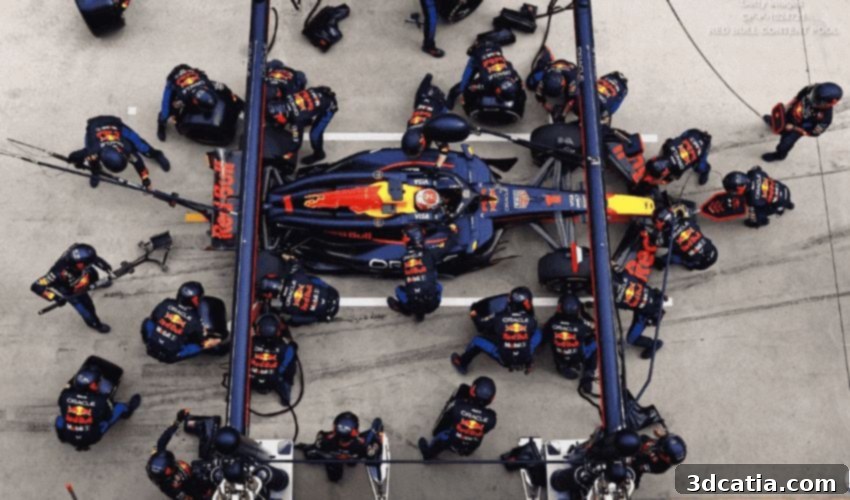
The Future of Speed: How 3D Printing & AI Drive Formula 1 Innovation at Red Bull Racing
The thrilling world of Formula 1, a pinnacle of engineering and speed, is rapidly being transformed by cutting-edge technologies like 3D printing. This additive manufacturing revolution is not just a trend but a fundamental shift in how high-performance racing cars are designed, developed, and manufactured. Teams such as Visa Cash App RB, leveraging partnerships with innovators like ROBOZE, and McLaren, which is deeply invested in prototype development, are demonstrating the immense potential of these advancements. At its core, Formula 1 is a relentless pursuit of speed and efficiency, where every gram and every millisecond counts. 3D printing offers unprecedented advantages in this hyper-competitive environment, enabling teams to significantly reduce car weight, consolidate multiple components into single, stronger parts, and crucially, enhance overall vehicle performance through intricate, optimized designs previously impossible to manufacture. This technological embrace is reshaping the very fabric of motorsport, pushing the boundaries of what’s achievable on the racetrack and setting new benchmarks for innovation in the automotive sector.
Within this innovative landscape, the Oracle Red Bull Racing team stands out as a prime example of technological leadership. Their consistent dominance in Formula 1 is a testament to their unwavering commitment to integrating the most advanced engineering solutions, particularly through their long-standing and highly strategic collaboration with Hexagon Manufacturing Intelligence. As a formidable force and the manufacturer’s champion since 2022, Red Bull Racing is acutely aware that maintaining its leading position requires continuous innovation and a proactive approach to adopting new methodologies. The partnership with Hexagon is instrumental in this endeavor, primarily focused on accelerating both the engineering design phase and the manufacturing processes. In a sport where races are won or lost by mere fractions of a second, these accelerations are not just beneficial; they are absolutely critical, providing Red Bull with a crucial competitive edge that translates directly into tangible performance gains on the racetrack.
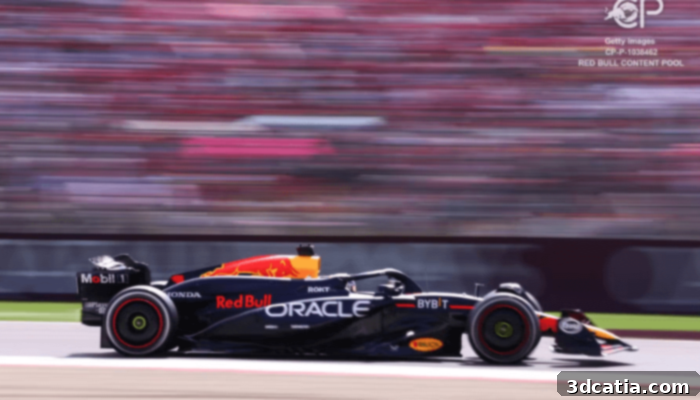
3D Printing: Accelerating Innovation and Development at Red Bull Racing
The enduring 18-year partnership between Red Bull Racing and Hexagon Manufacturing Intelligence has blossomed into a symbiotic relationship, positioning Red Bull as a preferred testing ground for Hexagon’s most advanced innovations. This unique collaboration provides Red Bull with a strategic advantage, allowing them to rapidly integrate cutting-edge technologies into their intricate development processes well before their rivals. Hexagon provides a comprehensive suite of solutions, encompassing everything from sophisticated metrology and inspection systems to advanced design and simulation software, all meticulously tailored to ensure that Red Bull’s cars are not just competition-ready, but optimally configured throughout the grueling Formula 1 season. A remarkable testament to the efficacy of this partnership is the significant 50% reduction in manufacturing defects achieved over the last two years. In a sport where precision is paramount and a single flaw can lead to catastrophic failure, this improvement underscores the relentless pursuit of quality that complements the team’s drive for speed. Balancing the imperative for rapid iteration with an uncompromising commitment to quality is fundamental for an F1 team, and Hexagon’s innovations are pivotal in making this delicate balance a tangible reality for Red Bull Racing.
The journey from conceptual design to a race-ready component is a rigorous and highly iterative process for any Formula 1 team. Red Bull Racing has embraced digital transformation with gusto, heavily utilizing digital twins and advanced simulations to design and thoroughly test their cars in a virtual environment before a single physical prototype is ever produced. This process begins with the entire car design meticulously crafted in Computer-Aided Design (CAD) software, followed by extensive simulator testing. During this crucial phase, the car’s performance characteristics are accurately replicated and evaluated on digital models of specific world circuits, allowing engineers to fine-tune aerodynamics, suspension, and countless other parameters under various simulated conditions. This virtual validation significantly reduces development time and costs associated with physical testing.
Once digital models are thoroughly evaluated and optimized, Red Bull employs state-of-the-art additive manufacturing techniques, notably stereolithography (SLA) 3D printing, to produce high-fidelity physical prototypes. SLA is particularly valued for its ability to create parts with exceptional surface finish and intricate details, making it ideal for aerodynamic components, cooling ducts, and various functional prototypes where precision is paramount. This cost-effective and rapid prototyping method allows engineers to quickly move from virtual designs to tangible parts that can be physically tested and refined in wind tunnels and on test tracks. The agility offered by 3D printing means that design iterations can be implemented and validated within days, rather than weeks or months, a critical factor in the fast-paced F1 development cycle. This rapid iteration capability is a cornerstone of Red Bull’s success, enabling them to continuously evolve their car’s performance throughout a season.
Beyond internal component development, Red Bull Racing also explores innovative applications of 3D printing in broader performance evaluation. Earlier this year, a groundbreaking initiative saw Red Bull Racing collaborate with Dutch Drone Gods to test a custom 3D-printed drone. This advanced drone, capable of breathtaking speeds exceeding 350 km/h, was engineered specifically to track Max Verstappen’s new Red Bull Racing RB20 F1 car during a complete lap of the iconic Silverstone Grand Prix circuit. The primary objective of this daring experiment was to capture unprecedented aerial footage and data, allowing the team to evaluate the car’s speed, agility, and overall performance dynamics in real-time, from a unique perspective previously unobtainable. This innovative use of 3D printing in an auxiliary role demonstrates Red Bull’s holistic approach to leveraging advanced technologies across all facets of their operations, constantly seeking novel ways to gain insights and push the boundaries of performance.
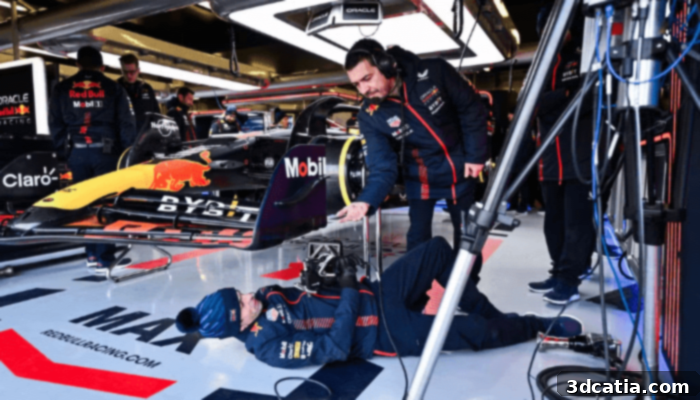
The Transformative Impact of Artificial Intelligence on F1 Development
Beyond the tangible benefits of 3D printing, Oracle Red Bull Racing is also harnessing the immense power of Artificial Intelligence (AI) to further enhance its competitive advantage. The ability of the Red Bull Racing car to adapt exceptionally well to diverse climatic conditions, from scorching desert heats to damp, cooler European tracks, is a testament to meticulous engineering and increasingly, AI-driven insights. The team manages an astonishingly complex ecosystem of components, with each manufactured part having an incredibly short two-week lifecycle before it’s either replaced, refined, or retired. This rapid turnover demands an unparalleled level of efficiency, precision, and predictive capability, areas where AI truly shines.
Integrating artificial intelligence into their development and design processes represents a monumental leap forward for Red Bull Racing. AI algorithms analyze vast datasets, including telemetry from previous races, sensor data from wind tunnel tests, and simulation results, to identify optimal design parameters and predict performance under various scenarios. This data-driven approach significantly enhances collaborative efforts among engineers, designers, and strategists. AI-powered tools can suggest design modifications that improve aerodynamics, optimize material usage for lightweighting, or predict component wear, leading to more informed and efficient decision-making. Furthermore, AI facilitates generative design, where algorithms autonomously explore thousands of design permutations based on specified constraints and performance goals, often yielding innovative solutions that human engineers might overlook. This has profound implications for the future of not only Formula 1 automotive design but also for broader high-performance vehicle production, pushing the boundaries of what is mechanically possible.
Red Bull’s strategic partnerships with technology leaders like Hexagon, coupled with their inherent ability to rapidly test, validate, and implement these cutting-edge innovations, provide them with a substantial and sustained competitive edge. The synergy between advanced additive manufacturing and intelligent AI systems allows them to accelerate their design cycles, reduce development costs, and ultimately build faster, more reliable, and more adaptable racing machines. This integrated approach ensures that Red Bull Racing remains at the forefront of motorsport innovation, constantly redefining what’s achievable in the quest for world championships. The combined power of 3D printing and AI is not just enhancing current performance; it’s laying the groundwork for a future where F1 cars are even more sophisticated, efficient, and exhilarating to watch.
What are your thoughts on the revolutionary impact of 3D printing and AI in Formula 1? We encourage you to share your insights in a comment below or join the conversation on our LinkedIn, Facebook, and Twitter pages! Don’t miss out on the latest advancements – sign up for our free weekly newsletter here for all the cutting-edge 3D printing news delivered straight to your inbox! You can also find all our compelling videos on our YouTube channel.
*All Photo Credits: Oracle Red Bull Racing