
Global Composite 3D Printing Market Surges Towards $19.8 Billion by 2028: Trends, Forecasts, and Key Drivers
The landscape of additive manufacturing continues its rapid evolution, with composite 3D printing emerging as a particularly dynamic segment. A recent report from Research and Markets offers a comprehensive outlook on this burgeoning industry, highlighting both its robust growth trajectory and the resilience it demonstrated amidst global economic challenges. Initially, the report had projected the composite additive manufacturing market to soar past $28 billion by 2028, reflecting an impressive 28% annual growth rate since 2020. However, the unforeseen impact of the global health crisis necessitated a recalibration of these forecasts. The revised figures now anticipate the composite 3D printing market to reach a formidable $19.8 billion by 2028, sustaining a strong annual growth rate of 27%. While a downward revision, this adjustment is remarkably modest given the profound disruptions inflicted by COVID-19 on economies worldwide, underscoring the inherent strength and adaptability of this advanced manufacturing sector.
The period of global uncertainty brought on by the health crisis served as a critical test for numerous industries. While many sectors grappled with unprecedented downturns, additive manufacturing showcased remarkable fortitude and strategic importance. Indeed, 3D printing technologies were notably less impacted during the health crisis compared to traditional manufacturing, although a complete immunity to market fluctuations was, of course, impossible. The actual growth rate could have been significantly slower, yet 3D printing proved its invaluable utility and efficiency at a time when conventional global supply chains experienced severe disruptions and even outright paralysis. The capability to facilitate quick, localized production became a cornerstone of resilience, enabling users to rapidly address urgent needs, innovate on the fly, and maintain operational continuity. This pivotal role played by additive manufacturing during such trying times solidified its position as a transformative technology, and the composite market, in particular, demonstrated exceptional performance and adaptability throughout this period.
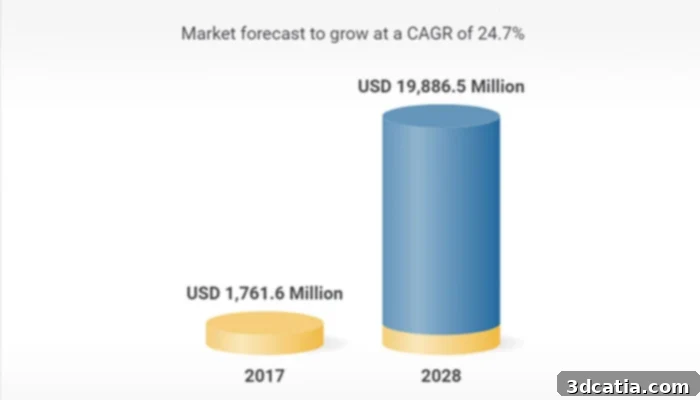
The growth of the composite 3D printing market (photo credits: Research and Markets)
Understanding the Appeal of Composite 3D Printing and its Restructuring Market
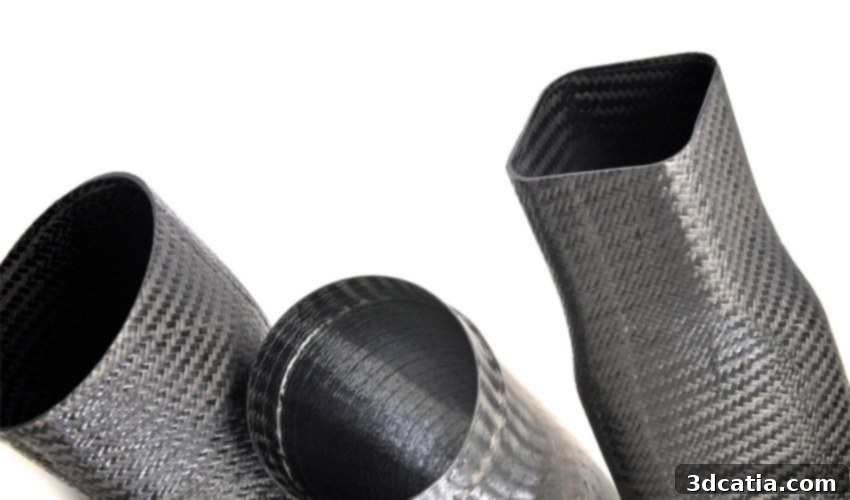
The increasing popularity of composite materials within the industrial sector is undeniable, driven by their unique ability to impart superior mechanical properties to demanding components. Industries such as aerospace, automotive, and defense are particularly keen beneficiaries, where the quest for enhanced performance often translates into a need for parts that are simultaneously lighter and stronger. Composite 3D printing excels in this regard, enabling the creation of components that can significantly reduce weight without compromising structural integrity – in many cases, surpassing the strength-to-weight ratio of traditional metals. This revolutionary capability is a game-changer for applications where every gram counts and where durability under extreme conditions is paramount. The advancements in composite 3D printing processes have been equally significant, with a growing number of manufacturers now offering comprehensive, turnkey solutions that streamline the design and production of sophisticated composite parts, making this cutting-edge technology more accessible to a broader industrial base.
Material Innovations and Strategic Investments Driving Growth
The Research and Markets study unequivocally confirms this positive trajectory, with the projected annual growth rate of 27% serving as a strong indicator of the market’s robust health and future potential. A significant focus of the report is on material extrusion processes, which are at the forefront of innovation in composite 3D printing. These processes offer unparalleled versatility, accommodating a wide array of composite materials reinforced with high-performance fibers such as carbon, glass, or aramid. The integration of these fibers allows for the creation of exceptionally lightweight parts without any compromise on critical performance characteristics like tensile strength, stiffness, or fatigue resistance. This ability to tailor material properties to specific application demands is a key differentiator for composite additive manufacturing. Furthermore, the report meticulously details the burgeoning ecosystem of strategic partnerships and significant fundraising initiatives undertaken by key market players. These collaborations and investments are vital in structuring and maturing the market, fostering innovation, and accelerating technological development. A prime example of this trend is the Swiss manufacturer 9T Labs, which recently garnered a substantial $17 million round of funding. This investment is earmarked to rapidly advance the development of its pioneering 3D Red Series, a state-of-the-art composite 3D printing platform poised to set new benchmarks in the industry.
The inherent advantages of composite materials – primarily their superior strength-to-weight ratio, exceptional stiffness, and design flexibility – are fueling their widespread adoption across a multitude of applications. When reinforced with continuous fibers, 3D printed composites can indeed rival, and in some cases even surpass, the mechanical properties of traditional metallic parts while offering significant weight savings. This comparison is particularly pertinent in industries where performance is critical and mass reduction directly translates to increased efficiency and reduced operational costs. The ability to customize fiber orientation within a printed part further optimizes its performance characteristics, allowing engineers to design components with anisotropic properties tailored precisely to the expected load conditions. This level of design freedom, combined with the inherent benefits of additive manufacturing such as reduced material waste and rapid iteration capabilities, makes composite 3D printing an indispensable tool for next-generation product development.
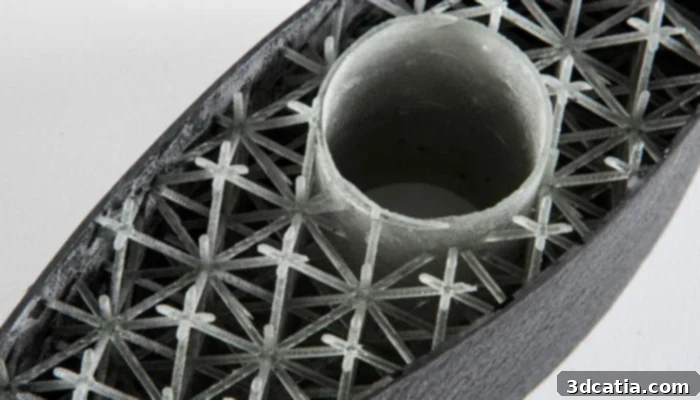
Composites are sometimes as resistant as some metals (photo credits: Fiberneering)
Key Sectors Driving Composite 3D Printing Adoption
The report details that aerospace and defense players have been consistently at the forefront of developing advanced applications utilizing carbon fiber reinforced composites. This sustained and increasing demand from these critical sectors is identified as one of the primary catalysts propelling the overall market growth. In aerospace, the push for lighter aircraft and spacecraft components directly translates to significant fuel efficiency gains and enhanced performance, making composite 3D printing indispensable for parts like custom tooling, jigs, fixtures, interior components, and even end-use structural elements. Similarly, the defense sector leverages these materials for unmanned aerial vehicles (UAVs), tactical equipment, and protective gear, where reduced weight and increased durability are paramount. The automotive sector is also poised for substantial investment in composite 3D printers, driven by the need to create lighter, safer, and more resilient parts. With the global shift towards electric vehicles (EVs), composite materials offer compelling advantages for battery enclosures, chassis components, and interior structures, contributing to extended range and improved vehicle dynamics. Beyond traditional automotive, high-performance and luxury vehicle manufacturers are also integrating composite 3D printed parts for custom, low-volume production and weight-critical applications.
Further broadening its impact, the healthcare sector is increasingly adopting composite 3D printing for highly specialized applications. The ability to produce custom prosthetics, orthotics, and surgical guides with complex geometries and tailored mechanical properties is revolutionizing patient care. Biocompatible composite materials offer durability and comfort, critical for devices that are in prolonged contact with the human body. The consumer goods and sports industries are also tapping into the advantages of composite 3D printing for items requiring high performance and lightweight design, such as specialized sporting equipment, custom bicycle frames, and advanced robotics components. This diversification across multiple high-value industries underscores the broad applicability and transformative potential of composite additive manufacturing.
Geographic Trends and Future Outlook
Analyzing the geographic segmentation, the study identifies the Asia-Pacific (APAC) region as a significant hotspot for growth. This robust expansion is fueled by the rapid adoption of composite 3D printing technology across key industries including healthcare, defense, automotive, and aerospace within the region. Emerging economies and established industrial hubs in APAC are investing heavily in advanced manufacturing capabilities, recognizing the strategic advantages offered by composite materials. Furthermore, the global recovery in air traffic, post-pandemic, is anticipated to provide a substantial boost to the manufacture of new aircraft. This resurgence in aerospace production will, in turn, drive an increased demand for lightweight and high-performance composite materials, directly impacting the composite 3D printing market positively. As manufacturing processes become more digitized and automated globally, composite 3D printing stands to benefit from increased industrial integration and further investment in research and development. This will lead to even more sophisticated materials, larger build volumes, and streamlined post-processing techniques, making the technology even more attractive to a broader range of industries worldwide. You can find the full report HERE for an in-depth analysis of these trends and forecasts.
Are you currently leveraging composite 3D printing in your operations or considering its potential for future projects? We invite you to share your insights and experiences in the comments section below! You can also connect with us and join the conversation on our LinkedIn, Facebook, and Twitter pages. Don’t miss out on the latest advancements and news in the additive manufacturing world; make sure to sign up for our free weekly Newsletter here to get the freshest 3D printing updates delivered directly to your inbox! For visual demonstrations and in-depth discussions, be sure to check out all our videos on our dedicated YouTube channel.