
Exploring the Future of Additive Manufacturing: Your Weekly Top 5 3D Printing Video Roundup
Welcome to another insightful Sunday digest, where we bring you the most compelling and transformative developments from the dynamic world of 3D printing. This week, our curated selection of top 5 videos offers a comprehensive look at how additive manufacturing continues to innovate across a multitude of sectors, from culinary arts and industrial sustainability to critical societal debates and artistic expression. We are excited to present stories that highlight the versatility and profound impact of this rapidly evolving technology. Join us as we uncover cutting-edge breakthroughs, gain perspectives from industry leaders, and reflect on the broader implications of digital fabrication shaping our future. From the debut of a revolutionary food 3D printer by a pioneering French start-up to HP’s strategic focus on environmental sustainability, and the ongoing ethical concerns surrounding 3D printed firearms, there’s a diverse range of fascinating content for every enthusiast. Furthermore, we’ll explore significant investments in aerospace 3D printing and celebrate how additive manufacturing empowers incredible artistic creations. Get ready to dive deep into the forefront of 3D printing innovation!
Top 1: Revolutionizing Culinary Arts with the Patiss3 Food 3D Printer
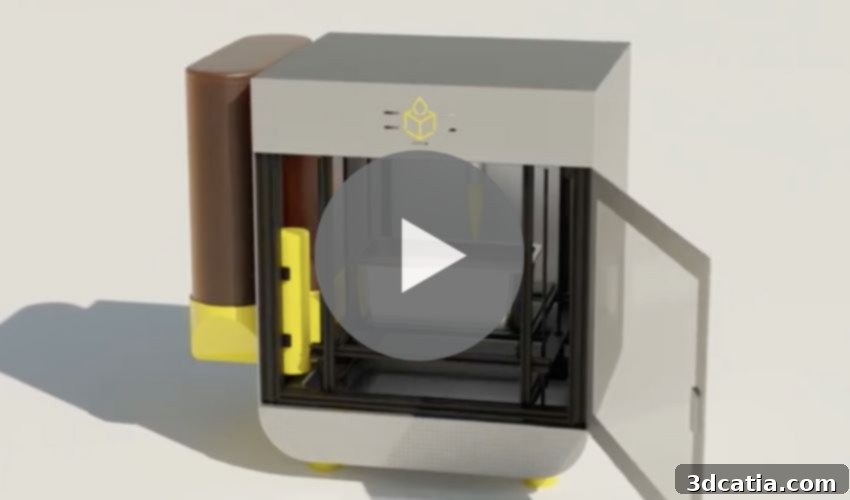
Leading our list this week is an exciting innovation poised to redefine the landscape of gastronomy. The French start-up La Pâtisserie Numérique is driven by a clear mission: to seamlessly integrate advanced technology into the daily routines of professional chefs and bakers. Having already developed a specialized slicer software designed specifically for food 3D printing, they have now unveiled their latest groundbreaking creation: the Patiss3 3D printer. This ingenious device is meticulously engineered for the efficient and precise production of cookie dough, offering unprecedented flexibility in both design and material utilization. The Patiss3 empowers culinary professionals to print virtually any shape imaginable, leveraging an extensive range of dough types, whether for crafting delicate sweet pastries or innovative savory appetizers. Its unparalleled versatility unlocks a new realm of possibilities for professional kitchens, artisan bakeries, and even ambitious home chefs. Imagine effortlessly creating bespoke logos for corporate events, intricate personalized designs for special occasions, or exploring entirely new artistic expressions in edible forms. Beyond enhancing customization and creativity, the Patiss3 promises to significantly streamline production processes, minimize food waste through precise deposition, and elevate the aesthetic presentation of culinary delights to an art form. This technology represents a monumental leap forward in gastronomic innovation, enabling chefs to achieve levels of detail, consistency, and structural complexity previously unattainable through traditional manual methods, thus ushering in a new era for personalized and artistic food production.
Top 2: HP’s Commitment to Sustainability in Additive Manufacturing at ADDIT3D
Our second highlight transports us to Bilbao, Spain, where the prominent ADDIT3D event recently concluded its impactful run from June 13 to 17. This pivotal industry gathering provided an invaluable platform for 3Dnatives to engage with key players in the additive manufacturing landscape, including the globally recognized printer manufacturer, HP. During our visit, we had the distinct opportunity to converse with Miquel Olivé, HP’s insightful sales manager for the Iberian region, who shed light on the burgeoning importance of sustainability within the additive manufacturing sector. Olivé articulated HP’s resolute commitment to pioneering more environmentally responsible 3D printing solutions. He elaborated on the company’s extensive efforts and ongoing advancements in developing sustainable materials, which include innovative programs for recycling surplus powders and integrating bio-based or recycled content directly into their printing processes. These initiatives are not merely reactionary but are core components of HP’s forward-looking product development and operational strategies, aiming to reduce the environmental footprint of their entire ecosystem. Furthermore, Miquel Olivé offered a tangible demonstration of HP’s capabilities by showcasing a diverse array of 3D printed parts. These examples visually illustrated the American manufacturer’s broad spectrum of applications across various industries, from high-performance automotive components and custom medical devices to consumer goods. The discussion underscored how HP’s advanced Multi Jet Fusion technology is not only enabling the production of highly functional and optimized parts but is also championing sustainable practices, driving innovation that serves both industrial efficiency and planetary well-being. This focus on eco-conscious manufacturing is crucial for the continued growth and acceptance of 3D printing globally.
Top 3: The Escalating Global Debate Surrounding 3D Printed Weapons
Shifting our focus to a more somber, yet critically important, topic, our third segment delves into the escalating global debate surrounding 3D printed weapons. As we reported last week, Europol has voiced profound concerns regarding the alarming proliferation of firearms produced using additive manufacturing techniques. Recent months have witnessed a disturbing surge in the number of 3D-printed weapons confiscated by law enforcement agencies across both Europe and the United States. This worrying trend signals a complex and multifaceted challenge for national authorities, international policymakers, and society at large. Sky News recently broadcast an in-depth report on this sensitive subject, highlighting the alarming ease with which individuals, often amateurs, are distributing digital models of fully functional weapons on various social media platforms and specialized 3D file repositories. This unhindered accessibility presents profound security risks, as it bypasses established traditional manufacturing and regulatory controls designed to prevent illicit firearm production and distribution. The ability to produce untraceable, largely plastic firearms at home, often from readily available and inexpensive materials, poses a grave threat to public safety and national security. If not effectively addressed through robust policy and technological countermeasures, the widespread adoption of weapons designed and fabricated with additive manufacturing tools could lead to unprecedented challenges for crime prevention, border security, and international cooperation. The debate intensifies around how to strike a delicate balance between fostering technological innovation and fulfilling the imperative to prevent harm, underscoring the urgent need for comprehensive legal frameworks, enhanced digital surveillance, and robust public awareness campaigns to mitigate these growing dangers effectively.
Top 4: Collins Aerospace’s Massive Investment in Aerospace Additive Manufacturing
Moving on to a pivotal development within the aerospace industry, our fourth segment highlights Collins Aerospace, a recognized global leader in aerospace and defense technologies. The company has announced a significant expansion of its advanced manufacturing capabilities with the inauguration of a new additive manufacturing center and the enhancement of its maintenance, repair, and overhaul (MRO) facilities at its Monroe, North Carolina campus. This ambitious undertaking represents a substantial investment of over $45 million, clearly demonstrating Collins Aerospace’s deep and strategic commitment to leveraging cutting-edge manufacturing techniques for the advancement of future aviation. Additive manufacturing, frequently referred to as industrial 3D printing, is particularly transformative for the aerospace sector due to its unparalleled ability to create complex, lightweight geometries that are often impossible to produce using traditional subtractive methods. This revolutionary technology enables the consolidation of multiple components into single, intricately designed parts, leading to significant reductions in overall weight, improved fuel efficiency, and enhanced structural performance for aircraft. The newly established center, initially equipped with two state-of-the-art 3D printers, is strategically positioned for further expansion, indicating robust plans for scaling production capacity and diversifying its additive manufacturing capabilities across various materials and processes. Collins Aerospace anticipates that this facility will play a pivotal role in designing and producing innovative, high-performance parts that will equip and define the next generations of commercial and military aircraft. This substantial investment not only underscores the growing maturity and critical importance of additive manufacturing in demanding industries but also firmly positions Collins Aerospace at the forefront of aerospace innovation, driving forward solutions that are more efficient, reliable, and sustainable for the future of global air travel.
Top 5: Raf Grassetti: Where Digital Artistry Meets Physical 3D Printing
Concluding our weekly exploration of 3D printing innovations, we celebrate the incredible synergy between art and technology through the remarkable work of Raf Grassetti. An artist of extraordinary talent and vision, Grassetti has garnered widespread recognition for his exceptional specialization in creating breathtaking 3D printed sculptures. Beyond his personal artistic endeavors, he holds a highly prestigious role as an art director for some of the biggest and most acclaimed video game franchises in the world, including the iconic “God of War” series. This distinguished background in digital design and intricate character creation provides him with a unique and powerful foundation for his personal passion: transforming elaborate virtual concepts into tangible, physical works of art. Utilizing advanced CAD software such as Zbrush, a leading tool favored by digital sculptors globally, the American artist meticulously crafts highly detailed and expressive models of beloved characters from comic books, blockbuster movies, and popular video games. What makes Grassetti’s creative process truly captivating is the subsequent step of materializing these digital masterpieces into the physical realm through the power of 3D printing. This cutting-edge technology allows him to flawlessly capture every intricate detail, every subtle nuance, and every delicate texture of his digital sculptures, thereby producing physical representations that are astonishingly true to his original artistic vision. His groundbreaking work exemplifies how 3D printing has evolved into an indispensable tool for contemporary artists, enabling them to produce complex, unique, and highly intricate pieces, rapidly prototype diverse designs, and even create exclusive limited-edition collectibles. Grassetti’s unwavering dedication to pushing the boundaries of digital artistry and physical fabrication inspires countless aspiring artists and powerfully demonstrates the limitless creative potential that additive manufacturing brings to the global art world.
This week’s comprehensive journey through the world of 3D printing has once again powerfully underscored the immense diversity, rapid evolution, and far-reaching impact of additive manufacturing. From the fascinating prospects of food 3D printers revolutionizing gastronomy and personalized nutrition to the critical discussions on sustainability championed by industry giants like HP, and the serious societal implications of readily available 3D printed weapons, this technology continues to shape our present and future in profound ways. We’ve also witnessed significant industrial investments by leaders such as Collins Aerospace, further cementing AM’s vital role in advanced sectors like aviation, and celebrated the boundless creativity unleashed by visionary artists like Raf Grassetti. The landscape of 3D printing is undeniably dynamic, presenting both incredible opportunities for innovation and complex challenges that demand our collective attention, ethical consideration, and ongoing technological advancement.
What are your thoughts on these groundbreaking developments, especially the new Patiss3 food 3D printer and its potential to transform culinary experiences? We’d genuinely love to hear your perspectives and insights! Share your comments below or connect with us on our vibrant social media platforms: LinkedIn, Facebook, and Twitter pages! To ensure you never miss out on the very latest 3D printing news, exclusive insights, and exciting updates, don’t forget to sign up for our free weekly Newsletter here, delivered straight to your inbox. You can also explore all our compelling videos and a wealth of further content on our dedicated YouTube channel. Until next time, keep exploring and engaging with the incredible, ever-expanding potential of 3D printing!