
Revolutionizing Tomorrow: Top 5 3D Printing Innovations & Insights of the Week
Welcome to another exciting Sunday edition, where we bring you the latest and most impactful developments from the world of additive manufacturing. This week’s curated selection of videos offers a vibrant spectrum of applications, showcasing how 3D printing technology is not only pushing the boundaries of innovation but also addressing pressing global challenges and transforming daily life. From providing sustainable housing solutions for the homeless and enhancing accessibility for the elderly, to pioneering eco-friendly food options and even confronting the darker side of technological misuse, these stories highlight the multifaceted nature of 3D printing. We’ll delve into how this disruptive technology is making tangible differences, impacting communities, and sparking crucial discussions about its future. Prepare to be inspired by human ingenuity, impressed by technological advancements, and informed about the ongoing societal implications of this dynamic field. If you’re passionate about staying abreast of cutting-edge 3D printing applications, our YouTube channel is your go-to resource, regularly featuring in-depth interviews, comprehensive reviews, and an abundance of engaging content tailored for enthusiasts and professionals alike. Dive in, explore the possibilities, and keep pace with the rapid evolution of 3D printing! Happy Sunday!
Top 1: 3D Printing Provides Hope and Homes for the Homeless
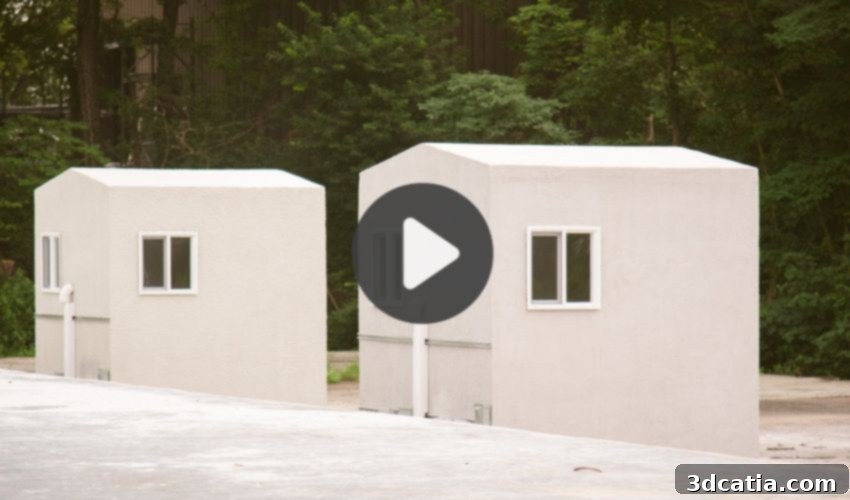
The challenge of homelessness is a complex global issue, impacting millions and demanding innovative solutions. In Chattanooga, Tennessee, a remarkable initiative is leveraging the power of 3D printing to provide not just shelter, but a pathway to permanent housing and renewed dignity for individuals experiencing homelessness. This groundbreaking project has seen two individuals successfully transition from temporary 3D printed shelters into stable, permanent homes, achieving this significant milestone an impressive 60 days ahead of their initial schedule. This success underscores the efficiency and effectiveness of additive manufacturing in addressing critical social needs.
The structures for this life-changing project were expertly supplied by Branch Technology, a company at the forefront of large-scale 3D printing, known for its innovative approach to construction. The land for these pioneering shelters was generously provided by Olivet Baptist Church, demonstrating the vital role of community partnerships in such endeavors. This initiative is a core component of a larger 12-month pilot program, meticulously managed by the Office of Homelessness and Supportive Housing, under Mayor Kelly’s administration. The program’s overarching goal is to offer secure, temporary housing solutions that serve as a crucial stepping stone towards long-term stability and integration into permanent supportive housing. To date, Mayor Kelly’s administration has facilitated nearly 3,000 people into such housing, highlighting a robust commitment to tackling homelessness head-on.
This project stands as a powerful testament to a diverse and collaborative approach to addressing homelessness. The specific contribution of Branch Technology, with its advanced 3D printing capabilities, has been instrumental in bringing these innovative shelters to life, offering a scalable and rapid construction method. The city of Chattanooga is not stopping here; there are ambitious plans to continuously relocate homeless individuals to these purpose-built shelters, aiming to replicate the successful 30-day placement timeline achieved in this initial instance. Following this temporary placement, the ultimate objective remains facilitating their smooth and supported transition into permanent housing, breaking the cycle of homelessness. Witnessing the transformative power of 3D printing in action, changing people’s lives for the better, is truly inspiring. Watch the video below to gain a deeper understanding of this remarkable effort:
Top 2: Enhancing Accessibility with a 3D Printed Wallet for Hassle-Free Payments
Daily life often presents unforeseen challenges, particularly for certain demographics. Elderly individuals, for instance, frequently contend with conditions such as arthritis or rheumatism, which can significantly impair their fine motor skills and overall mobility. Similarly, people with other tactile limitations or conditions causing tremors often find routine physical tasks to be frustratingly difficult. A common scenario where these challenges become acutely apparent is during simple transactions, such as making payments at a supermarket. The seemingly straightforward act of retrieving a credit card from a wallet, fumbling with coins, or even operating a payment terminal can become a source of considerable stress and dependency.
Recognizing this pervasive issue, a dedicated team of innovative students from the University of Sydney embarked on a mission to create a practical, user-centric solution. Their objective was to design a wallet that would specifically cater to the needs of individuals facing these mobility and dexterity limitations, making everyday financial interactions simpler and more independent. Leveraging the versatile capabilities of 3D printing technology, these students were able to rapidly prototype and bring their thoughtful design to life. The resulting 3D printed wallet is not just a container for cards; it is an intelligently engineered accessory designed for ease of use. A key feature of their innovative design is an integrated locking mechanism, ensuring that credit cards are securely held yet remain easily accessible with minimal effort. This ingenious design allows users to retrieve and insert their cards smoothly, circumventing the fine motor challenges often associated with traditional wallets.
This project serves as an excellent illustration of how 3D printing can be instrumental in the development of assistive technologies and plays a crucial role in promoting inclusive design. By directly addressing the specific pain points of a vulnerable population, this 3D printed wallet significantly enhances their independence and quality of life. Such innovations underscore the potential of additive manufacturing to create highly customized, ergonomic, and practical solutions that improve daily living. The flexibility and speed of 3D printing make it an ideal tool for iterative design processes, allowing for rapid adjustments and improvements based on user feedback. Explore the functionality and witness the positive responses of the participants who tested this innovative wallet in this featured Top 5 video, and understand how simple yet impactful design, enabled by 3D printing, can make a world of difference.
Top 3: India’s First 3D Printed Post Office: A Leap in Construction Innovation
The landscape of construction is undergoing a significant transformation, with 3D-printed buildings rapidly moving from conceptual models to tangible realities. Indeed, it has become increasingly common for hardly a week to pass without news of an exciting new project or significant updates on ongoing constructions in the field of additive construction. From residential homes to large-scale commercial structures, 3D printing is proving its mettle. A prime example of this global trend is the progress of Europe’s largest 3D-printed building in Heidelberg, a project that highlights the scale and ambition achievable with this technology. However, the true disruptive potential of 3D printing in construction extends far beyond record-breaking structures, especially in regions with unique demographic and economic challenges.
In densely populated and economically disadvantaged nations, the application of 3D printing in construction holds immense promise for the future. It offers not only incredibly cost-effective building methods but also unparalleled speed in construction timelines. These attributes are critical for addressing widespread housing shortages and infrastructure development needs in a sustainable and efficient manner. By significantly reducing labor costs, material waste, and construction time, 3D printing can revolutionize how essential public infrastructure is developed. It facilitates rapid deployment of buildings that are both durable and environmentally sound, paving the way for improved living standards and economic growth.
A shining example of this transformative potential comes from India, a nation poised for significant development. The recently inaugurated post office in Bengaluru, a project we first reported on a few months ago, represents a monumental achievement: it is India’s very first 3D printed post office. Spanning an impressive 1,100 square meters, this structure was constructed using advanced 3D printing techniques, setting a new benchmark for construction in the country. This pioneering project is more than just a building; it has the potential to initiate a broader movement towards embracing additive manufacturing in India’s construction sector. It serves as a powerful demonstration that 3D printing can deliver high-quality, functional, and aesthetically pleasing public infrastructure efficiently and economically. This post office symbolizes a forward-thinking approach to urban planning and infrastructure, showcasing how innovative technologies can be harnessed to meet the demands of a growing population. Gain invaluable insight into the construction process and the finished marvel of this 1,100 square meter post office in Bengaluru through the accompanying video, which illustrates the meticulous detail and speed of its creation.
Top 4: Sustainable Gastronomy: 3D Printed Seafood for Vegans
The health of our planet’s oceans is under severe threat, primarily due to excessive fishing practices that lead to the rapid depletion of marine life and irreversible disruption of delicate ecosystems. Despite growing awareness, the pace at which global consumption habits are changing to mitigate this environmental catastrophe is alarmingly slow. This creates a critical need for innovative solutions that can bridge the gap between ecological preservation and consumer demand for seafood products. As we reported recently, the esteemed research team led by Ph.D. Huang from the National University of Singapore has identified a significant contributing factor to this dilemma: the limited availability of appealing and sustainable alternatives to traditional seafood. This scarcity makes it challenging for consumers to make truly impactful dietary changes, even when they are environmentally conscious.
In response to this pressing global issue, Ph.D. Huang’s team has set an ambitious objective: to bridge this critical gap in the market through the groundbreaking application of 3D printing technology. Their pioneering work focuses on developing realistic, delicious, and environmentally friendly vegan seafood alternatives that can satisfy consumer cravings without contributing to oceanic degradation. By meticulously formulating plant-based ingredients and employing advanced food-grade 3D printing techniques, they are able to create products that mimic the texture, taste, and appearance of traditional seafood. This approach offers a compelling solution to both the environmental crisis of overfishing and the expanding dietary preferences of a growing vegan and vegetarian population.
A standout innovation from their research is the development of 3D printed calamari. This product is a testament to how additive manufacturing can revolutionize sustainable food production by creating alternative proteins with precision and customization. The technology allows for control over the shape, texture, and even the nutritional profile of the food, opening up entirely new possibilities for sustainable gastronomy. The implications of such advancements are profound, offering a viable path towards reducing our reliance on wild-caught fish, alleviating pressure on marine ecosystems, and promoting healthier, more sustainable diets globally. This innovation is not merely about creating a substitute; it’s about crafting a future where culinary delight and ecological responsibility coexist harmoniously. To delve deeper into their fascinating work and witness how their 3D printed calamari is made, watch the insightful video below and discover the future of sustainable eating:
Top 5: The Ethical Frontier: Two Men Charged in 3D Printed Guns Bust
While 3D printing technology offers immense potential for positive advancements across various sectors, it also presents a significant ethical dilemma and poses serious challenges when misused. The accessibility and ease of manufacturing enabled by additive manufacturing can unfortunately be exploited for illicit purposes, with the production of untraceable and potentially dangerous weapons being a primary concern. This darker side of 3D printing technology has become a growing focus for law enforcement agencies worldwide, highlighting the urgent need for stringent regulations and responsible oversight of technological dissemination.
In a concerning development from Western Australia, two men have been arrested and subsequently charged following a comprehensive four-month police operation targeting the illegal manufacturing and trafficking of firearms. The meticulous investigation led to raids across multiple properties within the state, uncovering a clandestine operation involving several 3D printed guns. Alongside these illicit weapons, police seized a functional 3D printer, various electronic devices containing detailed schematics for weapon production, and an array of gun parts, underscoring the sophisticated nature of the criminal enterprise. The charges levied against the individuals include both manufacturing and selling weapons, emphasizing the serious legal repercussions associated with such activities.
The Deputy Commissioner of WA Police voiced profound concern over this incident, articulating the inherent risk these weapons pose, particularly if they fall into the wrong hands. The primary worry stems from the fact that these 3D printed firearms are capable of firing live rounds, making them just as lethal as conventionally manufactured weapons, yet often lacking serial numbers or other identifying marks that facilitate tracing. This anonymity makes them particularly attractive to criminal elements. A significant contributing factor to this alarming trend is the widespread accessibility of manufacturing blueprints and instructions online, which allows individuals with malicious intent to easily acquire the knowledge needed to produce these weapons. An expert in 3D printing, weighing in on the issue, suggested that much stricter measures are urgently needed for identifying and removing weapon blueprints from the internet to curb this growing problem. The seriousness of the situation is further highlighted by previous cases, such as that involving an 18-year-old who was arrested for successfully printing a fully functional semi-automatic rifle, illustrating that this is an ongoing and escalating concern rather than an isolated incident. The charged individuals are now set to appear in court on separate dates, where they will face the full force of the law. This case serves as a stark reminder of the critical importance of responsible technology use, robust regulatory frameworks, and proactive law enforcement efforts to mitigate the risks associated with advanced manufacturing techniques. Watch the video to learn more about the details of this critical situation and the broader implications for public safety and technological regulation.
This week’s roundup truly encapsulates the diverse and often contrasting facets of 3D printing and additive manufacturing. From offering sustainable solutions to social and environmental challenges to presenting complex ethical and legal quandaries, the technology continues to evolve at an astonishing pace. Which of these Top 5 videos resonated with you most this week? We encourage you to share your thoughts and insights in a comment below or engage with us on our social media platforms: LinkedIn, Facebook, and Twitter! To ensure you never miss out on the latest news, breakthrough innovations, and exclusive content in the 3D printing world, don’t forget to sign up for our free weekly Newsletter here, delivering the freshest updates straight to your inbox! Additionally, you can find all our compelling videos, alongside a wealth of other informative content, conveniently located on our dedicated YouTube channel. Stay connected, stay informed, and continue exploring the boundless possibilities of 3D printing with us!
*Cover photo credits: WDEF News