
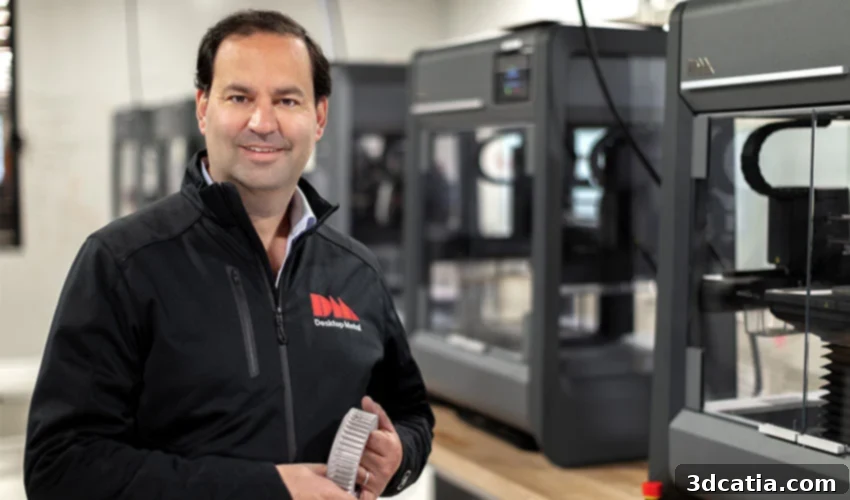
Desktop Metal: Pioneering the Future of Accessible Metal 3D Printing for Industry and Innovation
From its inception, Desktop Metal has rapidly distinguished itself as a formidable force, not just within the dynamic realm of 3D printing but across the broader landscape of manufacturing and industrial innovation. Established in October 2015, this visionary company is dedicated to the design, manufacture, and market deployment of cutting-edge metal additive manufacturing systems. These aren’t merely incremental improvements; they represent a fundamental paradigm shift, actively revolutionizing traditional metal fabrication processes. The profound impact and immense potential of Desktop Metal have been widely recognized, evidenced by an astounding $438 million in equity funding successfully secured from a prestigious roster of global investors, including tech giant Google, and automotive powerhouses BMW and Ford, over just four years. This substantial investment underscores the industry’s confidence in their groundbreaking approach. To truly grasp the scope of their transformative work and delve deeper into the ethos of this disruptive enterprise, it was an honor to feature Ric Fulop, the insightful CEO and Co-Founder of Desktop Metal, in our inaugural #TALK3D interview series.
A Brief History of Desktop Metal and Its Vision
Desktop Metal’s journey began in 2015, propelled by a singular, ambitious mission: to democratize metal 3D printing, making it genuinely accessible for engineering teams, product designers, and manufacturers alike. This wasn’t merely about bringing metal additive manufacturing out of specialized industrial facilities; it was about reimagining the entire process. The core objective was to engineer a metal 3D printing solution that was not only exceptionally fast but also compact, safe, and user-friendly enough to seamlessly integrate into standard office environments. This revolutionary vision took root even earlier, in 2013, when Ric Fulop initiated a series of critical collaborations. He brought together a formidable consortium of world-leading experts spanning diverse yet interconnected fields: materials science, mechanical engineering, and advanced 3D printing technologies. Over an intensive two-year period, this collaborative powerhouse engaged in deep research and development, resulting in a series of independent yet complementary inventions. These foundational breakthroughs meticulously pieced together the intellectual property and technological framework that forms the bedrock of Desktop Metal’s proprietary systems today. Their foresight recognized that while metal 3D printing offered immense advantages, its complexity, cost, and infrastructure requirements were significant barriers to widespread adoption. Desktop Metal aimed to dismantle these barriers, paving the way for a new era of metal prototyping and production.
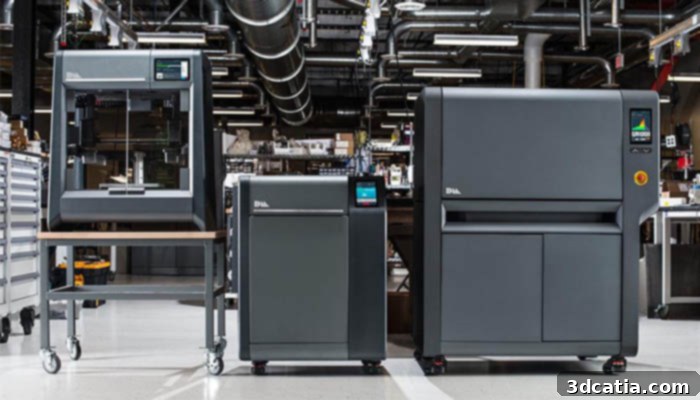
Desktop Metal’s Studio System, exemplifying office-friendly metal additive manufacturing.
The genesis of Desktop Metal was a collaborative effort involving seven distinguished founders, each bringing unique expertise to the table: Ric Fulop, Jonah Myerberg, Rick Chin, Yet-Ming Chiang, Ely Sachs, Chris Schuch, and A. John Hart. This diverse collective included visionaries with backgrounds in business leadership, materials science, mechanical design, and additive manufacturing, creating a robust foundation for innovation. From its very inception, the company attracted significant attention, successfully securing $14 million in seed funding to kickstart its ambitious endeavors. This initial capital fueled rapid progress, and within just one year, Desktop Metal had moved beyond conceptual designs, actively developing and refining functioning prototypes of its groundbreaking products. The intensity of their research and development efforts culminated in a pivotal moment in April 2017, when, after two years of meticulous work, Desktop Metal proudly unveiled two distinct and highly anticipated metal 3D printing systems to the public: the Studio System and the Production System. These systems were meticulously engineered to address different segments of the market – one focused on design and prototyping, the other on scalable production. The commercial rollout began swiftly, with the Studio System commencing shipments to customers by the end of 2017, bringing office-friendly metal additive manufacturing to the forefront. This was followed by the much-anticipated launch of the Production System in 2019, marking Desktop Metal’s entry into high-volume, industrial metal part fabrication.
How Desktop Metal is Reinventing Metal 3D Printing
Desktop Metal’s innovative approach fundamentally redefines how metal parts are conceived, prototyped, and manufactured. Their strategy revolves around two core, yet distinct, additive manufacturing solutions, each meticulously tailored to specific market needs: the Studio System and the Production System.
The Studio System: Office-Friendly Metal Prototyping and Low-Volume Production
The Studio System is a game-changer for engineering teams, design departments, and facilities requiring small to medium production runs. Its most significant differentiator is its unparalleled suitability for an office environment. This system operates on a Bound Metal Deposition (BMD) process, a technology akin to fused deposition modeling (FDM) for plastics, but ingeniously engineered for metals. Instead of hazardous loose metal powders or complex laser systems, the Studio System uses proprietary metal rods, similar to filament cartridges. These rods consist of finely atomized metal powder bound in a polymer matrix, making the material safe, clean, and remarkably easy to handle – a stark contrast to traditional methods.
A key benefit of the Studio System is its simplified and streamlined workflow. It comprises two main components: the 3D printer, which creates objects from these metal-infused cartridges, and a debinder/sintering furnace. The printer precisely deposits the bound metal material layer by layer to create a “green part.” This part then undergoes a solvent debinding process, where the polymer binder is partially removed, followed by sintering in the furnace. During sintering, the metal particles fuse together at high temperatures, densifying the part to achieve its final metallic properties, often exceeding 97% density. This comprehensive two-step process, contained entirely within the Desktop Metal ecosystem, eliminates the need for external tooling, specialized ventilation, or dedicated hazardous material handling equipment. Crucially, it doesn’t utilize any lasers or loose metal powders, which are typically associated with high costs, significant safety concerns, and complex facility requirements in conventional metal 3D printing. All that’s required for the Studio System is standard power and an internet connection, making it remarkably accessible and straightforward to integrate into almost any workspace. This ease of use dramatically lowers the barrier to entry for metal additive manufacturing, allowing engineers to iterate rapidly on designs, produce functional prototypes, and even create end-use parts without the delays and expenses associated with outsourcing or traditional manufacturing methods. It’s perfectly adapted for an office environment, bringing metal part creation directly to the design source.
The Production System: Unlocking High-Volume Metal Additive Manufacturing at Scale
For manufacturers focused on high-volume production and industrial-scale applications, the Production System stands as a monumental leap forward. This system is engineered from the ground up to deliver unparalleled speed, cost-efficiency, and scalability in metal additive manufacturing. It harnesses Desktop Metal’s proprietary Single Pass Jetting (SPJ) technology. SPJ is an evolution of binder jetting, an additive manufacturing process where a liquid binding agent is selectively jetted onto a thin layer of metal powder particles, building a part layer by layer. The beauty of this technology lies in its ability to print without supports in the powder bed, allowing for complex geometries and efficient nesting of parts.
What makes SPJ truly revolutionary is its single-pass approach. Unlike conventional multi-pass binder jetting systems, the Production System’s advanced print bar spans the entire width of the build area. In a single, rapid pass, it can jet both the binding agent and a separate layer of anti-sintering agent, combined with recoating the powder bed. This simultaneous operation drastically accelerates the printing process, making it up to 100 times faster than many other solutions on the market, particularly powder bed fusion technologies. This phenomenal speed allows for the rapid fabrication of thousands of complex metal parts per day, drastically reducing per-part costs and making metal 3D printing viable for true mass production for the first time. The Production System can process a wide range of advanced metal alloys, including stainless steels, tool steels, and superalloys, opening up possibilities for industries like automotive, aerospace, consumer products, and medical devices to produce intricate, high-performance components with unprecedented efficiency and design freedom. Both the Studio System and Production System share the core principle of producing high-density metal parts, but they cater to entirely different stages of the product lifecycle – from concept validation and prototyping to large-scale, cost-effective realization.
Let’s #TALK3D with Ric Fulop!
To gain even deeper insights into the vision driving Desktop Metal’s relentless innovation and to understand the strategic decisions shaping the future of metal additive manufacturing, we were privileged to sit down with Ric Fulop, the dynamic CEO and Co-Founder. His leadership has been instrumental in navigating the company from its ambitious startup phase to its current status as a market leader in advanced manufacturing. Through interviews like our #TALK3D series, we aim to bring you direct perspectives from the pioneers who are actively shaping the industry. Understanding the motivations, challenges, and future aspirations of leaders like Ric Fulop provides invaluable context to the technological advancements we see today. His insights shed light not only on Desktop Metal’s unique competitive advantages but also on the broader implications for global manufacturing and how industries can leverage these revolutionary tools to unlock unprecedented design flexibility, accelerate product development cycles, and achieve greater manufacturing efficiencies. Below, you can find the insightful conversation directly.
Desktop Metal continues to push the boundaries of what’s possible in metal additive manufacturing, making advanced capabilities more accessible and powerful for a wider array of applications. What are your thoughts on Desktop Metal’s transformative technologies and their impact on the future of manufacturing? We invite you to share your perspectives and engage with our community by leaving a comment below, or by connecting with us on our official Facebook and Twitter pages. To stay completely up-to-date with all the latest breakthroughs, news, and exclusive insights from the world of 3D printing, be sure to sign up for our free weekly Newsletter. Get all the essential updates delivered directly to your inbox, ensuring you never miss a beat in this rapidly evolving industry.