
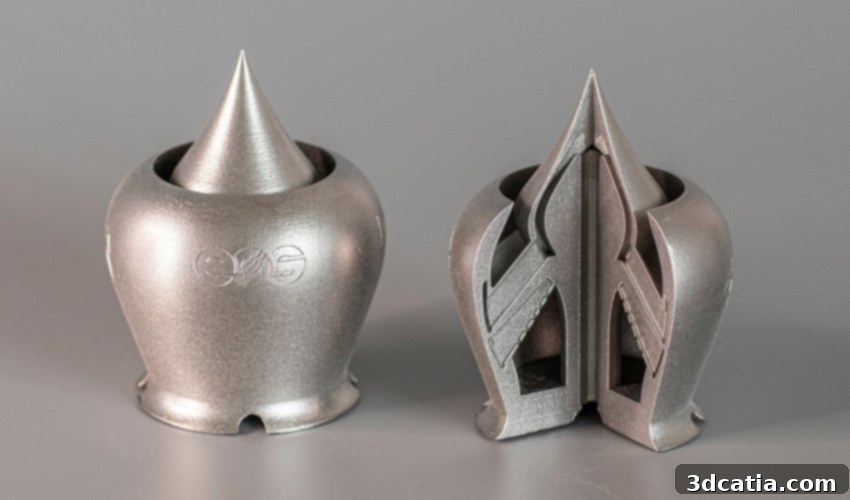
Unlocking Performance: A Comprehensive Guide to Nickel Alloys in 3D Printing
Nickel alloys have emerged as indispensable materials in the realm of 3D printing, primarily due to their exceptional thermal stability, robust mechanical strength, and superior resistance to corrosion. These remarkable properties position them as the material of choice for fabricating high-performance components across a diverse range of demanding industries. Sectors such as aerospace, automotive, medical, and oil and gas heavily rely on these advanced materials. Their inherent ability to withstand extreme operating conditions, combined with the unparalleled design freedom offered by additive manufacturing, facilitates the creation of highly complex, specialized parts that were previously challenging or impossible to produce using conventional methods. This comprehensive guide will delve into the intrinsic properties of nickel alloys, explore their significant advantages when utilized in 3D printing, highlight key industrial applications, and discuss the transformative impact of these materials on modern manufacturing.
Understanding Nickel Alloy Material Properties
The nickel alloys employed in advanced manufacturing processes originate from naturally occurring nickel ore. This valuable resource is found in various mineral deposits, including pentlandite, limonite, and garnierite, and is extracted through extensive large-scale mining operations worldwide. Following extraction, the raw ore undergoes a series of sophisticated refining stages to achieve high-purity nickel. This refined nickel then serves as the fundamental base material for the precise formulation of specific alloys, where other elements are added to impart desired characteristics such as enhanced strength, corrosion resistance, or high-temperature performance.
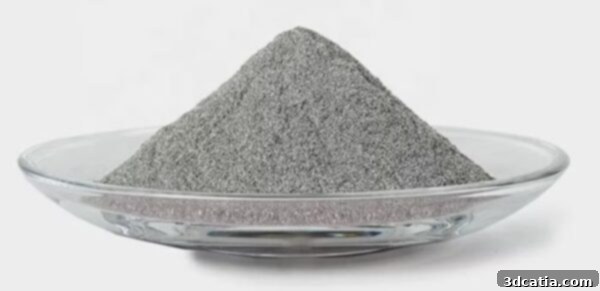
A nickel alloy in powder form, essential for additive manufacturing processes. (Credit: Guangzhou Sailong AM Co.)
Many of the most renowned and widely used nickel alloys in the industry are recognized by trade names, often derived from the companies that originally patented or commercialized them. Among the most prominent and frequently utilized in additive manufacturing are:
- Inconel® – This is a highly acclaimed family of nickel-chromium-based superalloys celebrated for their extraordinary resistance to both corrosion and extreme high temperatures. The most popular grades for 3D printing are Inconel 625 and Inconel 718. While both offer exceptional performance, their main distinctions lie in their specific chemical compositions and resulting mechanical properties. Inconel 625 typically contains approximately 58% nickel, along with substantial levels of chromium, molybdenum, and niobium, contributing to its excellent fatigue and creep resistance at high temperatures. In contrast, Inconel 718 features a similar nickel base but incorporates a higher proportion of iron, less molybdenum, and significant additions of niobium, aluminum, and titanium. These compositional differences lead to Inconel 718’s superior age-hardenability and weldability, making it a preferred choice for complex structural components in aerospace applications like jet engine parts and rocket components where high strength at elevated temperatures is critical. Its ability to maintain structural integrity under severe thermal cycling and mechanical stress is unparalleled.
- Hastelloy® – Comprised primarily of nickel, chromium, molybdenum, and often cobalt, Hastelloy alloys are engineered to deliver outstanding corrosion resistance, particularly in highly aggressive acidic and chemical environments. Hastelloy X, for example, is an austenitic alloy that includes minor amounts of cobalt, molybdenum, and tungsten. This specific formulation provides exceptional oxidation resistance and strength at high temperatures, rendering it invaluable for components exposed to hot gases and corrosive media, such as those found in jet engines, industrial furnaces, chemical processing equipment, and pollution control systems. Its versatility extends to applications where resistance to pitting and crevice corrosion is paramount.
- HAYNES® – Developed by Haynes International, a company renowned for its expertise in high-performance materials designed for the most extreme operating conditions, the HAYNES family of alloys represents another critical class of nickel-based superalloys. Popular grades such as HAYNES 230, 282, and 214 are specifically formulated for their superior high-temperature strength, excellent oxidation resistance, and remarkable structural stability. These alloys are frequently employed in critical components within gas turbines, industrial heat exchangers, and chemical reactors, where they must perform reliably under intense thermal and mechanical loads for extended periods. Their ability to resist thermal fatigue and maintain properties at elevated temperatures makes them ideal for demanding applications.
Beyond these widely recognized superalloys, several other notable nickel-based alloys play crucial roles in specialized applications. These include Monel (a nickel-copper alloy), known for its excellent corrosion resistance in marine and chemical environments, particularly against strong acids and seawater; Kovar (a nickel-iron-cobalt alloy), highly valued for its controlled thermal expansion properties, making it ideal for glass-to-metal and ceramic-to-metal seals in electronic devices and vacuum tubes; and Invar (a nickel-iron alloy, typically containing 36% nickel), famous for its exceptionally low coefficient of thermal expansion near room temperature, which is critical for precision instruments, optical systems, and scientific measurement devices. All these alloys demonstrate high resistance to corrosion and provide crucial performance in their respective demanding environments, ranging from deep-sea applications to the production of highly sensitive electronic and magnetic components.
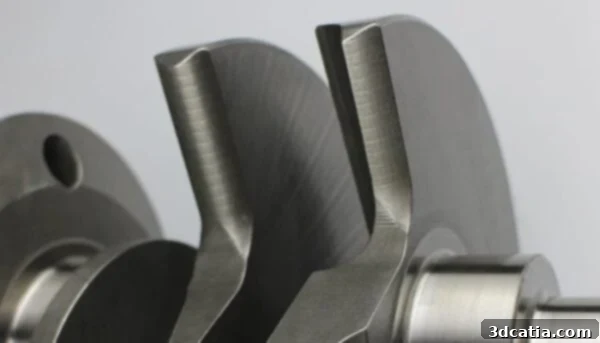
A high-performance 3D printed part, showcasing the intricate geometries achievable with Inconel 625. (Credit: ExOne)
3D Printing with Nickel Alloys: Processes and Considerations
For nickel alloys to be successfully integrated into 3D printing processes, the raw material must first be meticulously converted into a high-quality metal powder. This transformation is predominantly achieved through sophisticated atomization techniques, with gas atomization and plasma atomization being the most prevalent methods. Gas atomization involves melting the alloy and then using a high-pressure gas jet to break the molten stream into fine spherical droplets, which rapidly solidify into powder. Plasma atomization offers even finer particle sizes and superior sphericity, leading to powders with enhanced flowability and packing density. Following powder production, the material undergoes rigorous sorting, sieving, and conditioning processes to ensure precise particle size distribution, optimal morphology, and consistent purity. These advanced techniques are crucial for producing nickel alloy powders that consistently meet the stringent quality standards required by the most demanding industries, directly impacting the final part’s density, strength, and surface finish.
The majority of 3D printing applications involving nickel alloys are executed using various powder-based metal additive manufacturing technologies. The most widely adopted methods include Laser Powder Bed Fusion (LPBF), also known as Selective Laser Melting (SLM); Electron Beam Melting (EBM); and Directed Energy Deposition (DED). Each of these processes demands meticulous optimization of numerous parameters, such as the power of the laser or electron beam, scan speed, layer thickness, and build chamber temperature. This careful tuning is essential to achieve the desired microstructure, mechanical properties, and overall quality in the finished components, minimizing defects like porosity or residual stresses. In the context of Metal Binder Jetting, which involves binding metal powder particles with a polymeric binder before sintering, the selection of an appropriate binder is absolutely critical for ensuring robust layer adhesion and the integrity of the “green part.” Since these printed parts exhibit high porosity before undergoing a high-temperature sintering step, it is equally vital to precisely control binder distribution and powder packing density to minimize shrinkage and prevent deformation during the crucial sintering phase, which transforms the green part into a dense metal component.
Advantages and Limitations of 3D Printing Nickel Alloys
The combination of nickel alloys’ inherent properties with the capabilities of additive manufacturing offers a myriad of significant advantages. Foremost among these is their exceptional high-temperature resistance, allowing components to maintain structural integrity and mechanical performance even in environments exceeding 700°C, and in some cases, much higher. This makes them an unparalleled choice for critical components exposed to extreme thermal and mechanical loads. Simultaneously, 3D printing provides unparalleled design flexibility, enabling engineers to create incredibly complex, optimized geometries that would be unachievable with traditional manufacturing methods. This design freedom facilitates topology optimization, the integration of lattice structures for lightweighting, and part consolidation, resulting in more efficient, lighter, and often more compact components. These factors are absolutely essential for advanced applications in industries like aerospace, where every gram of weight savings translates to improved fuel efficiency and performance, and in automotive for high-performance systems.
However, the advanced nature of nickel alloys in 3D printing also comes with specific limitations. One of the most significant drawbacks is their high material cost. The price of high-quality nickel alloy powder can substantially elevate overall production expenses, potentially presenting a barrier to entry for certain applications or smaller-scale operations. Furthermore, 3D printed parts, particularly those made from nickel alloys, typically necessitate extensive post-processing steps. These can include stress relief heat treatments to mitigate residual stresses induced during the printing process, Hot Isostatic Pressing (HIP) to reduce internal porosity and improve mechanical properties, and precision machining or surface finishing to achieve final dimensional accuracy and surface quality. These post-processing stages can significantly extend overall production times and add to the manufacturing cost. Additionally, handling fine metal powders, especially reactive ones, poses inherent health and safety risks, necessitating the implementation of strict control measures, specialized ventilation systems, and the mandatory use of appropriate personal protective equipment to ensure operator safety.
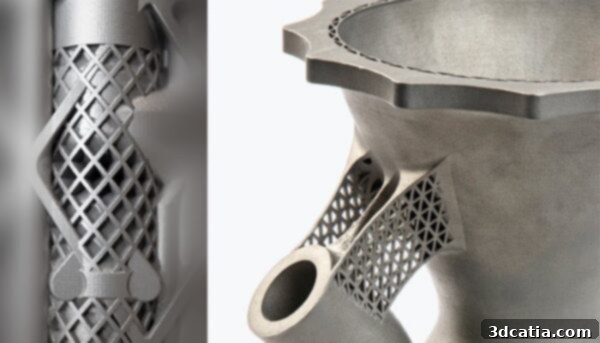
Examples of complex parts manufactured using 3D printing technology. (Credit: EOS (left) / Materialise (right))
Key Applications of 3D Printed Nickel Alloys
The extraordinary properties of nickel alloys, combined with the versatility of 3D printing, have led to their widespread adoption across a multitude of critical industries. In the demanding aerospace sector, nickel superalloys are indispensable for manufacturing crucial engine components such as turbine blades, combustion chambers, nozzles, and structural brackets. These parts must operate reliably under conditions of extreme temperatures, high mechanical stress, and corrosive environments, where the alloys’ creep resistance and fatigue strength are paramount. The ability to print complex internal cooling channels significantly boosts engine efficiency.
Within the automotive industry, particularly for high-performance and luxury vehicles, nickel alloys are increasingly utilized for components like turbochargers, exhaust systems, and specialized engine parts. Here, their exceptional heat resistance and corrosion resistance allow for improved engine performance, durability, and reduced emissions, enabling the creation of lighter and more efficient designs that withstand the harsh operating conditions of modern powertrains.
The medical and dental fields also benefit significantly from 3D printed nickel alloys. Their biocompatibility (for certain grades, with appropriate surface treatment) and remarkable durability make them ideal for producing customized surgical implants, prosthetic components, and intricate medical devices. The ability to tailor designs to individual patient anatomy, such as custom cranial implants or complex orthopedic structures, offers unprecedented possibilities for patient care and recovery. Their resistance to bodily fluids and long-term stability are key advantages.
In the oil and gas industry, nickel alloys are vital for manufacturing components used in drilling, extraction, and processing equipment. These parts are constantly exposed to highly corrosive chemicals, elevated temperatures, and high pressures in aggressive downhole environments. 3D printing allows for the creation of robust, corrosion-resistant valves, impellers, and sensor housings that can withstand these extreme conditions, thereby improving operational safety, efficiency, and component lifespan. Beyond these core sectors, numerous other industries, from chemical processing to power generation, are actively exploring and implementing nickel alloys in 3D printing to leverage their unique blend of properties for innovation and performance enhancement.
Have you had any personal or professional experience with 3D printing using nickel alloys? We invite you to share your insights and thoughts in a comment below, or engage with us on our LinkedIn or Facebook pages! To stay informed about the latest advancements and news in the additive manufacturing world, don’t forget to sign up for our free weekly Newsletter, delivered straight to your inbox. You can also explore all our informative videos and content on our dedicated YouTube channel.
*Cover Photo: EOS